NUR 114 Pain
 Call Kai
 Learn
 Practice Test
 Spaced Repetition
 Match
 Flashcards
 Knowt Play
1/81

There's no tags or description
Looks like no tags are added yet.
82 Terms
Pain
Whatever the person says it is, existing whenever they say it does
Most reliable indicator of pain?
Clients self report
Pain Assessment
OLDCARTS (what we use)
PQRST
COLDSPAA
OLDCARTS
Onset
Location
Duration
Characteristics
Aggravating factors
Relieving Factors
Timing
Severity
PQRST(U)
Precipitating/alleviating factors
Quality
Region/radiation
Severity
Timing
U - how it affects you
COLDSPAA
Character
Onset
Location
Duration
Severity
Pattern
Associated factors
Affects the client
Pain Expected Findings
Behavior
Facial Expressions
Changes in vital signs
Pain Scales
Numeric 0-10
Visual analog
Wong-Baker FACES
NVPS (Nonverbal Pain Scale)
FLACC
CRIES
NIPS
Numeric 0-10 is for who?
Adults and children who understand numbers
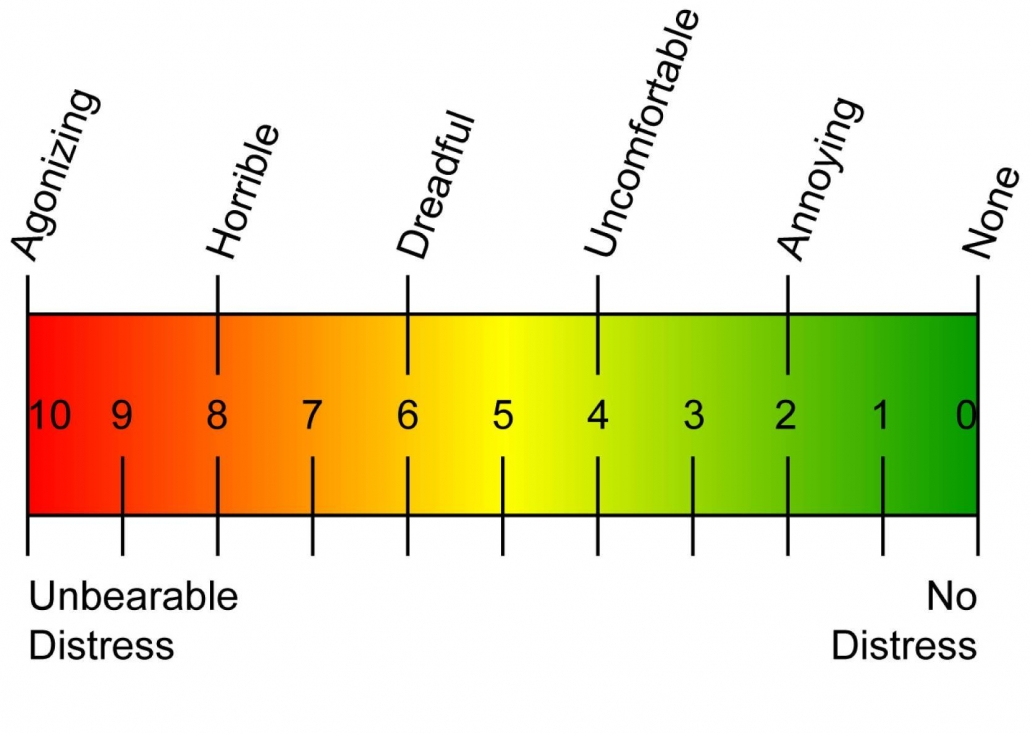
Visual Analog
Mark a point on a line from no pain to worst pain
Visual Analog is for?
Older children and adults

Wong-Baker FACES is for
age 3 and older, also cognitive impairment or language barrier

FLACC Scale
Face
Legs
Activity
Cry
Consolability
All grades from 0-1-2
FLACC Grades
0 - relaxed
1-3 - mild
4-6 - moderate
7-10 - severe
FLACC Scale is for
patients 2 months to 7 years and cognitively impaired clients who can’t self report
CRIES scale
Crying
Requires O2
Increased vitals
Expression
Sleeplessness
All grades from 0 - 2 points
CRIES Scale for
Neonates born at 38 weeks or more, useful for post-op
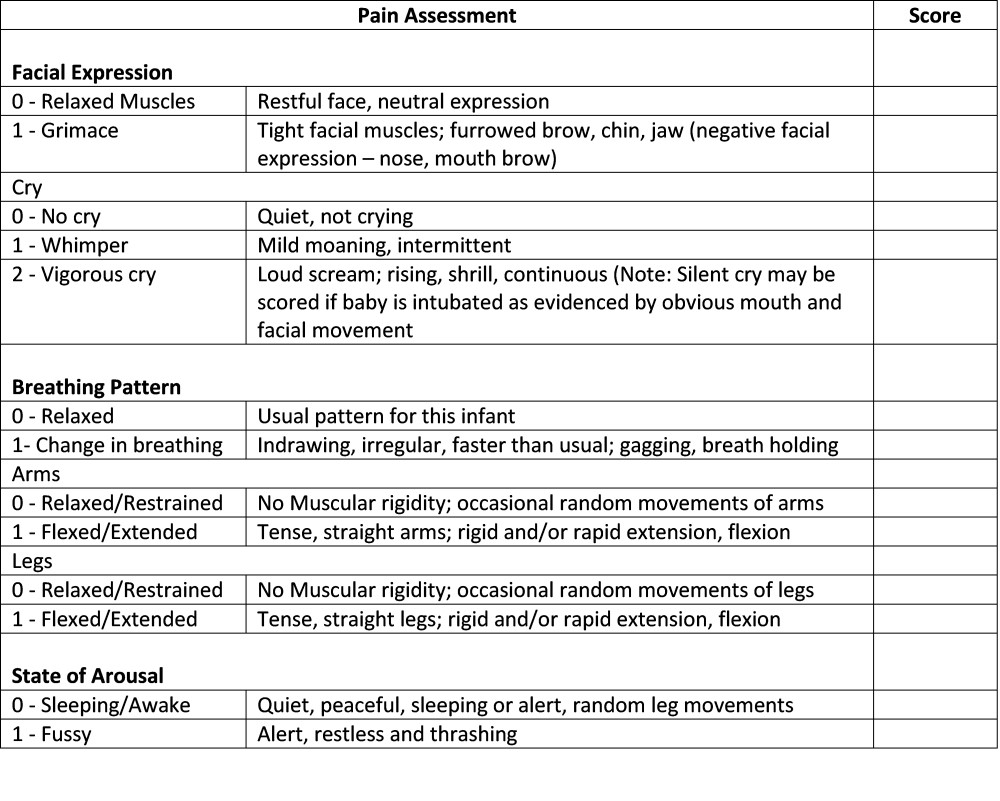
NIPs Scale
Infant pain scale
All grades from 0-1
Nonverbal Pain Scale (NVPS) is for
Adults who can’t verbalize
Based on FLACC, 5 categories scores 0 to 2
Vital signs are the least reliable indicator of pain because
They stabilize quickly even when pain continues
Main pain sign for infants
Crying
Management: Pharmacologic vs non-Pharmacologic
Always believe the client, treat pain early
Start with least invasive methods
Combine meds with nonpharm methods
Pharmacologic Management
Nonopioids, opioids, adjuvants
Nonpharmacologic Management
Methods that work together with meds and boost their effect.
Examples of Nonpharmacologic Methods
Relaxation
Distraction
Cutaneous stimulation
Cold
Heat
Massage
TENS
Guided imagery/hypnosis/biofeedback/music therapy
Exercise
Environment
Therapeutic touch
Relaxation
Deep abdominal breathing, meditation, yoga, progressive muscle relaxation (works best when pain is not yet severe)
Distraction
Reading, TV , games, socializing (find what the client likes)
Cutaneous Stimulation
Cold
Heat
Therapeutic touch
Massage
Acupuncture
Acupressure
TENS
Cold
Vasoconstriction, leads to less swelling (good for acute injury)
Heat
Vasodilation, better circulation (good for muscle and joint pain)
Massage
Promotes relaxation and sleep
TENS
Mild electric current through skin electrodes, client turns it on when in pain
Guided imagery, hypnosis, biofeedback, music therapy
Clients choice of music, headphones, sort of like distraction
Exercise
During acute pain, only self-administered range of motion. Helps prevent deconditioning in chronic pain
Environment
Smooth linens, reposition, keep clean and dry, comfortable temperature, control light, noise, and odors
Types of Pain
Acute
Chronic
Cancer
Nociceptive
Neuropathic
Acute Pain
Protective, identifiable cause, recent onset, ends as tissue heals
Under 6 months
Triggers a sympathetic response (higher HR, RR, BP)
Examples of acute pain
Burns
Trauma
Surgical incision
Chronic Pain
Constant or recurring with no predictable end
Longer than 6 months
Vital signs stabilize so signs are behavioral
Chronic Pain Examples
Arthritis
Back pain
Headaches
Cancer
Cancer Pain
From tumor, bone, or treatment (chemo, radiation)
Can be acute, chronic, nociceptive, and neuropathic all at once
Nociceptive Pain
From damage or inflammation of tissue (NOT NERVES)
Nociceptive pain is usually
Localized
Nociceptive pain is described as
Throbbing or aching
3 Types of Nociceptive Pain
Visceral
Somatic
Cutaneous
Visceral Pain
Internal organs, stretching, distention, or inflammation (can be referred to from other locations)
Somatic Pain
Bone, skin, joints, muscle, soft tissue (Localized)
Cutaneous Pain
Skin and subcutaneous tissue ( a type of somatic pain )
Neuropathic Pain
From damaged or abnormal nerves (NERVE PAIN)
Neuropathic pain described as
Burning, shooting, tingling, electric, pins and needles, numbness
Neuropathic Pain Examples
Diabetic neuropathy
Phantom limb pain
Spinal cord injury pain
Patient Controlled Analgesia (PCA) Pump
Computerized pump that lets the client give themselves safe doses of opioid by pressing a button ( usually through an IV )
PCA Benefits
Small frequent doses keep steady blood levels
Less total medication needed
Client has a sense of control
PCA Safety
Only the client presses the button (family or staff can cause oversedation)
Check the IV site and pump function at every assessment
Monitor Respirations, SpO2, sedation level
Client must be alert enough to use it
For Mild pain (1-3) what medication is needed?
Nonopioids, plus an adjuvant if needed
For Moderate pain (4-6) what medication is needed?
Nonopioid + opioid combo, plus adjuvant (acetaminophen + hydrocodone)
For Severe pain (7-10) what medication is needed?
Opioids, plus adjuvants (often scheduled doses unti controlled)
Types of Nonopioids
Aspirin
Ibuprofen
Ketorolac (Toradol)
Acetaminophen
Celecoxib
Low risk of dependence or tolerance
Nonopioids have a analgesic cieling, meaning…
Higher doses add toxicity, not relief!
Acetaminophen
Minor pain and fever
Acetaminophen Risk
Liver injury
Ibuprofen and Aspirin
For Mild to moderate pain
Ibuprofen and Aspirin risk
GI Upset and bleeding
Ketorolac (Toradol)
For moderate to severe pain, short term (up to 5 days)
Ketorolac (Toradol) risk
High GI and bleeding risk, kidney impairment
Celecoxib
For arthritis, acute and menstrual pain
Celecoxib Risk
GI upset, possible cardiovascular effects
Opioids
Act on the brain and spinal cord, block pain transmission
Types of Opioids
Morphine
Codeine
Oxycodone
Hydrocodone
Fentanyl
Hydromorphone
Methadone
Tramadol
Butorphanol
Opioid Adverse Effects
Respiratory depression
Sedation
N&V
Constipation
Before administering opioids you would want to check…
Respiratory rate
Naloxone (Narcan)
Opioid antagonist that reverses oversedation and respiratory depression
Adjuvants
Medication that is prescribed for pain relief, but not for its main intended effect (majorly neuropathic pain)
Types of Adjuvants
Anticonvulsants
Antidepressants
Corticosteroids
Antihistamines
Botox
Cannabis
Anticonvulsants
Gabapentin
Carbamazepine
Clonazepam
Antidepressants
Duloxetine
Amitriptyline
SSRIs
Corticosteroids
Dexamethasone
Prednisone (inflammation)
DO NOT GIVE WITH NSAIDS
Tolerance
Body responds to drug less over time, needs higher doses for the same effect (opioids, barbiturates)
Dependence
Client needs the drug to function, withdrawal if stopped suddenly: irritability N&V
Addiction
Compulsive use with cravings despite harm (unlikely when pain meds are used appropriately)
Assessments with Pain Meds
Pain
Vitals
Sedation
Allergies
before administering
When do you reassess pain?
Oral meds: 1 hour
IV meds: 30 minutes