Disorders of the stomach and esophagus
 Call Kai
 Learn
Learn Practice Test
 Spaced Repetition
 Match
Match Flashcards
 Knowt Play
1/22

There's no tags or description
Looks like no tags are added yet.
Name | Mastery | Learn | Test | Matching | Spaced | Call with Kai | Chat |
|---|
No analytics yet
Send a link to your students to track their progress
23 Terms
How do you clinically differentiate Vomiting from Regurgitation?
Vomiting: An active process preceded by nausea (ptyalism, lip licking, anxiety) and accompanied by abdominal contractions/retching. Expels food or bile from the stomach/small intestine.
Regurgitation: A passive process without nausea or prodromal abdominal contractions. Expels undigested food or saliva directly from the esophagus. Localizes disease directly to the esophagus.
What are the primary behavioral and physical indicators of Nausea in small animals?
Turning head away from food, excessive salivation (ptyalism), lip licking, pacing, and an anxious facial expression.
What are the primary etiologies of Megaesophagus?
Congenital (uncommon): Seen in Irish Setter, Great Dane, German Shepherd, Labrador Retriever, Chinese Shar-Pei, Newfoundland, Miniature Schnauzer, and Fox Terrier.
Idiopathic: Most common form in adult dogs.
Acquired Secondary: Caused by underlying focal or diffuse neuromuscular diseases (e.g., Myasthenia Gravis, Hypoadrenocorticism, Polyneuropathy).
What is the primary cause of mortality in patients with Megaesophagus?
Aspiration Pneumonia resulting from regurgitated esophageal contents.
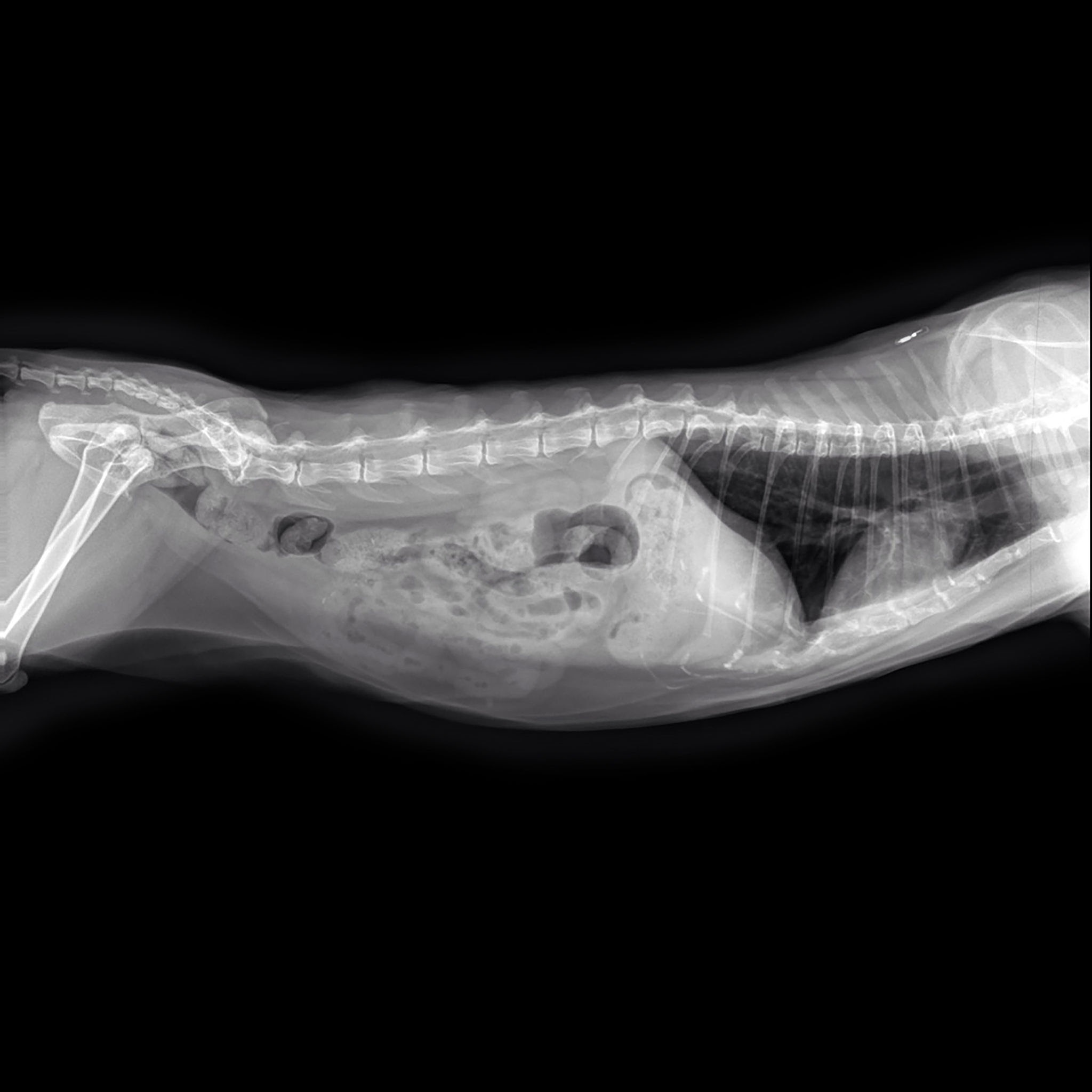
What are the most common causes of Esophagitis?
Gastroesophageal (GE) Reflux (secondary to general anesthesia, hiatal defects, or malpositioned feeding tubes).
Persistent vomiting (gastric acid exposure).
Esophageal foreign bodies.
Caustic agents (e.g., Paraquat).
Retained oral medications/pills (Doxycycline, Tetracycline).
How does Esophagitis exacerbate gastroesophageal reflux?
Mucosal inflammation reduces Lower Esophageal Sphincter (LES) tone, which allows progressive, worsening gastric acid reflux in a self-perpetuating cycle.
What is the gold standard diagnostic tool for Esophagitis?
Endoscopy (Esophagoscopy). Radiographs are insensitive unless a hiatal hernia or secondary megaesophagus is present.
What medical therapies are indicated for the management of Esophagitis?
Gastric Acid Suppression: Proton Pump Inhibitors (Omeprazole) are superior to H2 receptor antagonists (Famotidine), though Omeprazole takes 2–5 days for maximum efficacy.
Prokinetics: Cisapride (more effective) or Metoclopramide to increase LES tone and accelerate gastric emptying.
Esophageal Mucosal Protections: Sucralfate suspension.
Enteral Support: Gastrotomy feeding tube placement if oral intake is painful.
What are the most common causes of Acute Gastritis?
Ingestion of garbage/contaminated food, foreign objects, toxic plants/chemicals, irritating drugs (NSAIDs), and infectious agents (viral, bacterial).
What differential diagnoses must be ruled out before diagnosing Acute Gastritis?
Gastric/intestinal foreign body or obstruction, Canine Parvovirus, Uremia, Diabetic Ketoacidosis (DKA), Hypoadrenocorticism (Addison's disease), Hepatic disease, Hypercalcemia, and Pancreatitis. (Acute gastritis is a diagnosis of exclusion).
What is the medical management protocol for Acute Gastritis?
Fluid Therapy: IV crystalloid rehydration and maintenance.
Antiemetics: Maropitant, Ondansetron, Metoclopramide, or Dimenhydrinate.
Dietary Management: Withhold food until vomiting is controlled, then introduce a bland diet (e.g., 1 part boiled chicken or cottage cheese to 2 parts boiled rice/potato) and transition to normal food over 1 week.
Gastroprotectants/Adsorbents: Sucralfate, Kaolin-pectin, Bismuth subsalicylate, or Activated charcoal.
Note: Antibiotics and glucocorticoids are rarely indicated.
What primary diseases and risk factors trigger Gastric Ulceration and Erosion?
Drug-Induced: NSAIDs and Glucocorticoids (most common).
Metabolic/Endocrine: Hypoadrenocorticism, Uremia, Hepatic Disease, Mastocytosis/Mast Cell Tumor (hypergastrinemia/histamine release), DIC.
Neoplastic: Leiomyoma, Adenocarcinoma, Lymphoma, Mast Cell Tumor.
Inflammatory: Severe gastritis.
Hypotension/Ischemia: Shock, sepsis.
Idiopathic/Stress: Extreme exercise (sled dogs), spinal surgery.

What key CBC and Biochemistry abnormalities are characteristic of chronic Gastric Ulceration?
CBC: Initially a regenerative anemia that progresses over time to a microcytic, hypochromic, non-regenerative anemia (iron deficiency anemia due to chronic blood loss). Accompanying thrombocytosis and elevated neutrophilia.
Biochemistry: Significantly elevated Blood Urea Nitrogen (BUN) with a normal Creatinine (due to digestion and absorption of blood proteins / GI bleeding).
What is the drug of choice for treating or preventing NSAID-induced gastric ulcers?
Misoprostol (a synthetic Prostaglandin E1/E2 analogue).
What therapeutic options are indicated for severe, acute, or hypersecretory Gastric Ulceration?
Proton Pump Inhibitors: Omeprazole (superior acid suppression).
H2-Receptor Antagonists: Famotidine, Ranitidine.
Mucosal Coating: Sucralfate (binds to exposed ulcer beds).
Somatostatin Analogue: Octreotide (for rapid reduction of gastric acid in hypersecretory states with large ulcers).
Analgesia: Opioids or Tramadol.
Surgical Resection: Indicated for large, bleeding, or non-healing ulcers.
How is Chronic Gastritis definitively diagnosed and classified?
Definitively diagnosed by endoscopic gastric mucosal biopsy. It is classified histopathologically based on the predominant inflammatory cell infiltrate:
Lymphocytic-Plasmacytic
Eosinophilic
Granulomatous
Lymphoid Follicular
What are the main clinical signs of Chronic Gastritis?
Intermittent vomiting of food or bile, decreased appetite, weight loss, melena, hematemesis, and potential dermatologic signs (if secondary to food allergy/dietary hypersensitivity).
What step-by-step approach is taken to treat Idiopathic Chronic Gastritis?
Dietary Trial: 2-to-3 week trial with a novel or hydrolyzed protein diet.
Empirical Deworming: Especially if eosinophilic infiltrate is present.
Immunosuppression: Prednisolone if non-responsive to diet.
Refractory Cases: Add Azathioprine (dogs) or Chlorambucil (cats).
Prokinetics: Metoclopramide, Cisapride, or Erythromycin if delayed gastric emptying is present.
What is the clinical consensus on treating Helicobacter spp. in dogs and cats?
Helicobacter has a very high prevalence in normal and sick dogs and cats; its definitive role as a primary pathogen remains debated.
Triple therapy (Amoxicillin, Metronidazole, Famotidine + Bismuth) improves vomiting in 90% of cases, but achieves clearance of the organism in only 40% of animals.
Treatment decisions are made on an individual basis based on biopsy results and persistent clinical signs.
What physiological process helps localize disease directly to the esophagus?
Regurgitation
What is the primary cause of mortality in megaesophagus?
Aspiration pneumonia
What can be used for gastric acid suppression?
Omeprazole (PPI) is superior to H2-receptor blockers (Famotidine)
What samples are required to definitely classify and treat chronic gastritis?
Gastric mucosal biopsies