Drivers Permit Test
 Call Kai
 Learn
 Practice Test
 Spaced Repetition
 Match
 Flashcards
 Knowt Play
1/87

There's no tags or description
Looks like no tags are added yet.
88 Terms
Air Bags
They are supplemental restraints that are designed to work best in combination with safety belts. They reduce the chance that your head and upper body will strike some part of the vehicle interior.
Fatigue
It’s a physical or mental tiredness that can be caused by physical and mental strain, repetitive tasks, illness, medications, or lack of sleep. It can affect your vision and decrease your reaction time.
Aggressive Driving
It occurs when an individual internationally commits as an action that endangers other persons or property. Examples are speeding, following too closely, unsafe lane changes, improper signaling, and failing to obey traffic signals and warning signs.
Distracted Driving
A distraction is anything that takes attention away from driving, whether it is physically taking your hands from the wheel, eyes away from the road, or mental activities that take your mind away from driving.
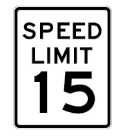
What does this for?
Alleys within a municipal corporation
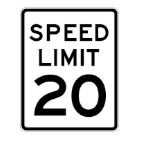
What does this mean?
School zones during recess and while children are arriving or leaving school during normal hours of operation.

What does this mean?
Streets within a municipal corporation.

What does this mean?
State routes or through highways, except controlled-access highways within municipal corporations outside business districts.

What does this mean?
State routes within municipal corporations outside urban districts.
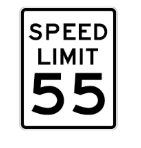
What does this mean?
Freeways with paved shoulders inside municipal corporations.

What does this mean?
Rural freeways
Right-of-way
Right-of-way describes the priority of traffic flow, meaning a pedestrian or vehicle, has the right to proceed with precedence over others in a particular situation or place.
What are the rules of the right-of-way?
Drivers who arrives before you at an intersection.
Drivers in the opposing traffic lane when you are making a left turn
The driver on your right at a 4 way intersection if both of you arrive at the intersection at the same time.
Drivers on a public highway if you are entering the highway from a driveway or a private road.
Drivers already on a limited access or interstate highway if you are on the entrance or acceleration ramp.
Pedestrians, bicyclists, and other drivers who are still in the intersection
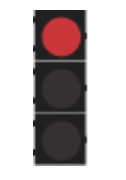
What does this mean?
A red traffic light means stop before entering the intersection. You must wait behind the stop line, crosswalk, or intersection until the traffic light turns green.

What does this mean?
A yellow traffic light indicates the color is about to change to red; use caution. Prepare to stop.

What does this mean?
A green traffic light means you may travel with caution through the intersection if it is clear to do so. A light marked with a green arrow indicates you can turn in the direction of the arrow without stopping.

What does this mean?
Slow down and proceed with caution. Be prepared to stop for any traffic flow that may be entering the intersection.
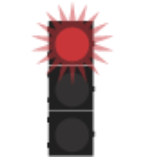
What does this mean?
Stop behind a stop line, crosswalk, or intersection before entering and come to a complete stop. Be sure no traffic is traveling across your path of travel before entering the intersection.

What does this mean?
Inoperable traffic lights are treated the same as a stop sign. Yield the right-of-way and use caution while entering the intersection
Regulatory Signs
Regulate the movement of traffic. These signs give notice to travelers of traffic laws or regulations
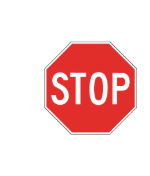
What does this mean?
All traffic in this lane must stop before proceeding.
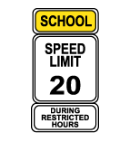
What does this mean?
Observe posted speed limit in school zone during restricted hours.

What does this mean?
Used at intersections of one-way roads, and freeway exit ramps.
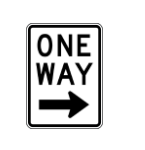
What does this mean?
Indicates a one-way road.

What does this mean?
Stop only if other traffic is affected; yield to all oncoming traffic.
Prohibitory Signs
Instruct the viewer that an action is prohibited. The red circle with a slash represents the word ‘NO.’ Whenever this symbol appears on a sign, the illustrated action is prohibited.

What does this mean?
No left turn

What does this mean?
No U turn
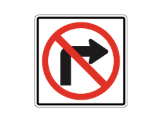
What does this mean?
No right turn
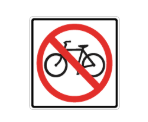
What does this mean?
No bikes
Warning Signs
Tell a driver of possible danger that might be ahead. The signs are usually yellow with black lettering or symbols and are diamond shaped.
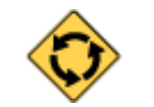
What does this mean?
Roundabout ahead
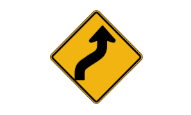
What does this mean?
Road curves ahead
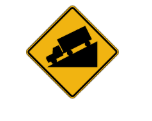
What does this mean?
Downhill grade ahead
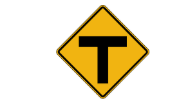
What does this mean?
Intersection ahead; Turn left or right

What does this mean?
Traffic travels in opposite directions

What does this mean?
Vehicle nearest the bridge has the right-of-way

What does this mean?
Passing is prohibited
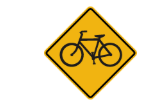
What does this mean?
Bicycle crossing
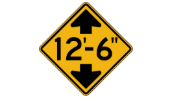
What does this mean?
Limited clearance ahead
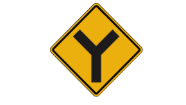
What does this mean?
Road branches ahead
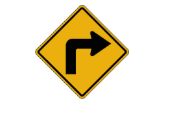
What does this mean?
Sharp right turn ahead

What does this mean?
Pedestrian crossing ahead

What does this mean?
Railroad crossing

What kind of signs are these?
Work zone signs
Work zone signs
These signs generally have a distinctive orange background. Nearing a construction zone, be alert, reduce speed, follow the directions of the signs, and watch for workers and equipment on the roadway/highway.
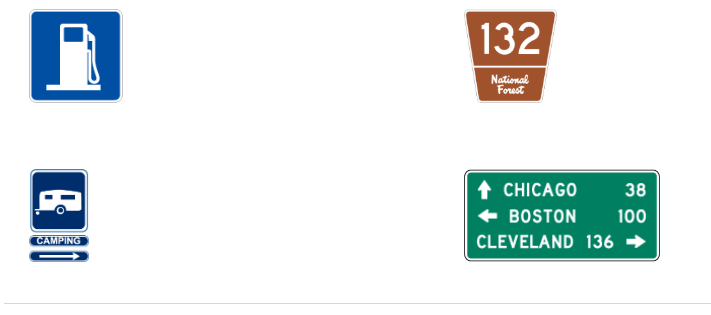
What kinds of sign are these?
Guide Signs
Guide Signs
Shapes may be square or rectangular, and colors may be green, brown, or blue. These signs provide points of interest and services along the highway, information on intersecting roads, and help direct drivers to cities and towns. Guide signs can help you find hospitals, gas stations or service stations, restaurants, and hotels.
Route Number Signs
The shape and color of these signs indicate the type of roadway — interstate, U.S., state, city, county, or local road. Corresponding signs, distances, etc., in maps and GPS applications assist travelers in way-finding.
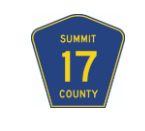
What sign is this?
Country Route

What Sign is this?
Interstate Route

What sign is this?
Off-Interstate Business Route

What sign is this?
U.S. Route
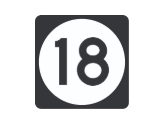
What sign is this?
State Route
Lane Pavement Markings
Pavement markings are lines, arrows, words, or symbols painted on the roadway. They divide lanes, tell you when you may pass other vehicles, tell you which lanes to use for turns, define pedestrian walkways, and show you where you must stop for signs or traffic signals.
What do the white lines mean?
Separates traffic traveling in the same direction. White lines may be solid or broken (dashed) lines.
What do the yellow solid lines mean?
Separates traffic traveling in opposite directions.
what does the yellow solid double line mean?
Do not drive to the left of the center line, unless you must cross the lines to turn left or pass a slow-moving vehicle (e.g., bicycle or vehicle displaying a slow-moving vehicle sign).
What do the yellow solid lines with a broken (dashed) line mean?
Passing other vehicles is allowed for motorists traveling in the lane with the broken line. Passing is prohibited for motorists traveling in the lane with the solid line.
What does the yellow broken (dashed) line mean?
Vehicles traveling in either direction may pass vehicles traveling in the same direction when safe to do so.
Two-way Left turn Only Lane
A two-way left turn lane is marked with a broken yellow line and a solid yellow line on each side of the lane. The marked center lane is for left turns only. Vehicles from either direction may use the center lane immediately prior to making a left turn.

What does this sign mean?
Two way left turn only lane
Is the two way left turn only lane allowed to be used for traveling or passing?
No
Crosswalks
Crosswalks define the area where pedestrians may cross the roadway.
What are the rules of the cross walk?
You must yield the right-of-way to pedestrians entering or in a crosswalk. If there is a stop line before the crosswalk, the stop line must be obeyed.
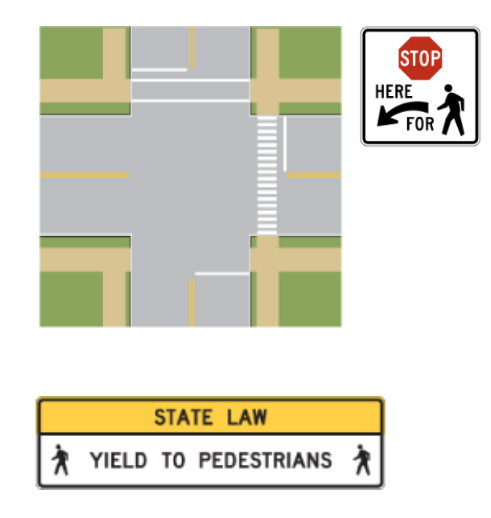
What are these signs used for?
Crosswalks
Work Zones
A Work Zone is an area where roadwork takes place and may involve lane closures, detours, and moving equipment. Work Zones are dangerous places for both workers and drivers. When approaching a Work Zone, watch for signs, cones, barrels, large vehicles, and workers.
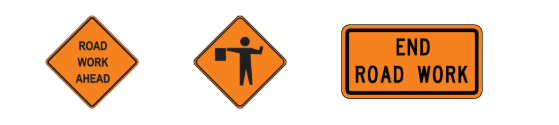
What do these signs mean?
Work Zones
Curves
Before entering a curve, reduce speed to a safe speed that allows you to apply slight and constant acceleration through the curve. Reduce speed more when traction is poor, when following other vehicles, and when you cannot see the end of the curve.
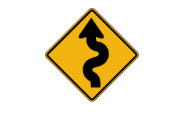
What does this sign mean?
Curves
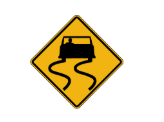
What does this sign mean?
Slippery Roads
Hydroplanning
Occurs when the steering tires start to ride on top of pooled water, similar to the action of water skis. The best way to avoid traction loss from hydroplaning is to slow down when driving in the rain and when the road is wet with pooled water or water puddles.
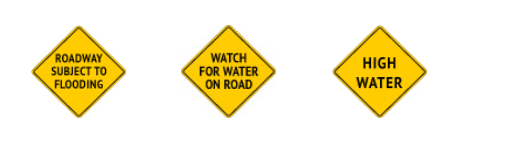
What do these signs mean?
Flooded Roadways
Space Management
You will share the road with a variety of other roadway users. A “space cushion” is the space you allow between your vehicle and other roadway users — providing time for you to react. Always try to maintain a safe space cushion around your vehicle.
Stopping Distance
Stopping distance is the distance your vehicle travels, in ideal conditions, from the time you realize you must stop until your vehicle stops.
Speed
The rate you are traveling. The faster you are traveling, the more time and distance is needed to stop.
Perception Time
The time and distance it takes you to recognize the need to stop. The average perception time for an alert driver is ¾ second to 1 second.
Reaction Time
The time and distance it takes for you to react and move your foot from the gas pedal, and begin applying the brakes. The average driver has a reaction time of ¾ second to 1 second.
Braking Distance
The time and distance it takes for your brakes to slow and stop a vehicle. At 50 mph on dry pavement with good brakes, it can take about 158 feet to stop.
Space to the Front
Always try to keep a minimum following distance of one vehicle length for every 10 miles per hour of travel, or four seconds between your vehicle and the vehicle ahead.
Space to the Side
A space cushion on the sides of your vehicle lessens the crash risks with options to move right or left.