FAH313 - WEEK 7 - Love, sex, war, and robots
 Call Kai
 Learn
 Practice Test
 Spaced Repetition
 Match
 Flashcards
 Knowt Play
1/5

There's no tags or description
Looks like no tags are added yet.
6 Terms

Title: The Death of Talos
Date: ca. 425-400 BCE
Location: Necropolis of Ruvo in Apulia
Description of art:
volute krater
handles = volutes
decorated with grape leaves
red figure
designed using “The Rich Style”
crowded = lots of art filling space
shading = to show volume
perspective art = Talos’ right foot looks shorter = pointing out towards viewer
Central scene = on body/belly of Krater
Talos being emptied of his ichor
Talos = white paint = distinguish him as made of bronze from other characters
Nucleus = Talos losing ichor
Twins Polydeukes + Kastor catching Talos
sailors on the Argo
informants
poseidon + Amphitrite
scene occurs by the sea
bottom right Crete or Europa being trampled = island/location of scene
Medea on the left
wearing Persian clothes = foreign to Greek world
phrygian cap
potion bag
Far left = the ship ARGO
Upper register = satyrs and other index characters

Title: Aphrodite of Knidos
Date: ca. 350 BCE
Artist: Praxiteles
Description of art:
Pudica pose = for male gaze
naked but covering pubic area
Praxitelean S-curve
Modelled after the lover of Praxitiles (Phryne, the Courtesan)
Moment in between = Toilette scene
will she grab her clothes to cover herself or reveal more?
significance:
Toilette scene = how she presents herself to her lovers (Anchises, Adonis, Ares)

Title: Eros at Thespiae
Date: ca. 350 BCE
Artist: Praxiteles
Description of art:
Sfumato male musculature
less defined muscles, more lean
accentuates emotional power over physical
wings
exaggerated contrapposto
Praxitelean S-curve
long curly hair
holding quiver
right arm out = exposing himself
inscription on base of sculpture
Significance:
poem written on base = first person
as if Eros speaking = Talking statue
Eros is modeled after the love that Praxiteles felt for Phryne
while you look at Eros, he is looking at you
shooting you glances instead of arrows
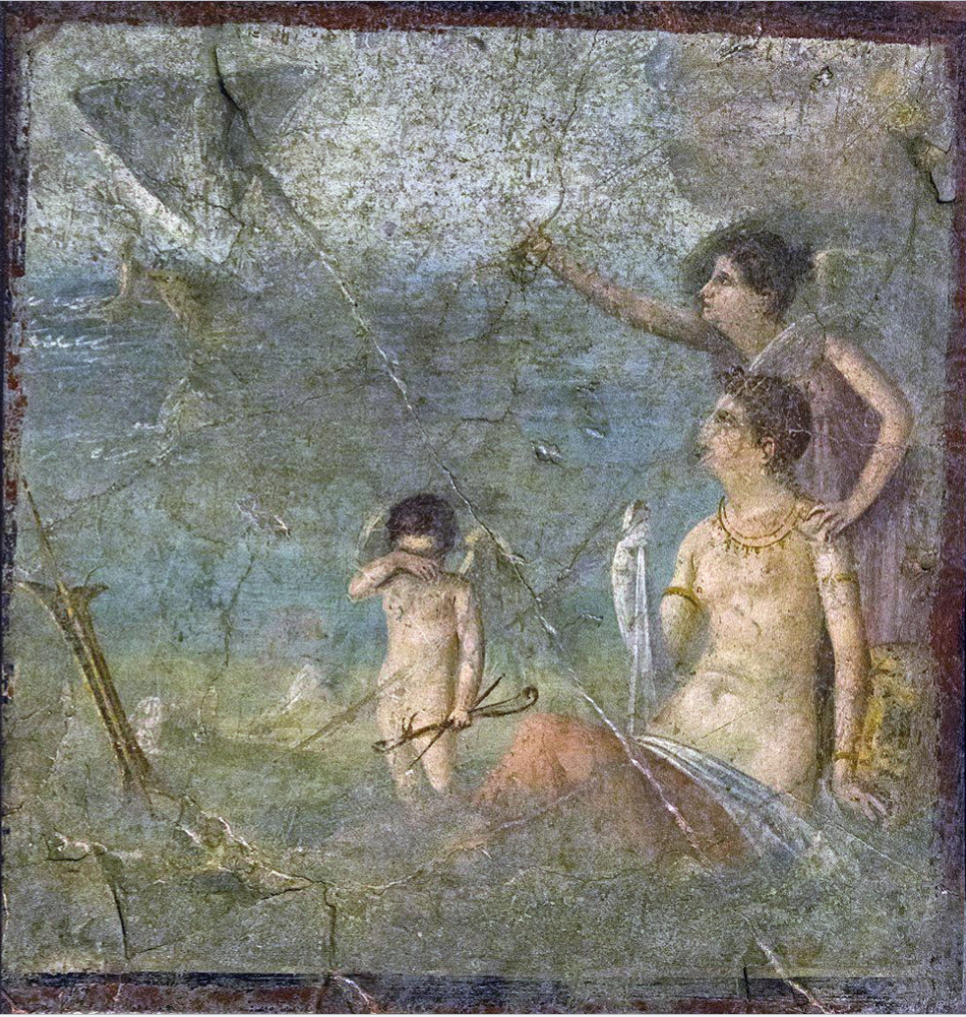
Title: The Abandoned Ariadne Fresco
Date: ca. ca. 79 CE
Medium: Painted plaster
Location: Pompeii
Description of art:
location of scene = Nacsoos
Ariadne on ground
Winged sleep/rumour pointing to top left corner = Theseus’ ship sailing away
abandoned Ariadne
NUCLEUS = Eros crying
little kid
right arm over the eyes = crying for Ariadne and the loss of her lover Theseus
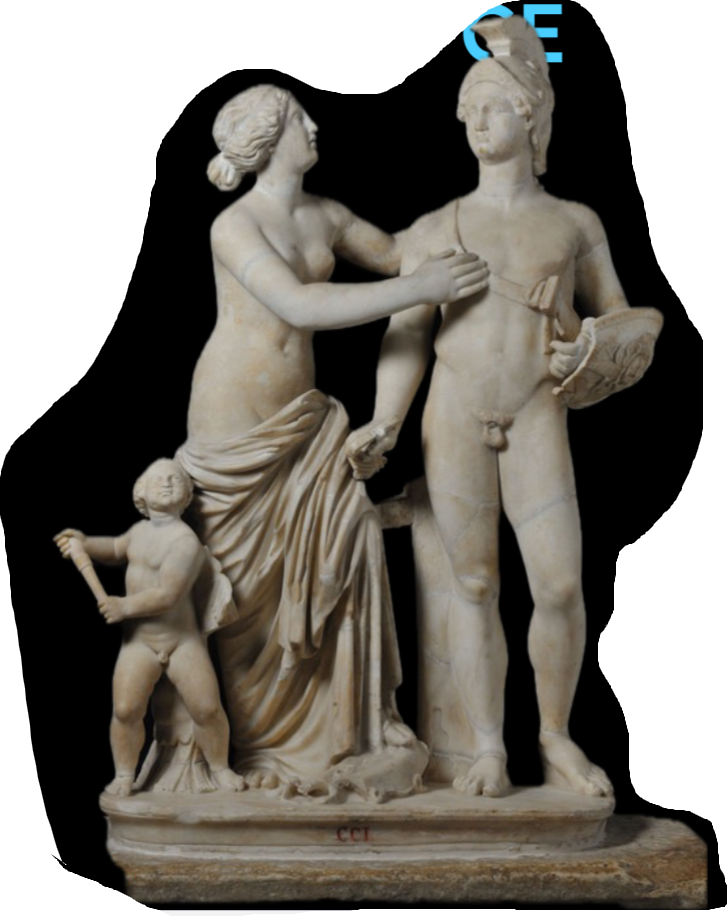
Title: Venus, Mars, and Cupid Group
Date: ca. 150 CE
Location: Rome
Description of art:
Concordia group
Mother + father + son
represent roman ideals
Ares = MARS
contrapposto —> similar to Doryphoros
looking in same direction
youthful, strong, warrior
helmet + shield + Gladius
standing straight and tall
Aphrodite = VENUS
supplication pose
want to stop Ares from going to war
similar to: Aphrodite of Melos
drapery stops at hips
similar lift in shoulders
S-curve
Eros = CUPID
presence = meaning it’s an erotic scene
significance:
Roman Pastiche
takes early greek models = for new narrative based on familiar art/concepts
Venus + Mars = Tutelary gods
important for Rome + Roman empire
guardians of Rome
Venus = Aenas = Founder of Site of Rome
Mars = Remus + Romulus = Founders of city of Rome

Title: Venus reclines on Mars Fresco
Date: ca. 79 CE
Location: Pompeii
Description of art:
Venus reclining in Mars’ lap
right arm above her head
Anakalypsis = Formal Unveiling
Mars unveils her instead (holding mantle)
wearing jewlery + Catena (body chain)
Made by Hephaistos for her
Eros holding sword of Mars
Another Eros putting on his helmet
Mars not at war = shield + spear are down
Sexual innuendo
Aphrodite holding his shaft
Nucleus = Aphrodite nudity
being objectified by male gazes
third viewer = US
Aphrodite wants to be nude = wants attention and to be observed