Organizational Behavior Chapter 16: Managing Change and Stress
 Call Kai
 Learn
 Practice Test
 Spaced Repetition
 Match
 Flashcards
 Knowt Play
1/27

There's no tags or description
Looks like no tags are added yet.
28 Terms
What are the major forces of organizational change?
External forces (demographic characteristics, technological advancements, market changes, social and political pressures) and internal forces (human resource issues, managerial behavior).
What is the significance of external forces in organizational change?
They dramatically affect why an organization exists and which markets it will participate in.
What are some key external forces that can drive organizational change?
Demographic characteristics, technological advancements, shareholder/customer/market changes, and social/political pressures.
What are internal forces that may indicate the need for change?
Low job satisfaction, low productivity, increased conflict, or strikes.
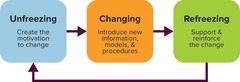
What is Lewin's Change Model?
A model that emphasizes the need to learn and unlearn behaviors, motivation, and the role of people in the change process.
What does the Systems Model of Change assume?
Any change has a cascading effect throughout an organization.
What are the inputs in the Systems Model of Change?
Intended change must align with mission, vision, readiness for change, and top-management support.
What are the outputs in the Systems Model of Change?
Desired end results or goals of a change that should align with the organization's strategic plan.
What are Kotter's eight steps for leading organizational change?
1. Establish a sense of urgency. 2. Create a guiding coalition. 3. Develop a vision and strategy. 4. Communicate the change vision. 5. Empower broad-based action. 6. Generate short-term wins. 7. Consolidate gains and produce more change. 8. Anchor new approaches in the culture.
What is organizational development (OD)?
Planned change aimed at increasing an organization's ability to improve itself as a humane and effective system.
How does OD influence organizational outcomes?
Higher employee satisfaction with change when top management is committed, and interventions using multiple techniques are more effective.
What is resistance to change?
Any thought, emotion, or behavior that does not align with real or potential changes to existing routines.
What are some causes of resistance to change?
Fear of the unknown, loss of status or job security, lack of trust, and personality conflicts.
How can managers overcome resistance to change?
By providing information, addressing employee concerns, building trust, and obtaining feedback.
What is the difference between eustress and distress?
Eustress is positive stress associated with positive emotions and outcomes, while distress is negative stress that can have adverse effects.
What are primary and secondary appraisals in occupational stress?
Primary appraisals assess whether a stressor is irrelevant, positive, or negative; secondary appraisals assess coping abilities.
What are some coping strategies for managing stress?
Control strategies, escape strategies, cognitive strategies, and symptom management strategies.
What should managers do to help employees cope with change?
Provide information, address concerns, and foster a positive, trusting relationship.
What is the role of top management in organizational change?
Top management commitment is crucial for higher employee satisfaction and successful change implementation.
What is the impact of stress on physical and psychological health?
Stress can lead to counterproductive behaviors and negatively affect both physical and psychological health.
What is a common misconception about stress?
That stress is merely nervous tension; in fact, stress can have both positive and negative consequences.
What is the importance of feedback in managing change?
Feedback helps determine the effectiveness of interventions and can guide necessary adjustments.
What is the relationship between change agents and recipients?
Resistance is reduced when there is a positive, trusting relationship between change agents and recipients.

What are some characteristics of effective change agents?
They should be trustworthy, able to communicate effectively, and possess a clear understanding of the change process.
What is the significance of recognizing progress in change management?
Recognizing progress helps motivate employees and reinforces positive behaviors during the change process.
What is the role of goals and time in managing change?
Setting clear goals and timelines helps guide the change process and keeps employees focused on desired outcomes.
What is the impact of peer pressure on resistance to change?
Peer pressure can either reinforce resistance or support acceptance of change, depending on the group dynamics.
What is the importance of a guiding coalition in Kotter's change model?
A guiding coalition provides leadership and support for the change effort, helping to drive the initiative forward.