Factors affecting Enzymes reaction
 Call Kai
 Learn
 Practice Test
 Spaced Repetition
 Match
 Flashcards
 Knowt Play
1/6

There's no tags or description
Looks like no tags are added yet.
7 Terms
What are the 6 factors affecting Enzyme reactions?
temperature
pH
enzyme concentration
substrate concentration
competitive inhibitor
non-competitive inhibitor
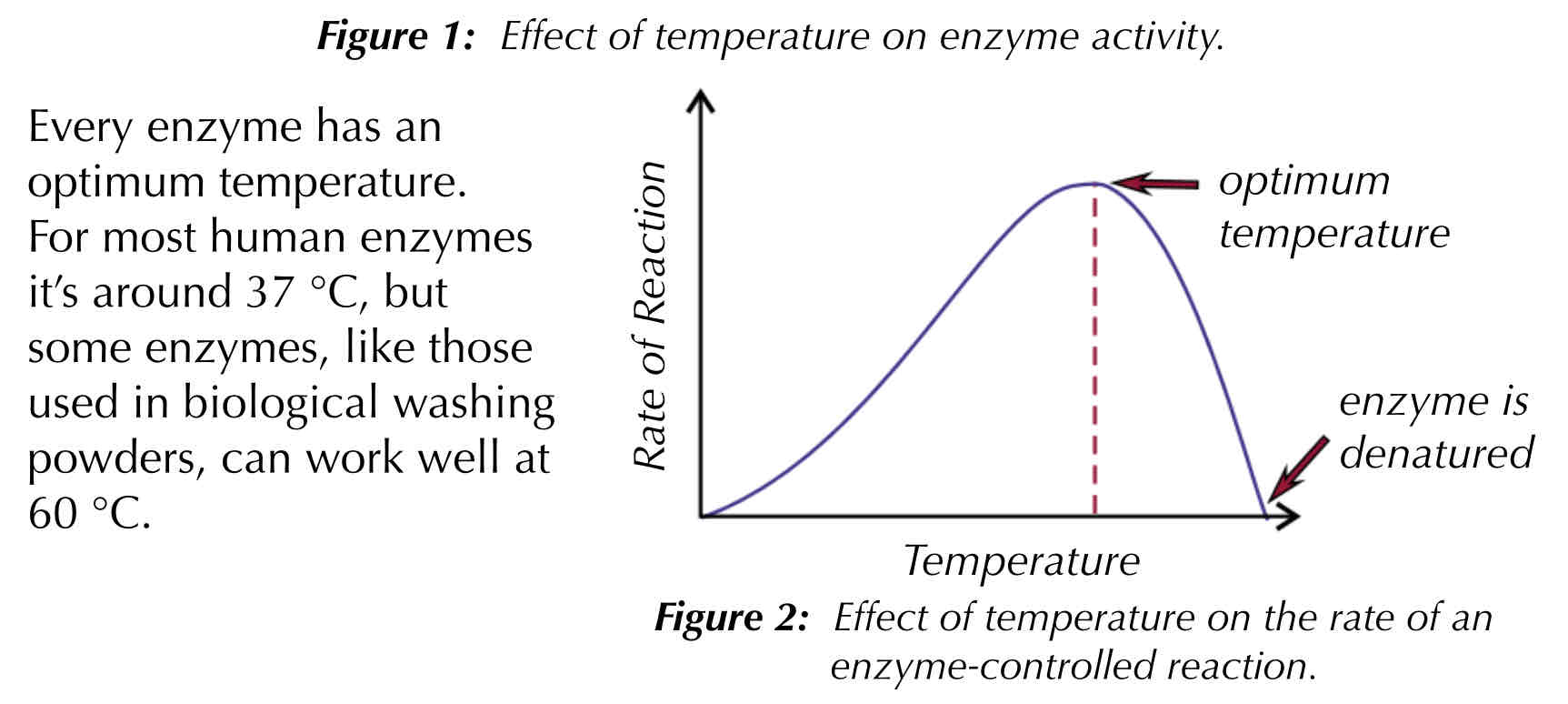
Describe the temperature graph.
as temperature increases, enzymes and substrates gain kinetic energy
more successful collisions occur between substrate and enzyme’s active site
more e-s complexes formed
so reactions happen faster
when temperature increases beyond optimum, H bonds between R groups start to break
enzyme’s active site denatures, tertiary structure of active site changes, no longer complementary to substrate
fewer / no e-s complexes formed
so rate of reaction is zero
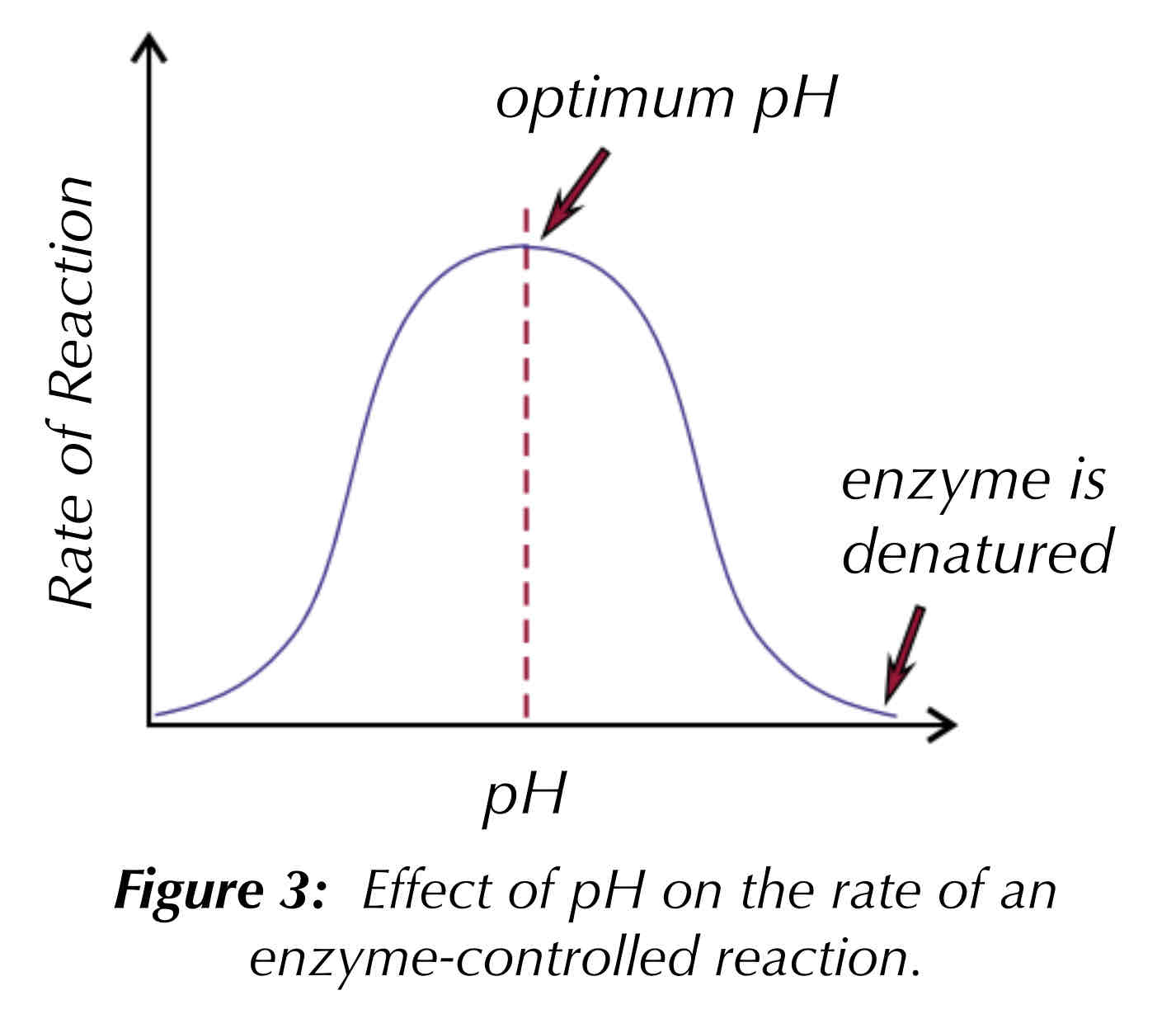
Describe the pH graph.
pH of a solution is a measure of H+ (H ion) concentration
as pH increases, enzymes and substrates gain kinetic energy
more e-s complexes are formed, reaction happens faster
when pH moves away from optimum, ROR decreases because change in pH changes the charge of R groups of amino acids
so changes H bonding & ionic bonding between R groups
so tertiary structure of enzyme’s active site changes and enzyme is denatured
so a.s. is no longer complementary to substrate
fewer e-s complexes are formed
ROR slows down and eventually stops
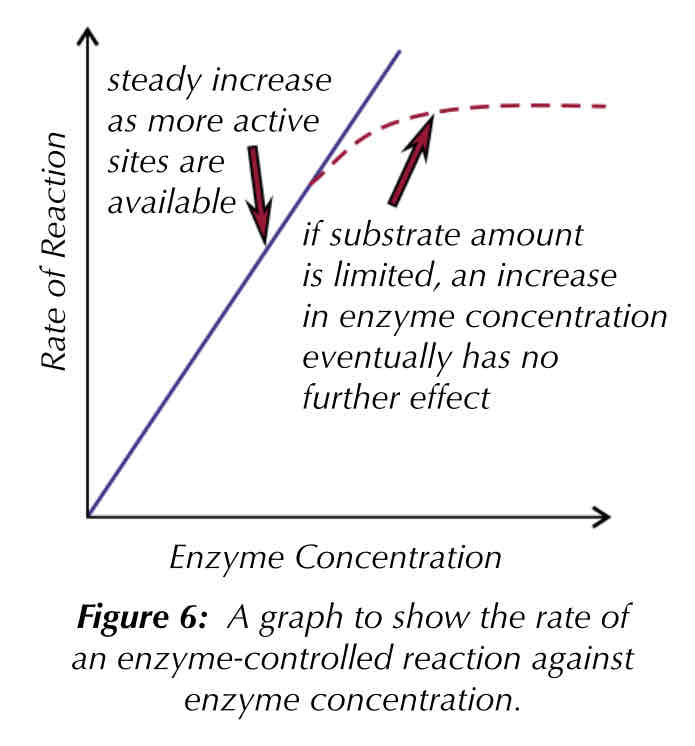
Describe the enzyme concentration graph.
enzyme concentration increases so ROR increases
so concentration of enzymes is the limiting factor in the reaction
more enzymes are then present so more collisions occur between the substrate and the enzyme’s active site
more e-s complexes are formed per unit of time
then, there are not enough substrates to bind to the active sites
concentration of substrate becomes the limiting factor
graph plateaus and ROR do not increase
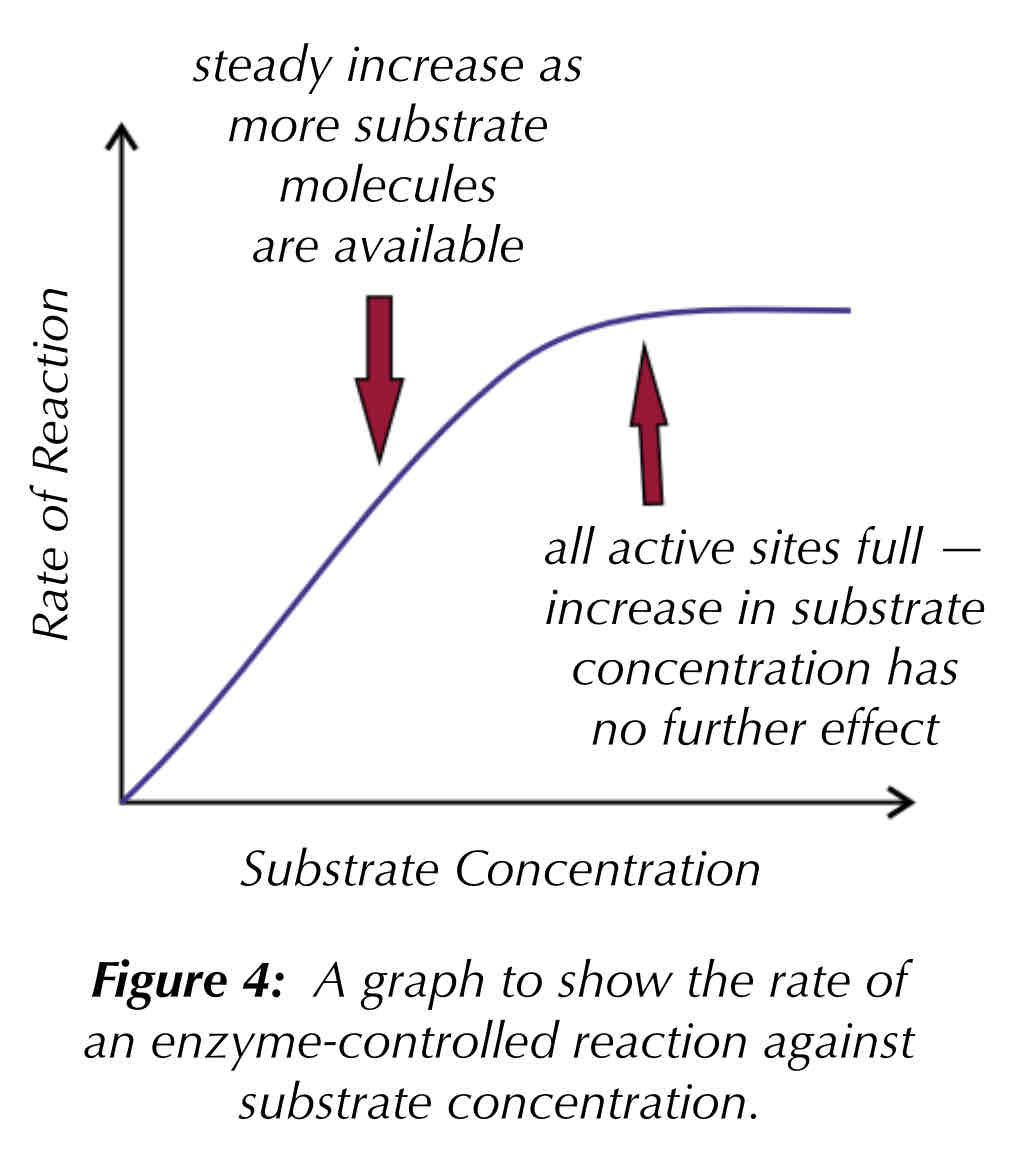
Describe the substrate concentration graph.
increasing the substrate concentration increases the volume of substrate
so more collisions occur between the active site of the enzyme and the substrate
more e-s complexes are formed
initially, as rate increases, amount of substrate is the limiting factor
but, when rate is constant, all active sites of enzymes are occupied
concentration of enzymes active sites is the limiting factor instead
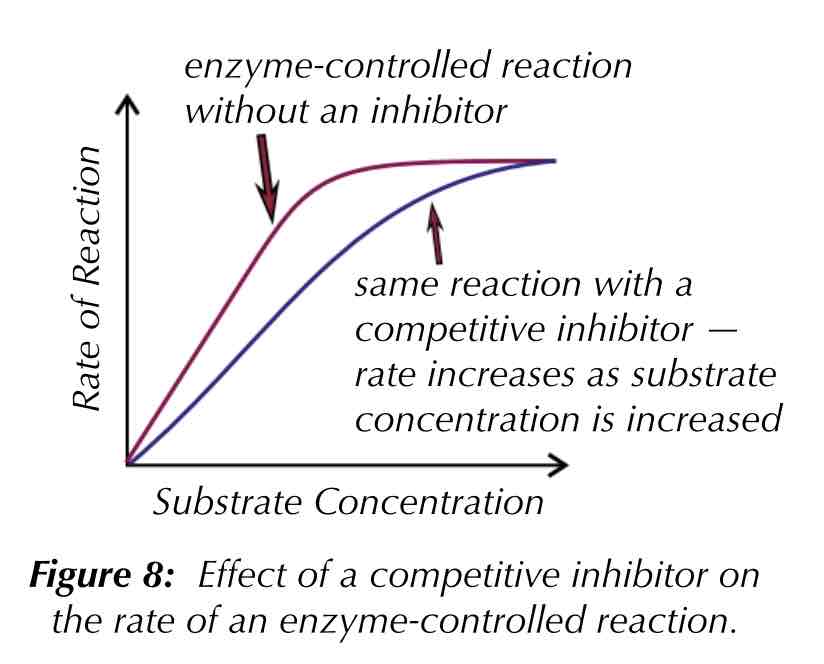
Describe the competitive inhibitor graph.
How much the enzyme is inhibited depends on the relative concentrations of the inhibitor and substrate. If there's a high concentration of the inhibitor, it'll take up nearly all the active sites and hardly any of the substrate will get to the enzyme. But if there's a higher concentration of substrate, then the substrate's chances of getting to an active site before the inhibitor increase. So increasing the concentration of substrate will increase the rate of reaction (up to a point).
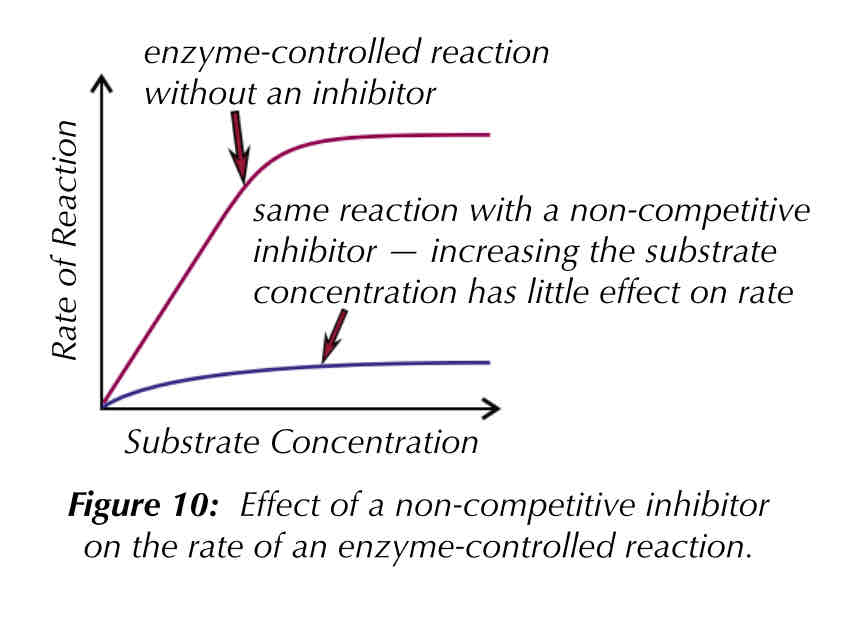
Describe the non-competitive inhibitor graph.
Non-competitive inhibitor molecules bind to the enzymes away from the active site- on the allosteric site. This causes the active site to change shape so the substrate molecules can no longer bind to it.
Non-competitive inhibitors do not compete with the substrate molecules to bind to the active site because they are a different shape. Increasing the concentration of substrate has no effect on it- enzyme activity will still be inhibited.