Substance Use Disorders
 Call Kai
 Learn
Learn Practice Test
 Spaced Repetition
 Match
Match Flashcards
 Knowt Play
1/27

There's no tags or description
Looks like no tags are added yet.
Name | Mastery | Learn | Test | Matching | Spaced | Call with Kai | Chat |
|---|
No analytics yet
Send a link to your students to track their progress
28 Terms
Describe Substance Use Disorders
Harmful consequences
Impact on Treatment
Harmful consequences
Biological toxicity
Cancer, liver toxicity, fetal alcohol syndrome
Disturbing or dangerous behavior
Embarrassing actions, arguments, physical violence, vehicle crashes
Relationship problems
Isolation from friends and family, divorce
Legal problems
Incarceration
Impact on Treatment
Affect prognosis/treatment response of other mental disorders
Often respond less well to treatment
Associated w/ poor compliance
Characteristics are manifested in the treatment relationship
Some may become overly dependent
They may not follow recommendations
May experience conflict about getting well
More likely to be dissatisfied
When is it considered unhealthy alcohol abuse?

What dis the Dx Criteria for Substance Abuse Disorder
Substance Use Disorder Dx Criteria: 2 w/in 12 month period:
1. Substance often taken in larger amounts or over a longer period than intended
2. Persistent desire or unsuccessful attempts to cut down or control use
3. A great deal of time is spent in activities necessary to obtain, use or recover from its effects
4. Craving, or strong desire or urge to use
5. Recurrent use -> failure to fulfill major role obligations
6. Continued use despite having persistent social/interpersonal problems caused by effects of substance
7. Important social, occupational, or recreational activities are given up/reduced because of use
8. Recurrent use in situations in which it is physically hazardous
9. Use is continued despite knowledge of having persistent/recurrent problems associated w/ use
10. Tolerance, as defined by either of the following:
need for markedly increased amounts to achieve intoxication or desired effect
markedly diminished effect with continued use of the same amount
11. Withdrawal, as manifested by either of the following:
. characteristic withdrawal syndrome
closely related substance, is taken to relieve/withdrawal
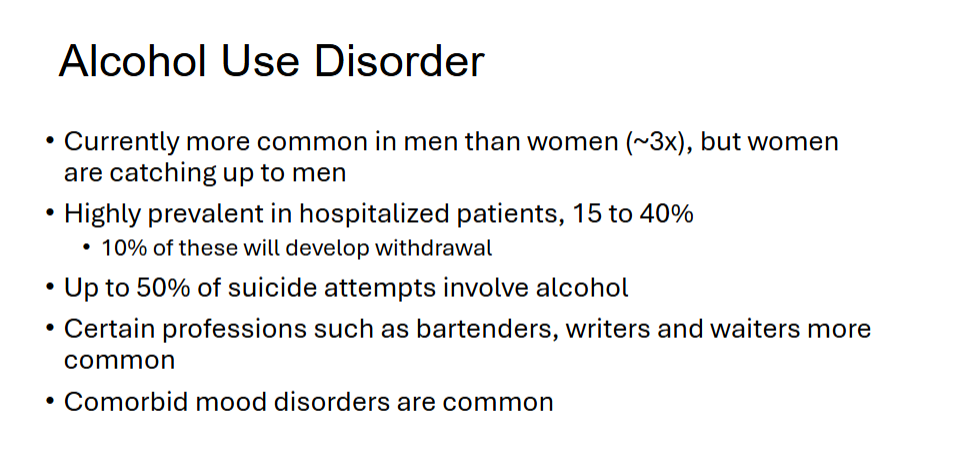

[REVIEW] CAGE

Describe Alcohol Use Disorder
Hints for Diagnosis
Medical Complications
Psychiatric and Social Complications
Alcohol Intoxication Symptoms
Alcohol Withdrawal Symptoms
Treatment of Alcohol Withdrawal
Rehab
Making a Diagnosis of Alcohol Use Disorder
Be suspicious:
Accidents and falls
Ability to drink more than others
Lying to family and co-workers
Blackouts
Abnormal laboratory findings:
High blood alcohol concentration
Increased MCV, high cholesterol, elevated liver enzymes (GGT acutely)
Physical findings:
Enlarged red nose and reddened palms
Enlarged liver and spider veins
Gynecomastia and testicular atrophy
Medical Complications
Fatty liver
-> cirrhosis and failure
GI problems:
gastritis, ulcers, bleeding, diarrhea
Pancreatitis
Cardiomyopathy
-> heart failure
Neuropathy
Cerebellar damage
-> ataxia
Wernicke’s encephalopathy/ Wernicke-Korsakoff syndrome
acute syndrome
cognitive and memory impairment
Cancers
Infections
TB, frequent pneumonias
Fetal alcohol syndrome
Psychiatric and Social Complications
Alcohol related dementia
Depression and anxiety
Suicide
Intoxication -> accidents, fights and falls
Withdrawal problems
Marital and family problems
Loss of jobs
Legal problems
Increased use of other drugs
Alcohol Intoxication
One of more of the following signs
Slurred speech
Incoordination
Unsteady gait
Nystagmus
Impairment in attention or memory
Stupor or coma
Alcohol Withdrawal
Two (or more) of the following
Autonomic hyperactivity
hand tremor
Insomnia
N/V
Transient hallucinations
Psychomotor agitation
Anxiety
Generalized tonic-clonic seizures
Delirium
6 - 48 hours after cessation or sig decrease in use
Treatment of Alcohol Withdrawal
Use drug similar to Alcohol (GABA binding)
BZD’s
W/ Liver/Brain Damage: oxazepam or lorazepam + freq. dosing
W/O Liver/Brain Damage: chlordiazepoxide or diazepam
DAY 1: treat withdrawal symptoms -> decreased 20% each day for next 4 days
Replace fluids + thiamine + folic acid
Anticonvulsants -> antiseizure, preserve cog, prevents relapse
valproic acid, carbamazepine or gabapentin
Rehabilitation
CBT
modifying thoughts and behaviors regarding drinking
12 step programs
AA
Treat underlying psychological illness
Other:
Network, Family, Couples, Inpatient Programs, Therapeutic Communities
What is CIWA

Describe Disulfiram
Clinical Usage
AE
Instruction
Effects
Disulfiram
Clinical Usage:
managing chronic alcoholics who wish to remain abstinent
AE:
Compliance
Medication works best if supervised by a spouse or partner
Metallic Taste
Sulfur Odor
RARELY:
hepatotoxic, psychosis, neuropathy
Instruction:
Dose at 250 mg daily and advise patient not to drink for at least 5 days if stopped
Effects:
Feeling Hot
Facial flushing,
Pounding headaches,
N/V
Describe Naltrexone
Class
MOA
Genetics
Clinical Usage
Side Effects
Naltrexone
Class:
Opioid Antagonists:
MOA:
Alcohol -> affects production/release/activity of opioid peptides
-> Enhances midbrain DA Release (thus alcohol feels good)
Genetics:
FH+ + Genetic high risk -> exaggerated alcohol-induced rise in Beta- endorphin levels
Clinical Usage:
Motivated pts
PTs who describe addiction as a craving
Side Effects:
Nausea,
headache,
anxiety
sedation
CI:
Severe liver damage
Pts taking opiods
Describe Acamprosate
Class
MOA
Clinical Usage
PK
Benefits
Acamprosate
Class:
NMDA Antagonist or Inhibitory Modulator
MOA:
Excitatory NMDA contributes to alcohol’s intoxicating, cognitive/dependence-forming effects
Clinical Usage:
Decrease withdrawal symptoms
Assist in abstinence
PK:
Poorly absorbed,
bioavailability of 11%
Excreted via kidneys without metabolism
Benefits:
NO Hepatotoxicity
Few AE
Diarrhea = MC


Describe Cannabis Use
Dif between THC and CBD
AE
Intox. Effects
Withdrawal
Dif between THC and CBD
THC: psychoactive effects
analgesic, anti-nausea, appetite-stimulating and ant-spastic effects
Cannabidiol: not psychoactive
anti-inflammatory, anti-anxiety, anti-epileptic and antipsychotic effects
AE:
Cardiovascular
Increased risk of
stroke, heart disease and other vascular problems
Pulmonary
Smoking -> damage lung tissue
Pregnancy
stillbirth,
decreased fetal growth,
premature birth,
Long- term infant developmental issues
Neuro
Addiction ~ 30%
Cognitive impairment
Irreversible up to 8 IQ point loss
Cannabis intoxication
behavioral/psychological changes
impaired motor coordination,
euphoria,
anxiety,
sensation of slowed time,
impaired judgment,
social withdrawal
Two or more of symptoms w/in 2 hrs:
Conjunctival injection
Increased appetite
Dry mouth
Tachycardia
Cannabis Withdrawal:
Three or more
Irritability, anger or aggression, anxiety
Sleep difficulty
Decreased appetite or weight loss
Restlessness
Depressed mood
One of the following -> sig. Discomfort:
abdominal pain,
shakiness/tremors,
sweating,
fever, chills,
headache
Describe Phencyclidine Use Disorder
Effects
Low
High
Really High
Management
Intox Effects
Effects:
Low doses (1-5 mg)
Numbness,
relaxation,
euphoria,
Slurred speech,
loss or motor coordination,
misperception of strengths or invulnerability
High doses ( 6-10 mg or higher)
delirium,
hallucinations,
delusions of grandeur,
anxiety,
panic,
Increased BP/HR,
breathing problems,
raised body temperature,
agitation and violence
Very high doses (>20 mg)
Risky behavior,
coma,
seizures
death from respiratory depression
Management:
Treat intoxication in ICU
Safe environment
High BP:
benzodiazepines, antipsychotics (low anticholinergic), phentolamine
Intox Effects:
Behavioral or psychological changes
belligerence,
assaultiveness,
impulsiveness,
unpredictability,
psychomotor agitation,
impaired judgment
Within one hour, two (or more), w/in two hours of use
Vertical or horizontal nystagmus
Hypertension or tachycardia
Numbness or diminished responsiveness to pain
Ataxia
Dysarthria
Muscle rigidity
Seizures or coma
Hyperacusis
Describe Hallucinogens
Types
MOA
Intox Effects
Behavioral or psychological changes
Perceptual
Physical Symptoms
What is Hallucinogen Persisting Perception Disorder
Types:
peyote, mescaline, LSD, psilocybin, MDMA (Ecstasy)
all Schedule I
MOA:
Affects DA, Ht, AcH, GABA
Intox Effects:
behavioral or psychological changes
Anxiety or depression,
ideas of reference,
fear of “losing one’s mind,”
Paranoid ideation,
impaired judgment
Perceptual changes
subjective intensification of perceptions,
depersonalization/derealization,
illusions,
hallucinations,
Synthesias
Physical Symptoms (2)
Pupillary dilation
Tachycardia
Sweating
Palpitations blurring of vision
Tremors
incoordination
Hallucinogen Persisting Perception Disorder
Cessation of hallucinogen -> reexperiencing one or more symptoms that were experienced while on hallucinogens
Describe Inhalents:
Characteristics
Dangerous b/c?
Intox Effects?
Characteristics:
Psychoactive vapors
CNS Depressant w/ short period of intox
Used in younger, males, low-income
Dangerous:
Permanent brain Damage
Heavy metals and the hydrocarbons
Toxic to liver and kidneys
Intox Effects:
behavioral or psychological changes
belligerence,
assaultiveness,
apathy,
impaired judgment)
Physiologic Symptoms (2 or more)
Dizziness
Nystagmus
Ataxia
Slurred speech
Hallucinations/Delusions
Unsteady gait
Lethargy
Depressed reflexes
Psychomotor retardation
Tremor
Generalized muscle weakness
Blurred vision or diplopia
Stupor or coma
Euphoria


Describe Fentanyl
What is it?
Clinical Usage
Added in?
Describe Kratom
What is it?
Effects
MOA
Fentanyl
What is it?
Very potent synthetic opioid
Clinical Usage:
anesthesia + post-op pain
Severe cancer pain (when other opioids no longer effective
Transdermal patch
Lozenges or lollipops
Added in:
Heroin
Amphetamines
Kratom
What is it?
Recreational drug in SE Asia and the West
mitragynine and 7-hydroxymitragynine
Can be used as self-management of opioid withdrawal
Effects?
Small doses = stimulatory
Larger doses = sedative-narcotic effect
Withdrawal = same as opioid withdrawal
MOA:
Bind to
opioid + serotonin + noradrenaline + dopamine receptors
Describe Opiod Use disorder:
Medical Complications of Opioid Dependence
Intox Effects
Withdrawal Effects
Medical Complications of Opioid Dependence
Infections (via) injecting
Endocarditis
Hepatitis B, C and delta
Cellulitis and abscesses
Aspiration pneumonia
Osteomyelitis and septic arthritis
HIV and STD’s
Endocrine, primarily reproductive
Decreased sperm motility
Menstrual abnormalities and amenorrhea
Gastrointestinal
Constipation
Pseudo-obstruction of the bowel
Liver disease,
primarily from viral infections
Respiratory depression
Trauma from accidents, violence, sexual abuse
Depression and suicide
Opioid intoxication
Behavioral or psychological changes
initial euphoria followed by
apathy,
dysphoria,
Psychomotor agitation or retardation
,impaired judgment
Physical Symptoms
Pupillary constriction (or dilation due to anoxia from severe overdose) + One
Drowsiness or coma
Slurred speech
Impairment in attention or memory
Withdrawal Effects (3)
Dysphoric mood
N/V
Muscle aches
Lacrimation or rhinorrhea
Pupillary dilation,
Piloerection,
sweating
Diarrhea
Yawning
Fever
Insomnia
Describe Naloxone in regards to opiods:
Effect
Why timing = essential
MOA
Naloxone
Effect:
Reversal of Overdose:
Why is Timing = essential
Brain death starts in 4-8 minutes after breathing stopped
MOA:
Pure mu receptor short-acting antagonist
Describe Methadone
Usage
Benefits
MOA
CI
Short vs Long term Detox
Chronic Use Effects
PK
Program Usage
Methadone
Usage:
Treatment of Withdrawal
Avoids some withdrawal symptoms and provides setting for psychosocial rehabilitation
Benefits:
cross tolerant, orally effective, long-acting cheap
MOA
μ and δ agonist
NMDA antagonist
CI:
For withdrawal from less addictive drugs
propoxyphene or pentazocine
Instead: decrease dose or use clonidine
Short vs long term detox:
Short: 30 days
Long: 180 days
Chronic Use Effects:
Proved safe/efficient when monitored
No long term damage to organ systems
HPA axis and immune function normalize
AE:
Constipation common
orgasmic dysfunction in men
QT Widening at high doses
PK:
Rapidly/Completely Absorbed
Highly lipophilic + Large Distribution + Accumulation in solid organs
Timing:
Peak plasma levels in 2-6 hours
Pain relief lasts about 6 hours
Metabolism:
Cytochrome P450
Program Usage:
Need policies for illicit use
Expect relapses and support return to program
Have counseling components
Reward clean urines and other positive behaviors
privilege of take-home doses
Describe Clonidine:
Cons
OTher Comfort Medications
Clonidine
Cons:
hypotension, sedation and dizziness
Does not work for:
irritability, insomnia and muscle aches
Comfort medications
NSAIDs for muscle cramps or pain,
dicyclomine for abdominal cramps,
ondansetron for N/V
Describe Buprenorphine
MOA
Benefits
AE
Buprenorphine
MOA:
Mixed μ receptor agonist / antagonist
Effectively blocks effects of opiates and thus the reward qualities
Benefits:
long-acting and safe
Pt little cravings or relapses
AE:
Can precipitate withdrawal reaction if given too soon after use of opioid agonist
NOTE:
Available initially as a parenteral analgesic
Now in sublingual tablet and rapidly dissolving film for detox and maintenance
Now two depot injection preparations lasting 30 days which are being used in prisons
Can be prescribed in doctor’s office or methadone clinic, also now in jails
What is MAT?
What is it?
Goals
Uses
Cons
Opiate Substitution or Medication Assisted Treatment (MAT)
What is it?
Continual, regular use of Methadone + Buprenorphine
Prevents intox/withdrawal periods
Goals:
reduce or prevent the adverse effects of drug use
improve
functioning, quality of life and overall functioning
Uses:
Should be partnered with rehabilitation services and supportive counseling, individual or group
Cons:
Some social and political opposition
Limited availability of clinics or spaces
Limited financial resources of many patients
Need to attend regularly
Not enough trained professionals
Describe Naltrexone
MOA
AE
CI
Uses
Naltrexone
MOA:
Binds tightly to the μ (mu) receptor
Prevents other opioids from binding
Pt loses interest/no craving
AE:
Nausea,
headache,
anxiety
sedation
CI:
severe liver disease
Uses:
Alcohol use Disorder
Opioid use disorder
NOTE:
Would like to see use increased in those leaving a detox program, jail or prison to decrease risk of relapse
Many drug court patients have been ordered into Naltrexone treatment
Depot shot expensive but some insurance including Medicaid covers
Describe Sedative, Hypnotic or Anxiolytic Use Disorder
Intox Effects
Withdrawal Effects
Tx
Intox Effects:
behavioral or psychological changes
inappropriate sexual or aggressive behavior,
mood lability,
impaired judgment
Physical Symptoms (one or more)
Slurred speech
Incoordination
Unsteady gait
Nystagmus
Impairment in cognition
(i.e., attention, memory)
Stupor or coma
Withdrawal Effects (two or more):
Autonomic hyperactivity
(e.g., sweating or pulse rate greater than 100 bpm)
Hand tremor
Insomnia
N/V
Transient hallucinations/illusions
Psychomotor agitation
Anxiety
Grand mal seizures
Treatment
Medical detoxification:
Psychotherapy:
Support groups

Describe Stimulant Use Disorder
Intox Effects
Withdrawal Effects
Overdose consequences
Tx
Intox Effects:
behavioral or psychological changes
euphoria
affective blunting,
changes in sociability,
hypervigilance,
Interpersonal sensitivity,
anxiety,
tension or anger,
stereotyped behaviors,
Impaired judgment
Physical symptoms (two or more)
Tachycardia or bradycardia
Elevated or lowered BP
Pupillary dilation
Perspiration or chills
N/V
weight loss
Psychomotor agitation or retardation
Muscular weakness,
respiratory depression,
chest pain
cardiac arrythmias
Confusion,
seizures,
dyskinesias, dystonias or coma
Withdrawal Effects (two or more):
Fatigue
Vivid unpleasant dreams
Insomnia or hypersomnia
Increased appetite
Psychomotor agitation or retardation
Overdose Consequences:
MI
CVA
Seizure
Sudden death
Treatment
Antipsychotics
Is psychotic
Benzodiazepines or sedating antipsychotics(quetiapine)
irritability of withdrawal
Antidepressants
>2 weeks
Operant conditioning:
CBT and support groups

