Intro to neuro 2 pt 2
 Call Kai
 Learn
 Practice Test
 Spaced Repetition
 Match
 Flashcards
 Knowt Play
1/28

There's no tags or description
Looks like no tags are added yet.
29 Terms
what is brain tissue made of

meninges layers of the cns
D A P

dura mater (hard mother)

archanoid mater (spider mother)

pia mater (delicate mother)

sulci, gyri, and fissures
hill = grass (gyri) valley = sink (sulci)

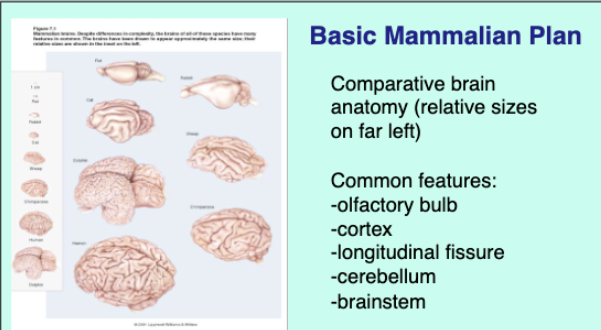
basic mammalian plan
olfactory bulb, cortex, longitudinal fissure, cerebellum, brainstem
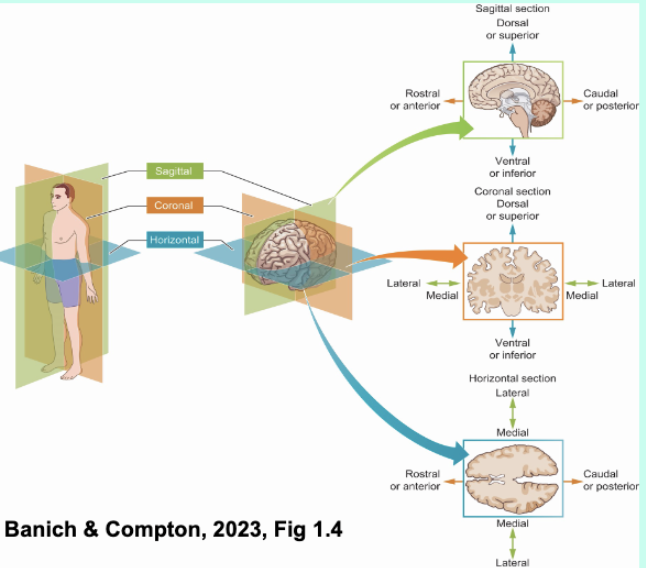
directional terms

medial and lateral

3 brain orientations
divisions of adult human nervous system
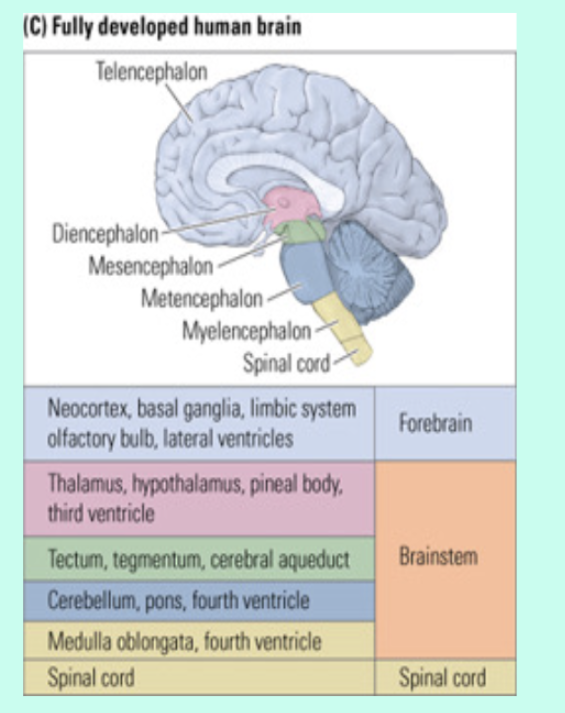
forebrain (telencephalon)
basal ganglia – controlled movement and learning
cerebral cortex – create and respond to perceptions in the world
hippocampus – memory and learning, spatial navigation
amygdala – emotion, surprise, relevance
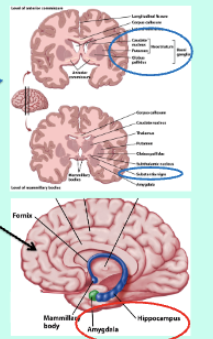
diencephalon
dorsal = thalamus
ventral = hypothalamus

brain dividers
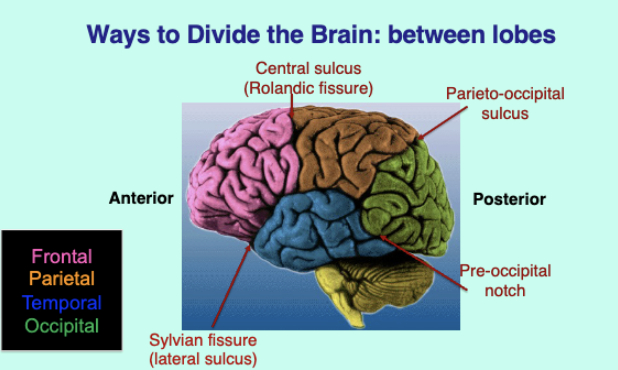
brodmann’s areas
Similar cell architecture =
homogeneous area of cortex
representing a functional area

primary cortical projections
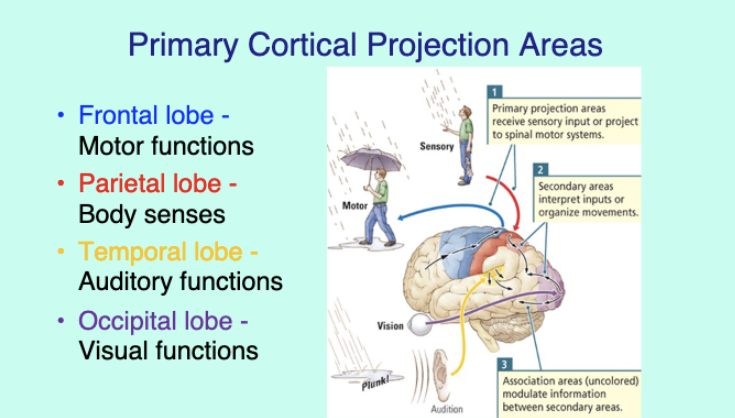
PRO , I AM
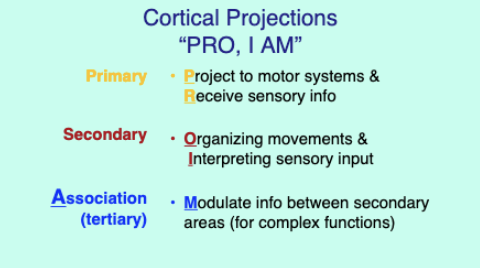
connections between cortical areas

Neuroplasticity
Changing of neuron connections and organization of networks and function through experience and learning
the hebbian synapse
When an axon of cell A is near enough to excite cell B and repeatedly or
persistently takes part in firing it, some growth process or metabolic change
takes place in one or both cells such that A's efficiency, as one of the cells
firing B, is increased.”

Principles of Neuroplasticity
Brain is not hardwired
We learn many new things that alter connections between various parts of the brain
Plasticity is ability of brain and CNS to
Adapt to environmental change
Respond to injury
Acquire new information by modifying connectivity and function
Multiple leves
Cellular changes in response to learning
Cortical remapping in response to injuries
why do we need to be plastic?
to grow a brain that adaptive to the known and variable/changing environement
neural networks are sculpted by early experience
factors impacting plastic
enriched environments and exercise grows new neurons
conclusion: enriched early environments influence brain development, memory, and ability to learn
environments of deprivation (poor nutrition, lack of social contact, absence of mental engagement) and stress produces less dendritic growth and learning
why do we need to stop being plastic?
to stabilize what the brain has learned in development and strengthen existing connections through practice
*creates an organism that can respond efficiently to known environment
typical brain maturation

harnessing plasticity

two types of plasticity
structural plasticity: experiences or memories change a brain’s physical structure
functional plasticity: brain functions move from damaged to undamaged area

plasticity in injured brain

overall message of lesson
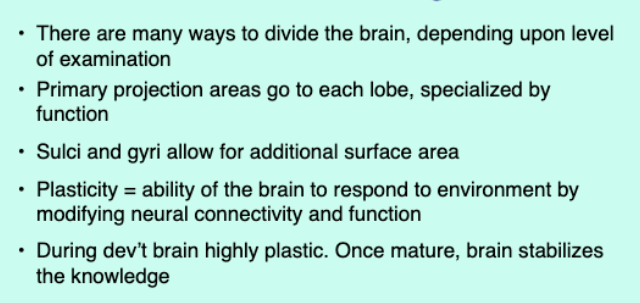
there are many ways to divide the brain upon level of examination
primary projection areas go to each lobe, specialized by function
sulci and gyri allow for additional surface area
plasticity = ability of the brain to respond to the environment by modifying neural connectivity and dunction
during dev’t brain highly plastic: once mature, brain stabilizes the knowledge