Switzerland: Military History and Notable Events
 Call Kai
 Learn
Learn Practice Test
 Spaced Repetition
 Match
Match Flashcards
 Knowt Play
1/31

There's no tags or description
Looks like no tags are added yet.
Name | Mastery | Learn | Test | Matching | Spaced | Call with Kai | Chat |
|---|
No analytics yet
Send a link to your students to track their progress
32 Terms
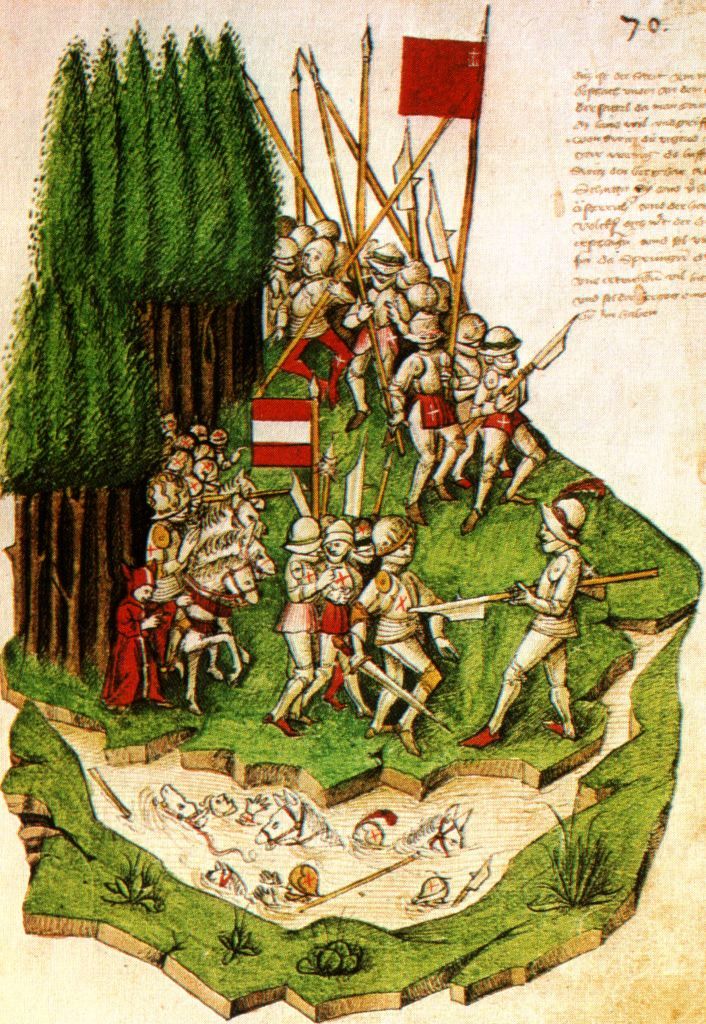
1315 - Battle of Morgarten (All Facts)
Battle in which the Three Forest Cantons of the Swiss and their forces defeated Duke Leopold of Austria and his forces, thus having consolidated the League of the Three Forest Cantons, which formed the core of the Old Swiss Confederacy
Battle in which a smaller army of Swiss foot-soldiers at Luke Zug had routed the army which came to the valleys of Schwyz and Unterwalden to
subdue the peasant farmers there
bring central Switzerland within the domain of the Habsburg Empire
Battle prior to which the Habsburgs had long enjoyed manorial rights in the valleys of Schwyz and Unterwalden, but hadn’t ever pressed their claim to political power there
Battle which caused the Three Forest Cantons, which were become increasingly independent prior to the namesake, to come together and fortify the entrances to their valley
Battle which was triggered when a dispute over grazing rights involved the men of Schwyz in attacking an abbey and taking some of its monks hostage
Battle in which Duke Leopold of Austria devised a plan involving naval forces on Lake Lucerne to block off Unterwalden and attack Schwyz
However, he did not reckon with the slaughter that followed, mostly of his own men and its noble leaders in the namesake district
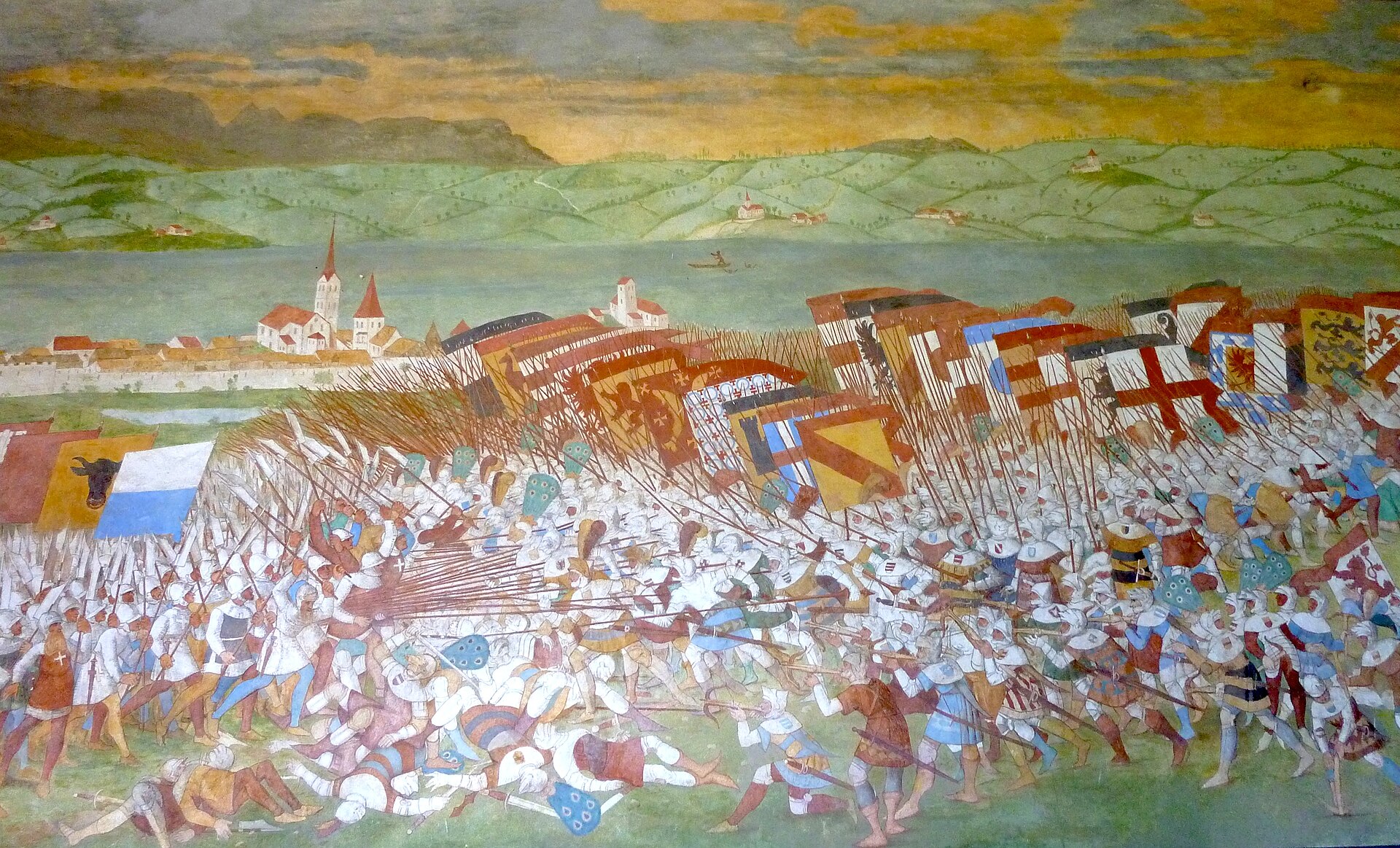
1386 - Battle of Sempach (All Facts)
Battle in which the (Old) Swiss Confederation defeated Leopold III of Austria and his forces
Battle in which Leopold III of Austria was killed in battle
Battle which broke out due to Leopold III of Austria’s growing power in the Duchy of Swabia
Battle after which a treaty was signed, (supposedly) the Treaty of Zurich by Albert, which recognized recent Swiss conquests and allowing the Swiss to keep all the land they won
Battle after which a few years later the Habsburg dukes of Austria agreed to another 20-year truce with the Swiss Confederation
1474 - Perpetual Peace (All Facts)
Peace treaty signed between Archduke Sigismund of Habsburg Austria and the Old Swiss Confederacy (the Eight Cantons), in which the parties agreed to effectively end over a century of open hostilities between themselves, forcing Austria to renounce its claims on several Swiss-occupied territories and establishing a critical anti-Burgundian alliance
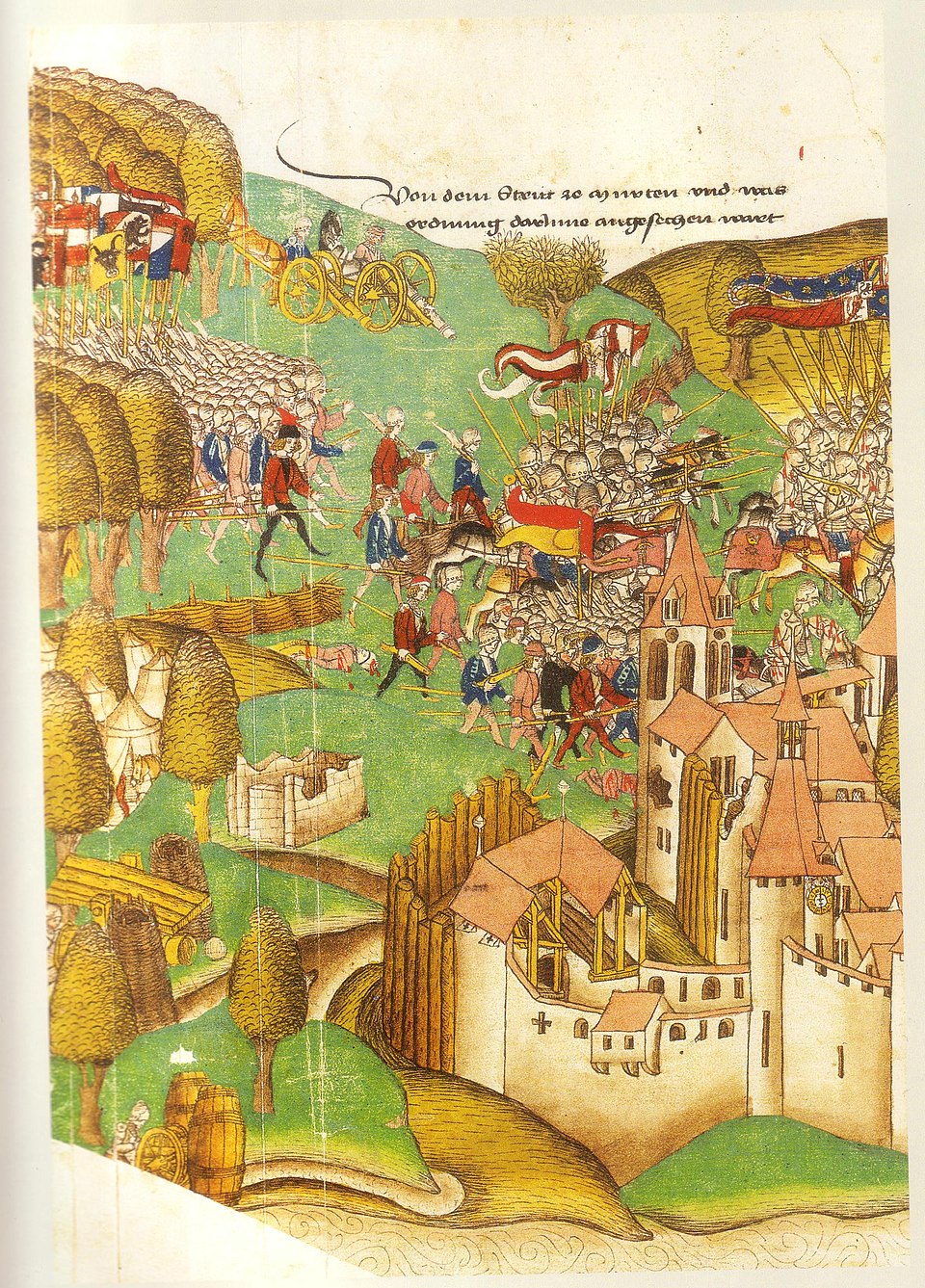
1474 - 1477 - Burgundian Wars (All Facts)
Series of conflicts between the Old Swiss Confederacy (the Eight Cantons) and France and the territories of Burgundy under Charles Martin
Series of conflicts in which
The Swiss and the French took the district of Vaud
Charles Martin seized Lorraine in France
Series of conflicts which effectively ended the Kingdom of Burgundy
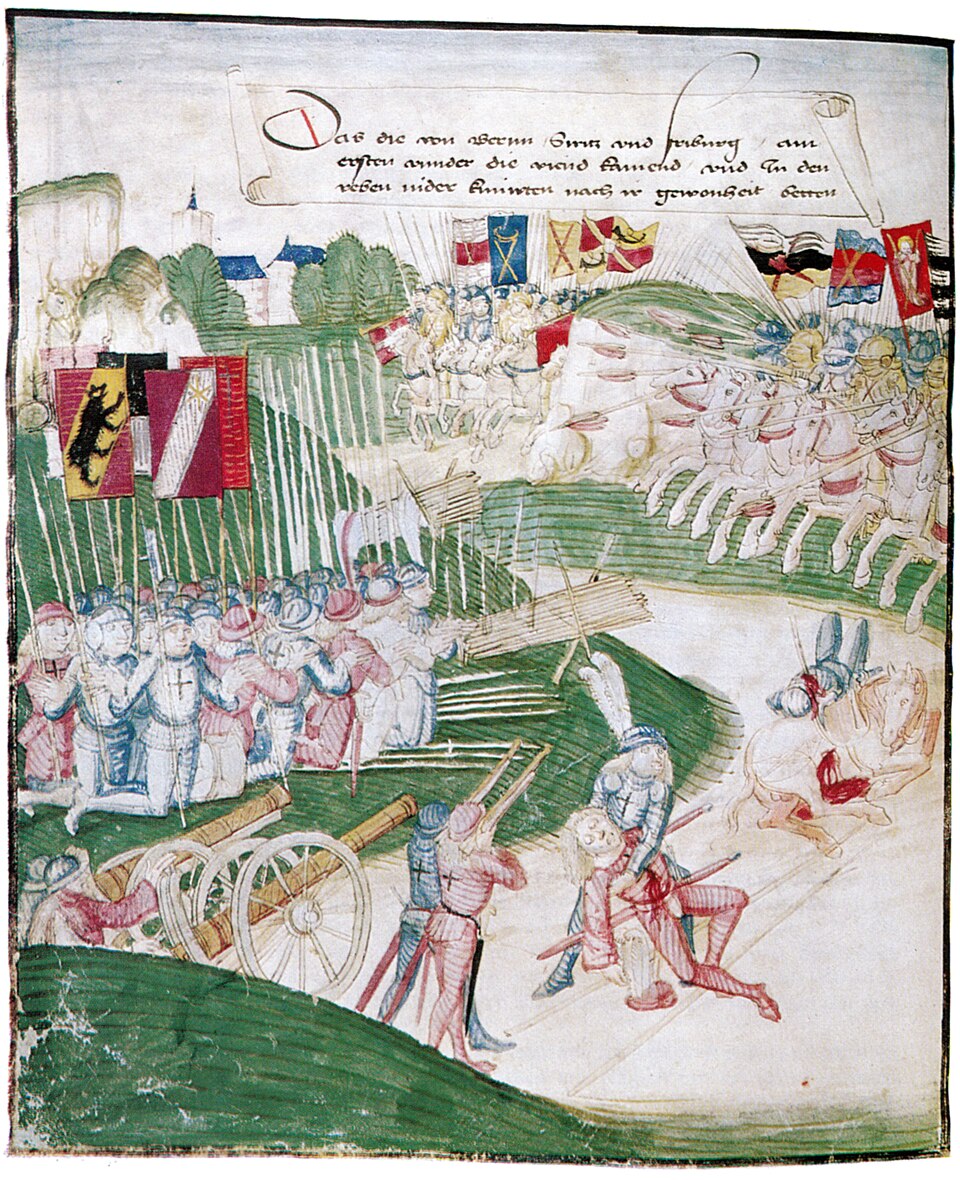
1476 - Battle of Grandson (All Facts)
Battle in which the Swiss defeated Charles Martin and his forces during the Burgundian Wars
Battle in which the Swiss pikemen bore down the heavily-armored Burgundian cavalry
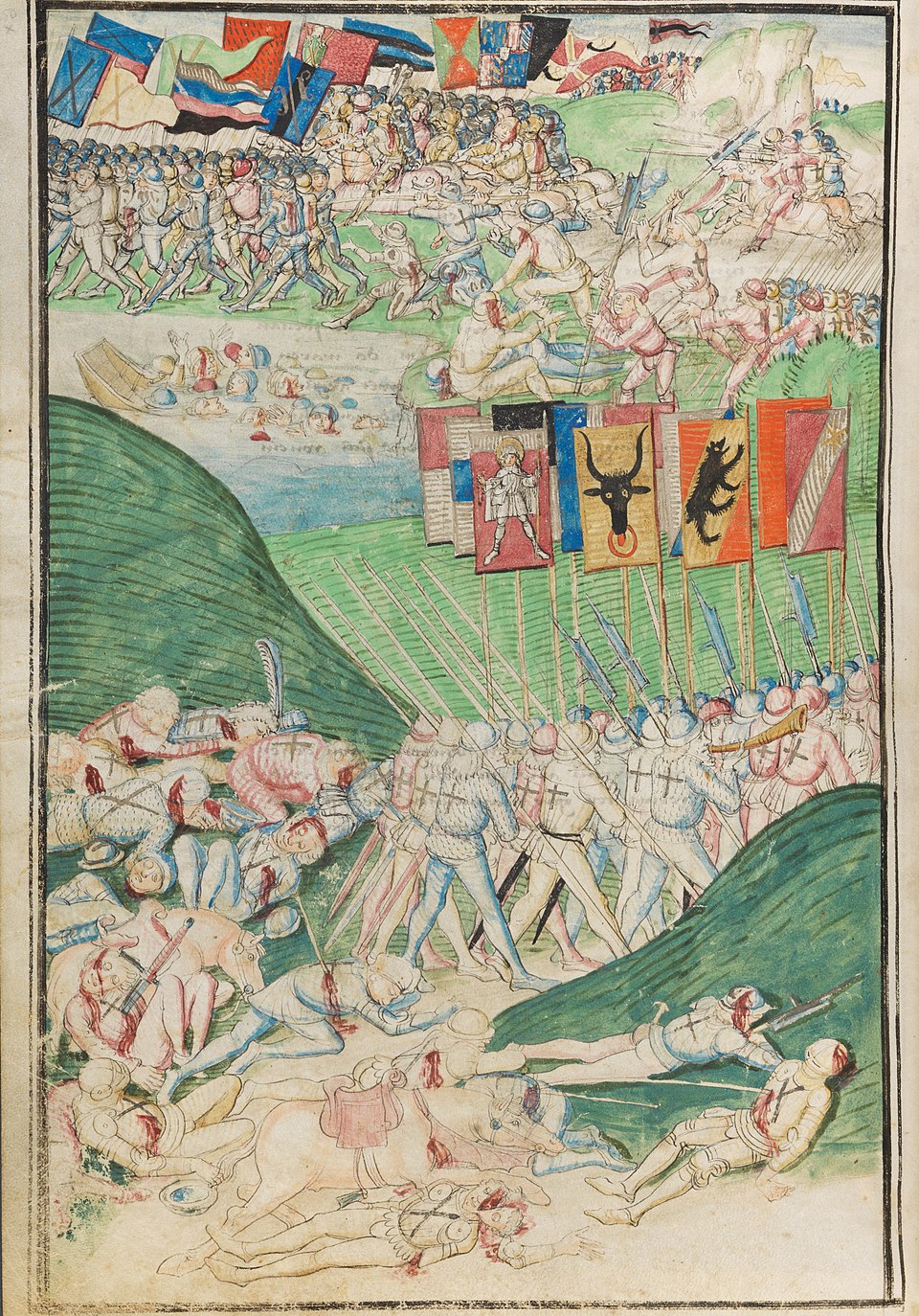
1476 - Battle of Morat (All Facts)
Battle in which the Swiss and Duke Rene II of Lorraine defeated Charles Martin and his forces during the Burgundian Wars
Battle in which Charles sought revenge for “shameful defeat” by besieging the namesake city, only to again be routed by the Swiss
Battle in which half of Charles Martin’s army died
Battle after which Charles Martin fled
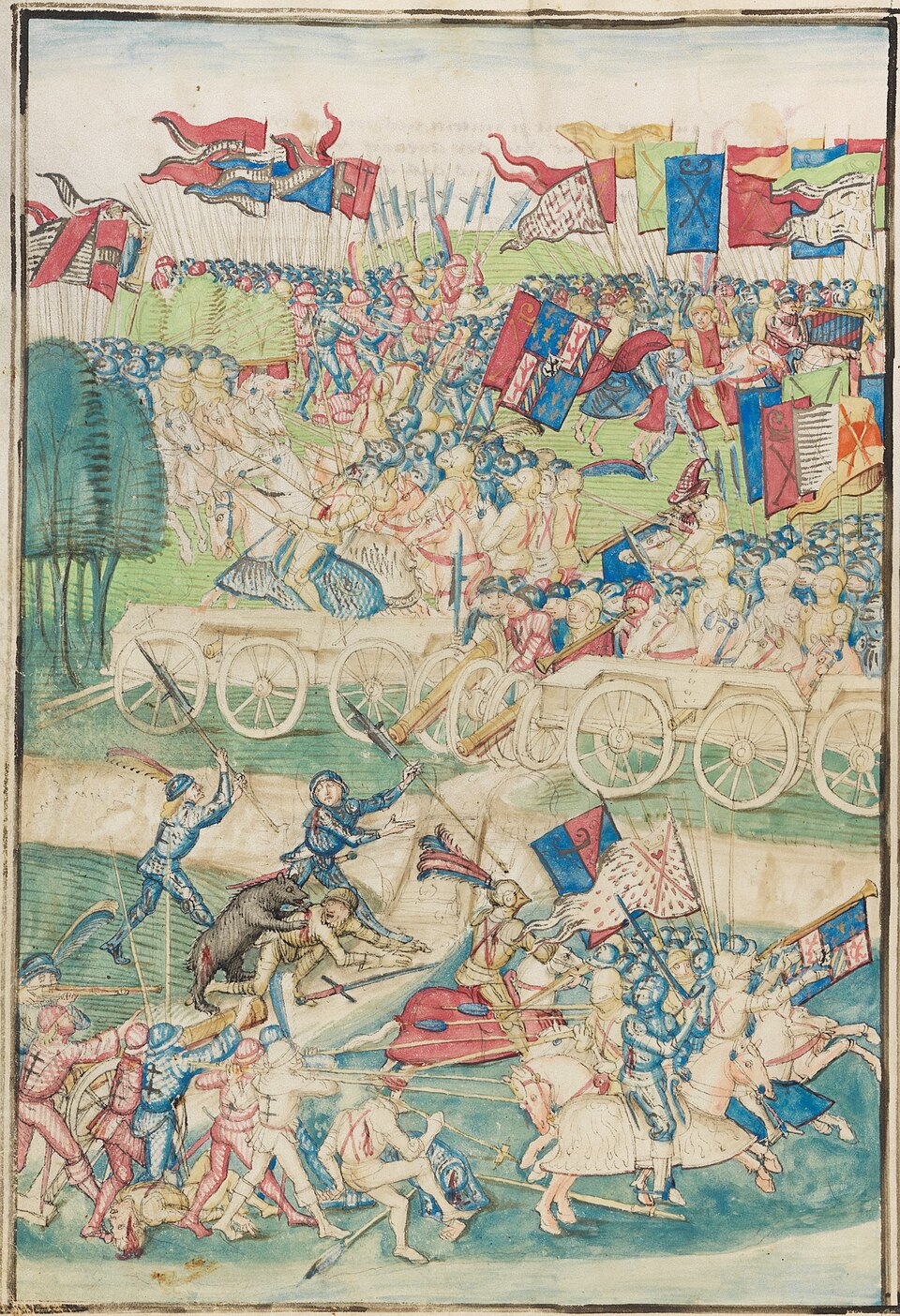
1477 - Battle of Nancy (All Facts)
Battle in which the Swiss and Duke Rene II of Lorraine and his French forces defeated Charles Martin and his Burgundian forces, thus ending the Burgundian Wars and ending the Dukedom of Burgundy
Battle after which Charles Martin’s body was found naked on a frozen pond, half eaten by wolves, and his skull cloven by a Swiss battle-axe; having been completely unrecognizable and identifiable only by the scars on his body
1494 - 1559 - Italian Wars (All Facts)
Series of conflicts between the Valois (France) and the Habsburgs (Spain and Holy Roman Empire) that began with the First Italian War and ended with the Ninth Italian War and mostly took place in (Northern) Italy
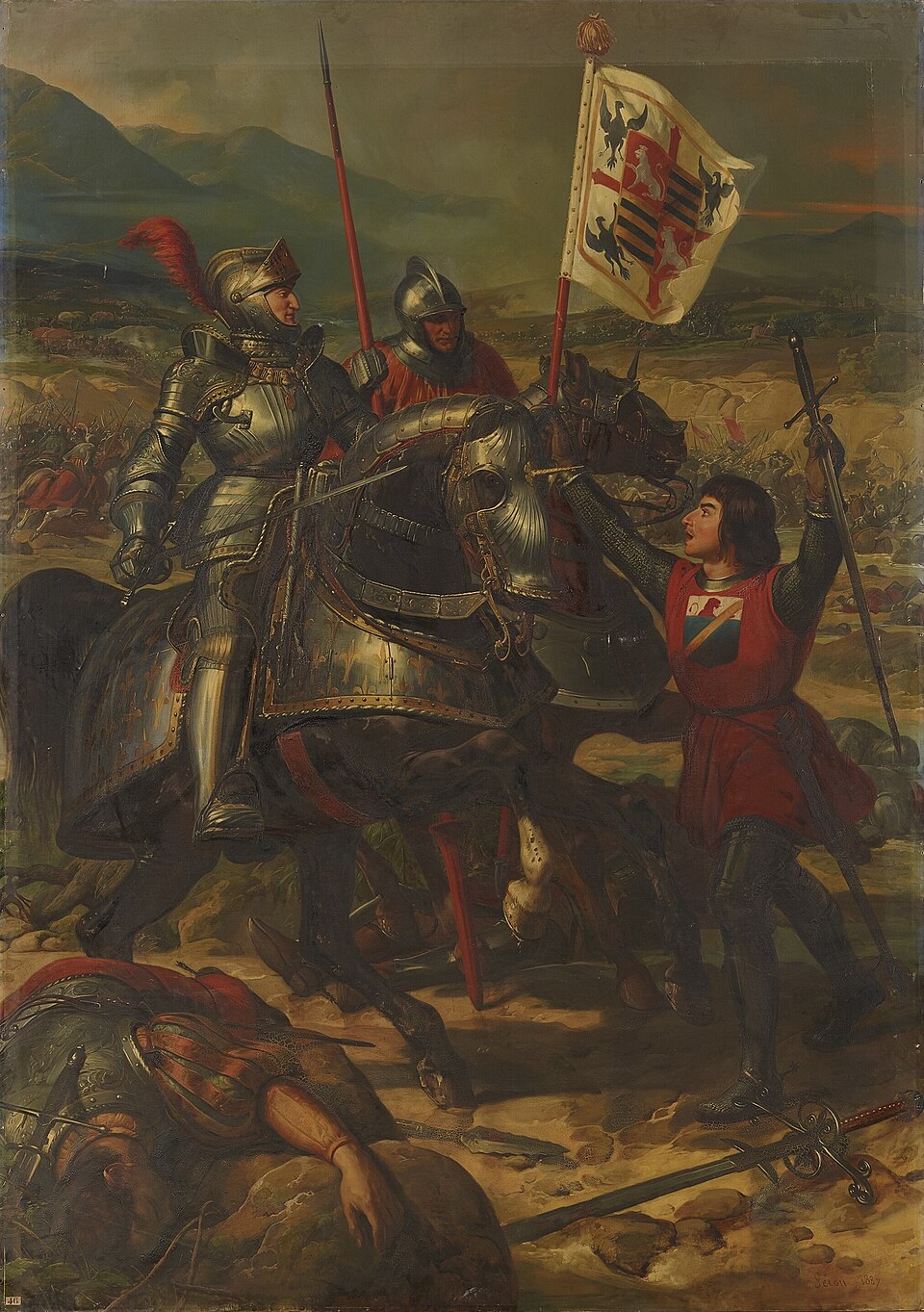
1494 - 1498 - First Italian War (All Facts)
Conflict in which the Habsburgs (Spain), with support from the Papacy and League of Venice, defeated the Valois (France)
Conflict that began with King Charles VIII of France’s invasion of the Kingdom of Naples
Conflict in which King Charles VIII and his army infected the Kingdom of Naples with the “French Pox” disease
Conflict in which King Charles VIII and his army was forced to retreat from Italy, thus halting French expansion and preventing France from securing a permanent foothold in the Kingdom of Naples
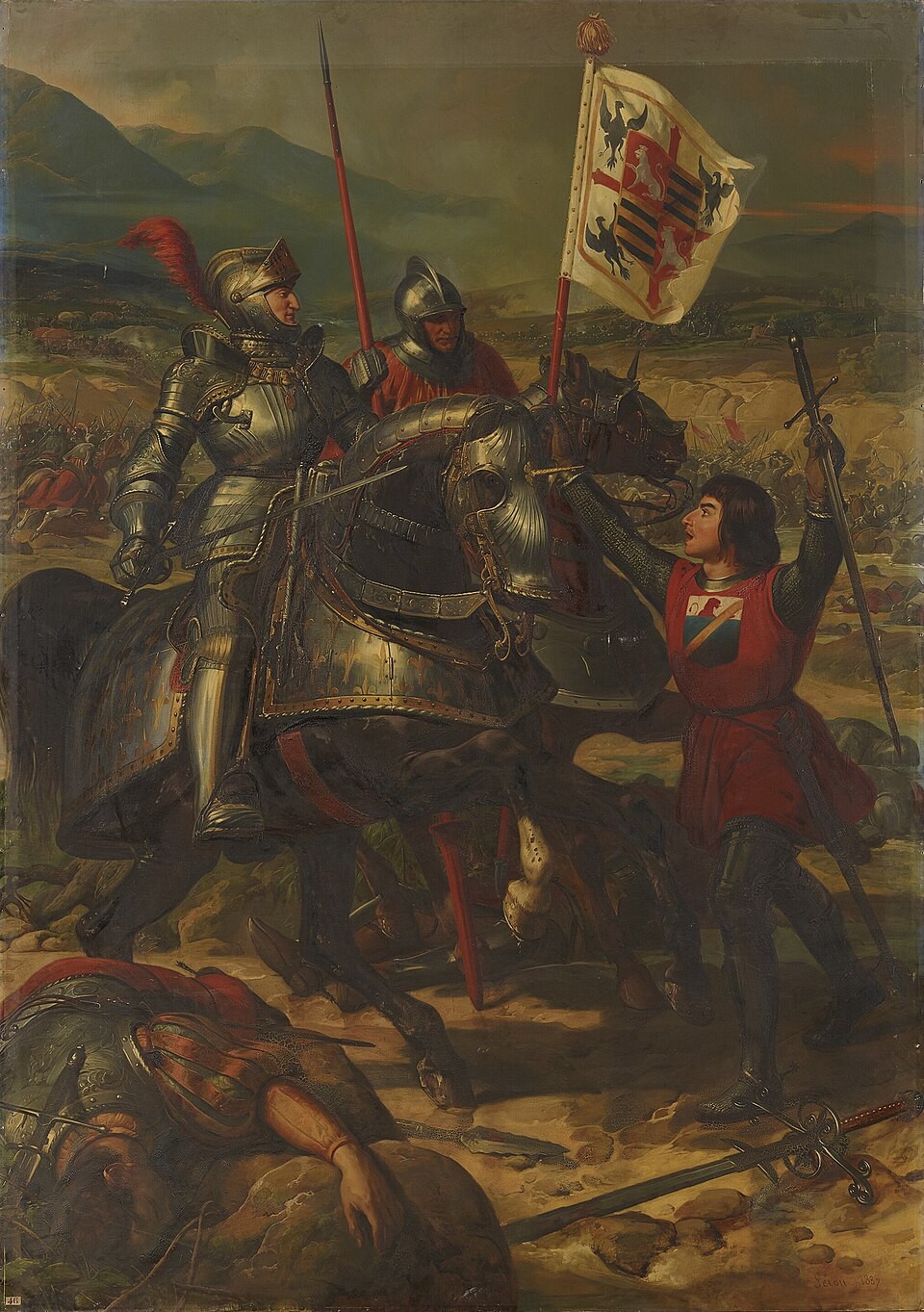
1495 - Battle of Fornovo (All Facts)
Battle in which King Charles VIII of France and his forces were defeated by the Italians and Swiss
Battle which left the French army exhausted, emaciated, and riddled with disease, limping its way home to France after its defeat
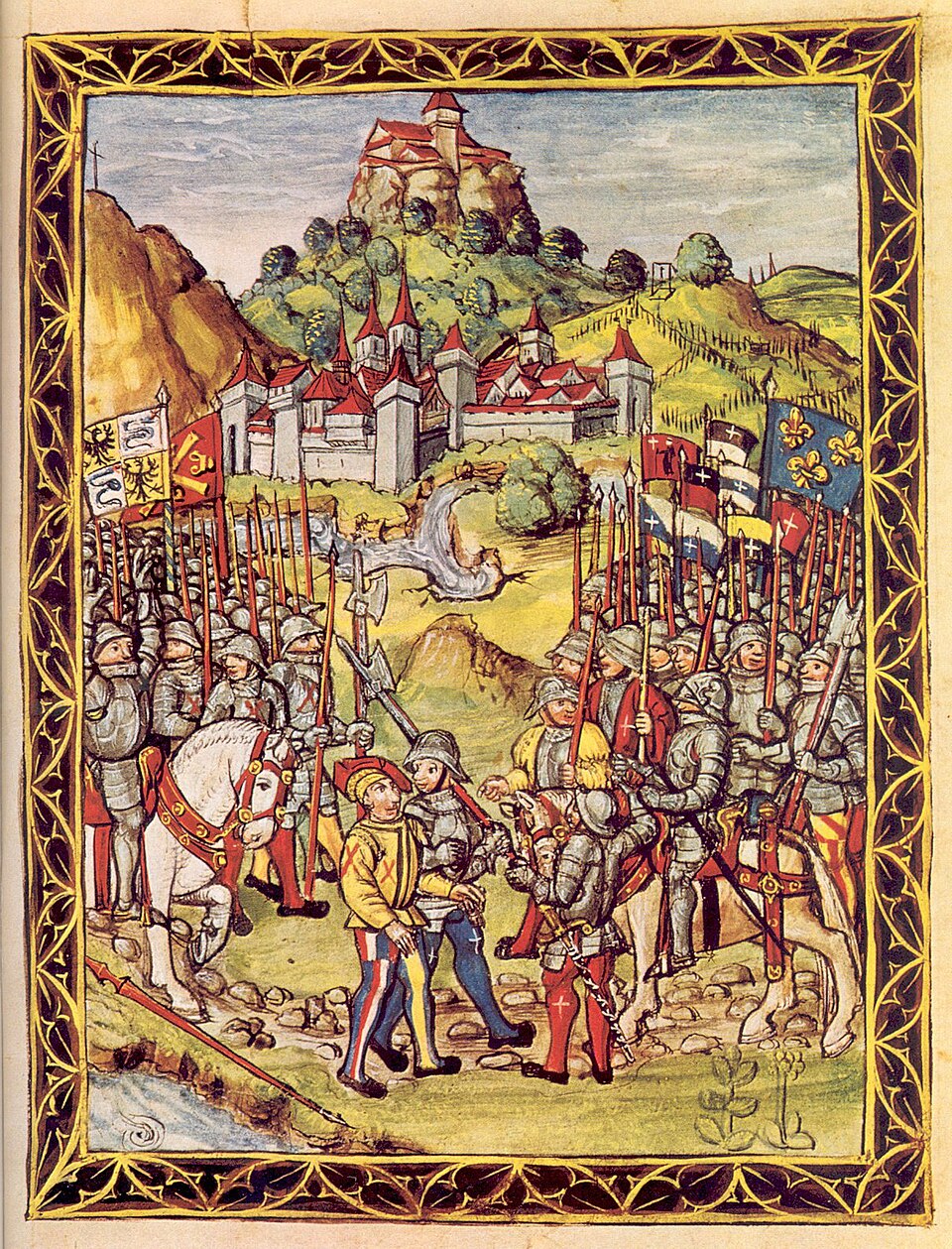
1499 - 1501 - Second Italian War (All Facts)
Conflict in which the Valois (France), with support from the Papacy, Venice, Florence, and Switzerland, defeated the Habsburgs (Spain)
Conflict in which King Louis XII of France, with the help of Gian Giacomo Trivulzio and his Italian forces, seized and conquered the Duchy of Milan
Conflict after which Ludovico Sforza fled from the Duchy of Milan
Conflict in which the Milanese rebelled against Gian Giacomo Trivulzio and his Italian forces and the French, thus Sforza returned and took advantage of the revolt and attacked the French back
He was eventually deserted by his troops, however, and handed over to the enemy and imprisoned by the French

1508 - 1516 - Fourth Italian War / War of the League of Cambrai / War of the Holy League (All Facts)
Conflict in which the Valois (France) and Venice defeated the Habsburgs (Spain and the Holy Roman Empire) and England
Conflict which began when King Louis XII of France, Pope Julius II and the namesake league sought to punish the Republic of Venice for annexing papal provinces on the Adriatic Sea and thus attacked and defeated the Republic of Venice as a result in the Battle of Agnadello
Conflict in which Pope Julius II and the namesake league (including Venice, Spain, and Switzerland) then turned against France, whose foothold in northern Italy became too strong for the papacy and namesake league
Conflict in which Pope Julius II raised the cry to “clear the Barbarians out of Italy” (the French under King Louis XII), turning against the King of France after previously lifting the excommunication of Venice
Conflict which saw protracted war in Lombardy, the Romagna, and Veneto in northern Italy
Conflict in which King Francis of France secured the Duchy of Milan for the French
Conflict triggered by a Genoese revolt against French forces that had occupied the city
Conflict during which Matthäus Schiner dissuaded the Swiss (the Old Swiss Confederacy) from forming an alliance with the French against Pope Julius II
Conflict which saw the following battles take place including
Battle of Agnadello
Siege of Mirandola
Battle of Ravenna
Battle of the Spurs
Siege of Tournai
Battle of Novara
Battle of Marignano
Conflict which ended with
The Treaty of Fribourg
The Concordant of Bologna
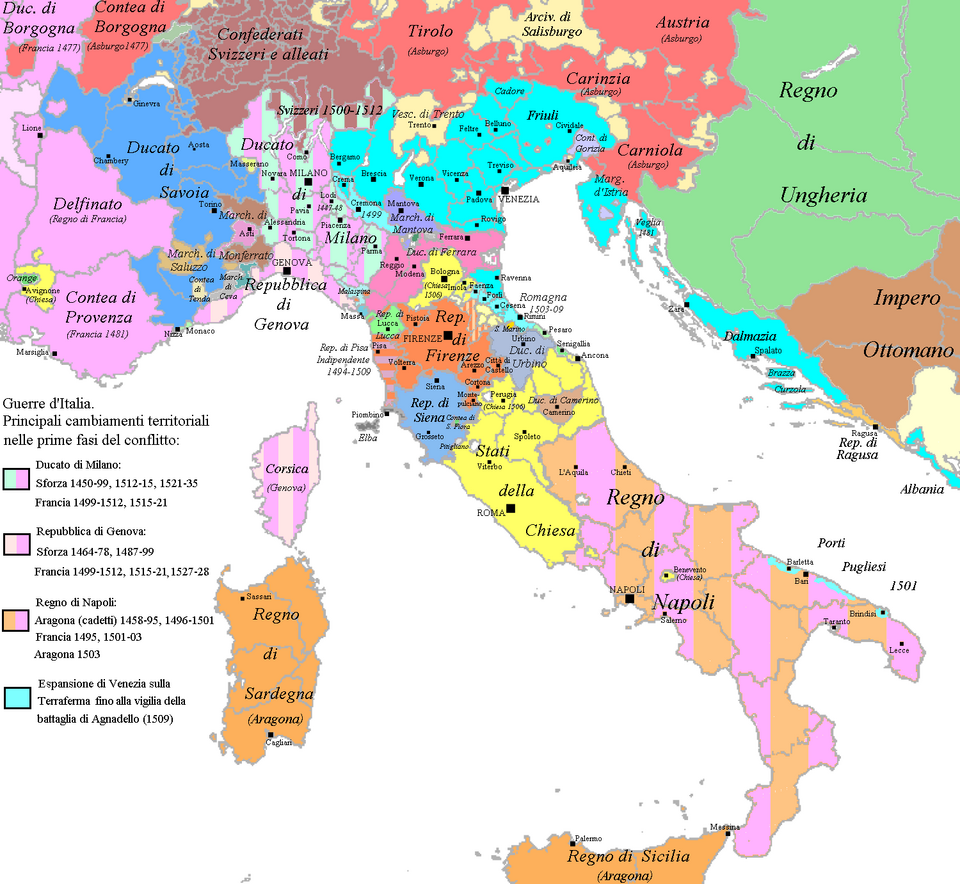
1508 - 1511 - League of Cambrai (All Facts)
(Temporary, short-lived) Military Alliance between King Louis XII of France, Maximilian of the Holy Roman Empire, Pope Julius II and the Papacy, and King Ferdinand of Spain aimed at conquering the Republic of Venice and its Italian possessions that initiated the Fourth Italian War / namesake War
Alliance which was the brainchild of Pope Julius II, ostensibly set up as a “Holy League” against the Ottoman Turks
The pope’s more immediate use for the league was to recover for the papacy the towns of the Romagna region under Venetian rule
However, the French gained too strong a foothold in northern Italy; and the namesake league eventually turned against France during the Fourth Italian War / namesake War

1513 - Battle of Novara (All Facts)
Battle in which Milan, with help from Pope Leo X and his Holy League, along with Cardinal Matthäus Schiner and his Swiss forces, defeated France and the Republic of Venice during the Fourth Italian War / War of the League of Cambrai

1515 - Battle of Marignano (All Facts)
Battle in which King Francis and France defeated Cardinal Matthias Schiner and Switzerland during the Fourth Italian War / War of the League of Cambrai
Battle in which King Francis
initially tried to bribe the Swiss to avoid fighting them, but that approach failed and cemented the legacy of French kings as bad at bribing
thus planned to fight against the Swiss carefully knowing he was forced to fight
negotiated treaties with England, Austria, and Venice prior to it
assembled an army of 40K French artilleryman and German light infantry
crossed the Alps with his forces and drove the Swiss back into Lombardy, where he tried but failed to set up a last-ditch negotiation with the Swiss at Gallarate where he demanded the recognition of French claims to Lombardy and Milan and the withdrawal of the Swiss from Italy
Battle in which the Swiss pikemen fought hard, but ultimately were defeated
Battle after which King Francis and his forces marched towards and seized Milan in Italy
Battle after which King Francis of France and Switzerland signed the Treaty of Fribourg
1515 - Treaty of Fribourg (All Facts)
(Perpetual) Peace Treaty signed between King Francis of France and Matthäus Schiner and Switzerland (the Old Swiss Confederacy) that ended the Battle of Marignano and ended French-Swiss conflict in the Fourth Italian War / War of the League of Cambrai

1516 - 1648 - Swiss Reformation (All Facts)
Period and Movement led by
Ulrich Zwingli, who
had an alternative form of Holy Communion held in Zurich during the Swiss Reformation, which was of great simplicity with neither music nor singing
He presided over a table laid with beakers and wooden vessels
He served the congregation first, and then himself afterwards
John Calvin (from France)
He was eventually expelled from Geneva / the Genevan Reformation
He was recalled to Geneva after being expelled, and from there he began to implement within Geneva in Switzerland his original scheme for the creation of a godly government
William Farel (from France)
He was eventually expelled from Geneva / the Genevan Reformation
Period and Movement from which emerged Anabaptism
Period and Movement focused in Zurich, during which
local magistrates there banned the Roman Mass
Period and Movement which spread from Zurich to
Berne, which decided in favor of the namesake and abolished the Mass
Geneva, in which, in 1536, its city council met at its cathedral and officially adopted the Protestant Reformation after William Farel had returned there a third time after being expelled twice
Geneva was considered one of the citadels of the Protestant Reformation, but its council was unwilling to accept the full force of the Reformation

1521 - 1526 - Fifth Italian War / Four Years’ War (All Facts)
Conflict in which Charles V and the Habsburgs (the Holy Roman Empire and Spain) defeated King Francis and the Valois (France)
Conflict upon which King Francis of France lost his war with Holy Roman Emperor Charles V for supremacy in Europe
Conflict which saw the
Holy Roman Empire’s invasion of Champagne
Battle of Bicocca
Siege of Marseilles
Battle of Pavia
Conflict which saw
a modernization of European military forces, especially with regards to new arms (guns), defenses (Bastion Fort), and tactics / strategies
new tactics being developed for mounted troops using new carbines (arquebus) and horse pistols, which became the masters of the battlefield, replacing and eventually contributing to the elimination of armored cavalry and knights in armor
the implementation of the Bastion / Star Fort (“trace italienne;” a circuit of low, thick walls punctuated by square bastions), which
replaced the high and thin walls of the Middle Ages as new defenses
were designed to absorb the punishment of the heavy siege guns which were a part of every successful army by that time
changed the entire pattern of warfare because the cities protected by them could no longer be taken by traditional methods of blowing a hole in the walls and pouring infantry through the breach and instead forced towns to be encircled by siege-works and batteries and starved and frightened into submission
essentially made warfare more a matter of engineering and logistics
the advent of the gun bring about great changes at sea since
ships no longer rammed and boarded each other, but pounded each other with formidable arrays of guns firing through ports in ships’ sides
gunships eventually set the pattern which all maritime nations must have followed if they wanted to avoid facing inevitable defeat
Conflict which ended with the Treaty of Madrid
1522 - Battle of Bicocca (All Facts)
Battle in which the Habsburgs (Spain and the Holy Roman Empire), supported by the Papacy and the Duchy of Milan, defeated the Valois (France), supported by the Republic of Venice and Switzerland, during the Fifth Italian War / Four Years’ War
Battle after which the imperial army of the Holy Roman Empire occupied the Republic of Genoa, where a doge who supported Holy Roman Emperor Charles V was appointed

1526 - 1530 - Sixth Italian War / War of the League of Cognac (All Facts)
Conflict in which Holy Roman Emperor Charles V and the Habsburgs (the Holy Roman Empire and Spain) defeated King Francis and the Valois (France), supported by the League of Cognac (England, Switzerland, and the Italian city-states of Florence, Venice, Milan, and Genoa)
Conflict which ended the Republic of Florence (it was no longer a republic after the namesake conflict)
Conflict during which the Papacy switched sides, initially supporting the League of Cognac, but then defecting to the Habsburgs
Conflict which saw
The Sack of Rome
Conflict which ended with
The Treaty of Cambrai / Ladies Peace / “Pax de Daimes”
1526 - 1529 - League of Cognac (All Facts)
Anti-Habsburg military alliance formed by France, Venice, Florence, and Milan; as well as England, Switzerland, and the Kingdom of Navarre within Spain to curb the overwhelming dominance of Charles V in Italy and the Holy Roman Empire, Spain, and Italian city-states that supported him
It was initially formed by the Papacy, but the Papacy, by the end of the namesake conflict / Sixth Italian War, switched to the side of Charles V and the Holy Roman Empire
1529 - Treaty of Cambrai / Ladies Peace / “Pax de Daimes” (All Facts)
Peace Treaty signed between Louise of Savoy (on behalf of King Francis of France) and Margaret of Austria (on behalf of Holy Roman Emperor Charles V) which ended the Sixth Italian War / War of the League of Cognac
Peace Treaty in which
King Francis of France
renounced all its rights in Italy, Flanders, and Artois
agreed to pay a ransom of two million crowns
Charles V of the Holy Roman Empire
renounced any claims to Burgundy
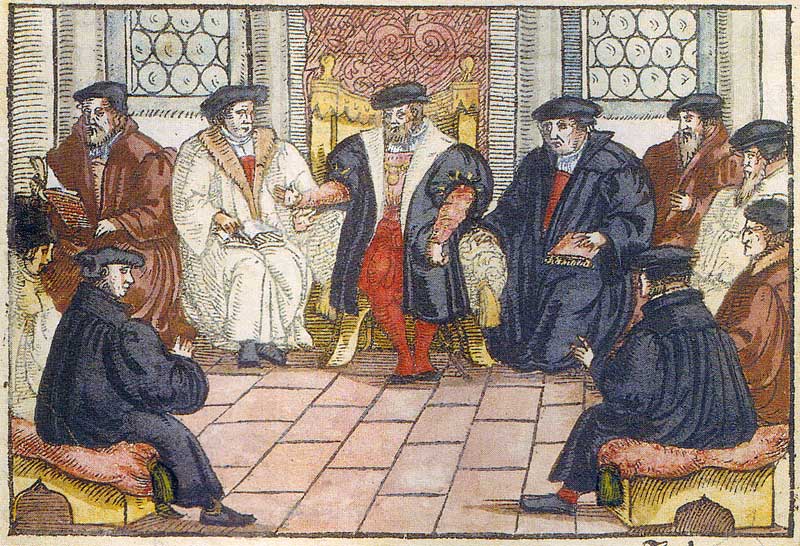
1529 - Marburg Colloquy (All Facts)
Meeting organized by Philip of Hesse which sought to close the emerging gap in Protestant theology between Martin Luther and Ulrich Zwingli
Meeting in which Philip of Hesse invited the reformers of Wittenberg, Strasbourg, and Zurich to meet in the namesake castle and tried (and ultimately failed) to resolve their theological differences which emerged as divisions within the Protestant Reformation
Meeting in which Philip of Hesse managed to persuade Martin Luther and Ulrich Zwingli to visit his castle in the namesake town in Germany to discuss their views, along with other Protestant reformers of the time including
Philip Melanchthon
Johannes Oecolampadius
Meeting in which they all signed off on fifteen articles, agreeing on all items of doctrine except the Eucharist
Meeting in which Luther and Zwingli agreed and
renounced transubstantiation
renounced the belief that the eucharist was a sacrifice for the living and the dead
insisted on communion in both kinds of Christ
Meeting in which Luther and Zwingli disagreed on
whether or not Christ's body and blood are present in the Eucharist
Meeting which ended badly, as Luther and Zwingli remained divided politically
Luther refused to move against Holy Roman Emperor Charles V
Zwingli was keen for the Swiss to revolt against the Holy Roman Empire
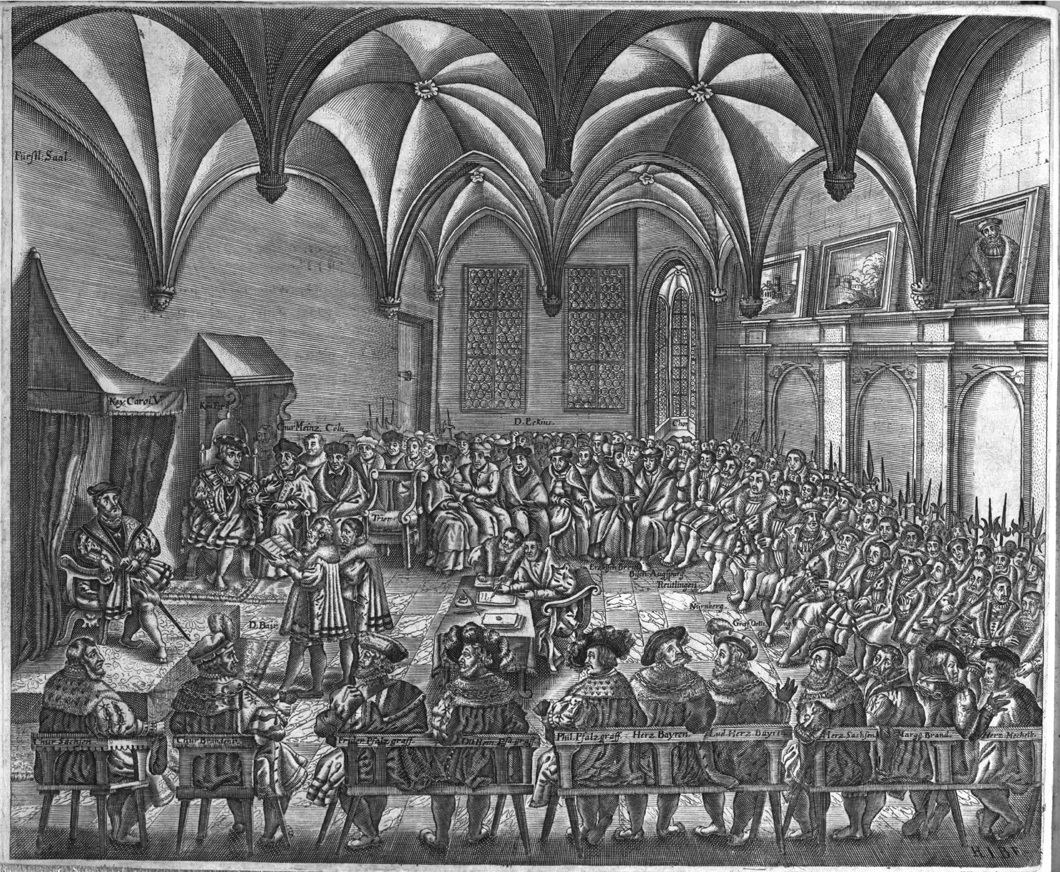
1530 - (Second) Diet of Augsburg (All Facts)
Imperial Diet in which the Catholics defeated the Protestants and decided that the Protestants (Lutherans) must recognize the Pope or would be threatened with force if they failed to do so
As a result, the more moderate Lutherans united with the more militant and radical Zwinglians (Swiss)
Imperial Diet in which Holy Roman Emperor Charles V and the Catholics and Philip of Melanchthon and the Protestants both wanted to achieve unity
They were keen on compromise and unity in order to defend themselves against the Muslim Ottoman Turks who had just besieged Vienna a year prior
However, close observers saw this as nothing more than window-dressing as their religious differences remained much deeper in reality
Imperial Diet in which the namesake Confession was presented in an (failed) attempt to avoid a permanent split and thus achieve reconciliation with the Catholic Church
Imperial Diet attended by Philip Melanchthon as Martin Luther was still in exile from the Holy Roman Empire

1531 - Second War of Kappel / Battle of Kappel (All Facts)
Civil War / Battle in which the Catholic Cantons of Switzerland defeated the Protestants of Switzerland including Zurich, Basle, and Berne
Civil War / Battle in which Ulrich Zwingli was killed
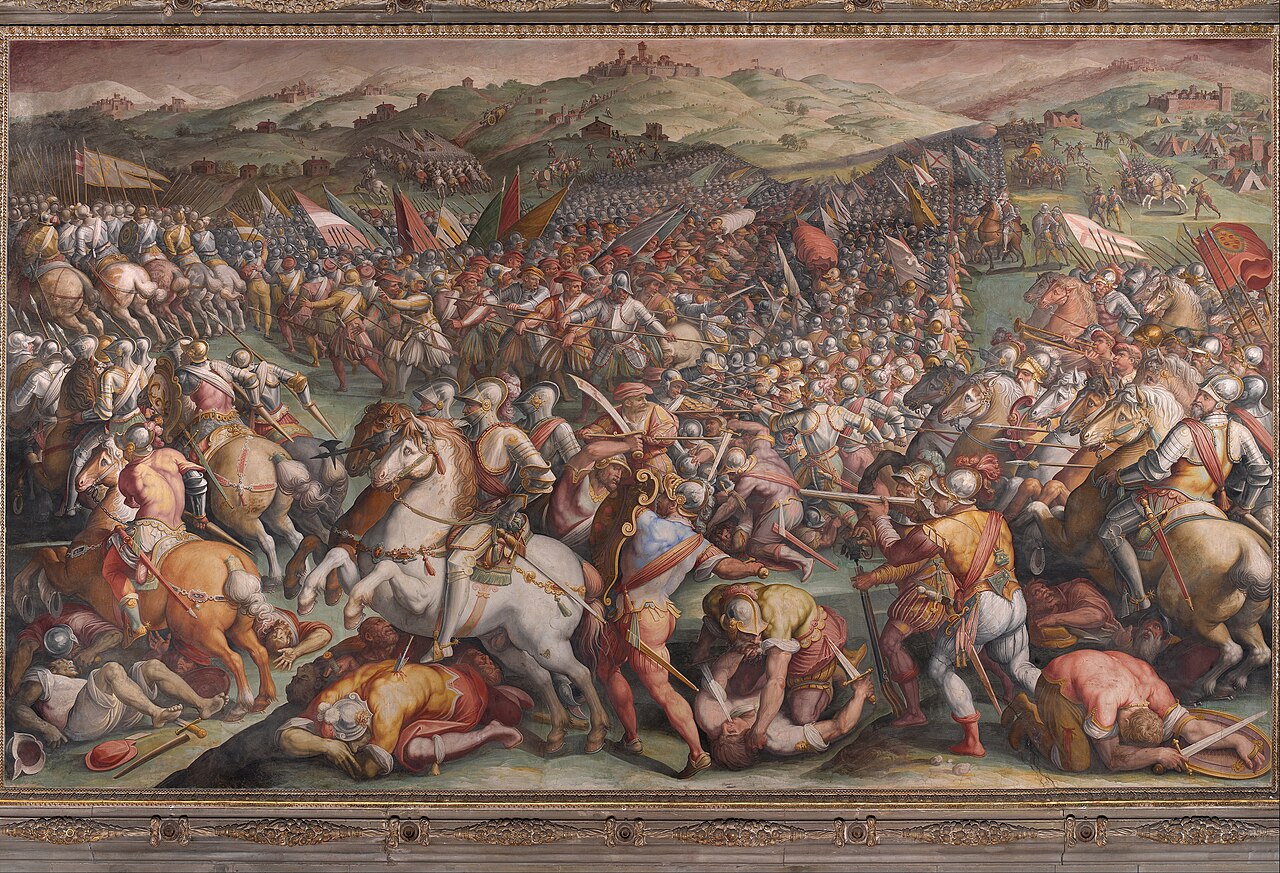
1551 - 1559 - Ninth Italian War (All Facts)
Conflict in which Charles V and Philip II and the Habsburgs (the Holy Roman Empire and Spain) defeated King Henry II and the Valois (France), ending the Italian Wars
Conflict which began when
King Henry II of France declared war against Holy Roman Emperor Charles V, with the intent of recapturing parts of Italy and ensuring French, rather than Habsburg, domination of European affairs
King Henry II of France publicly disavowed the Council of Trent
Conflict which saw
The Siege of Metz
The Battle of Marciano
The Siege of Siena
The Battle of St. Quentin
The Siege of Calais
The Siege of Thionville
The Battle of Gravelines
Conflict which included the Siege of Siena, a brutal 15-month blockade in which Cosimo de Medici and the Habsburgs (Holy Roman Empire) defeated the Valois (France) and took Siena from the French, during the namesake war
Conflict which ended with the Treaty of Cateau-Cambresis

1618 - 1648 - Thirty Years’ War (All Facts)
Conflict
between Catholics and Protestants in Germany following the failure to reconcile them via the Peace of Augsburg
Conflict in which
4.5M-8M people were killed from
the battlefield
plague and disease
the constant maneuvering helped to spread disease
famine
the constant maneuvering laid waste to vast tracts of farmland
Crops were destroyed
German towns lost as many as 50% of their populations from
being razed to the ground by siege and fire
plague borne by countless armies
the European continent was nearly destroyed
Conflict which began
with the Defenestration of Prague and Bohemian Revolt
when Bohemia elected itself a new Protestant as king, Frederick V, previously the elector of Palatine, to replace the Habsburg King Ferdinand II, whom the Bohemian estates had previously “accepted” as king
Conflict during which
The Protestant Union was dissolved
Conflict during which
Johann Tserclaes (Count of Tilly) and his Catholic forces sacked the Heidelberg University Library
Bavaria (as well as Spain and Austria) invaded France with their armies and advance units of the Bavarian cavalry arrived in the Parisian suburbs
These armies invaded France but were driven back
Conflict which saw
The Bohemian Revolt
The Defenestration of Prague
The Battle of White Mountain
The Vatellina War (between Spain and Switzerland)
The Battle of Lutter
The Battle of Dessau Bridge
The Sack of Magdeburg
The Battle of Breitenfeld
The Battle of Lutzen
The Battle of Nordlingen
The Battle of Wittstock
The Battle of Rheinfelden
The Battle of Freiburg
Conflict which involved
The Eighty Years’ War / Dutch Revolt (between Spain and the Netherlands / Dutch Republic)
Conflict which ended with
The Peace of Prague
The Peace of Westphalia
This took three years of negotiation in two cities, Munster and Osnabruck, to bring about the official signing
Just four years prior to the start of the war,
Catholics and Protestants alike in Germany were already preparing for the conflict, which threatened to engulf the whole continent as
battle-lines were already being drawn up by then
fortunes were already being spent equipping private armies throughout Germany
Germany prepared itself to be the battlefield when the war would break out
In the Protestant north of Germany,
whole cities were ringed with star-shaped walls, bastions, and moats
In Catholic Bavaria and in the Rhineland,
great new fortresses pierced the skylines
intense diplomatic activity was taking place, particularly on the part of
Prince Christian of Anhalt-Bernburg
King James of England
Conflict which ended when three successive salvos crashed out from 70 cannons on the walls of Munster to announce that peace came from a war-ravaged Europe after three decades of bitter conflict in which every power became involved both on land and sea
Conflict after which
100K+ mercenaries had to be paid and returned home lest they turn themselves into robber-bands adding even more torment to a war-weary Europe
the high cost of the war caused massive tax demands on both nobles and peasants, both parties of whom threatened revolt

1620 - 1626 - Vatellina War (All Facts)
War between Spain and the Swiss League of Grisons that arose out of competition to control the namesake Alpine valley forming a key part of the Spanish Road; during the Thirty Years War
1626 - Treaty of Monzon (All Facts)
Peace Treaty between France, Spain, and the Papacy which restored the status quo of 1617 in the area of the Alpine Valley
Peace Treaty in which
Spanish forts were to be destroyed
France was to have the use of the passes in and out of Valtellina, to be restored to the leaders of three associations of landlords known as the (Swiss) Grisons
Peace Treaty involving France since France wanted an Alpine route directly into the Habsburg backyard in Italy
1648 - Peace of Westphalia / Treaty of Westphalia (All Facts)
Peace Treaty signed between the Holy Roman Empire and Spain (Habsburgs), France, Sweden, and their dozens of allies; which ended the Thirty Years’ War
Peace Treaty which
guaranteed the full sovereignty of the German states from the Habsburgs (Holy Roman Empire and Spain)
guaranteed total religious freedom in German states for Catholics, Lutherans, and Calvinists (with the exception of the hereditary lands of the Habsburgs)
Peace Treaty in which
the Habsburgs
recognized the independence of
the Protestant German states (from the Catholic Holy Roman Empire)
Switzerland (from the Holy Roman Empire)
The Netherlands (from Spain)
France
acquired as reparation
Alsace
other territories
Sweden
acquired Pomerania
Thus gave them dominance in the Baltic
Peace Treaty which
was signed in conjunction with the Treaty of Munster, in which the Habsburgs recognized the independence of the Netherlands (the Dutch Republic) from Spain
represented the failure by the Habsburgs to turn Germany into a Catholic monarchy
1653 - Swiss Peasant War (All Facts)
Series of peasant uprisings that were violently suppressed by the Swiss governments, beginning in Bern and Lucerne and spreading to other Swiss states
Series of peasant uprisings in which peasants demanded
reductions in taxes and mortgages
a more stable currency