Anatomy Lab Exam (Muscles- Individual Terms)
 Call Kai
 Learn
 Practice Test
 Spaced Repetition
 Match
 Flashcards
 Knowt Play
1/254

There's no tags or description
Looks like no tags are added yet.
255 Terms
Frontalis
A: draws scalp forward, elevates eyebrows, and wrikles skin of forehead
N: facial nerve (VII)

Orbicularis Oris
A: closes and shapes/protrudes lips (kissing muscle), forms words
N: facial nerve (VII)

Zygomaticus Major
A: draws angle of mouth upward as in smiling (smiling muscle)
N: facial nerve (VII)

Buccinator
A: movements of blowing and sucking (blowing muscle), compresses cheek
N: facial nerve (VII)

Risorius
A: draws angle of mouth laterally as in grinning or tenseness (grinning muscle)
N: facial nerve (VII)

Platysma
A: draws lower lip down and backward (pouting); depresses mandible
N: facial nerve (VII)

Orbicularis Oculi
A: closes eyelids
N: facial nerve (VII)

What are the muscles used in chewing
masseter, temporalis, medial pterygoid, lateral pterygoid
Masseter
A: chewing
N: mandibular branch of trigemial nerve (CN V)

Temporalis
A: chewing
N: mandibular branch of trigemial nerve (CN V)

Medial Pterygoid
A: chewing
N: CN V

lateral pterygoid
A: chewing
N: CN V

Superior Rectus
A: superiorly rotates eyeball (rolls it upward)
N: oculomotor nerve (CN III)

Inferior Rectus
A: inferiorly rotates eyeballs (rolls it downward)
N: oculomotor nerve (CN III)

Lateral Rectus
A: laterally rotates eyeball
N: abducens nerve (CN VI)

Medial Rectus
A: medially rotates eyeball
N: oculomotor nerve (CN III)

Superior Oblique
A: rotates eyeball downward and laterally (down and to the side)
N: trochlear nerve (CN IV)
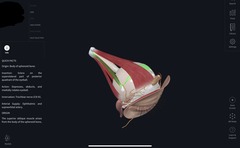
Inferior Oblique
A: rotates eyeball upward and laterally
N: oculomotor nerve (CN III)

sternoceidomastoid
O: sternum (manubrium) and sternal end of clavicle
I: mastoid process of the temporal bone
A: flex head, laterally flex head, rotate head
N: accessory

Pneumonic to remember nerves that move eyeball muscles
SO4LR6R3
(superior obliwue - CN IV)
(lateral rectus - CN VI)
(all the rest - CN III)
How many cranial nerves are there?
12
How are cranial nerves numbered?
from anterior to posterior in the order they come off of the brain
facial nerve
(CN-VII) travels through internal acoustic meatus and exits the skull through the stylomastoid foramen (on both sides)
Bell's Palsy
infection or damage to the facial nerve
- muscles droop/sag
- 80% of the time it resolves itself
Pectoralis Major
medial anterior half of clavicle, lateral surface of sternum, aponeurosis of external oblique

pectoralis major insertion
lateral lip of bicipital groove of humerus
pectoralis major action
primary flexor of arm, also medially rotates and adducts arm
pectoralis major nerve
pectoral nerve
Pectoralis Minor origin
anterior surfaces of 3rd through 5th ribs

pectoralis minor insertion
coracoid process of scapula
pectoralis minor action
protracts, depresses, and downwardly rotates pectoral girdle accessory breathing muscle
pectoralis minor nerve
pectoral nerve
Subclavius origin
first rib
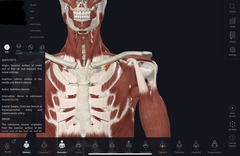
subclavius insertion
clavicle
subclavius action
depresses clavicle and acts as a dynamic splint for fractured clavicle
subclavius nerve
subclavian nerve
Serratus Anterior origin
O: lateral surfaces of 1st through 8th ribs

serratus anterior insertion
medial border and inferior angle of scapula
serratus anterior action
most powerful protractor of pectoral girdle - boxer's muscle, upwardly rotates pectoral girdle, fixates scapula against chest wall
serratus anterior nerve
long thoracic nerve
Trapezius origin
external occiciptal protuberance, superior nuchal line and spinous process of vertebrae C7 through T12, attached to the back of the neck via the ligamentum nuchae

ligamentum nuchae
ligamentous band extending from external occipital protuberance to C7
trapezius insertion
acromial end of clavicle, acromion process, and spine of scapula
trapezius action
elevates, retracts, and upwardly rotates pectoral girdle, extends head
trapezius nerve
accessory nerve
What nerve innervates the two msucles that move the head?
accessory nerce (C3,C4) innervates the sternocleidomastoid and trapezius
Rhomboid Major origin
spinous process of T2 through T5 vertebrae

rhomboid major insertion
medial border of scapula
rhomboid major action
retracts pectoral girdle, rotates scapula downward
rhomboid major nerve
dorsal scapular nerve
Rhomboid Minor origin
spinous process of C7 through T1 vertebrae

rhomboid minor insertion
medial border of scapula
rhomboid minor action
retracts pectoral girlde, rotates scapula downward
rhomboid minor nerve
dorsal scapular nerve
Levator Scapulae origin
transverse process of C1 through. C4 vertebrae

levator scapulae insertion
medial border of scapula near superior angle
levator scapulae action
elevates scapula
levator scapulae nerve
dorsal scapular nerve
Deltoid origin
lateral third of clavicle, acromion process, and spine of scapula

deltoid insertion
deltoid tuberosity of humerus
deltoid action
primary abductor of arm (middle/acromial head), anterior head/clavicular head helps flex arm, posterior/spinous head helps extend arm
deltoid nerve
axillary nerve
Supraspinatus origin
supraspinous fossa of scapula

supraspinatus insertion
greater tubercle of humerus
supraspinatus action
assists deltoid in abduction of arm (initiates abduction), laterally rotates arm (rotator cuff muscle)
supraspinatus nerve
suprascapular nerve
Infraspinatus origin
infraspinous fossa of scapula

infraspinatus insertion
gerater tubercle of humerus
infraspinatus action
laterally rotates arm (rotator cuff muscle)
infraspinatus nerve
suprascapular nerve
Subscapularis origin
subscapular fossa of scapula

subscapularis insertion
lesser tubercle of humerus
subscapularis action
medially rotates arm (rotator cuff muscle)
subscapularis nerve
subscapular nerve
Teres Minor origin
lateral border of scapula

teres minor insertion
greater tubercle of humerus
teres minor action
laterally rotates arm (rotator cuff muscle)
teres minor nerve
axillary nerve
Teres Major origin
O: inferior angle of scapula

teres major insertion
(distal to) lesser tubercle of humerus
teres major action
extends, adducts, and medially rotates arm
teres major nerve
subscapular nerve
Latissimus Dorsi origin
spinous process of T7 through T12 vertebrae, lumbar fascia, lateral surfaces of 9th through 12th rib, and iliac crest

latissimus dorsi insertion
bicipital groove of humerus
latissimus dorsi action
extends, adducts, and medially rotates arm
latissimus dorsi nerve
thoracodorsal nerve
What muscles travel through the thoracic outlet?
anterior, middle, and posterior scalenes
scalenes
anterior, middle, and posterior
travel through the thoracic outlet
can help flex the neck

anterior triangle of the neck superior border
inferior border of the mandible
anteiror triangle of the neck medial border
sagittal line down middle of neck
anterior triangle of the neck lateral border
anterior border of sternocleidomastoid
What is located in the anterior triangle of the necK?
coracoid triangle
coracoid triangle
- located in anterior triangle of the neck
- 3 important structures: common carotid artery, internal jugular vein, cranial nerve X (vagus nerve)
thoracic outlet
the space between clavicle and first rib, very narrow,
- contains anterior, middle, and posterior scalenes, subclavian vein and artery, and brachial plexus
What passes through the thoracic outlet
brachial plexus and subclavian artery pass between the anterior and middle scalenes
- subclavian vein is anterior to anterior scalene
- all pass through thoracic outlet
thoracic outlet syndrome
either the vessels (vascular) or nerves of brachial plexus (neurological) get impinged (or pressed)
- can be caused by overuse injuries, poor posture, heavy backpack, obesity
- symptoms: tingling, numbness, pain, lack of circulation to upper extremity
what does nuchae mean
back of the neck
Why do a lot of little kids have scapulae that wing out?
they have weak serratus anteriors (that protract the scapulae)
What would happen if you lost your supraspinatus?
you would have to manually start abduction of that arm with the other arm before the deltoids can take over
IF a muscle inserts on the greater tubercle of the humerus, what is one of its actions?
lateral rotation of the humerus