Applied EQ parasitology
 Call Kai
 Learn
Learn Practice Test
 Spaced Repetition
 Match
Match Flashcards
 Knowt Play
1/27

There's no tags or description
Looks like no tags are added yet.
Name | Mastery | Learn | Test | Matching | Spaced | Call with Kai | Chat |
|---|
No analytics yet
Send a link to your students to track their progress
28 Terms
What are the risk factors for colic w/ regards to parasitology?
No association w/ anthelmintic type / programme
Increased risk if not on a worming programme
Decreased risk if on a regular worming programme
Increased risk after anthelmintic administration
Recall what the main parasitic cause of colic is?
Strongylus vulgaris
Causing thrombosis of the cr. mesenteric a. & a non strangulating infarction
Rarely seen since modern anthelmintics

What is post worming colic?
Recognised following anthelmintic treatment of horses known to have high worm burdens
Inflammation of the GIT subsequent to death of large numbers of parasites
What are the clinical signs of cyathostominosis?
Weight loss, hypoalbuminea
D+
Intussusceptions
Caecocaecal
Caecocolic
Can be ass. w/ high mortality
What GI issues is anoplocephala perfoliata (tapeworm) associated with?
Spasmodic colic
Ileal impactions
Caecal intussusceptions
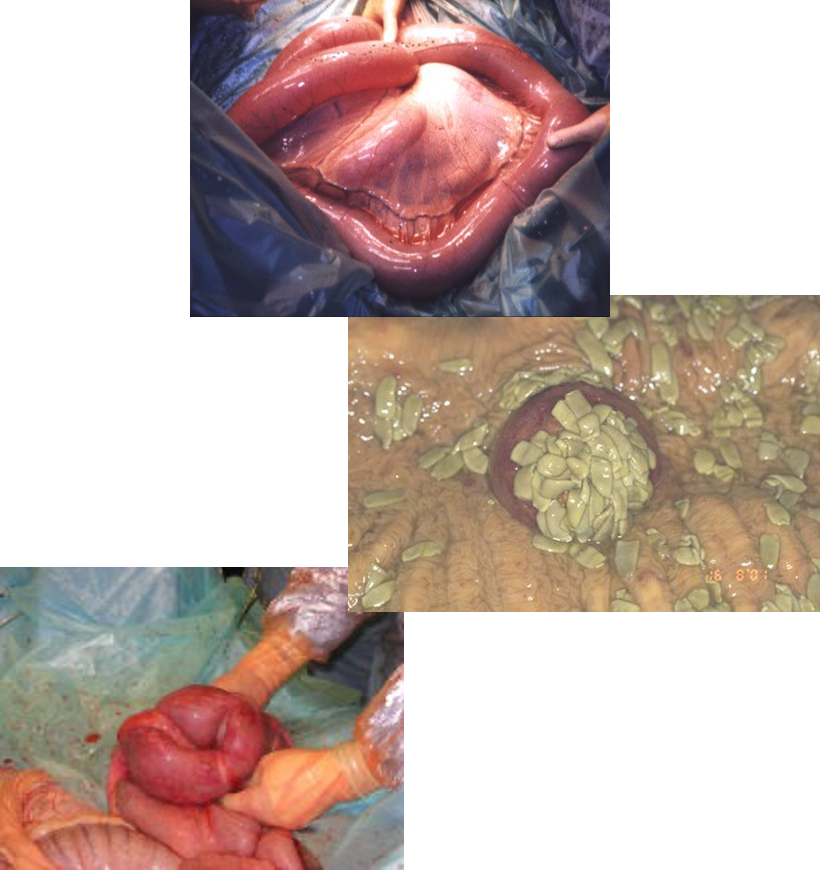
must be operated on
What do large burdens of parascaris equorum result in?
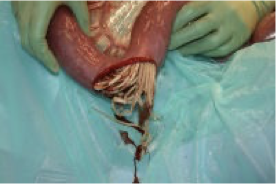
Weight loss / unthriftiness
Sl obstruction & colic
What is this? What can it cause?
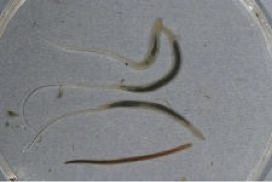
Oxyuris equi
Can cause peri-rectal irritation (tail rubbing)
What are these? When are they found?
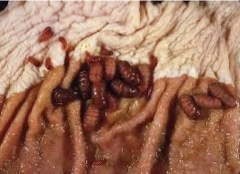
Bot flies (gastrophilus intestinalis)
Often incidental finding when performing gastroscopy
Eggs often seen on horses legs during summer months
Of no clinical significance in most cases
What is the aim of parasite prevention in youngstock?
Minimise exposure of youngstock to most pathogenic parasites → preventing (high) level of infection → reducing incidence of dx
What is the lifecycles of parascaris spp, cyathostomins & anoplocephala perfoliata?
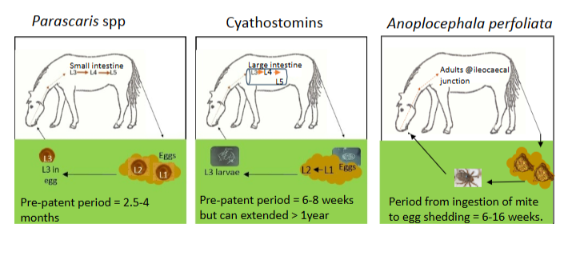
What are the parasite specific anthelmintitic drug options?

How are diagnostic tools used to control parasites in youngstock?
detect and monitor infection
determine if current control measures are working
direct appropriate intervention (e.g drug tx) if required.
Reduce unnecessary drug use of drugs but balance w/ need to control parasite in most vulnerable age group.
Risk-based evaluation currently considered best practice, but more difficult to do for youngstock
List some ways that parasite transmission can be reduced in horses aside from drugs
Good pasture hygiene
Poo picking
Graze other stock (e.g. sheep) on pasture grazed by horses
Don't use high risk pastures for most vulnerable horses (<3yo)
If pastures permanent consider switching age groups on different pastures/ year
Quarantine
What are the priority parasites of foals & weanlings in the first 12 months of life?

Describe strongyloides westeri
Rarely causes dx (self-limiting)
Current recommendations NOT to pre-emptively treat mares
Can do FEC @ 2-5wks (but not necessary)
What is the current recommendation of treating Parascaris spp?
Treat 2-3months & again @ 4-5months
FEC from 2-3mo —> help understand shedding patterns
Confirm drug working by doung FEC reduction test —> use pyrantel & fenbendazole as ivermectin & moxidectin have resistance
At what are are strongyles seen in weanlings?
Anoplocephala perfoliata & strongyles such as cyathostomins start to be seen between 12-24mo
Reduce risk by grazing weanlings on low-risk pastures
What is used to treat strongyles?
Ivermectinl, moxidectin, pyrantel —> effectiveness determinged by FEC reduction test
How can you diagnose a strongyle infection?
FEC —> detects patent infection & doesn't differentiate between large and small strongyles (best done on every animal in co grazing group)
Large strongyle larval differentiation test —> limitations due to long PPP
What threshold is used for treatment in FEC?
200-500epg to treat high shedders
What are the diagnostic tests for cyathostomins?
Small redworm ELISA (blood test)
Total worm burden test- detected all stages not just adult
Complex interpretation- vet only
What are the diagnostic tests for tapeworms (A. perfoliata?)
FEC —> centrifugation flotation (60& Se)
Diagnosteq tapeworm ELISA (68% Se) —> detects exposure vs current infection
EquiSal (saliva) —> same antigen as ELISA
Saliva/serum ELISA +ve frpm 6-7mo
How is anoplocephala perfoliata treated?
Double dose of pyrantel or praziquantel
What is used to diagnose tapeworms in yearlings?
Saliva/serum ELISA or specialist FEC in spring to reduce egg shedding so fewer infected oribatid mites.
Saliva/serum ELISA or specialist FEC in autumn to reduce parasite burden.
Describe sustainable parasite control
Assess risk
Natural risk mitigation
Treat horses
Consider parameters for tx to maintain in refugia population
Treat horses w/ appropriate de-wormer
How does poo picking reduce transmission of parasites?
Reduces no. of infective L3 on pasture
Leads to lower mean FEC for grazing herd
Describe FEC for tapeworms
Can confirm current infection but lack sens, so absence of eggs challening to interpret.
Describe blood & saliva ELISA testing for tapeworms
Detect abs that indicate exposure to tapeworm —> reliable if used >4months after prev. tapeworm tx