Biochemistry Chapter 7 - Enzymes
 Call Kai
 Learn
Learn Practice Test
 Spaced Repetition
 Match
Match Flashcards
 Knowt Play
1/11

There's no tags or description
Looks like no tags are added yet.
Name | Mastery | Learn | Test | Matching | Spaced | Call with Kai | Chat |
|---|
No analytics yet
Send a link to your students to track their progress
12 Terms
What are the properties of enzymes?
Biological catalysts
Most are proteins
Nomenclature: add ase
Accelerate chemical reactions under physiological conditions
Highly specific
What is an apoenzyme? What is a holoenzyme?
Apoenzyme = catalytically inactive enzyme = enzyme without a cofactor
Holoenzyme = catalytically active enzyme = enzyme with cofactor
What are the two types of cofactors

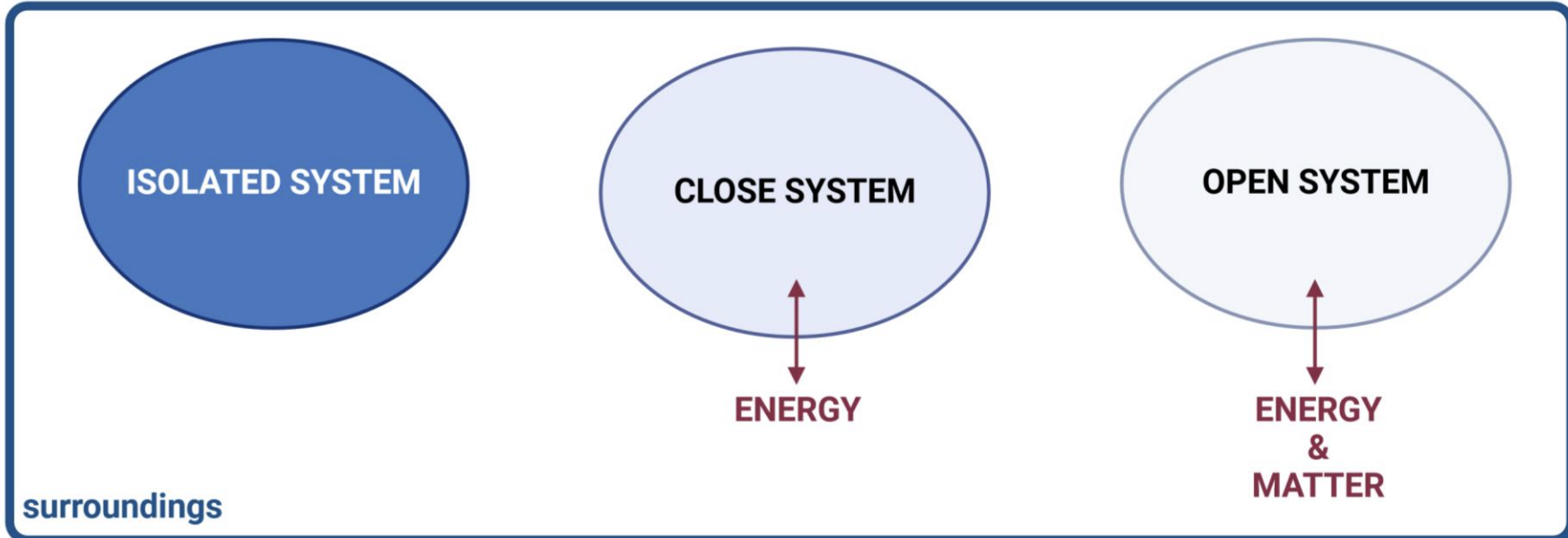
What kind of system is a cell in regard of thermodynamics?
They are open!!!
What are exergonic reactions? What are endergonic reactions?
Exergonic:
reactions have a negative delta G (free energy is released) and are favorable/ spontaneous
Endergonic:
reactions have a positive delta G (free energy input required) and are unfavorable
Note:
When delta G is zero there is no net change in the concentration of reactants and products (equalibrium)

How do enzymes work? Do they alter the equalibrium?
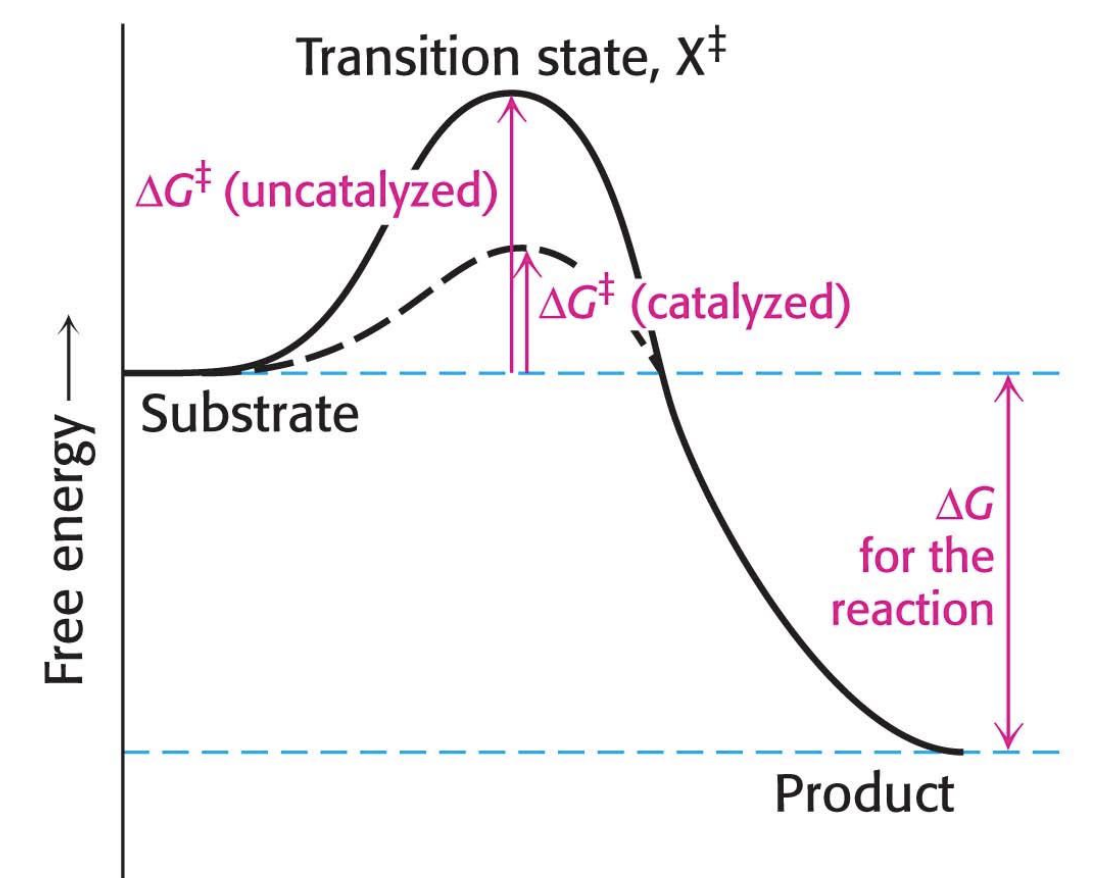
Enzymes do NOT change the equalibrium of a reaction, only accelerate the reaction by decreasing the activation energy
Draw the energy diagram of a chemical reaction
What is the activation energy?
The energy required to form the transition state from the substrate is called the activation energy
How do enzymes affect the transition state
Enzymes facilitate the formation of the transition state
What are transition state analogs?
Transition states are unstable arrangement of atoms that cannot be isolated
Transition state analogs mimic this arrangement, inhibiting the enzyme
Enzymes prefer to bind the transition state, because it represents the highest energy with the best binding
What are the two theories of enzyme substate binding?
The lock and key theory
The induced fit theory

Common features of active sites
The active site is a three-dimesnional cleft or crevice created by amino acids from different parts of the primary structure
The active site consitiutes a small portion of the enzyme volume
Active sites create unique microenvironments
The interaction of the enzymes and substrate at the active site involves multiple weak interactions
Enzyme specificity depends on the molecular architecture at the active site
The active site stabilizes