lec 12 carbon cycle pt 1
 Call Kai
 Learn
Learn Practice Test
 Spaced Repetition
 Match
Match Flashcards
 Knowt Play
1/31

There's no tags or description
Looks like no tags are added yet.
Name | Mastery | Learn | Test | Matching | Spaced | Call with Kai | Chat |
|---|
No analytics yet
Send a link to your students to track their progress
32 Terms
carbon useful to form molecules because
can form 4 strong bonds with other elements and enter ring formations
to break carbon bonds
energy is required, stable at room temperature
exothermic because
more energy is released by a broken carbon bond than is needed to break the bond
in presence of oxygen, the reaction of carbon bond breaking is
combustion
large carbon molecules are reservoirs of
stable, stored energy e.g. sugars and fats for life, fossil fuels
we can only have a stable temperature and liquid water because of
presence of carbon in the atmosphere
carbon cycle is
the movement of carbon through abiotic and biotic reservoirs
carbon source
a reservoir releasing more carbon than received
carbon sink
a reservoir receiving more carbon than released
Gt
billion tons
aspects within the carbon cycle grouped based on
timescale and whether organic or inorganic reservoirs
inorganic carbon cycle
cycling of carbon between only the ocean, rocks, and atmosphere on millions of years timescale
reservoirs of inorganic C cycle
oceans, atmosphere, and rock
linkages of inorganic C cycle
precipitation, chemical weathering, solubility pump, deposition, volcanism, and mountain building

precipitation
water moving from atmosphere to terrestrial reservoirs
rain is naturally acidic because
atmospheric CO2 naturally reacts with water vapor in atmosphere to form carbonic acid
when carbonic acid rainwater hits oceans
carbon moving directly from atmopshere to ocean in slightly acidic water
when carbonic acid rainwater hits land
it interacts with minerals in chemical weathering
chemical weathering
chemical breakdown of larger minerals, which releases elements, ions, and molecules
carbonic acid reacts with exposed rock to release
calcium ions and bicarbonate ions, eventually washed into the ocean with surface runoff
solubility pump
direct exchange of carbon between atmosphere and ocean because of reservible reaction involving carbonic acid formation/decomposition
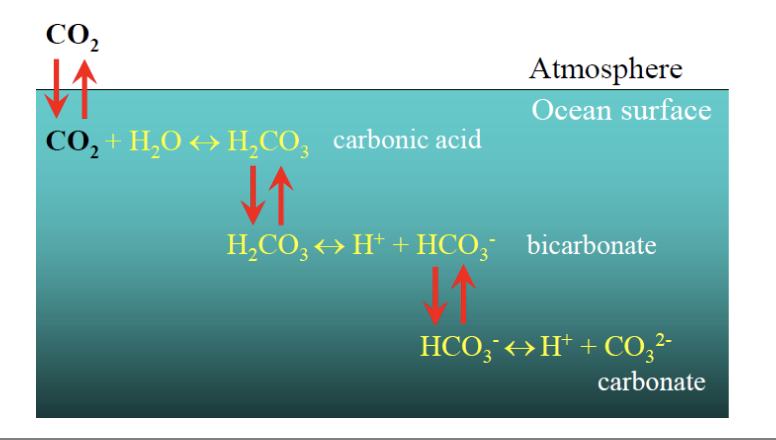
movement of CO2 into ocean relies on
random movement of molecules in gaseous atmosphere and then coming into contact with the ocean surface
deposition
chemical transformation from ocean reservoir to sedimentary rock reservoir through depositing of sediment
deposition steps
calcium and carbonate ions combine in solution to form calcium carbonate, which deposits on the ocean floor over time to form mineral deposit rocks
volcanism
melting of rocks and gases rise towards surface, ultimately emerging into atmosphere
subduction
often causes volcanism, tectonic plate is pushed under another
volcanism byproducts differ depending on
chemical composition of rocks, CO2 released by carbonate rocks along with melted minerals
new rock produced by volcanism exposed to
chemical weathering, with greater amounts of minerals
mountain-building events
formation of elevated rock regions due to continental drift or volcanism, ends up exposing new rock to chemical weathering
over long term, inorganic aspects of C cycle are
self-regulating, in a negative feedback loop
snowball earth may have emerged from a
positive feedback loop due to increased rainfall weathering, sequestration of CO2 in rocks, lowering of temperature, higher albedo from continents, further lowering of temperature, ice formation and further albedo and temperature lowering
we got out of snowball earth because
volcanism continued, low precip in the cold so less CO2 removed, greenhouse effect eventually warmed it up again