botany exam 3
 Call Kai
 Learn
 Practice Test
 Spaced Repetition
 Match
 Flashcards
 Knowt Play
1/99

There's no tags or description
Looks like no tags are added yet.
100 Terms
essential elements
necessary for plant growth and reproduction. Without, plants cannot complete their life cycles
beneficial elements
elements that might not be necessary but help the plant thrive
macronutrients & micronutrients
macro: required in relatively large quantities (C, N, O, H, etc)
micro: required in small quantities (Fe, Na, Zn, etc)
plants absorb most mineral nutrients from the soil as
ions. Cations are often bound to clay particles or organic acids.
Ions dissolved in water can enter root through apoplastic pathway. To reach xylem, it must enter symplast
maintaining supply of minerals (replenishing)
Bulk water flow, ions move with water
diffusion
root growth
roles of essential elements
C: photosynthesis (CO2) and forms organic molecules
N: part of protein, nucleic acids, and chlorophyll
H & O: part of all biological macromolecules, key roles in metabolism
roles of minor elements
Calcium: middle lamella & developmental signaling
P: synthesize nucleic acids & phospholipids, ATP
K/Cl: regulate stomatal opening & closing, enzyme activation
magnesium, zinc, nickel, copper, manganese are cofactors for different enzymes
symptoms of nutrient deficiency
stunted/slow growth
chrlorosis (yellowing of leaves)
necrosis
Haber-Bosch process
production of ammonia for fertilizers
soil components
organic matter, inorganic mineral matter, water, air
humus
paartially decayed matter with organic acids, gives organic material dark color
inreases nutrient content, water retention, and aeration
inorganic material
sand (100 mic m to 2 mm)
silt (2-100 micro)
clay (<2 micro)
smaller particles gave higher water holding capacity
loams
soils with no dominant particle, optimal for agriculture
50% pore space, of that water in ab half
organic vs mineral soils
organic soils are formed from sedimentation, when organic matter is deposited more quickly than it is decomposed
mineral soils are formed from weathering of rocks
soil profile has different zones, called horizons
O horizon: organic layer, dark in color, contains partially decayed organic debris
A horizon: topsoil; a mixture of organic & inorganic products, microbial activity
B horizon: subsoil; present in older soils. Dense layer of small particles with accumulated minerals
C horizon: soil base; includes parent material
young vs mature soils
young soils are often rich in minerals & contain all necessary nutrients
high concentrations of ions can limit water movement into plant
may be toxic
mature soils have lower concentrations of nutrients, but contain clays and organic materials that can bind cations and release them as needed
soil pH
most plants prefer 5.5 to 6.5
acidic cond. help free essential cations & break down rocks
extremely acidic concentrations slow down decomposition (less nutrients)
discovery of photosynthesis took over 250 yrs
1600s Joannes van Helmont showed plants do NOT obtain biomass from soil
Priestly showed plants could restore air
Senebier: CO2 was needed
Ingehousz: carbon was fixed by plant
Saussure: water involved
1864 Sachs: carbohydrates end product
equation for photosynthesis
6 CO2 + 6 H2O →(light) C6H12O6 + 6 O2
engelmann
placed filament of algae with aerobic bacteria under microscope
demonstrated red and blue light supply mst of the energy for photosynthesis
light & temp
with sufficient light, photosynthesis increases with temp
low light, no change
stages of photosynthesis
light dependent: light excites different pigments, energy used to catalyze formation of ATP & NADPH. thylakoid membrane
light independent: Calvin cycle, fixes carbons into sugars
both in chloroplast. Stroma
chloroplast structure
thylakoids: system of internal membranes
grana: stacks of disc-like compartments
lamellae: flat tubules connecting the grana
membrane is site of light-dependent rxns
lumen serves as H+ reservoir and plays key role in photophosphorylation (ADP to ATP)
stroma: fliud-filled area outside of thylakoids, contains DNA, ribosomes, and enzymes
properties of light
light is an electromagnetic wave
light as a discrete package of energy called a photon. each photon contains energy inversely proportional to wavelength of light, absorbed by electron
photosynthetic pigments
chlorophyll: absorbing part of red and blue light (a and b)
carotenoids:
-carotenes: absorb UV, violet, and blue light
-xanthophylls: might not be photosynthetically active, but play a protective role
when a photon of light is absorbed
the excited electron moves to a higher energy state
as it returns to its original state, it transfers energy to an adjacent pigment (resonance)
eventually, the energy reaches the reaction center
the photosystems
photosystem I absorbs light optimally at 700 nm
photosystem II absorbs light at 680 nm
photosystem excitation
I, electron in P700 moves to higher state and is tranferred to NADP+ (2 e- + 1 H+ → NADPH). P700 left as positive ion
II, electron in P680 moves to higher state and moves toward P700+. 700 ready for energy absorption, 680 is + and can split water to recover electrons (photolysis)
ATP synthesis
H+ are moved from stroma to lumen, creating concentration gradient
H+ moves back to stroma via ATP synthase, photophosphorylation
Calvin cycle
light independent reactions: using NADPH & ATP to reduce CO2 to sugar, requires many enzymes
rubisco catalyzes joining of CO2 with ribulose biphosphate (RuBP)
C3 steps
CO2 + RuBP → 2 PGA
NADPH & ATP reduce PGA to PGAL
some PGAL & STP are used to reform RuBP, other can be converted to DHAP
PGAL & DHAP combine to form 6-C sugar phosphate
photorespiration
occurs when CO2 conventrations are too low or temps too high
rubisco catalyzes addition of O2 to RuBP, producing 2 C molecule that is oxidized to CO2 w/o making ATP/NADPH
C4 pathway: complements C3
CO2 + PEP → oxaloacetate → malate
malate sent to bundle sheaths where they release CO2
C3 cycle takes place in bundle sheath
CAM photosynthesis
modification of C4 that opens stomata at night
CO2 absorbed at night, combined with PEP → malate
malate stored in vacuole as malic acid
during day, malate is decarboxylated and CO2 is used in C3 cycle to produce carbs
stages of sexual reproduction
production of special reproductive cells following meiosis
pollination
fertilization (creation of zygote)
seed/fruit development
dispersal
germination
what allowed angiosperms to become widespread
directed pollination
four whorls of modified leaves
sepals: outside, generally green. collectively the calyx
petals: inside the sepals, generally colorful. collective: corolla
stamens: male organs
carpels: female organs
perianth
the nonreproductive part of the plant
calyx and corolla
tepals
some flowers do not have distinct calyx and corolla
androecium
the whorl grouping the stamens (male organs)
parts of stamen
anther: the pollen-bearing part at the top. usually made of 4 pollen sacs
filament: a slender stalk connecting the anther to the base of the flower
gynoecium
the whorl grouping the carpels (female organs)
pistil
an individual carpel or group of fused carpels
parts of the carpel
ovary: a swollen portion at the base, containing the ovules
style: a lender supporting stalk
stigma: the very tip which receives the pollen
microsporocyte
mass of dividing cells inside pollen sacs during early development
undergoes meiosis to form 4 haploid (n) microspores
androecium divisions
microsporocyte meoisis→ microspores 4 (n) mitosis → pollen grain
pollen grain
2-celled male gametophyte, contains tube cell and generative cell
produces sperm cells for fertilization
pollination
pollen reaches the stigma of another flower and secretes proteins that are used as a recognition mechanism
once recognized, the tube cell grows and forms a pollen tube, which transports the sperm toward the ovary
gynoecium structural arrangments
simple pistil (single folded carpel)
compound pistil (several separate carpels or several fused)
ovary
hollow structure having one or several chambers called locules
ovules are attached to the placenta
placentation: placental distribution
parietal: from ovary wall
axile: arise from axis of ovary with several locules
central: from a central column
marginal: arising from one of the margins
embryo sac development
as ovule matures, forms protective integuments. small opening called micropyle for fertilization
megasporocyte inside the nucellus
megasporocyte meioisis → 4 (n) megaspores → 1 undergoes repeated mitosis → embryo sac
female gametophyte
embryo sac
parts of embryo sac
the egg apparatus, consists of egg cell and 2 synergid cells
central cell w/ 2 nuclei
3 antipodal cells
double fertilization
nucleus of one sperm cell fuses with nucleus of egg cell, forming diploid (2n) zygote
nucleus of other sperm cell fuses w/ 2 polar nuclei in central cell, forming (3n) endosperm
flower development
shoot apical meristem transforms into floral apices. floral organs develop as modified leaves
broadening of apical dome, increase in RNA & protein synthesis
flowers can also be considered
a shortened, very modified shoot or branch
ABC model of flower development
expression of A: sepal
A + B: petal
B + C: stamen
C: carpel
flower architecture
complete (4 whorls) or incomplete
unisexual (imperfect) flowers
staminate: stamen bearing
pistillate: pistil bearing
perfect flowers contain both stamen and pistil
connation: union of parts in the same whorl
adnation: union of parts from different whorls
superior ovary: ovary is situated above the point of origin of other whorls
inferior ovary: ovary appears below the point of attachment of perianth and stamens
hypanthium
in inferior ovary, the calyx, corolla, and androecium fuse into a tube
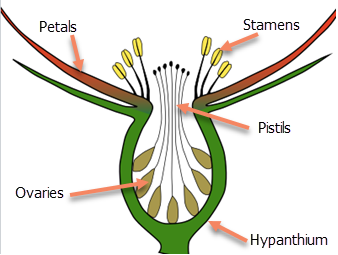
inflorescence
flowers are borne in clusters
nectar
sugary water secreted by nectaries, reward for pollinators
pollen vectors
biotic: pollen is transported by animals. flowers are key to attracting the right pollinator; colors might form nectar guide that points the pollinator.
abiotic: pollen carried by wind or water
wind-pollinated plants
don’t waste resources; usually small, colorless, odorless.
sometimes flowers are produced before new leaves emerge
self vs cross pollination
cross-pollination: one plant getting pollen from another, increases genetic recombination
self-polination: transfer pollen from the anther to stigma of same flower or from one flower to another in same plant. allows for reproducing in sparse conditions
seeds & fruits
seeds are mature ovules, containing the embryonic plant
fruits are ripened ovaries with the seeds
seed development
after fertilization, the 3n nucleus produces the endosperm.
the zygote produces the embryo and suspensor
integuments become seed coat
perisperm
in many plants, the nucellus becomes this source of nutrition
simple fruits
the ovary wall develops into the pericarp
other tissues of the flower are known as accessory
layers of pericarp
exocarp: outer layer, often the skin of the fruit. can contain oil glands or hairs
mesocarp: middle layer, sometimes the fleshy layer or a protective layer
endocarp: the inner layer, can be a protective layer or soft
types of fruits
simple fruits: derived from a single ovary
aggregate fruits: derived from many separate ovaries of a single flower
multiple fruits: derived from enlarged ovaries of several flowers
classification of simple fruit
by whether the pericarp is dry or fleshy
fleshy fruits can be classified by the number of carpels, the position of the ovary, and how the pericarp develops
dry fruits can be classified by whether they split open (dehiscent) or not (indehiscent), position of ovary, number of carpels, etc.
simple fruits: dry and dehiscent
legume: arises from single carpel, which opens along 2 sides at maturity
follicle: arises from single carpel, open only along one side when mature
capsules: derived from a compound ovary, opens along top side
silique: derived from a flower with superior ovary and 2 locules; splits in 3 portions at maturity
simple fruits: dry and indehiscent
achene: dry, one-seeded fruit; pericarp is easily separated from the thin seed coat
caryopsis: fruit of the grass family; also one-seeded fruit, but pericarp and seed coat are fused
samara: typified by an outgrowth of ovary wall to form wing-like structures. can be 1 or 2 seeded
schizocarp: 2 carpels that can be split into 2 one-seeded halves
nut: one seeded fruit with a hard, stony pericarp
drupe
single fleshy fruit; derived from a single carpel; usually one seeded. thin exocarp, fleshy mesocarp, and hard encdocarp
berry
single fleshy fruit. Derived from compound, superior ovary
fleshy pericarp with undefined layers
types of berries
hesperidium: has oil cavities in exocarp and mesocarp, and endocarp as juicy pulp segments (oranges)
pepo: fleshy mesocarp and endocarp, rind made by receptacle fused with exocarp (cucmber, watermelom)
pome
single fleshy fruit derived from flower with inferior ovary
flesh is the enlarged hypanthium and core is the ovary (apple)
aggregate fruit
formed from numerous ovaries of a single flower
each ovary has a single carpel and as they grow, they form drupelets that coalesce into a larger unit
strawberries are considered
accessory fruit.
ovaries → achene, receptacle becomes fleshy red tissue
multiple fruit
ovaries of several flowers that coalesce as they grow
receptacle of some enlarges into fleshy edible tissue
parthenocarpy
development of fruit without fertilization
no seeds
roles of fruit
aid in seed dispersal
deter inappropriate seed-dispersal
protect the seeds from certain herbivores
dispersal mechanisms
abiotic vectors: wind & water, adaptations wings & plumes
biotic vectors: animals
no vector: ballistic dispersal
water adaptations: air pockets, seeds carried by flash floods
bryophytes include
mosses, liverworts, hornworts
land plants evolved from
green algae. Most direct ancestor: charophytes
evidence: share chemical & metabolic traits, photosynthetic piigments, store excess carbs as starch, contain cellulose
adaptations for life on land
cuticle: waxy covering over epidermis of aerial plant parts, prevents dessication (water loss)
stomata: small pore in plant epidermis, allows gas exchnage
plant life cycle
alternation of generations: haploid gametophytes, diploid sporophyte
gametangia
plant sex organs. Contains protective outer layer of sterile cells, and gametes.
male: antheridium, female: archegonium
4 main groups of plants
Bryophytes: nonvascular, spores (mosses, stoneworts, liverworts
seedless vascular plants, spores (club mosses, ferns)
gymnosperms, seeds (conifers, cycads, ginkgoes, gnetophytes)
angiosperms (flowering plants), seeds (monocots, eudicots)
bryophytes
nonvascular plants: cannot extensively transport, rely on diffusion & osmosis to obtain water and nutrients
some have cuticle, some absorb water through leaves, most require moist environments to reproduce
phyla of bryophytes
Phlyum bryophyta: mosses
phylum hepatophyta: liverworts
phylum anthocerophyta: hornoworts
all are gametophyte dominant
mosses
help form soil, colonize rocky sites that were previously colonized by lichens
moss body: thallus (body structure), rhizoids (hair-like absorptive tissues)
many have separate sexes, gametophyte gen dominates
sporophytes consist of
a foot, seta, and capsule
liverworts
thallus: body that lacks stem, roots, leaves
gemmae: asexual reproductive structure of luverworts, small balls of tissue, borne in a saucer-shaped structure

hornworts
found in fields & roadsides. Thalloids: 1-2 cm
sporophyte generations form hornlike projections out of gametophyte thallus
genes
sequences of nucleotides in DNA. Each has a locus
chromosomes
DNA combines with proteins to form chromatin. Divided into discrete strands called chromosomes
diploid organisms have homologs
homozygous: identical alleles (Mendel)
test cross
mating a dihybrid with a homozygous recessive (each combo of alleles produced ini equal numbers