PCA FAY27
 Call Kai
 Learn
 Practice Test
 Spaced Repetition
 Match
 Flashcards
 Knowt Play
1/72

There's no tags or description
Looks like no tags are added yet.
73 Terms
Strategic Intelligence
Senior military and civilians. NSC and HSC give objectives which SecWar, combatant commanders, and the JCS discuss. Focus on national policy and theater strategy. Understand global situation.
Operational Intelligence
Force commanders. Understand military capability of our enemies and influence their disposition before combat. Monitor events in area of interest. Conduct campaigns and major operations.
Tactical Intelligence
Commanders. Focus on planning and execution of tactical objectives. Conduct battles, engagements, and small unit/crew actions.
Radio Frequency (RF) Communications
Range of 3kHz to 300kHz covering High Frequency, Very High Frequency, and Ultra High Frequency. Our enemies conduct harmful interference including jamming (impairing communications circuits) and imitative (deception through fraudulent transmissions).
Satellite Communications
Utilizes satellites to communication for increased access, redundancy, and improved performance than terrestrial.
Terrestrial Network Infrastructure
Run by transmitters within Earth’s atmosphere relying on cell towers.
Joint Intelligence Preparation of the Operational Environment (JIPOE)
Analytical process used to produce intelligence assessments to support Joint Force Commanders’ decision making to reach a desired endstate.
JIPOE 1
Define operational environment.
JIPOE 2
Describe the impact of the operational environment.
JIPOE 3
Evaluate adversarial and other actors.
JIPOE 4
Determine course of action from most to least likely and most dangerous to friendliest.
S1 (Supply)
Stock control: ship’s operating budget.
S2 (Supply)
Food service.
S3 (Supply)
Retail services: vending machines, ship store, etc.
S4 (Supply)
Disbursing: distribute Navy cash onboard.
CS
Culinary specialist. Operate and manage Navy messes.
LS
Logistics specialist. Customer service, accounting, and supply organization.
RS
Retail specialist. Sale of supplies (ship stores, vending machines, laundry, barbershop) to improve morale.
Typical Shipboard Divisional Chain of Command

Mission of the Navy
The United States is a maritime nation, and the U.S. Navy protects America at sea. Alongside our allies and partners, we defend freedom, preserve economic prosperity, and keep the seas open and free. Our nation is engaged in long-term competition. To defend American interests around the globe, the U.S. Navy must remain prepared to execute our timeless role, as directed by Congress and the President.
Mission of the Army
To deploy, fight and win our nation’s wars by providing ready, prompt and sustained land dominance by Army forces across the full spectrum of conflict as part of the joint force.
Air Force Mission
The mission of the United States Air Force is to fly, fight and win - airpower anytime, anywhere.
Space Force Mission
Secure our Nation’s Interests in, from, and to Space.
Coast Guard Mission
The mission of the United States Coast Guard is to ensure our Nation's maritime safety, security and stewardship.
1st Step NPP
Mission analysis: understand situation, produce mission statement.
2nd Step NPP
Course of Action development: examine for validity by ensuring suitability, feasibility, acceptability, distinguishability, and completeness.
3rd Step NPP
Wargaming
4th Step NPP
Course of Action comparison and decision: all retained COAs are decoded upon by the commander.
5th Step NPP
Plan or Order Development: Develop plans based on COA the commander chose.
6th Step NPP
Transition: handover of orders to those executing.
The Composite Warfare Commander Doctrine
Allows the OTC to execute a decentralized command philosophy. Can be implemented at any time and level.
Call Signs of the Composite Warfare Commander Doctrine


AEGIS Weapon System
Centralized, automated, command-and-control, and weapons control. Total system from detection to kill. AN/SPY Radar. 100+ targets at a 256+ mi range. 5 components: SPY Radar, Fire Control System, Command and Decision computer, standard missiles. On all DDG 51+
AN/SQQ-89 Undersea Warfare
USW/ASW detection and targeting capability. Combines active and passive sonar data. On DDGs.

BGM-109 Tomahawk Land and Attack Missile (TLAM)
All-weather long range subsonic cruise missile for deep land attacks. Files at extremely low altitudes. On DDGs.
Littoral Combat Ship Mission Modules

MK 15 Phalanx Close-in Weapon System (CIWS)
Inner layer point defense. Evaluates, tracks, and engages ASM and aircraft. Only weapon capable of searching autonomously. On DDGs, LSDs, and CVNs.
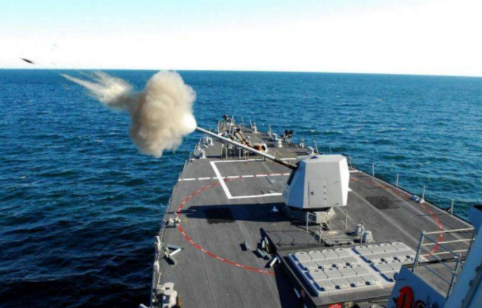
MK 5” 54/62 Caliber
Fire support for expeditory operations. 20 round automatic loader drum. 16-20 rounds per min. On DDGs.

MK 46 Torpedo
Warhead of 100lbs, NATO standard, introduced in 1965. On DDGs.

MK 54 Torpedo (Lightweight Hybrid Torpedo - LHT)
Uses hardware and software from MK46 and MK50. Advanced guidance and control, increased performance. On DDGs.

RIM-116 Rolling Airframe Missile (RAM)
Lightweight, quick-reaction, fire and forget missile for air and surface. No shipboard support needed. On LHA, LHD, LPD, CVN, LSD, LCS.

RIM-162 Evolved Sea Sparrow Missile (ESSM)
Mid-range semi-active homing missile using data uplinks. Defends against cruise missiles and helos. On CVA, LHA, LHD, DDG, Zumwalt.

RGM-84 Harpoon
Active radar guidance and sea skimming mean high survivability and effectiveness. On DDGs, LCS.

SM-2 and SM-6 Standard Missiles
Launched from VLS. Fleet area defense, extended area capable on sea and land. On DDGs and LCS.

SM-3 Standard Missile
Destroy short to mid range ballistic missiles. Hit-to-kill sheer force. Works with any AEGIS ship.
SSDS
Combat management system to track and engage incoming threats. While AEGIS is offensive, SSDS has a range of less than 25 miles and is exclusively defensive. On amphibious ships and aircraft carriers.

REMUS
Side-scan sonar for ocean floor imagining. Programmed with a laptop. Supports MCM.

MK48 and MK48ADCAP (ADvanced CAPability) Torpedoes
Principal heavyweight anti-sub and anti-surface torpedo. Acoustic homing with onboard SONAR. ADCAP improves speed and accuracy, sinking most ships.
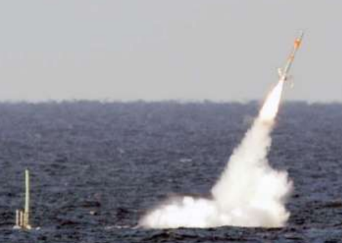
Tomahawk Cruise Missile
All-weather long-range subsonic cruise missile for land attack. Can be launched from torpedo tubes or VLS. Conventional 1000lb warhead.

Trident II (D5) Submarine Launched Ballistic Missile (SLBM)
Deployed from Ohio SSBNs. Range of 4000+ miles. Launched with pressure inside an air bubble, then ejecting out of the water with first stage motor igniting. Each missile contains multiple nuclear warheads housed in multiple re-entry vehicles (MIRVs).

Dry Dock Shelters (DDS)
Can launch SEAL Delivery Vehicles (SDVs) or Combat Rubber Raiding Crafts (CRRCs) without having to resurface.
SSN Deployment
6 months
SSGN Deployments
15 months
SSBN Deployments
77 days at sea followed by 35 days in port. Blue and Gold crews.
EOOW (submarine)
Monitors nuclear systems and engines. Maximizes propulsion for submarine operations and warfighting.
Contact Manager (submarine)
Provides an accurate contact picture to OOD. Leads sonar and fire control. Provides recommendations for navigational and tactical decisions.
OOD (submarine)
Drives the ship and acts as the CO’s representative on the bridge.
SDO/EDO
In-port operations, housekeeping, in-port casualties, and admin.
Squadron Type Decoder

Squadron Designations

Commander of an Air Wing is…
CAG. Holds the rank of Captain and reports directly to the Carrier Strike Group (CSG) Commander.
Carrier Air Wing contains…
70 aircraft.

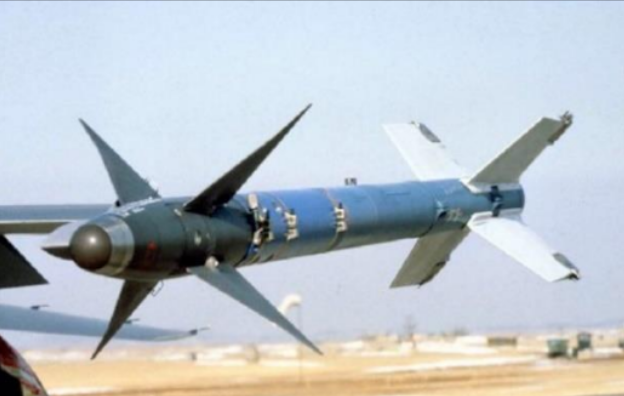
AIM-9X Sidewinder
Detects, acquires, intercepts, and destroys airborne threats. Delivers a datalink-enabled, launch and leave, munition using passive infrared energy to track enemy air targets. First shot, first kill Within Visual Range (WVR). On F/A-18E/F and F-35B/C.

AIM-120 AMRAAM
Advanced Medium-Range, Air-to-Air missile with all-weather, beyond-visual-range capability. Follows the AIM-7 Sparrow series. Faster, smaller, lighter, and better against low-altitude targets. On F/A-18E/F, E/A-18G, and F-35B/C.

Joint Direct Attack Munition (JDAM)
Guidance kit which converts existing bombs into ‘smart’ munitions. The tail section contains an inertial navigational system (INS) and GPS. Improves accuracy in all weather conditions. On F/A-18E/F and F-35B/C.

AGM-88 HARM
The high-speed anti-radiation missile is air-to-surface used to destroy enemy radar-equipped air defense systems. Minimum aircrew input. Fixed antenna and seeker head in the missile nose. Smokeless, solid-propellant, dual-thrust rocket motor to propel missile. On F/A-18E/F, E/A-18G, and F-35B/C.
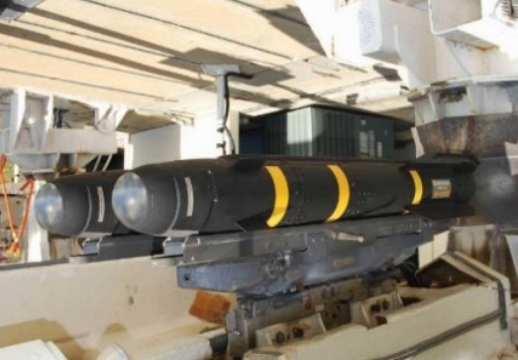
AGM-114 Hellfire
Air-to-ground, laser guided, subsonic missile with antitank capability. Used in air-to-air combat against helos and slow-moving fixed wing. On MH-60R/S.

MK-54 Torpedo
This lightweight hybrid torpedo is a surface ship and aircraft-launched anti-submarine weapon. On MH-60R and P-8A.
General lifecycle of a Fleet Squadron…
Approximately 36 months. 4 phases. Lifecycles can be split into 2 categories: carrier-based and land-based (maritime and TACAMO).
Fleet Squadron Lifecycle Phase 1
Maintenance: 6 months to ensure readiness. Training and administrative requirements.
Fleet Squadron Lifecycle Phase 2
Work-up: 8 months including Advanced Readiness Program (ARP), Airwing Fallon, and COMPTUEX/JTFX. The most taxing phase.
Fleet Squadron Lifecycle Phase 3
Deployment: 7ish months with approximately 4.5 months transiting to and from the operational area.
Fleet Squadron Lifecycle Phase 4
Sustainment: “Surge” phase where the CSG is usually in port. 15 months to maintain proficiency.