psych 670, Chap 7 Deployment of selection systems
 Call Kai
 Learn
Learn Practice Test
 Spaced Repetition
 Match
Match Flashcards
 Knowt Play
1/36

Earn XP
Description and Tags
Personnel Selection Deployment of selections
Name | Mastery | Learn | Test | Matching | Spaced | Call with Kai | Chat |
|---|
No analytics yet
Send a link to your students to track their progress
37 Terms

Recruitment
Increasing the number of job applicants, seeing if they are a quality fit with
the open position
The organization’s culture
Meets organization’s legal and ethical obligations to diversity.
Selection Process Steps (First 3 steps)
Choose the recruitment strategy that maximizes the pool of qualified applicants
Ensure the predictors are valid to hire the best employees
Ensure that predictors are legally defensible
Selection Process Steps (Last 2 steps)
Address strategies for administering predictors and using predictor data. Ex: Mutliple cut-off approach or norm-based cut-off score
Consider the applicant’s experience in the hiring process (applicant reactions)

Goals of recruitment
Increase hiring pool
Have “qualified” candidates
Increase and maintain workforce diversity

Types of recruitment methods
Web page
Career fair
career website
professional social networking sites
Employee referrals
Employee referral pros and cons
Pros:
More likely to get highly qualified applicants that know about the organization.
Cons:
Attract more people that are like the current employees, in terms of background, gender, and ethnicity.

Factors that affect application attraction to an organization
Characteristics of a job and organization
Behavior of recruiter
If the applicant thinks that they would be a good fit for the organization
Word of mouth

3 reasons as to why validity of the selection procedure matters
Organizations don’t want to waste resources, time, and money. So pick one that works.
Organizations can choose what they think are strong predictors of high validity to select the best talent.
Legal reasons: Proof of validity is essential for defending test in cases of adverse impact against legally protected groups.
Content Validity
The degree that a selection procedure does what it’s supposed to.
Ex: Customer service test was created by talking with SME to develop questions.
Face Validity
Does the test appear to measure what t’s supposed to?
Ex: CPR/FA test having questions about choking.
Issues with Content Validity
People confuse it with face validity. However, content validity involves input from SME about selection procedures.
Does not involve the demonstration of empirical relationship between test and job. There’s controversial effects.
Only useful on small samples. Large studies show validity is impossible for large samples.
R² Value
Percentage of Variance, used in multiple regression test.

Criterion-Related Validity
Showing a statistical relationship between test and criterion measures of job performance is usually done through correlation or linear regression.

Validity coefficent
Correlation between test and criterion. Shows magnitude of relationship between test and job performance.
Predictive Validity
A mode of criterion-related validity. Test is given to a group of applicants; then, after they have been hired (and some time has passed), we look at their performance to determine if it was predicted well.
Concurrent Validity
A mode of criterion-related validity. Test is given to current employees. Test scores are then related to current job performance.
Cross validation
After the initial criterion related validity is established, confirm it with a another sample.
Shrinkage
When the R² in Cross validity 2nd sample doesn’t match the R² in original validity sample.
Validity generalization
Assuming a test is valid for other similar jobs.
Ex: A test for mechanical ability test helps Shop A find a qualified car mechanic, so the same test should help Shop B find a car mechanic.
Situational Specificity hypothesis
A hypothesis that questions if one test works for one job. We cannot assume the test will be valid in other settings.
Case law
Any law that goes into effect after a court case.
Ex: Loving v Virginia, legalizing interracial marriage
Equal Employment opportunity Commission (EEOC)
Government agency that monitors the equal opportunity against all groups through selection procedures and pay.
Protected group
Individual protected under the law.
Ex: Women, ethnic groups, people over 40

Executive Orders
A type of law for federal contractors that governs employment practices.

Disparate treatment
Overt discrimination. Intentionally discriminating on the employers part.
Ex: Hiring only men for construction workers.

Adverse impact
Employer did not realize a test or predictor for selection procedures favors one group over another.
Ex: Cognitive ability test favors white people over minorities.

4/5 or 80% rule
U.S court rule for adverse impact. Selection ratio for protected groups should be at least 80% of selection for unprotected groups.

Multiple cut off approach
When using multiple predictors for a selection process, applicants must score a minimum score for each test to get hired.

Multiple hurdle approach
When doing multiple predictors, applicants must score a minimum score in order to move on to the next test.
Norm based cut off score
An organization would create a cut off score based on average score of previous applicants.
Criterion-referenced cut-off score
Cut off score that corresponds to what is considered minimally acceptable job performance
Band
A range of predictor scores are grouped together and considered statistically equal.
Ex: Josh gets a 91, Heather got a 93, we can bond them together.
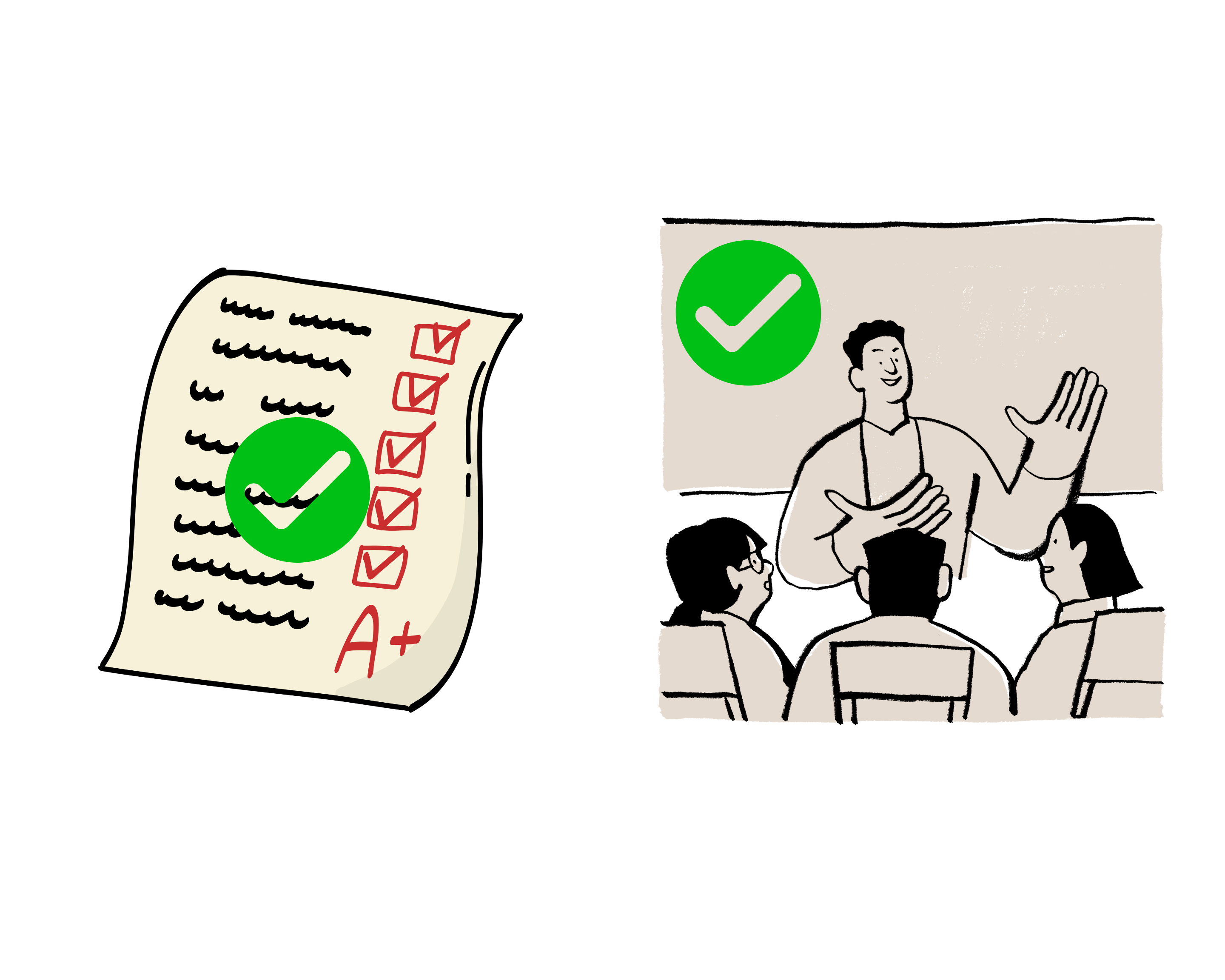
True positive
Passed selection procedure, and is a good performer

True Negative
Failed selection procedure, thankfully would’ve been a bad performer
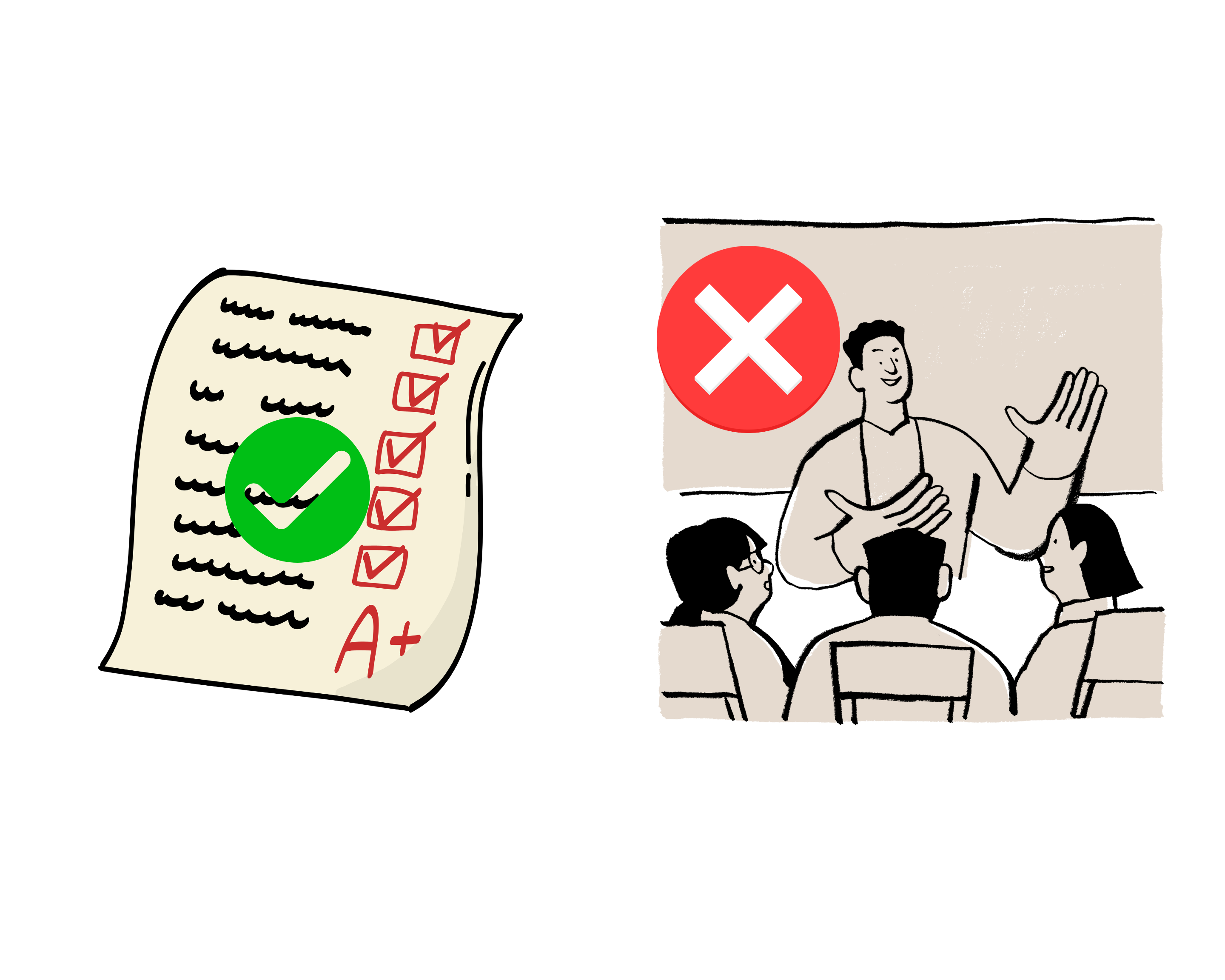
False positive
Passed selection, bad employee/performer

False Negative
Failed selection, however would’ve been a good performer.

Selection ratio
Number of job vacancies versus job applicants