FRST 307 Lab

0.0(0)
Studied by 0 people
call kaiCall Kai
learnLearn
examPractice Test
spaced repetitionSpaced Repetition
heart puzzleMatch
flashcardsFlashcards
GameKnowt Play
Card Sorting

1/47

encourage image

There's no tags or description

Looks like no tags are added yet.

48 Terms
1
New cards
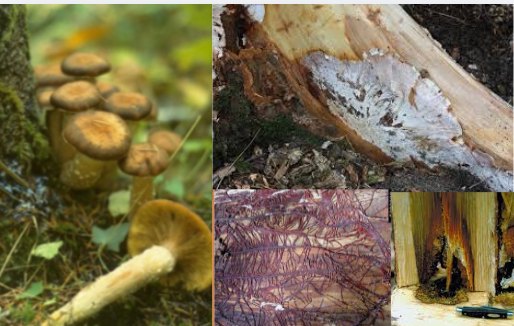
<ul><li><p>white rot </p></li><li><p>cambial mycelia fans </p></li><li><p>rhizomorphs</p></li><li><p>tan coloured, gilled fruiting bodies</p></li><li><p>predominantly conifers</p></li></ul><p></p>
  • white rot

  • cambial mycelia fans

  • rhizomorphs

  • tan coloured, gilled fruiting bodies

  • predominantly conifers


Armillaria Solidipes

2
New cards
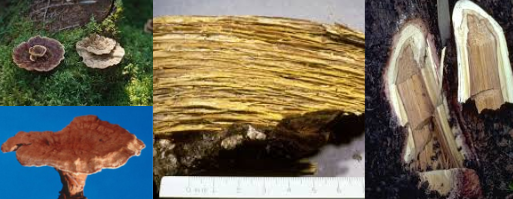
<ul><li><p>pitted white rot</p></li><li><p>fruiting body - upper surface brown/black, lower surface white </p><ul><li><p>large, at the base of trunk</p></li><li><p>shelf like, slightly upturned</p></li></ul></li><li><p>western hemlock</p></li></ul><p></p>
  • pitted white rot

  • fruiting body - upper surface brown/black, lower surface white

    • large, at the base of trunk

    • shelf like, slightly upturned

  • western hemlock


Heterobasidion annosum
3
New cards
<ul><li><p>pitted white rot (<em>honeycomb </em>appearance)</p></li><li><p>fruiting body - upper surface yellow brown/rust brown, lower surface - yellow/greybrown</p><ul><li><p>almost funnel like</p></li></ul></li><li><p>spruces, true firs, pines</p></li></ul><p></p>
  • pitted white rot (honeycomb appearance)

  • fruiting body - upper surface yellow brown/rust brown, lower surface - yellow/greybrown

    • almost funnel like

  • spruces, true firs, pines


onnia tomentosa

4
New cards
<ul><li><p>laminated root disease</p></li><li><p>ectotrophic grey-white mycellium on roots + bark </p></li><li><p>mycellium can be covered by crust like tan/brown layer </p></li><li><p>doug fir </p></li></ul><p></p>
  • laminated root disease

  • ectotrophic grey-white mycellium on roots + bark

  • mycellium can be covered by crust like tan/brown layer

  • doug fir


coniferiporia sulphurascens

5
New cards
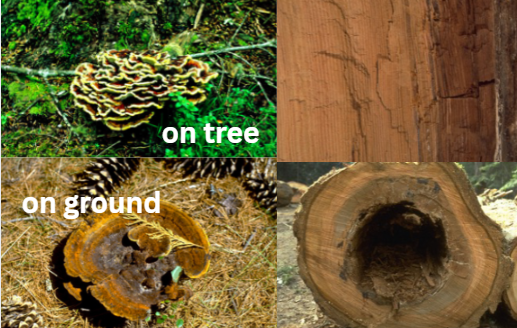
<ul><li><p>cubical brown rot </p></li><li><p>fruiting body </p><ul><li><p>shelf like on trees </p></li><li><p>funnel like on ground </p></li><li><p>yellow - orange (young), red - brown (old) in zones (ON TOP) </p><ul><li><p>lower surface = yellow green</p></li></ul></li></ul></li><li><p>advanced decay = large red brown cubes w mycelial mats</p></li></ul><p></p>
  • cubical brown rot

  • fruiting body

    • shelf like on trees

    • funnel like on ground

    • yellow - orange (young), red - brown (old) in zones (ON TOP)

      • lower surface = yellow green

  • advanced decay = large red brown cubes w mycelial mats


Phaeolus hispidoides

6
New cards
<ul><li><p>no decay </p></li><li><p>small ascomycete (RARE)</p></li><li><p>root pathogen</p></li></ul><p></p>
  • no decay

  • small ascomycete (RARE)

  • root pathogen


Grosmannia wageneri

7
New cards
<ul><li><p>brown stringy heart rot</p></li><li><p>fruiting body</p><ul><li><p>upper - black + cracked</p></li><li><p>lower - black (grey when young)</p></li><li><p>hoof shaped and hard</p></li></ul></li><li><p>incipient decay = light brown heartwood stain</p></li></ul><p></p>
  • brown stringy heart rot

  • fruiting body

    • upper - black + cracked

    • lower - black (grey when young)

    • hoof shaped and hard

  • incipient decay = light brown heartwood stain


Echinodontium tinctorium

8
New cards
<ul><li><p>brown cubical heart rot</p></li><li><p>fruiting body</p><ul><li><p>marshmallow-esque, collumnar or hoof shaped</p></li><li><p>upper - white (fresh), grey/brown (old)</p></li><li><p>lower - white (fresh), light brown (dry)</p></li></ul></li><li><p>incipient decay = yellow/red brown stain</p></li></ul><p></p>
  • brown cubical heart rot

  • fruiting body

    • marshmallow-esque, collumnar or hoof shaped

    • upper - white (fresh), grey/brown (old)

    • lower - white (fresh), light brown (dry)

  • incipient decay = yellow/red brown stain


Laricifomes officinalis

9
New cards
<ul><li><p>brown cubical sap/heart rot </p></li><li><p>fruiting body</p><ul><li><p>shelf-like/hoof-shaped</p></li><li><p>upper surface - red/brown margin, other ranges from dark brown-grey-black</p></li><li><p>lower surface - white to cream</p></li></ul></li><li><p>possible mycelial mats in advanced decay </p></li></ul><p></p>
  • brown cubical sap/heart rot

  • fruiting body

    • shelf-like/hoof-shaped

    • upper surface - red/brown margin, other ranges from dark brown-grey-black

    • lower surface - white to cream

  • possible mycelial mats in advanced decay


Fomitopsis mounceae

10
New cards
<ul><li><p>White spongy heart rot</p></li><li><p>fruiting body</p><ul><li><p>VERY flat + defined shelf</p></li><li><p>top = light brown often covered with brown dust</p></li><li><p>bottom = white</p></li></ul></li><li><p>advanced decay - white spongy mottled wood</p></li></ul><p></p>
  • White spongy heart rot

  • fruiting body

    • VERY flat + defined shelf

    • top = light brown often covered with brown dust

    • bottom = white

  • advanced decay - white spongy mottled wood


Ganoderma applanatum

11
New cards
<ul><li><p>brown cubical sap rot </p></li><li><p>fruiting body </p><ul><li><p>shelf like but <em>gilled</em> underside</p></li><li><p>top = light - dark cinnamon brown </p></li><li><p>bottom = light brown</p></li></ul></li></ul><p></p>
  • brown cubical sap rot

  • fruiting body

    • shelf like but gilled underside

    • top = light - dark cinnamon brown

    • bottom = light brown


Gloeophyllum sepiarium

12
New cards
<ul><li><p>brown cubical heartrot</p></li><li><p>fruiting body</p><ul><li><p>upper = bright orangy yellow</p></li><li><p>lower = yellow</p></li><li><p>wavy shelfs clustered together</p></li></ul></li><li><p>advanced decay = small red-brown cubes</p></li></ul><p></p>
  • brown cubical heartrot

  • fruiting body

    • upper = bright orangy yellow

    • lower = yellow

    • wavy shelfs clustered together

  • advanced decay = small red-brown cubes


Laetiporus sulphureus

13
New cards
<ul><li><p>white pitted heart/sap wood rot</p></li><li><p>furiting body </p><ul><li><p>upper = ridged, light-dark greyish brown</p></li><li><p>lower = light brown</p></li><li><p>hoof shaped or effused reflexed or shelf like</p></li></ul></li><li><p>advanced decay can have dark zone lines, white wood fibers</p></li></ul><p></p>
  • white pitted heart/sap wood rot

  • furiting body

    • upper = ridged, light-dark greyish brown

    • lower = light brown

    • hoof shaped or effused reflexed or shelf like

  • advanced decay can have dark zone lines, white wood fibers


Porodaedalea pini

14
New cards
<ul><li><p>white rot </p></li><li><p>advanced decay = black zone lines </p></li><li><p>fruiting body </p><ul><li><p>shelf life </p></li><li><p>upper = grey/black</p></li><li><p>lower = brown</p></li></ul></li><li><p><em>only on aspen (populus)</em></p></li></ul><p></p>
  • white rot

  • advanced decay = black zone lines

  • fruiting body

    • shelf life

    • upper = grey/black

    • lower = brown

  • only on aspen (populus)


Phellinus tremulae

15
New cards
<ul><li><p>white spongy rot</p></li><li><p>dark zone lines </p></li><li><p>fruiting bodies </p><ul><li><p>shelf like </p></li><li><p>upper = multicoloured (so pretty)</p></li><li><p>lower surface = white cream/grey</p></li></ul></li></ul><p></p>
  • white spongy rot

  • dark zone lines

  • fruiting bodies

    • shelf like

    • upper = multicoloured (so pretty)

    • lower surface = white cream/grey


Trametes versicolor

16
New cards

What are the two types of fruiting bodies for atropellis piniphila

  1. pycnidia - on young cankers (perrennial cankers on branches/stems + resinosis)

  2. apothecia - in the center of cankers (black saucer-like structures)

  • blue/black stain in sapwood, and branch flagging (griddled branches from cakers)


17
New cards
<ul><li><p>infects pinus species (lodgepole pine/pondorosa pine)</p></li><li><p>distorted growth</p></li><li><p>has two types of signs</p></li></ul><p></p>
  • infects pinus species (lodgepole pine/pondorosa pine)

  • distorted growth

  • has two types of signs


Atropellis piniphila

18
New cards

signs and symptoms of entoleuca mammata


signs

  • perithecia - grey when young, black when mature, visible on canker surface


symptoms

  • diffuse cankers (sunken yellow area on abrk)

  • cracking bark

  • stem breakage

  • leaf wilt


19
New cards
<ul><li><p>on aspen, willow, sitka alder (<em>broadleaf bc species)</em></p></li><li><p>diffuse orange cankers</p></li><li><p>greyish/black sexual fruiting bodies</p></li></ul><p></p>
  • on aspen, willow, sitka alder (broadleaf bc species)

  • diffuse orange cankers

  • greyish/black sexual fruiting bodies


Entoleuca mammata

20
New cards

signs + symptoms of neonectria spp.

signs

  • perithecia (Sexual)

  • sporodochia (cause flagging, small brightly coloured red/orange)

    • both grow from cankered bark

symptoms

  • perrenial cankers - tree makes concentric circles of callused tissue

  • sunken cankers

  • branch flagging (sporodochia)


21
New cards
<ul><li><p>BC broadleaf species </p></li><li><p>perrenial cankers (Concentric circles, flagging, sunken cankers) </p></li><li><p>perithecia and sporodochia</p></li></ul><p></p>
  • BC broadleaf species

  • perrenial cankers (Concentric circles, flagging, sunken cankers)

  • perithecia and sporodochia


Neonectria spp.

22
New cards

hosts of chrysomyxa pirolata

acial (most damaging)

  • spruce (picea)

telial

  • wintergreens


23
New cards
  • infect spruce cones = destroy cone crop

  • in telial hosts, yellow uredinia are present on lower leaf surfaces


chrysomyxa pirolata

24
New cards

What hosts are involved with cronartium coleosporiodies

aecial (more severe)

  • pinus (cankers, chlorotic needles, aecial pustles, resionsis)

telial

  • scrophulariaceae spp

    • uredinia (+telia) form on underside of leaf


25
New cards
<ul><li><p>stem gridling + deformation </p></li><li><p>cankers, chlorotic leaves, resinosis</p></li><li><p>aceial pustles on brances, uredinia on telial host</p></li></ul><p></p>
  • stem gridling + deformation

  • cankers, chlorotic leaves, resinosis

  • aceial pustles on brances, uredinia on telial host


cronartium coleosporioides

26
New cards
  • Hosts + signs + symptoms of cronartium comandrae


aecial

  • pinus

    • perrenial cankers, aecial pustles, chlorotic needles, pear shaped aeciospores

telial

  • comandra spp

    • uredinia on underside of leaves

    • chlorotic leaves, stem spots


27
New cards
<ul><li><p>cankers, chlorosis, aecial pustles, pear shaped aeciospores</p></li></ul><p></p>
  • cankers, chlorosis, aecial pustles, pear shaped aeciospores


Cronartium Comandrae

28
New cards

hosts + signs + symptoms of cronartium ribicola

aecial

  • pinus spp

    • cankers (diamond shaped + orange), aecial pustels, chlorisis + branch flagging


telial

  • Ribes spp.

    • uredinia on underside


29
New cards
<p>cankers (diamond shaped), aecial pustles, chlorosis</p>

cankers (diamond shaped), aecial pustles, chlorosis

Cronartium Ribicola

30
New cards

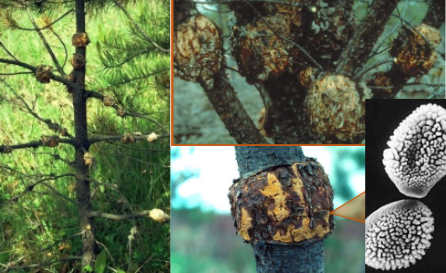
Hosts + symptoms of cronartium harknessii

AUTOECIOUS

  • pinus

    • galls, orange aecia, ellipsoid aeciospores, branch flagging

31
New cards
<ul><li><p>galls + orange aecia </p></li></ul><p></p>
  • galls + orange aecia


Cronartium Harknessii

32
New cards

Hosts + signs + symptoms of gymnosporangium Sabinae

Aecial

  • pyrus spp

    • yellowish/orange leaf spots, pycnia of backside of leaves, aecia

telial

  • juniperus spp

    • telialspores/bassidiospores (no uredinial stage)


33
New cards
<ul><li><p>yellow orange leaf spots</p></li><li><p>dark orange globular telia</p></li><li><p>aecia on backside of leaf</p></li></ul><p></p>
  • yellow orange leaf spots

  • dark orange globular telia

  • aecia on backside of leaf


Gymnosporangium Sabinae

34
New cards

Signs + symptoms + hosts of melampsora occidentalis

Aecial

  • conifer spp

    • aecia are flat and form on needles + chlorotic needles

telial (worst)

  • populus spp

    • uredinia on both sides of the leaf as yellow spots


35
New cards
<ul><li><p>flat aecia on needles </p></li><li><p>orange/yellow aeciospores</p></li><li><p>yellow uredinia on broadleaf telial species</p></li></ul><p></p>
  • flat aecia on needles

  • orange/yellow aeciospores

  • yellow uredinia on broadleaf telial species


melampsora occidentalis

36
New cards
<p></p>


Arceuthobium tsugense

*WESTERN HEMLOCK

  • fan like, several shoots @ each node


37
New cards
term image

Arceuthobium americanum

LODGEPOLE PINE

  • distinct worhled pattern

  • several shoots at a node


38
New cards
term image

arceuthobium douglasii

DOUGLAS FIR

  • few branches


39
New cards
term image

arceuthobium laricis

WESTERN LARCH

  • fan-like


40
New cards
term image
  • pines (lodgepole + pondorosa)

  • acervuli + pseudothecia


41
New cards
term image

Lophodermiun Pinastri

  • pines (pond +lodgepol)

  • hysterothecia SPOTS


42
New cards
term image

elytroderma deformans

  • pines (lodg+pond)

  • hysterothecia SLITS


43
New cards
term image

rhytisma punctatum

  • apothecia

  • bigleaf maple


44
New cards
term image

Rhabdocline Pseudotsugae

  • doug fir

  • apothecia


45
New cards
term image

hypodermella laricis

  • western larch

  • hysterithecia

  • retained infected needes + discolouration


46
New cards
term image

nothophaeocryptopus gaeumannii

  • doug fir

  • phseudothecia


47
New cards
term image

didymascella thujiana

  • western redcedar

  • apothecia


48
New cards