Art After 1940 Midterm
 Call Kai
 Learn
Learn Practice Test
 Spaced Repetition
 Match
Match Flashcards
 Knowt Play
1/49

There's no tags or description
Looks like no tags are added yet.
Name | Mastery | Learn | Test | Matching | Spaced | Call with Kai | Chat |
|---|
No analytics yet
Send a link to your students to track their progress
50 Terms

Mark Rothko, Red on Red, 1949.
Abstract expressionism, birth of the “color field“ paintings, painted in many thin layers so you could see through the veils of paint, The way he handled the edges of the color are integral to his style, He wanted the color to seem to lift off the canvas, Everything was soft and blurred out at the edges, and he wanted the viewer to experiance extreme emotions when looking at his art

Willem de Kooning, Woman I, 1950-52.
More interested in vulgarity/grotesque than beauty, Considered an action painter but still worked on an easel, His woman series was inspired by oracles and goddesses from ancient cultures, Inspired by old things and contemporary things like Avon lipstick ads. Referential artist mimicked Picasso and West African masks as well as surrealist artists. abstract expressionist

Jackson Pollock, Number 1, 1948.
Used automatist technique, considered a dialogue with the materials, action painting where the canvas is the areana, The art is not the product but the action of creating, process over product, painted standing over the canvas which was laid on the ground. Abstract expressionist.
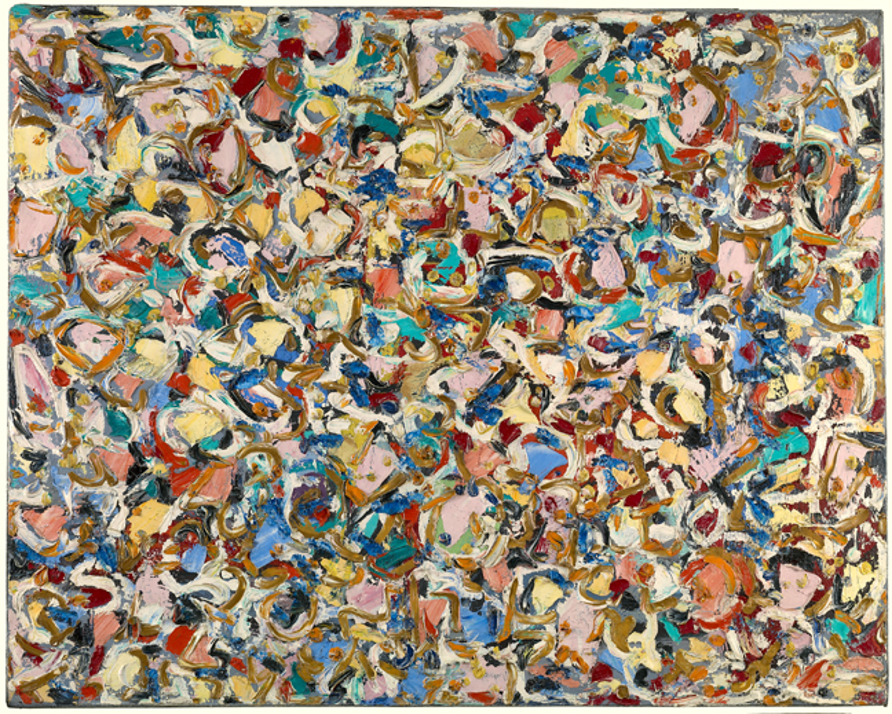
Lee Krasner, Noon, 1947 (from Little Images series).
Series of small works which were compressed and tightly composed tactile images, used color to move your eye around the canvas, used color to alter depth, she liked to let things go the way they were gonna go and not over work the painting. for most of her career she put her husbands (jackson pollock) career before hers. Abstract expressionist
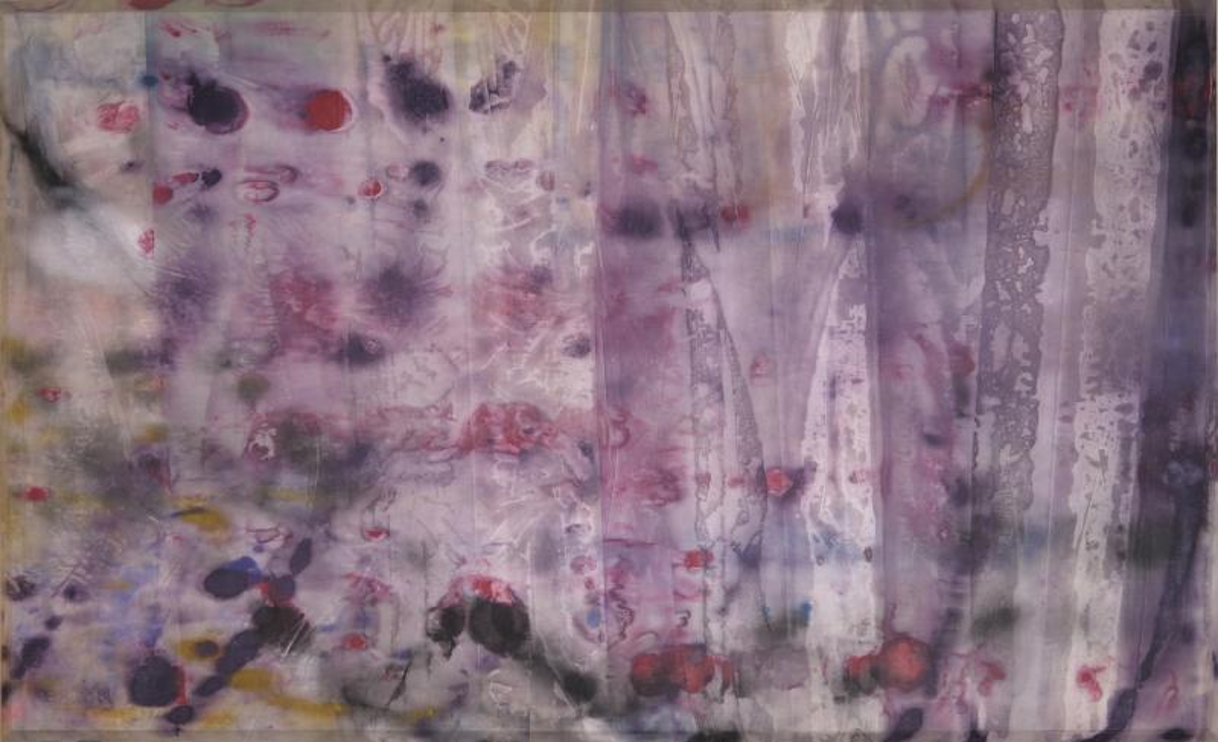
Sam Gilliam, April 4, 1969.
Stained canvas as opposed to applying thick paint, Said staining was about a purity of the optics and materials, created paintings that draped and were not stretched on a canvas. Would work on unstretched hanging canvas that he would stain with his diluted acrylics he would scrunch them up and fold them and then hang them to dry before adding more layers. Would sometimes make large works and hang them so people could walk under them. Said his work was not about him being black and that abstraction was wider than that. Abstract expressionist and color field painter.

Robert Rauschenberg, Erased de Kooning, 1953.
Wanted to find a way to bring drawing into the all whites, Made lots of erased drawings, Decided if the erased drawing must be an important work so he made it a deKooning, deKooning gave him an unfinished drawing that he really liked because dekooning thought it would be best to give him something he would miss, Rauschenberg spent a month erasing his work. Experimented with the idea of unmaking works, Experimented with white paintings and pairing things down to the absolute minimum.

Robert Rauschenberg, Bed, 1955.
Was made with a quilt and a pillow and hung vertically with lots of dripping paint and nail polish, controversial work, quilt gifted to him at black mountain collage, used his own sheets and pillows making it an intimate self portrait, found object collage. His work was not about him it was about the spectator and the world around him and life in general which was differnt from other abstract expressionists.
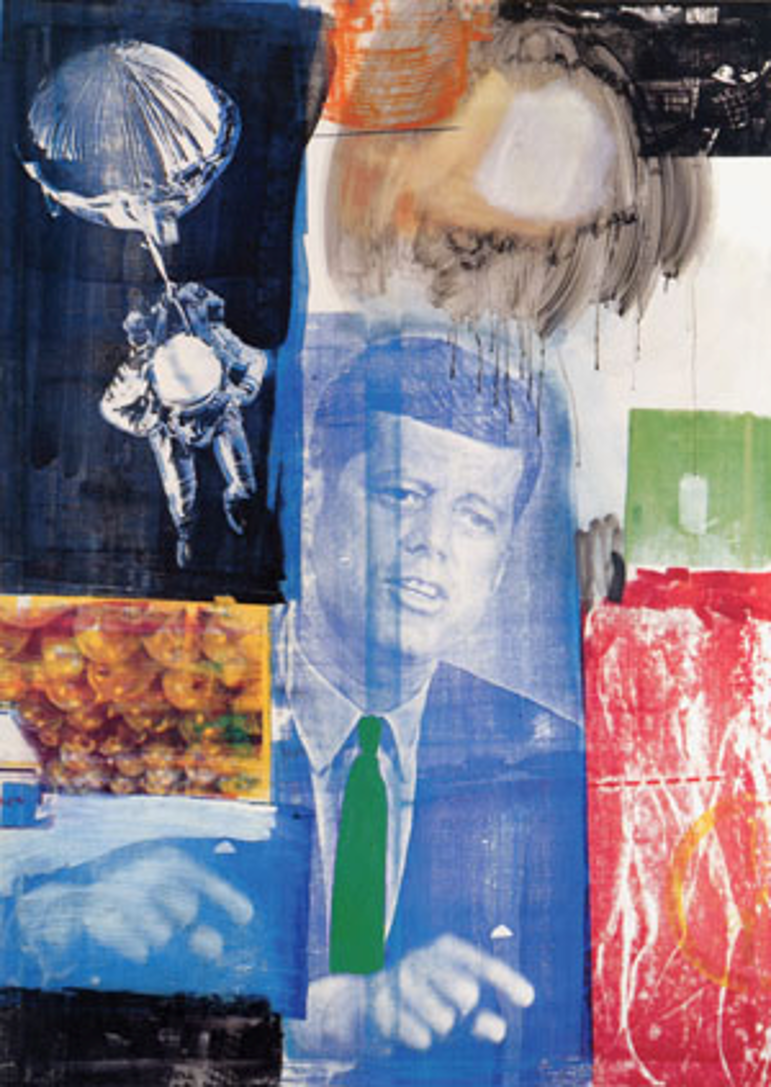
Robert Rauschenberg, Buffalo, 1964.
Uses silkscreen printing, Used in a stream of conscious way, Commented on commercialism and nationalism, Used repetition of forms and text, considered like a high tech collage, liked that he could play with color and scale. JFK was cinsidered highly volitile imagry after his assination making this work kinda controversial. abstract expressionist.

Jasper Johns, Flag, 1954.
Made of beeswax and will ocntinuously yellow overtime. Painted american flags as a response to the red and lavender scare, thought of the flag itself in its purest form as abstract art, He thought paintings meant more than what the author intended and should be ambiguous so that it is different for every person looking at it. interested in the idea of not recreating an object in an image but making a whole new object that stood on its own even it it was a recreation.

Jasper Johns, Target with Plaster Casts, 1955.
Controversial work because it included male genitalia. Had a fascination with targets and painted them often related to the laveneder and red scare, this one specifically related to the lavander scare because of the casts at the top. included moving parts where you could flip up the sections with the casts. museums refused to show it unless flap with the cast of the genitalia under it were closed.

Marcel Duchamp, Fountain, 1917.
A premade urinal he purchased that he turned on its side and signed R. Mutt. Original was lost because a gallery threw it out. Made “readymade” art which was a comment on what the art establishment wanted. Readymade art commented on what is beauty and what is art, Its not about craftsmanship its about concept, Disinterested in aesthetics, Presentation of an object without an analysis of it, Neither ugly nor beautiful and dispenses the idea of hierarchies of art vs non-art, Readymades questions the whole idea of art. Dada and conceptual artist.

Francis Bacon, Study for Crouching Nude, 1953.
Two figures, Dark overtones, May depict sexual interaction between men. Said “I would like my pictures to look as if a human being had passed through them like a snail- leaving its slime.” Tortured figures, geometry and his Interest in figures comes from late 19th century photography. Was self taught, no formal training.

Francis Bacon, Study after Velázquez’s Portrait of Pope Innocent X, 1953.
It shows a distorted version of Pope Innocent X, head of the Catholic Church from 1644 to 1655, as depicted in Spanish artist Diego Velázquez's Portrait of Innocent X. Bacon never painted from life only from other images. Painted many pope portraits and almost all the popes are depicted within cage-like structures, screaming or about to scream. Bacon identified as a Nietzschean and atheist, and some contemporary critics saw the series as symbolic execution scenes.


Arman, Poubelles (Trash Cans), 1961
Literally trash in glass boxes. Let the objects arrange themselves. Did "portraits" of others, Collected Rauchenberg’s trash and put it in a glass display case in 1970. Critiqued consumer culture and liked to think about “planned obsolescence.”

Yves Klein, Monochrome, c. 1955
Done with a paint roller, Painted with color he invented (I.K.B International Klein Blue), Did exhibition with 11 monochromes, all priced differently depending on their different level of “spirituality”, color field painting. found radical new ways to represent the infinite and immaterial in his works. One such strategy was monochrome abstraction—the use of one color over an entire canvas. Klein saw monochrome painting as an “open window to freedom, as the possibility of being immersed in the immeasurable existence of color.”

Yves Klein, Anthropometries of the Blue Age, 1960
Painted on naked women and used them as “Living brushes”. Had them drag each other on canvases while an orchestra played and people watched. Early performance art. literally objectifying women. shows how womens bodies are viewed in the artistic sphere.

Yoko Ono, Cut Piece, 1964.
Performance piece where she sat in the front of the room with scissors and allowed the audience to cut off pieces of her clothing at their own discretion. Repeated this performance multiple times. Remained completely silent and stone faced for the whole thing , At the end she was not fully naked but she had her bra straps cut off and was holding up her bra. Sat on her knees posed sort of submissively like in prayer. The audience is the piece.

Claes Oldenburg, Soft Bathtub, 1965.
Pop artist and Took regular things and things that have use and recreated them to remove their value. this was called a soft sculpture, where he used vinyl to softify things that are usually hard then hung them vertically. Did this with many different objects and it made them almost humanlike.

Roy Lichtenstein, Blam!, 1962.
Pop art painting inspired by a real comic book. Used war imagery and onomatopoeia together to create a shocking dissonance. Commentary on war and the trivialization and commercialization of it????

Andy Warhol, Marilyn Diptych, 1963
A very large silkscreen diptych made just after her suicide. Allowed silkscreen to break down in the artwork as a commentary on the fleetingness of beauty and celebrity Made multiple different versions of this in different sizes and colors with various numbers of repetition. Not meant to be like an obituary. Some think his subject is not marilyn but rather repetition and recognizability. Thought of as a drag image or hyperfeminization to the point of absurdity. Detached from who Marilyn was as a person. Art is not conceived in its relationship to the person but to the process itself and the branding

Andy Warhol, Orange Car Crash, 1963
Said in the future everyone will be famous for 15 minutes and it will likely be for something terrible. Takes newspaper imagery. Done very large with silkscreens. Made lots of these style of prints, downplays the horrors and makes them almost like a pattern on the screen with the bright colors. Picking up on how the media portrays things and how these terrible moments are immortalized. Made the horrors look almost decorative

Martha Rosler, Red Stripe Kitchen (House Beautiful: Bringing the War Home), c. 1967-72.
“The conflict in Vietnam has been dubbed the first “living-room war” because of the unprecedented way in which television carried images of the ongoing carnage into American households. Yet it was in frustration with what she perceived as the inadequacy of such mass-media images—their seeming remoteness from the concerns of daily life in the U.S.—that Martha Rosler produced this work.” Used collage and mixed together images from a home living type magazine and a war report.
Although they considered themselves to be individuals, what did the Abstract expressionists have in common?
They wanted to subvert expectations, create something new (techinques and ideas), express themselves, and challenge art industtry standards. They made art about themselves and to make art to say something.
In what ways did Jackson Pollock depart from traditional painting?
His style of painting is action painting
His paint is a document of his movements and there is a pattern there
Avoided pattern prettiness and acceptability
Destroyed the idea of foreground, midground, and background and started the idea of all-over compositions
Process was more important than product
This type of painting is sometimes considered a dialogue with the materials
used pure gesture and automatist technique

Jim Nutt, Miss E. Knows, 1967.
Chicago imaginist part of the hairy who group whose work aimed at subverting artistic conventions and standards of taste. Painted on plexiglass. Cartoonish style and grotesque and sexual imagery. inspired by pinball machines. many elements relate to the comic-strip style of hard, crisp forms standing out boldly against simple backgrounds.

Christina Ramberg, Waiting Lady, 1976.
Chicago imaginist who worked with acrylic on board. painted Fragmented females bodies with an emphasis on hair, lace, and vinyl textures. Painted textures very well. Heads were not often visible. used a controlled neutral pallet. Quilted and her paintings were inspired by her quilting at times. Weird kinky feminist works.
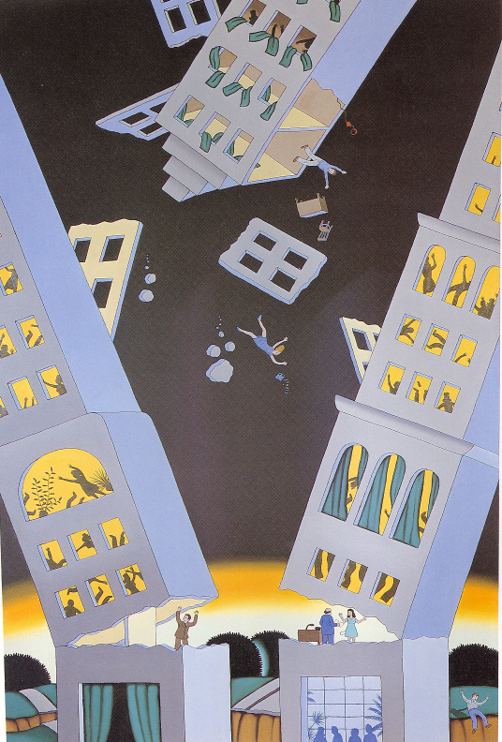
Roger Brown, Midnight Tremor, 1972.
One of his disaster paintings he said they were based on disaster movies: house fires, plane crashes, and other catastrophes… Dark comedy element to his work. Flattened colors and shadows. Used imposable light sources and lots of decorative elements.

Ed Pascheke, (Stripper Series) Joella, 1973
Used extremely bright and nauseating colors and lots of airbrushing. Painted strippers because of his interest in street culture, stip club posters, and people with a curated public persona. Chicago imaginist artist.

Edward Kienholz, The Wait, 1964-65.
California funk artist. in the wait there is a live parrot which Jux deposes the bones in the center of the piece. Smelled musty and like a nursing home, on purpose. In the center is a skeleton composed of cow bones with canning jars tied around its neck. Has a taxidermy cat in her lap. Implies she is awaiting her imminent death as the world has left her behind.


Bruce Conner, CHILD, 1959-60.
California funk artist. CHILD is a mangled figure in a child's high chair made of wax, cloth, stockings, metal, and twine. Inspired by the use of the electric chair. Figure has a penis and an open mouth. Made to look disturbing because of the electric chair

Bruce Conner, Looking Glass, 1964.
California Funk artist. assemblage sculpture. Comments on the societal ideal of a woman, the comercialization of womanhood and how womanhood is thought of as one thing.

Robert Arneson, Portrait of George Moscone, 1981.
California Funk artist. A bust of George Moscone who in 1981 who was shot along with Harvey Milk and the bust was highly controversial for referencing his murder in a less than appropriate way on the column. the words "Bang Bang Bang Bang Bang", "Twinkies," and "Harvey Milk Too!" are visible on the front of the pedestal. Twinkies was on there in refernce to the twinkie defence put forht by the assisns lawyers which claimed that the killer could not be held accountable because his recent increase in eating sugary foods caused mood swings. This defence worked somehow.
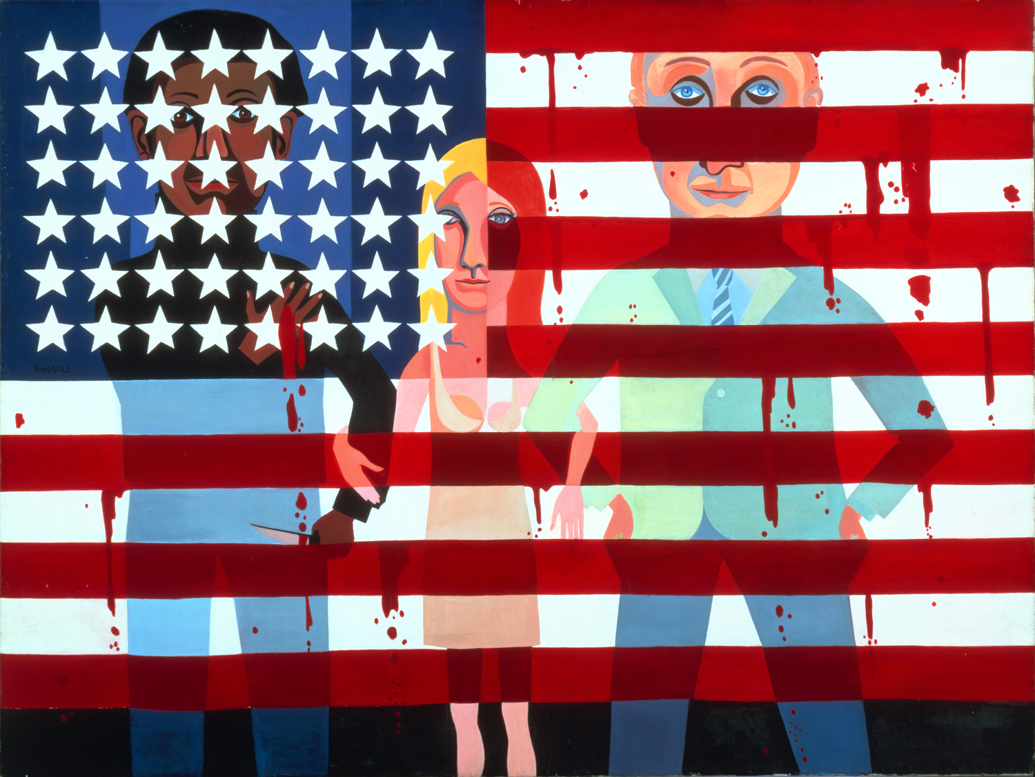
Faith Ringgold, The American People Series # 18: The Flag is Bleeding, 1967.
The way she painted white people was controversial, abstracted forms and bluish coloring. Known for her use of color in terms of pigmentation of races. Her work was a critique on white liberalism that invited in black individuals into power settings but did not allow them a voice. This is a flag based work inspired by Jasper Johns. Its a protest piece commenting on how the flag should represent freedom and safety but the black man and the flag are bleeding.

Faith Ringgold: The American People # 20: Die, 1967
“Ringgold’s American People Series confronts race relations in the United States in the 1960s. This mural-sized painting evokes the civil uprisings erupting around the country at the time. On the canvas, blood spatters evenly across an interracial group of men, women, and children, suggesting that no one is free from this struggle. Their clothing—smart dresses and business attire—implies that a well-off professional class is being held accountable in this scene of violent chaos.The children grasping each other near the center of the painting give form to this fear of the future.“
In what ways did Robert Roschenberg and Jasper Johns both continue with and depart from the painting techniques and artistic content of the Abstract Expressionists?
Both pushed the idea that they were not recreating objects but were making the object itself. They also believed that art was not just about the painter but rather the viewer. They align with the movement by using their art to question the conventions of the art world and conventional critics and galleries.
What was the impact of Marcel Duchamp’s artistic practices on the art of the 1950s and 60?
originator of “readymade art“ and one of the early DADA artists. ENcourages absurdidty in art and pushback on what should be considered art. Opened up the art world to the idea that anything can be art with the right mindset. Believed that art is not performed by the artist alone but the spectators view on the work affects the work itself and art is something alchemic and almost magic when the viewer interprets it.

T.C. Cannon, Washington Landscape with Peace Medal Indian, 1970.
“Cannon painted Washington Landscape with Peace Medal Indian in 1976 as a commentary on the exploitation of Native community leaders, who were awarded medals by the US government while being denied ownership of their tribal lands.” Started a style called Southern Plains flat style. Used images of native americans and cowboys that were painted with bright and flat colors. Nostalgic feeling in his art

T.C. Cannon, Two Guns Arikara, 1974-77.
The Arikaras were one of the first Native tribes to wage war on the United States government in 1823. Reminiscent of photographs of native americans taken by white settlers, these photos remove the individual identities and realities of their subjects, effectively promoting settler land expansion into the mythic “unconquered” American West. This painting shows a native person in a way similar to how they were viewed by white settlers but included the implication that the native people will not let the settlers take over without a fight.

Joseph Kosuth, One and Three Chairs, 1965.
Shows a physical chair, a phtot of a chair, and the definition of a chair. Kosuth did not make the chair, take the photo, or write the definition. Similar to Duchamps readymade works. Asks the question what is art and which of these is “the most chair“. He wanted the viewer to think about what makes an object the object and to take a simple object and turn it into something to be debated and explored.
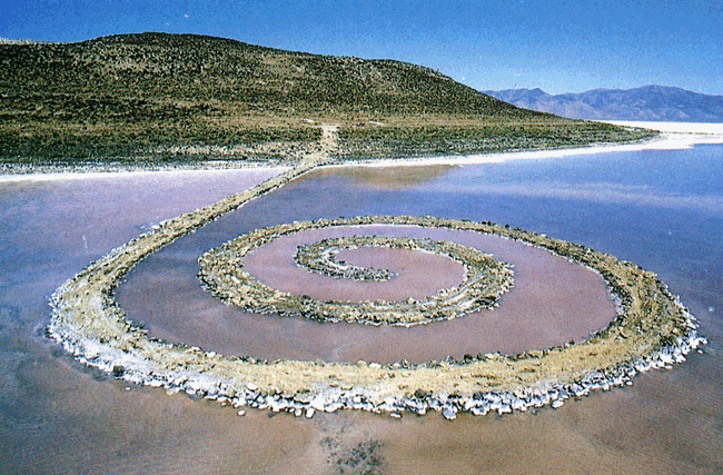
Robert Smithson, Spiral Jetty, 1970, Great Salt Lake, Utah.
Spiral made from black basalt, limestone, earth (1500 ft long). Revolutionary for chnging the landscape on a very large scale and within the water. Also due to its location its destruction seemed inevidable (climate change might preserve it). He liked the red color of the water as it reimded him of blood but the water is no longer red because of a chemical change. Interested in the idea of a ruined monument and thought of the Spiral Jetty as a flattened tower of babel (from the bible).

Nancy Holt, Sun Tunnels, 1974-76.
Composed of four large concrete cylinders big enough to stand in, installed in an X-shaped configuration in the Great Basin Desert. Each tunnel is perforated with patterns corresponding to the constellations. As the sun and moon move across the sky, light passes through these openings, bringing the stars down to earth. It shows the body as a part of the larger earth, universe, and solar system. By standing in one of the tubes, you become a part of space (you already are). The four structures are precisely aligned to frame the rising and setting sun during the summer and winter solstices.

Carrie Mae Weems, Kitchen Table Series, 1990.
She staged and photographed a fictional drama in which she plays the lead. Always set in a small room with a table and a single overhead light. Many photos contain other figures playing a role in the narritive. The kitchen is thought of as a womens domain and “not important“, here she turns it into the site of the most important moments in life. Commentary on womens lives and the complexity of black womens lives and strength and beauty.

Catherine Opie, Dyke, 1993
Portrait of the artist’s friend who tattooed DYKE on the back of her neck, which was very brave and controversial at the time. She wanted to document it because it was representative of an alt and bold choice that was not uncommon in queer communities then. She marked herself with her queer identity in a very literal way and made herself identifiable to her community. Fabric background reminiscent of old paintings of royals and the symbolism they used to show their status.

James Luna, Artifact Piece, 1987, 1992.
This work explored how Indigenous people have been objectified and fetishized in history and museums, historically and currently. By lying in a glass box in only a loincloth and labeling his own scars and placing out “Artifacts“ from his own life he is making himself a museum exhibit and showing the viewers the absurdity of how museums have presented native people. Americans “Like romance over truth“ and whenever Luna moved in his box, it was jarring to the viewer who had been used to seeing native people as a passive thing to be looked at.

Barbara Kruger, Your Body is a Battleground, 1989.
She addresses the viewer directly by using the word you as the first word of the text. This image was made for the Women’s March on Washington in 1989 that addressed threats to Roe v Wade. She adopted the images and language of advertizing to catch the attention of viewers and embolden her message. She made her message accessible, and interesting, and it grabs the viewer.

Janine Antoni, Lick and Lather, 1993.
fourteen self-portrait busts that Janine Antoni cast in two materials, with seven in chocolate, and seven in soap. Each cast was identical until the artist undertook the task of licking the chocolate busts and bathing with the soap busts, hence the playful title, Lick and Lather.
Howdid artists from the 1950s and 60s integrate art and life? Be prepared to discuss two art movements and and examples of one work by an artist from each movement.
Jackson Pollocks action paintings brought life into his art by representing his movements and emotions during the painting of a piece. They were self portraits in a non-literal sense. It was an expression of his own personal inner life. He integrates art and life by creating a visual representation of his life.
Yoko Ono’s Cut piece performance art integrates life into art by making the public the subject of her performance.
How did New York Pop art in the 60s differ from Funk art or Chicago Imaginism? Consider both the content and materials used by each group. What subjects did these artists engage and how did those subjects differ from those of BIPOC artists in the 60s/70s
New York Pop focused on consumerism, branding, pop culture, and recognizable mainstream topics while Funk and Chicago Imaginism were more anti-consumerist and counter culture focused. Pop art used a lot of painting and silk screening, where the product could be easily replicated multiple times over and Funk art and Chicago Imaginism painted on glass or made found object asemblages which could not be replicated. While these artists focused on consumerism and pop culture BIPOC artists at the same time were making political and protest art realted to the civil rights movement.
How did regional identity (Chicago’s figurative tradition, the Bay area’s assemblage/funk sensibility) shape a movements relationship to materiality versus conceptual arts more placeless, international, and institution-critique orientation.
How did Earthworks/Land art rejent the tradition of the gallery and museum systems.
Earthworks and Land art use the earth itself as a museum. No institution is needed to show art, nobody can buy the art, nobody has to pay to see it. The art becomes a part of the earth and cannot be owned. It takes away the prestige and importance of the museum because it makes it obsolite.