A&P Nervous System Lab Terms

0.0(0)
Studied by 0 people
call kaiCall Kai
learnLearn
examPractice Test
spaced repetitionSpaced Repetition
heart puzzleMatch
flashcardsFlashcards
GameKnowt Play
Card Sorting

1/103

encourage image

There's no tags or description

Looks like no tags are added yet.

104 Terms

1
New cards

Neuron

The primary signaling units of the nervous system, receiving, integrating, and transmitting info. through the body using electrical impulses and chemical messengers.

<p>The primary signaling units of the nervous system, receiving, integrating, and transmitting info. through the body using electrical impulses and chemical messengers.</p>
2
New cards

Axon

Transmit electrical impulses (action potentials) away from a neuron’s cell body to other neurons, muscles, or glands

<p>Transmit electrical impulses (action potentials) away from a neuron’s cell body to other neurons, muscles, or glands</p>
3
New cards

Neuroglia

Maintain homeostasis, insulate axons, defend neural tissue, and support neuronal signaling and development in the central and peripheral nervous systems.

<p>Maintain homeostasis, insulate axons, defend neural tissue, and support neuronal signaling and development in the central and peripheral nervous systems.</p>
4
New cards

Ependymal neuroglia

Line brain ventricles & Central Canal of spinal cord; produce, circulate, and regulate CSF to maintain CNS homeostasis
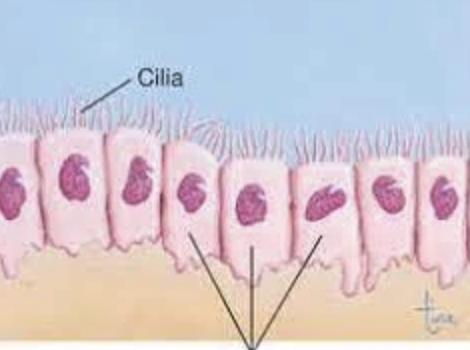
<p>Line brain ventricles &amp; Central Canal of spinal cord; produce, circulate, and regulate CSF to maintain CNS homeostasis</p>
5
New cards

Oligodendrocytes neuroglia

In the CNS and produce myelin to insulate axons and speed up electrical signal transmission

<p>In the CNS and produce myelin to insulate axons and speed up electrical signal transmission</p>
6
New cards

Astrocytes neuroglia

In the CNS and maintain extracellular homeostasis, support blood-brain barrier function, fuel neurons, and regulated synaptic signaling

<p>In the CNS and maintain extracellular homeostasis, support blood-brain barrier function, fuel neurons, and regulated synaptic signaling</p>
7
New cards

Microglia neuroglia

In the CNS and act as the CNS’s primary macrophages (immune cells)
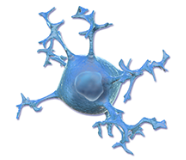
<p>In the CNS and act as the CNS’s primary macrophages (immune cells)</p>
8
New cards

Satellite neuroglia

In the PNS and surround neuronal cell bodies to regulate the local environment and support neuronal signaling

<p>In the PNS and surround neuronal cell bodies to regulate the local environment and support neuronal signaling</p>
9
New cards

Schwann Neuroglia

In the PNS, myeline axons, support neuronal survival and metabolism, and guides nerve regeneration after injury

<p>In the PNS, myeline axons, support neuronal survival and metabolism, and guides nerve regeneration after injury</p>
10
New cards

Axon hillock

Sums incoming excitatory and inhibitory electrical signals from the neuron’s dendrites and cell body to decide whether to trigger an action potential

<p>Sums incoming excitatory and inhibitory electrical signals from the neuron’s dendrites and cell body to decide whether to trigger an action potential</p>
11
New cards

Synapses

Transmits signals from a neuron to another neuron or to a target cell

<p>Transmits signals from a neuron to another neuron or to a target cell</p>
12
New cards

Cell body (Soma)

Acts as the metabolic control center of a neuron and integrates incoming signals to help determine whether the cell fires an electrical impulse

<p>Acts as the metabolic control center of a neuron and integrates incoming signals to help determine whether the cell fires an electrical impulse</p>
13
New cards

Dendrites

Receives signals from other neurons and conducts those electrical/chemical impulses toward the neuron’s cell body

<p>Receives signals from other neurons and conducts those electrical/chemical impulses toward the neuron’s cell body</p>
14
New cards

Nucleolus

Produce and assemble ribosomes, which build proteins in the cell

<p>Produce and assemble ribosomes, which build proteins in the cell</p>
15
New cards

Nissl Bodies (Chromatophilic)

Act as the primary site of protein synthesis inside a neuron’s cell body and dendrites

<p>Act as the primary site of protein synthesis inside a neuron’s cell body and dendrites</p>
16
New cards

Synaptic Terminal

The end of an axon that converts an incoming electrical action potential into a chemical signal to communicate with a target cell

<p>The end of an axon that converts an incoming electrical action potential into a chemical signal to communicate with a target cell</p>
17
New cards

Cerebral hemisphere

The left and right halves of the cerebrum that control voluntary movement, process sensory input, and drive higher-level thought, memory, emotion, and language
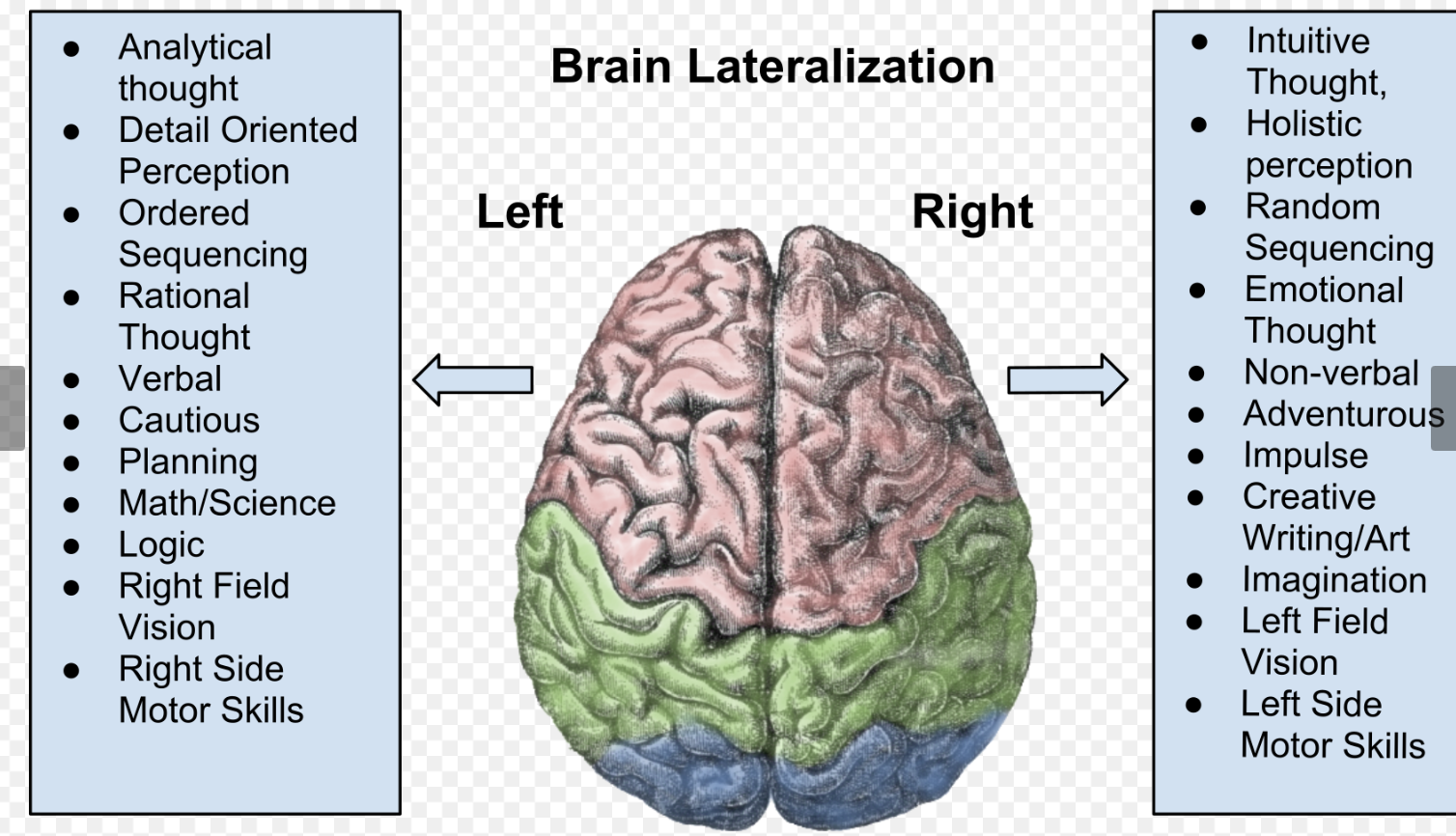
<p>The left and right halves of the cerebrum that control voluntary movement, process sensory input, and drive higher-level thought, memory, emotion, and language</p>
18
New cards

Frontal Lobe

Governs voluntary movement, expressive speech, personality, and executive functions like planning, focus, and impulse control

<p>Governs voluntary movement, expressive speech, personality, and executive functions like planning, focus, and impulse control</p>
19
New cards

Parietal Lobe

Processes bodily sensations, integrates sensory information from multiple sources, and supports spatial awareness and movement coordination

<p>Processes bodily sensations, integrates sensory information from multiple sources, and supports spatial awareness and movement coordination </p>
20
New cards

Temporal Lobe

Processes hearing and language comprehension, forms and retrieves long-term memories, interprets visual objects and faces, and helps regulate emotions

<p>Processes hearing and language comprehension, forms and retrieves long-term memories, interprets visual objects and faces, and helps regulate emotions</p>
21
New cards

Occipital Lobe

Processes visual information sent from the eyes and turn it into usable signals for the rest of the brain

<p>Processes visual information sent from the eyes and turn it into usable signals for the rest of the brain</p>
22
New cards

Longitudinal fissure

Structural separation and housing protective tissue

<p>Structural separation and housing protective tissue</p>
23
New cards

Gyri

Support higher cognitive functions by expanding surface area of gray matter

<p>Support higher cognitive functions by expanding surface area of gray matter </p>
24
New cards

Sulcus

Increases cortical surface area within the skull, organizes brain regions, and houses gray matter and CSF pathways

<p>Increases cortical surface area within the skull, organizes brain regions, and houses gray matter and CSF pathways</p>
25
New cards

Parieto-occipital sulcus

Serves as a major anatomical boundary and reference landmark between the parietal lobe and the occipital lobe

<p>Serves as a major anatomical boundary and reference landmark between the parietal lobe and the occipital lobe</p>
26
New cards

Central Sulcus

Acts as an anatomical boundary separating the frontal lobe from the parietal lobe and dividing the primary motor cortex from the primary somatosensory cortex
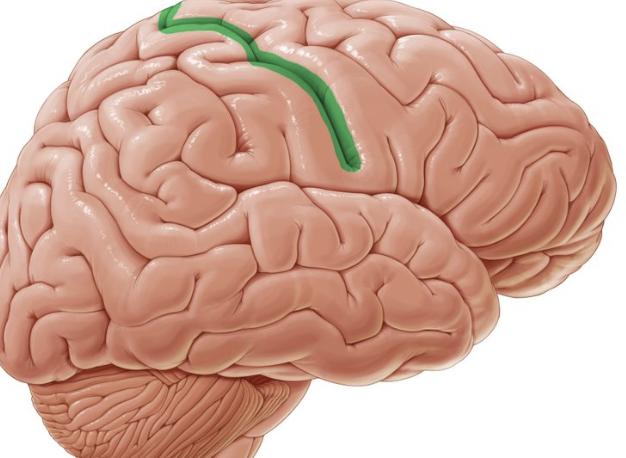
<p>Acts as an anatomical boundary separating the frontal lobe from the parietal lobe and dividing the primary motor cortex from the primary somatosensory cortex</p>
27
New cards

Transverse fissure

An anatomical boundary that separates the cerebrum above from the cerebellum below

<p>An anatomical boundary that separates the cerebrum above from the cerebellum below</p>
28
New cards

Cerebral cortex

Folded outer gray matter layer of the brain that controls higher-level functions including voluntary movement, sensory processing, language, memory, attention, reasoning, and decision-making

<p>Folded outer gray matter layer of the brain that controls higher-level functions including voluntary movement, sensory processing, language, memory, attention, reasoning, and decision-making</p>
29
New cards

White Matter

Acts as the CNS’s communication network, relaying fast electrical signals between different regions of gray matter and between the brain and spinal cord

<p>Acts as the CNS’s communication network, relaying fast electrical signals between different regions of gray matter and between the brain and spinal cord</p>
30
New cards

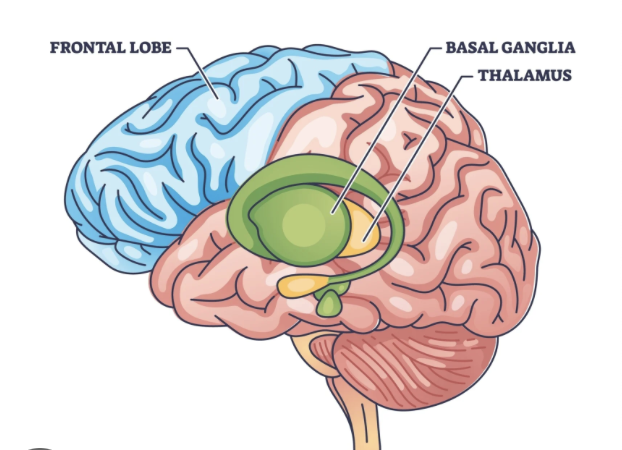
Basal nuclei

Regulate voluntary movement by acting as a gatekeeper that promotes desired actions and suppresses unwanted ones, while also supporting motor learning, habit formation, reward, and executive decisions
<p>Regulate voluntary movement by acting as a gatekeeper that promotes desired actions and suppresses unwanted ones, while also supporting motor learning, habit formation, reward, and executive decisions</p>
31
New cards

Thalamus

Central relay station and filter, processing and routing almost all sensory info (except smell) and motor signals to the cerebral cortex while helping regulate consciousness, sleep, alertness, memory, and emotion

<p>Central relay station and filter, processing and routing almost all sensory info (except smell) and motor signals to the cerebral cortex while helping regulate consciousness, sleep, alertness, memory, and emotion</p>
32
New cards

Hypothalamus

Maintains homeostasis and links the nervous system to the endocrine system via the pituitary gland

<p>Maintains homeostasis and links the nervous system to the endocrine system via the pituitary gland</p>
33
New cards

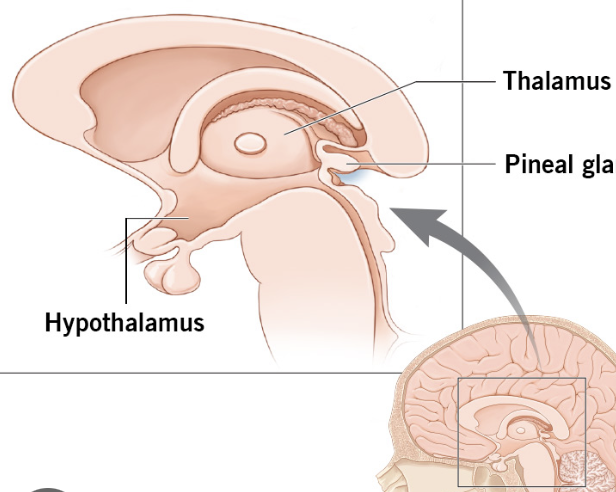
Pineal body

Produces and secretes melatonin to regulate circadian rhythms and sleep-wake cycles
<p>Produces and secretes melatonin to regulate circadian rhythms and sleep-wake cycles</p>
34
New cards

Mammillary body

Supports recollective and spatial memory by processing and relaying memory-related signals within the Papez circuit and limbic system

<p>Supports recollective and spatial memory by processing and relaying memory-related signals within the Papez circuit and limbic system</p>
35
New cards

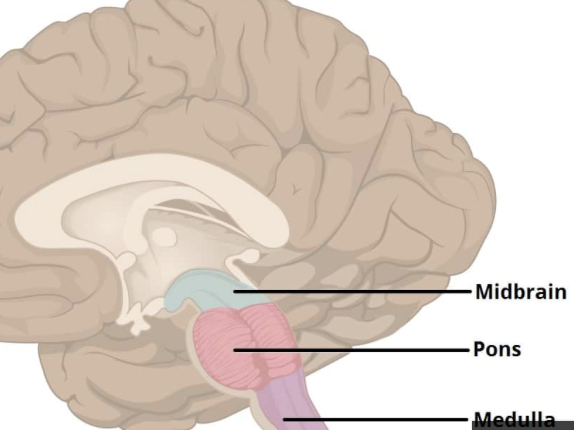
Midbrain

Plays key roles in motor control, eye movements, visual and auditory processing, alertness, and pain modulation
<p>Plays key roles in motor control, eye movements, visual and auditory processing, alertness, and pain modulation</p>
36
New cards

Pons

A communication hub in the brainstem that relays signals between the cerebrum, cerebellum, and spinal cord while regulating breathing, sleep, arousal, and several head and face functions

<p>A communication hub in the brainstem that relays signals between the cerebrum, cerebellum, and spinal cord while regulating breathing, sleep, arousal, and several head and face functions</p>
37
New cards

Medulla oblongata

Controls essential involuntary life functions, including breathing, heart rate, and blood pressure

<p>Controls essential involuntary life functions, including breathing, heart rate, and blood pressure</p>
38
New cards

Fornix

The major output pathway of the hippocampus within the limbic system, playing a vital role in episodic memory, recall, and cognitive processing

<p>The major output pathway of the hippocampus within the limbic system, playing a vital role in episodic memory, recall, and cognitive processing</p>
39
New cards

Corpus callosum

Transfers and integrates sensory, motor, and cognitive information between the left and right cerebral hemispheres so both sides of the brain work together seamlessly

<p>Transfers and integrates sensory, motor, and cognitive information between the left and right cerebral hemispheres so both sides of the brain work together seamlessly</p>
40
New cards

Cerebellum

Coordinates voluntary movement, balance, posture, and motor learning while also supporting cognitive and emotional processing

<p>Coordinates voluntary movement, balance, posture, and motor learning while also supporting cognitive and emotional processing</p>
41
New cards

Superior colliculi

Coordinate gaze shifts, rapid eye movements (saccades), head orientation, and spatial attention toward or away from stimuli

<p>Coordinate gaze shifts, rapid eye movements (saccades), head orientation, and spatial attention toward or away from stimuli</p>
42
New cards

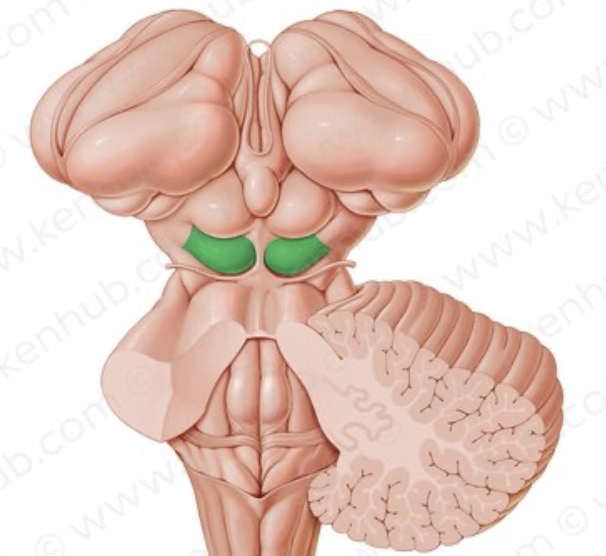
Inferior colliculi

Acts as the main auditory integration and relay hub in the midbrain, processing sound cues like frequency, pitch, and spatial location before sending signals to the thalamus and auditory cortex
<p>Acts as the main auditory integration and relay hub in the midbrain, processing sound cues like frequency, pitch, and spatial location before sending signals to the thalamus and auditory cortex</p>
43
New cards

Corpora Quadrigemina

Acts as reflex centers in the midbrain that coordinate rapid visual and auditory responses

<p>Acts as reflex centers in the midbrain that coordinate rapid visual and auditory responses</p>
44
New cards

Olfactory bulbs

Receives smell signals from the nasal cavity and relays them to higher brain regions for odor processing, memory, and emotion

<p>Receives smell signals from the nasal cavity and relays them to higher brain regions for odor processing, memory, and emotion</p>
45
New cards

Olfactory tract

Transmits smell signals from the olfactory bulb directly to the brains olfactory cortex and related structures

<p>Transmits smell signals from the olfactory bulb directly to the brains olfactory cortex and related structures</p>
46
New cards

Lateral ventricles

Produces, stores, and circulates CSF

<p>Produces, stores, and circulates CSF</p>
47
New cards

Interventricular Foramina

Connects the left and right lateral ventricles to the third ventricle in the brain, allowing CSF to flow between them

<p>Connects the left and right lateral ventricles to the third ventricle in the brain, allowing CSF to flow between them</p>
48
New cards

Third ventricle

Produces, receives, and circulates CSF between the lateral ventricles and the fourth ventricle to cushion, protect, and chemically stabilize the brain

<p>Produces, receives, and circulates CSF between the lateral ventricles and the fourth ventricle to cushion, protect, and chemically stabilize the brain</p>
49
New cards

Aqueduct of the midbrain

A narrow canal that connects the third ventricle to the fourth ventricle, allowing CSF to circulate through the brain’s ventricular system

<p>A narrow canal that connects the third ventricle to the fourth ventricle, allowing CSF to circulate through the brain’s ventricular system</p>
50
New cards

Fourth ventricle

Produces CSF and routes it out of the brain’s internal ventricular system into the surrounding subarachnoid space and spinal cord

<p>Produces CSF and routes it out of the brain’s internal ventricular system into the surrounding subarachnoid space and spinal cord</p>
51
New cards

Central Canal

A narrow, CSF filled tube that helps circulate fluid, transport nutrients, and cushion spinal cord tissue

<p>A narrow, CSF filled tube that helps circulate fluid, transport nutrients, and cushion spinal cord tissue</p>
52
New cards

Choroid plexus

A specialized network of blood vessels and epithelial cells inside the brain’s ventricles that mainly produces CSF and forms the blood-CSF-barrier

<p>A specialized network of blood vessels and epithelial cells inside the brain’s ventricles that mainly produces CSF and forms the blood-CSF-barrier</p>
53
New cards

Olfactory Nerve (I)

cranial nerve enabling your sense of smell

<p>cranial nerve enabling your sense of smell</p>
54
New cards

Optic nerve (II)

cranial nerve transmitting electrical visual signals from the retina to the brain
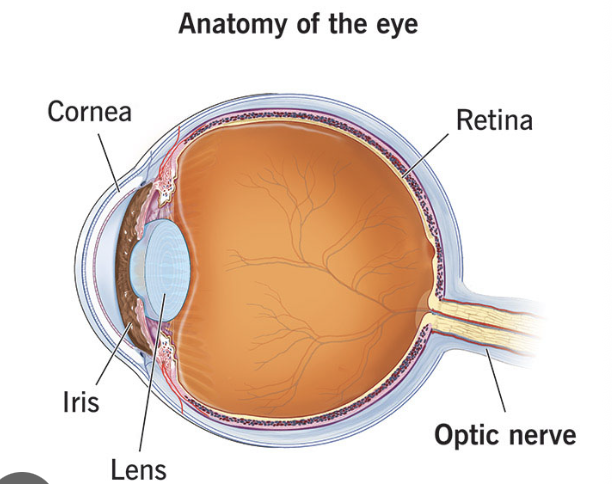
<p>cranial nerve transmitting electrical visual signals from the retina to the brain</p>
55
New cards

Oculomotor nerve (III)

cranial nerve controlling most eye movements, raises upper eyelid, constricts pupil, and adjusts the lens

<p>cranial nerve controlling most eye movements, raises upper eyelid, constricts pupil, and adjusts the lens</p>
56
New cards

Trochlear nerve (IV)

cranial nerve that controls the superior oblique muscle to help move the eye downward, outward, and inward in rotation

<p>cranial nerve that controls the superior oblique muscle to help move the eye downward, outward, and inward in rotation</p>
57
New cards

Trigeminal nerve (V)

cranial nerve that provides most of the sensory feedback from the face and head while controlling the muscles used for chewing

<p>cranial nerve that provides most of the sensory feedback from the face and head while controlling the muscles used for chewing</p>
58
New cards

Abducens nerve (VI)

motor nerve that controls the lateral rectus muscle, moving the eye outward (laterally) away from the nose

<p>motor nerve that controls the lateral rectus muscle, moving the eye outward (laterally) away from the nose</p>
59
New cards

Facial nerve (VII)

cranial nerve controlling the muscles of facial expression while also carrying taste signals, regulating tear and saliva production, and helping moderate sound volume
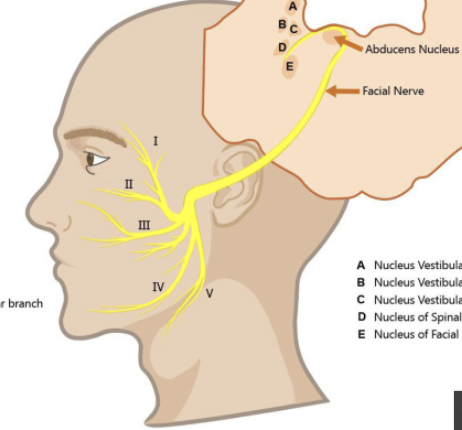
<p>cranial nerve controlling the muscles of facial expression while also carrying taste signals, regulating tear and saliva production, and helping moderate sound volume</p>
60
New cards

Vestibulocochlear nerve (VIII)

sensory nerve that carries signals for hearing and balance from the inner ear to the brain

<p>sensory nerve that carries signals for hearing and balance from the inner ear to the brain</p>
61
New cards

Glossopharyngeal nerve (IX)

mixed nerve that controls swallowing, taste from the back third of the tongue, salivation via the parotid gland, and sensory feedback from the throat, middle ear, and carotid blood vessels

<p>mixed nerve that controls swallowing, taste from the back third of the tongue, salivation via the parotid gland, and sensory feedback from the throat, middle ear, and carotid blood vessels</p>
62
New cards
63
New cards
64
New cards
65
New cards
66
New cards
67
New cards
68
New cards
69
New cards
70
New cards
71
New cards
72
New cards
73
New cards
74
New cards
75
New cards
76
New cards
77
New cards
78
New cards
79
New cards
80
New cards
81
New cards
82
New cards
83
New cards
84
New cards
85
New cards
86
New cards
87
New cards
88
New cards
89
New cards
90
New cards
91
New cards
92
New cards
93
New cards
94
New cards
95
New cards
96
New cards
97
New cards
98
New cards
99
New cards
100
New cards



