Cheat Sheet 24: Embryology: Gametes, Fertilization, and Development
 Call Kai
 Learn
 Practice Test
 Spaced Repetition
 Match
 Flashcards
 Knowt Play
1/32

There's no tags or description
Looks like no tags are added yet.
33 Terms
What are gametes and their types?
Gametes are haploid reproductive cells; the female gamete is the egg, and the male gamete is the sperm.
What is capacitation in the context of sperm?
Capacitation is a biochemical process initiated by secretions in the uterus and fallopian tubes that makes sperm more active in the female reproductive tract.
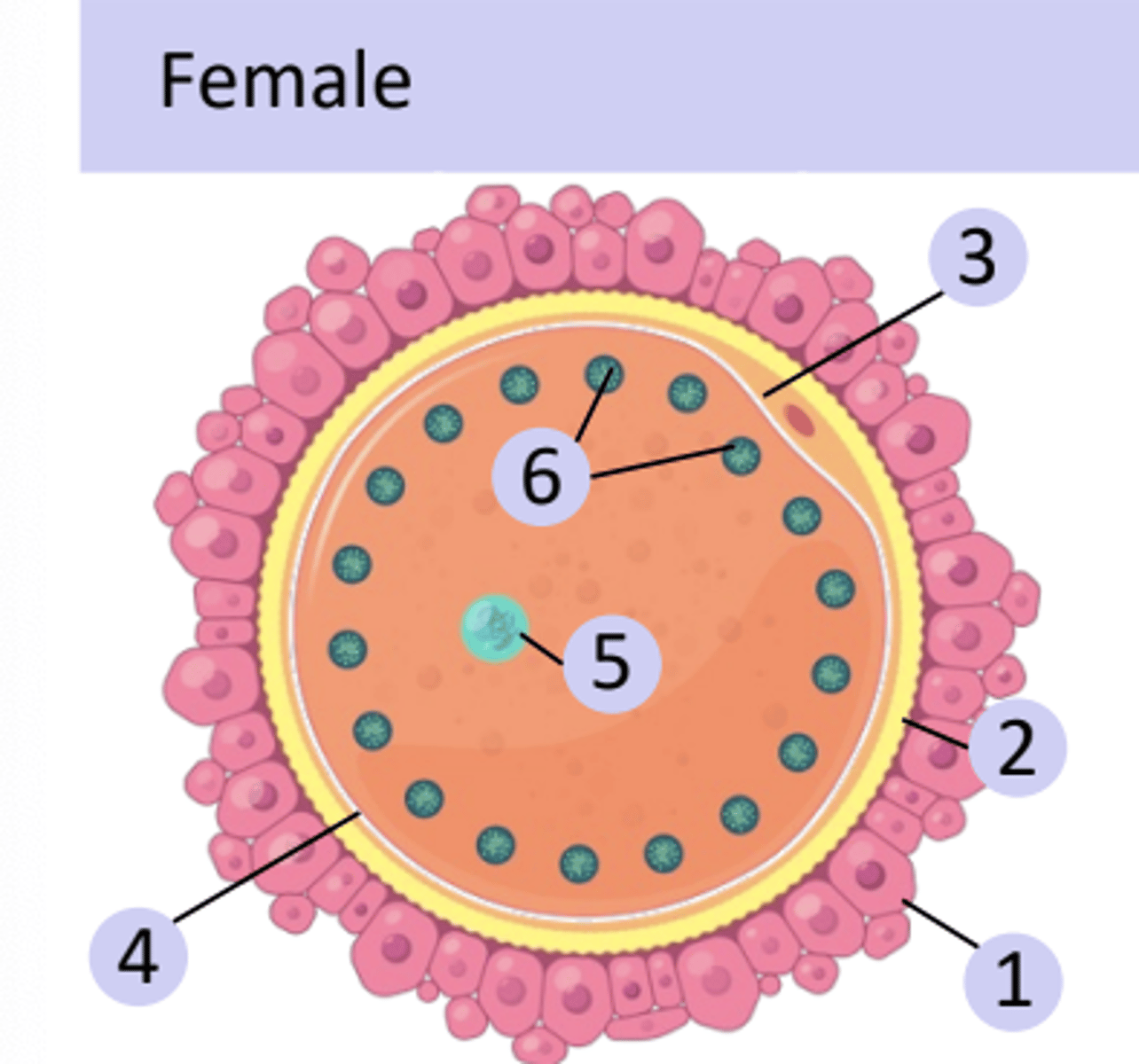
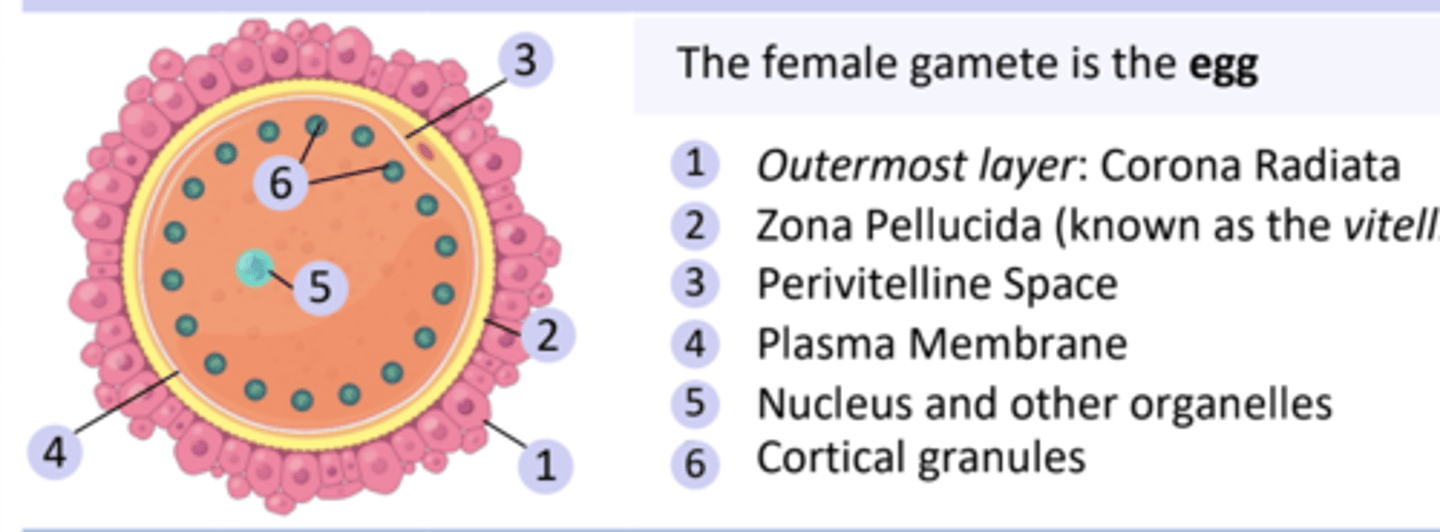
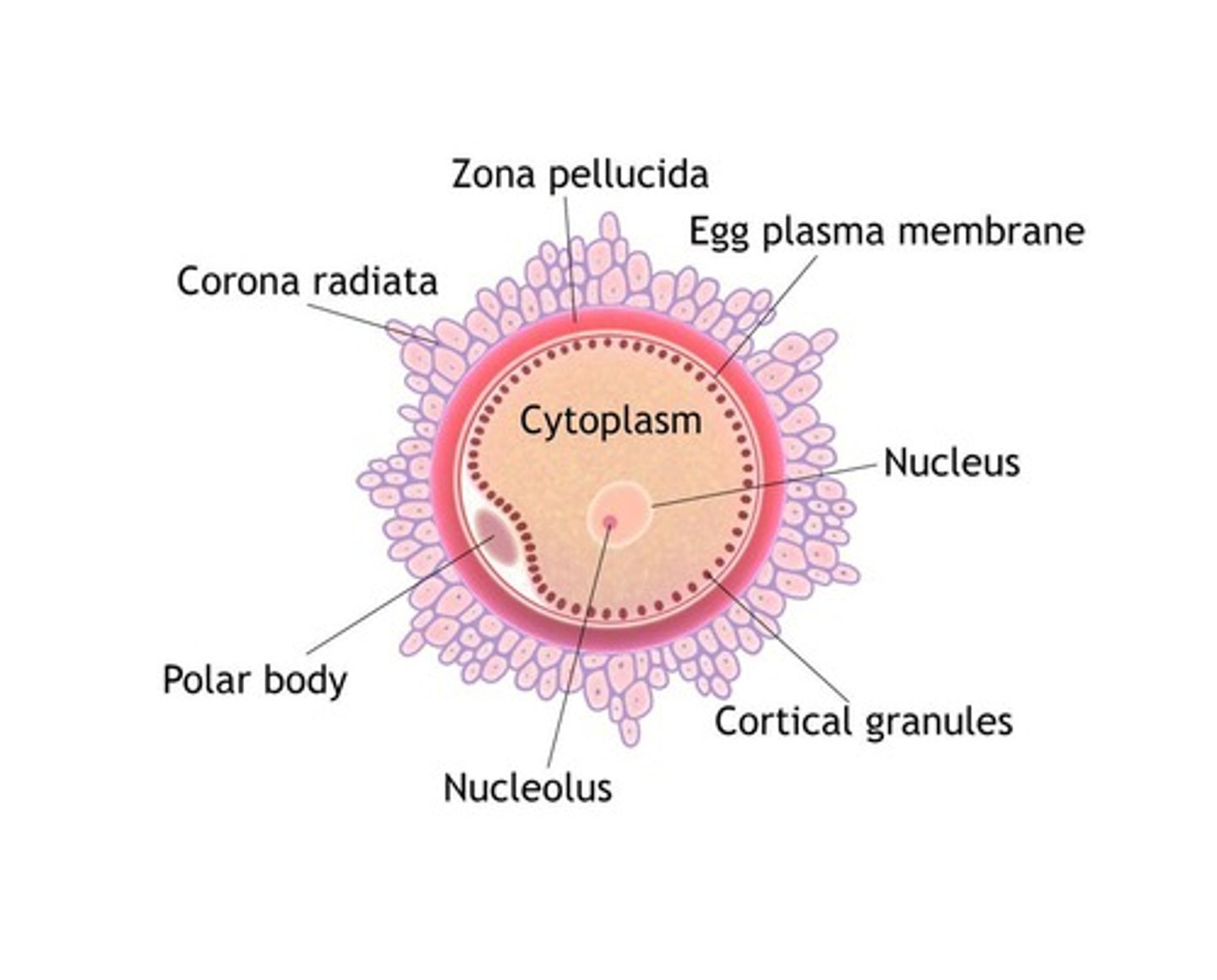
What are the layers surrounding the egg?
1. Corona Radiata
2. Zona Pellucida (vitelline membrane)
3. Perivitelline Space
4. Plasma Membrane
5. Nucleus and organelles
6. Cortical granules.
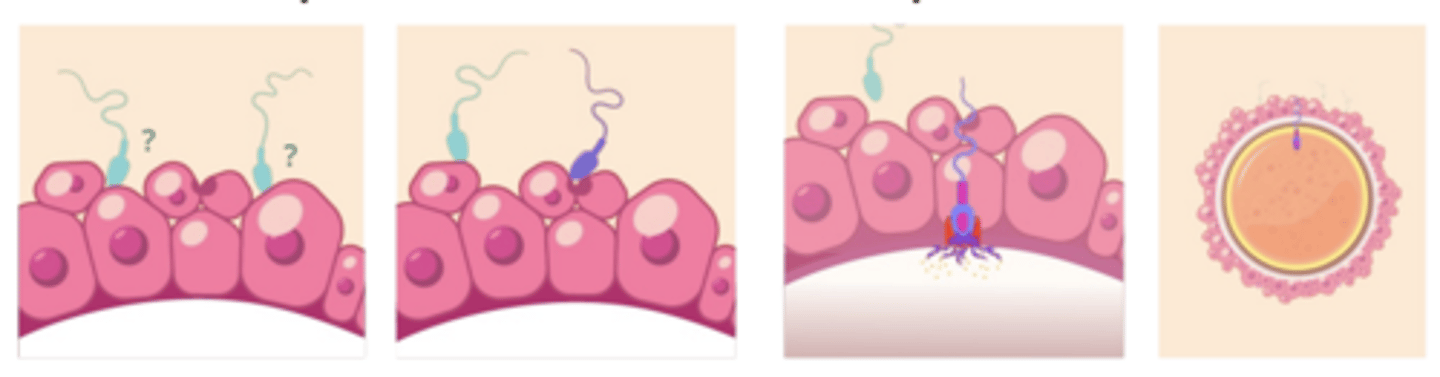
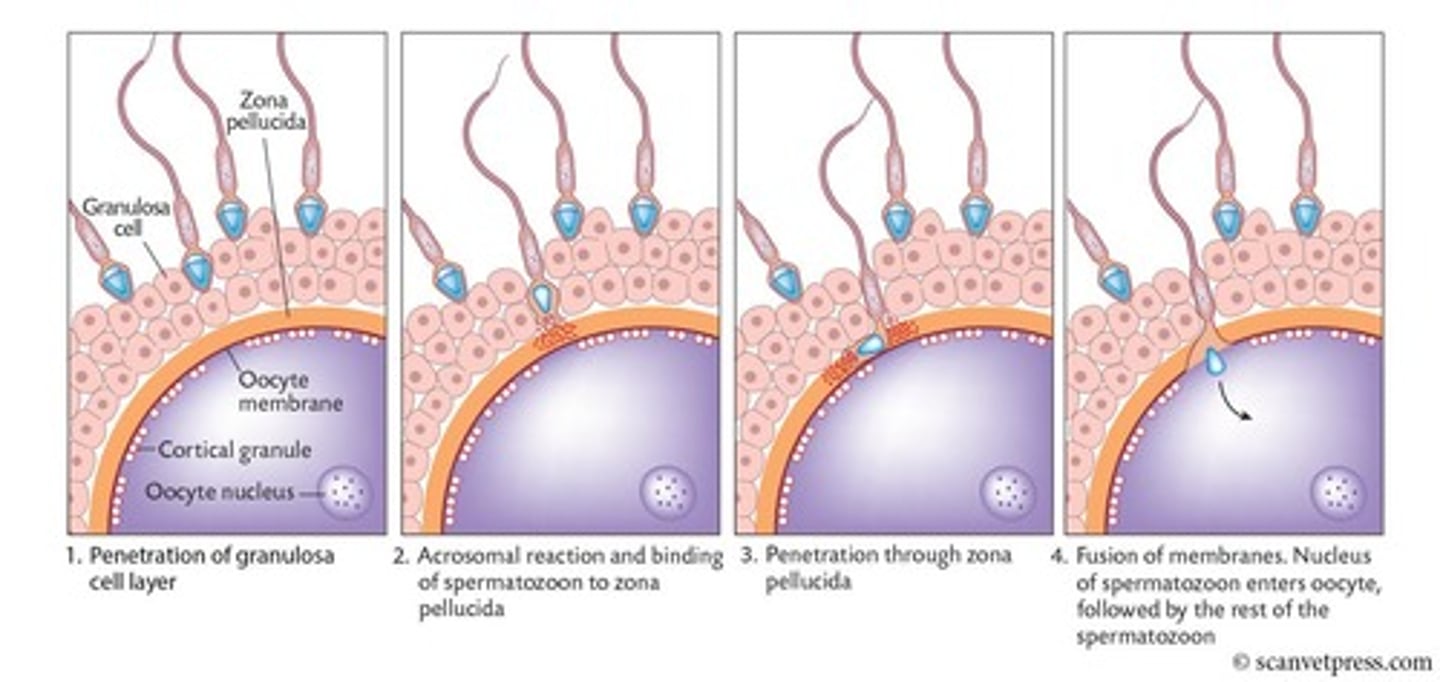
What are the steps of fertilization?
1. Sperm swims through the corona radiata
2. Sperm arrives at the zona pellucida
3. Acrosome reaction occurs
4. Sperm enters perivitelline space and fuses with egg plasma membrane
5. Sperm nucleus enters egg
6. Two haploid nuclei fuse to form diploid zygote.
What are the fast and slow blocks to polyspermy?
- Fast block occurs instantly when sperm fuses with the egg membrane, causing depolarization and preventing other sperm from binding.
- Slow block is a longer-lasting response involving Ca2+ release and the hardening of the zona pellucida.
What is cleavage in embryonic development?
Cleavage is the rapid cell division of the early embryo, increasing cell number without increasing cell size.

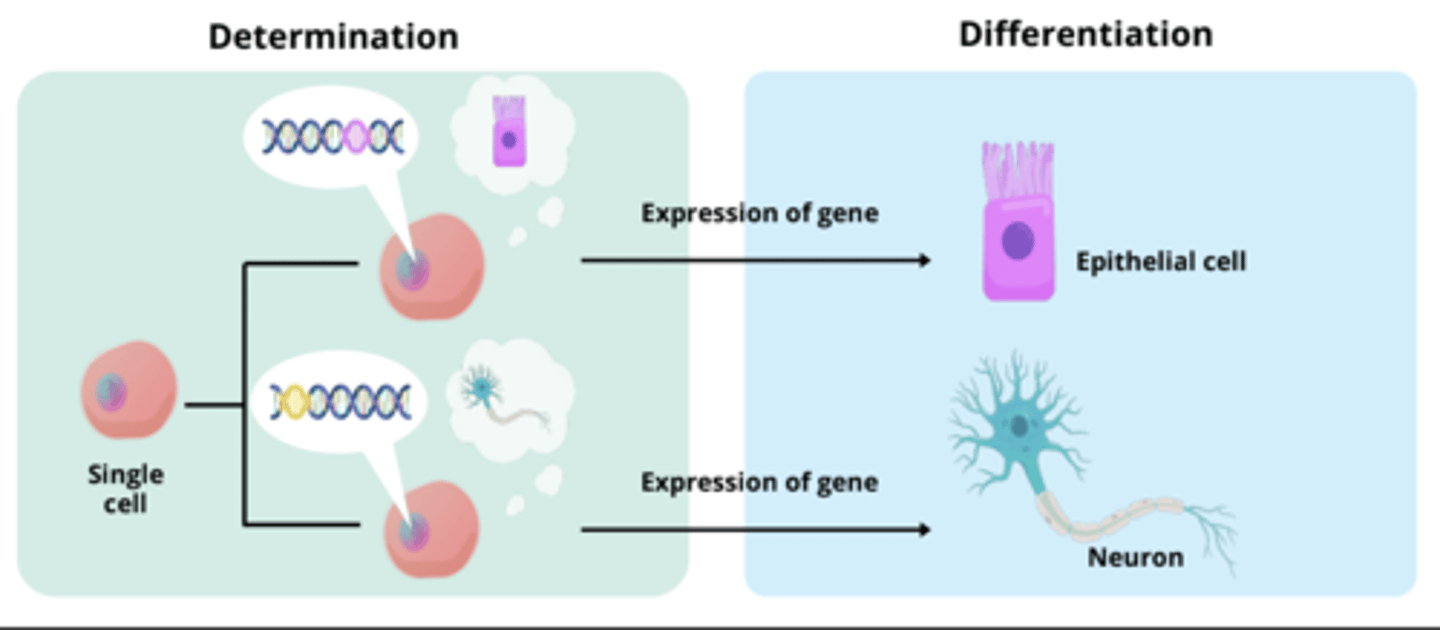
What is the difference between determination and differentiation?
Determination: A cell is determined when it has decided what genes will be expressed and which will be repressed.
Differentiation: When we can look under the microscope and see a physical change
in the cell expressing those genes
What are the two types of cleavage patterns?
Determinate (Mosaic) cleavage: where cell fate is decided early.
Indeterminate (Regulative) cleavage: where cell fate is determined later.
What is the difference in radial and spiral cleavage?
Radial: New cells formed Directly above previous cells
Spiral: New cells formed at angle to previous cells
What direction of cleavage is a protostome and duterostome?
Protosome: Sprial
Duterostome: radial
What type of cleavage is a proteostome and duterostome?
Proteostome: Determinate (Mosaic)
Duterostome: Indeterminate (regulative)
What is the coelom formation of proteostome and duterostome?
Proteostome: Schizocuelus
Duterostome: Entercoleus
What distinguishes protostomes from deuterostomes?
In protostomes, the first opening becomes the mouth, while in deuterostomes, it becomes the anus.
What is the significance of the notochord during development?
The notochord stimulates the overlying ectoderm to thicken and forms parts of the intervertebral discs and spinal vertebrae.

What are the stages of embryonic development from zygote to neurula?
Fertilized zygote → Morula → Blastula → Gastrula → Neurula.
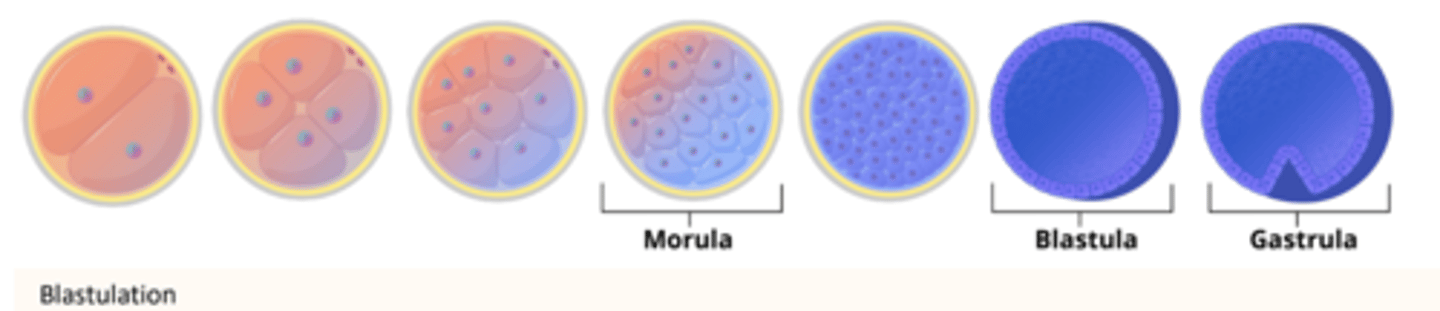
The morula (solid ball of cells) becomes a ______________
blastula (hollow sphere of cells)
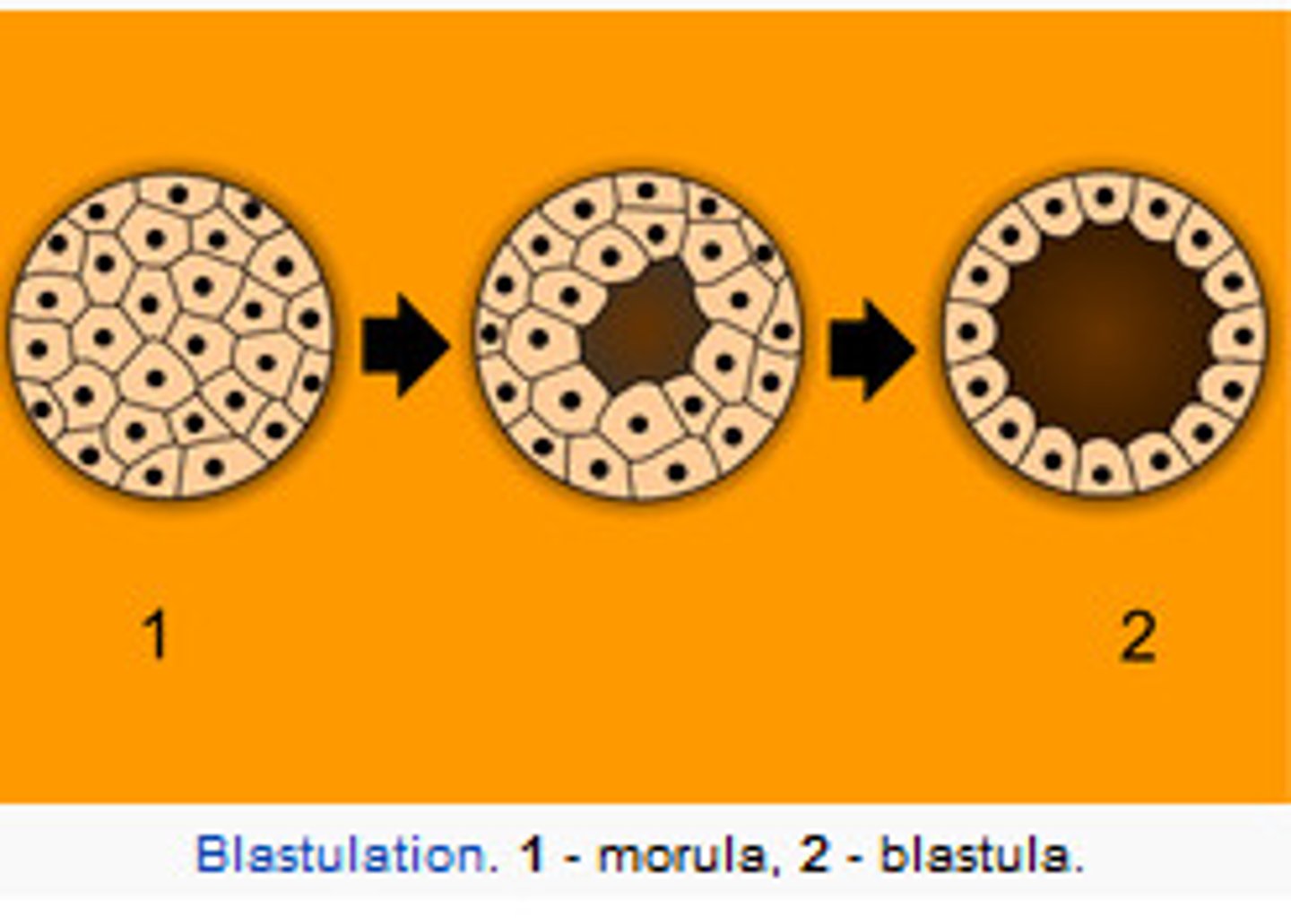
The morula (solid ball of cells) becomes a blastula (hollow sphere of cells) Human embryos at this stage are specifically referred to as
Blastocysts
What are the three germ layers formed during gastrulation?
Ectoderm, mesoderm, and endoderm.

What are the key features that all chordates have during development?
1. Dorsal hollow nerve cord
2. Notochord
3. Post-anal tail
4. Pharyngeal gill slits.

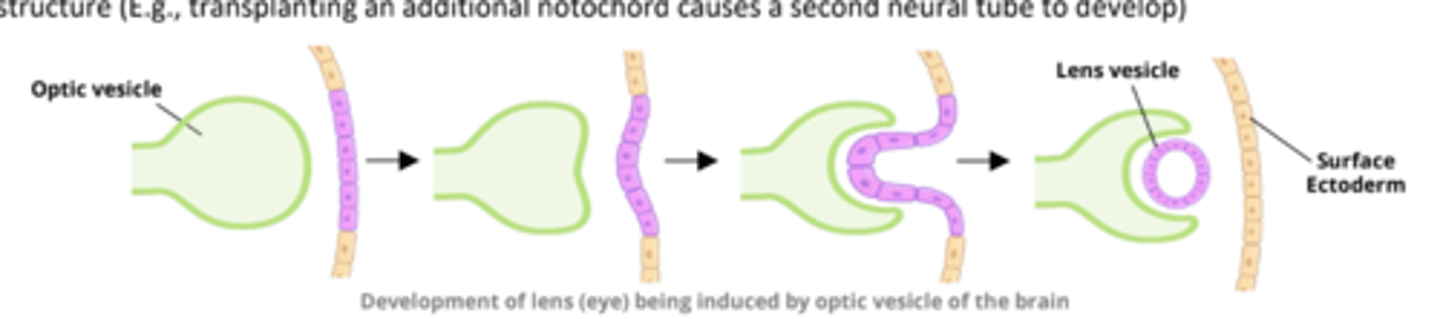
What is the role of induction in embryonic development?
Induction is when a cell influences the development of nearby cells, often confirmed through experimental transplantation.
What are the two types of twins?
Monozygotic twins: single sperm fertilizes an egg to form 1 zygote > 2 genetically identical embryos
Dizygotic twins: formed from two separate eggs fertilized by two sperm.
What is the difference between amniotes and non-amniotes?
Amniotes (birds, reptiles, mammals) develop specialized membranes outside the embryo
non-amniotes (amphibians, fish) lack these membranes and typically lay eggs in water.
What happens during the acrosome reaction?
The acrosome reaction is triggered when sperm reaches the zona pellucida, releasing hydrolytic enzymes that digest through it.
What is the blastula stage in embryonic development?
The blastula is a hollow sphere of cells that forms from the morula.

What is the significance of the gray crescent in amphibian development?
The gray crescent, formed opposite the sperm's entry point, predicts the future pattern of the amphibian embryo.
What is the role of cortical granules during fertilization?
Cortical granules fuse with the membrane and release contents into the perivitelline space, contributing to the slow block to polyspermy.
What is the fate of cells in determinate cleavage?
In determinate cleavage, the fate of the cell is decided early, meaning that if a blastomere is removed, it cannot form a complete organism.
What is the fate of cells in indeterminate cleavage?
In indeterminate cleavage, the fate of the cell is determined later, allowing for the possibility of forming a complete organism even if a blastomere is removed.
What is the neural tube and its significance?
The neural tube forms from the folding of the neural plate and will develop into the brain and spinal cord.

What is the process of gastrulation?
Gastrulation is when the blastula invaginates to form the gastrula, establishing the three germ layers and the gut tube.
What does the Ectoderm give rise to? (5)
• Epidermis layer (skin/hair)
• Adrenal Medulla
• Jaw + teeth
• Sensory system
• Nervous system
What does the Mesoderm give rise to? (6)
• Circulatory system
• Lymphatic system
• Skeletal system
• Muscular system
• Adrenal cortex
• Notochord
What does the Endoderm give rise to? (3)
• Epithelial lining (GI & respiratory tract, excretory system, reproductive tract)
• Thyroid, parathyroid, and thymus
• Liver