(B) feline and canine reproductive disorders.
 Call Kai
 Learn
 Practice Test
 Spaced Repetition
 Match
 Flashcards
 Knowt Play
1/117

There's no tags or description
Looks like no tags are added yet.
118 Terms
define Metritis
Inflammation of the uterus

what is it
ovary

what is it
uterine horn
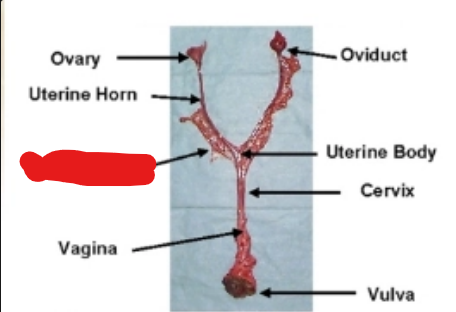
what is it
mesometrium
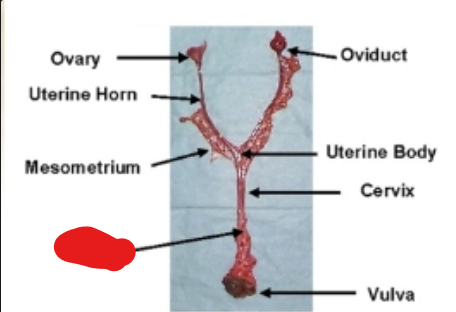
what is it
vagina
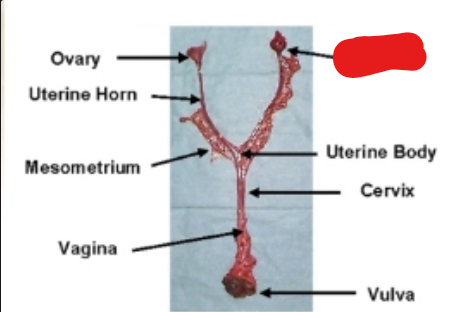
what is it
oviduct

what is it
uterine body
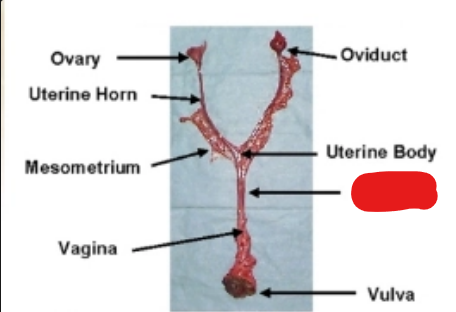
what is it
cervix

what is it
vulva
what causes metritis (3)
Suppression of function
Estrus
Can also occur post delivery, especially with prolonged deliveries/dystocias
metritis can become — if untreated
pyometra
clinical signs of metritis (10)
Lethargy
PU/PD
Vomiting
Inappetence
Fever
Tachycardia
tachypnea
Vaginal discharge (can vary in colour, light brown - green)
Hungry offspring
+/- distended abdomen, will feel dough-like
how to diagnose metritis (4)
CBC
UA
Imaging
Biopsy
how to treat metritis (3)
IV fluids
Antibiotics
Prostaglandins or oxytocin
how to prevent metritis
OVH
define pyo-
purulent
define metra
uterus
define pyometra
purulent uterine infection
what causes pyometra (1 + 3ish)
bacteria goes into the uterus
Elevated Progesterone → endometrial gland changes (thickening and increased secretions) + reduced uterine contractions
what animals are susceptible to pyometra (4)
unspayed
greater than 6 yrs old
Bacteria enters within 60 days of the last estrus cycle
uterine stump
clinical signs of pyometra (general) (11)
Lethargy
Inappetence
PU/PD
leads to dehydration
Vomiting
diarrhea
Pale mm
Abdominal pain
abdominal enlargement
± discharge
MEDICAL EMERGENCY!
clinical signs of open pyometra (11)
bloody discharge from the vulva
Purulent discharge from the vulva
Fever
Lethargy
Anorexia
Depression
Increased thirst
Increased urination
define Purulent
containing, consisting of, or discharging pus
clinical signs of closed pyometra (11)
no discharge
Rapid onset of clinical signs
Anorexia
Vomiting
Depressed
Diarrhea
Sepsis
Enlarged abdomen
soft abdomen
EMERGENCY!
how to diagnose pyometra (13)
Estrus cycle timing
Animals that clean their hind end excessively
CBC
Chemistry
UA
RBCs in urine
WBCs in urine
bacteria in urine
↓ SG if there is damage to the kidneys
Radiographs
ultrasound
Need to rule out pregnancy
Vaginal cytology
how to treat pyometra (2)
ovariohysterectomy
prostaglandins
how to prevent pyometra
ovariohysterectomy
define dys
difficult
define -ocia
labor
define dystocia
difficult labor
how to cause maternal dystocia (4)
Uterine Inertia
Small Birth Canal
Previous dystocia
Prolonged labour
what causes fetal dystocia (4)
Large fetus
Malpresentation
Abnormal positioning
Too many fetuses
what are clinical signs for dystocia (6)
No fetus produced within ~4 hours after labor begins
1–2 hours between offspring
Strong contractions with no progress
Excessive pain/vocalization
Abnormal/green discharge
Dam becoming exhausted
how to diagnose dystocia (7)
When did labor begin?
How many delivered?
How many expected?
Vaginal examination
Presentation/position
x-ray
ultrasound
how to treat dystocia (8)
Stabilize
Perform exam/imaging
Oxytocin
Manual assistance
C-section
ovariohysterectomy
Monitor for infection or wound problems
Neonatal care
how to prevent dystocia
Proper breeding management
should drop ~ —℃ about 24-48 hours before labour begins
1
what is the normal heart rate for neonatals
greater than 200 bpm
what is the normal respiratory rate for neonates (range)
15 - 35 rpm
what is the normal USG in birds (range)
1.005 - 1.020
what age do puppies normally start walking
10 days
what age do kittens normally start walking
3 weeks
how long does it take for the suckle reflex to dissapear
3 weeks
what are some concerning signs in neonatals (9)
Limp
inactive
Hypothermic
Constant crying
Poor suckle
Abnormal MM
Weight loss
Diarrhea
dehydration
what is the normal temp for neonatals (range)
35 - 37.2 °C
puppies should gain — – — g/day/kg of expected adult weight
2 - 4
puppies should gain — – — g/day/kg of expected adult weight
10 - 15
what are 3 of the biggest challenges for neonates are:
hypothermia
hypoglycemia
dehydration
what causes mammary tumors
unknown
—% of dogs are benign mammory tumors
50
—% of dogs are malignant mammory tumors
50
—% of cats are benign mammory tumors (range)
10 - 20 %
—% of cats are malignant mammory tumors (range)
80 - 90 %
where are malignant mammary tumors found (4)
lymph nodes
lungs
skeletal system
structures in the abdomen
what (VERY GENERAL) age range of animals are sussceptible to mammary tumors
Middle-aged to older animals
clinical signs of mammary tumors (3)
Enlargement of mammary gland(s)
Edema
pain
in mammory tumors ; Smaller tumour = — prognosis
better
how to diagnose mammary tumors (5)
CBC
Increased WBC
Decreased PLT count
imaging
histology
vaginitis is common in — dogs
prepuberal
what is the Most common sign of vaginitis
vaginal discharge
how to treat vaginitis (2)
antibiotics
self-limiting after first estrous cycle
what causes vaginitis in adults (6)
anatomical abnormalities
bacterial infection
trauma
chemical irritations.
canine herpes virus
define Pseudopregnancy
Exaggeration of normal hormones during the estrus cycle in dogs who aren’t pregnant
clinical signs of Pseudopregnancy (7)
decreased levels of progesterone
increased prolactin
weight gain
mammary gland enlargement
lactation
mucoid vaginal discharge.
mothering type behaviours to stuffed animals
Pseudopregnancy Develop about — - — weeks after estrus cycle
6 - 12 weeks
how long does pseudopregnancy last (range)
1 - 3 weeks
what is Cryptorchidism
One or both testicles are retained
Testicles should descend by — - — months of age
2 - 6 months
what causes cryptorchidism (1)
Hereditary
Breeders may ask for an implant so they can show. This practice is —
illegal
Retained testicles are at a higher risk of — —
testicular cancer
how to treat cryptorchism
castration
In dogs with prostatic disease, the prostate will — in size and weight as the dog matures. When dogs are neutered before maturity, this growth is —
increase , halted
purpose of prostate (2)
produce fluid as a transport
support for sperm during ejaculation
what are 5 disorders of the prostate (5)
Cysts
Neoplasia
benign hyperplasia
prostatitis
prostatic abscessation
what causes benign hyperplasia (1)
Due to a hormone imbalance of estrogen and androgens
— — Results in enlargement of the gland and increased blood supply to the gland, making it bleed easier
Benign Hyperplasia
clinical signs of benign hyperplasia (3)
Tenesmus
Prostate is enlarged, non-painful, and symmetrical when palpated
none
define Tenesmus
a persistent, uncomfortable sensation that you need to empty your bowels (rectal tenesmus) or bladder (vesical tenesmus) even when they are already empty
how to diagnose benign hyperplasia (1)
biopsy
how to treat benign hyperplasia (3)
castration
Low dose estrogen therapy
Other hormone therapies to block testosterone turnover
how to prevent benign hyperplasia
early castration
what causes prostatitis (7)
E. coli
Proteus
Klebsiella
Pseudomonas
Streptococcus
Staphylococcus
B. canis
clinical signs of acute prostatitis (5)
anorexia
fever
lethargy
stiff gait in rear limbs
caudal abdominal pain
clinical signs of chronic prostatitis (2)
asymptomatic
chronic UTI’s
how to diagnose prostatitis (4)
RBC’s in urine
WBC’s in urine
bacteria in urine
urine culture
how to treat prostatitis (4)
28 days of antibiotics for acute
6 weeks of antibiotics for chronic
Castration
Prostatectomy
what is Prostatic Abscessation
Serious bacterial infection where pockets of purulent discharge form in the gland
what is prognosis for Prostatic Abscessation : —% after — yrs
50% after 1 yrs
clinical signs of Prostatic Abscessation (8)
Tenesmus
Urethral discharge
Lethargy
Pain
Vomiting
Hematuria
Fever
Depression
how to diagnose Prostatic Abscessation (3)
CBC
Chemistry
Prostate aspiration
how to treat Prostatic Abscessation (5)
Surgical drainage
Castration
Antibiotics
IV fluids
supportive care
what causes Orchitis and Epididymitis (3)
infectious causes
related to an immune-mediated response
non-inflammatory
what causes non-inflammatory Orchitis and Epididymitis (6)
heat exopsure
cold exposure
cytotoxic agents
hormonal changes from drugs
tumours
environment
clinical signs of Orchitis and Epididymitis (5)
Pain in testes
enlargement of the testis
epididymis
Decreased semen quality
Poor libido
Orchitis and Epididymitis Can sometimes be mistaken for — —
testicular masses
how to diagnose Orchitis and Epididymitis (6)
Ultrasound
FNA
swabs
biopsies
Semen evaluation
Bacterial culture
if an animal tests positive for Brucellosis, the animal needs to be (3)
castrated
isolated
euthanized
how to treat Orchitis and Epididymitis (4)
Castration
Antimicrobials
Antifungals
immunosuppressives
how to prevent Orchitis and Epididymitis
castration