Art History 150: Works of Art
 Call Kai
 Learn
 Practice Test
 Spaced Repetition
 Match
 Flashcards
 Knowt Play
1/15

There's no tags or description
Looks like no tags are added yet.
16 Terms

Albrecht Dürer, The Four Horseman of the Apocalypse, 1498
Woodcut print from Durer’s Apocalypse in Pictures (Illustrated scenes from the Book of Revelations)
Show the four horsemen: Death, Famine, War, and Plague
Retain a strong gothic influence
Placed the horsemen diagonally to create kinetic energy
Late gothic intensity and early renaissance structure
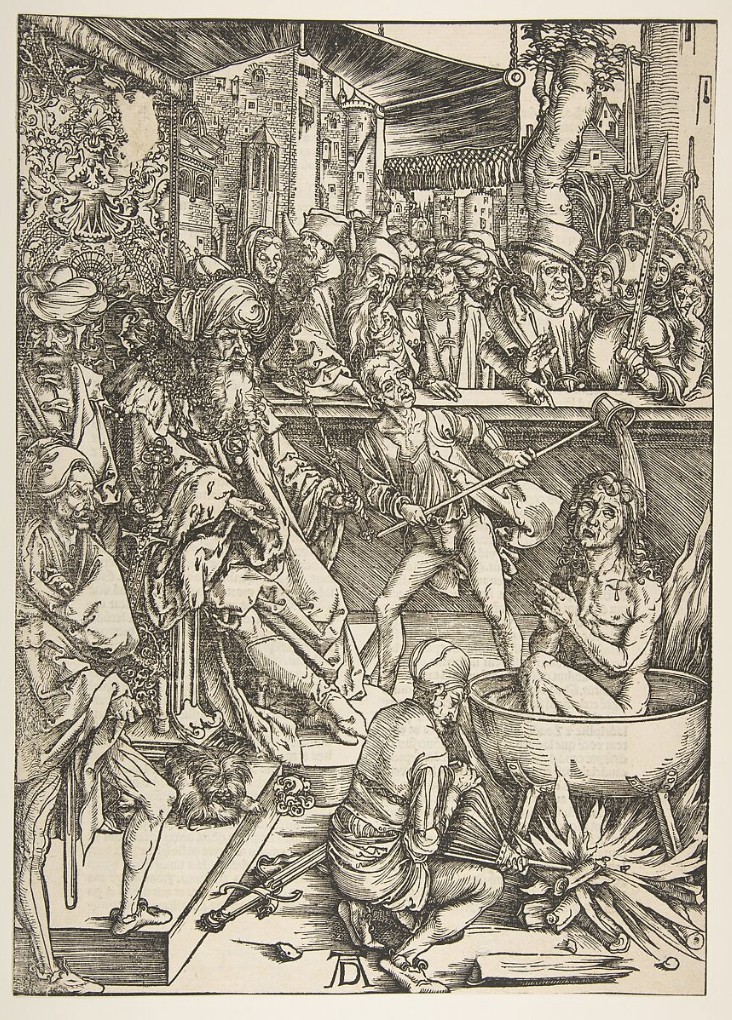
Albrecht Dürer, The Martyrdom of Saint John, 1498
Woodcut print from Durer’s Apocalypse in Pictures
Saint John was condemned to boil in a pot of oil
Showcases his incredible use of line work and hatching/cross hatching
Includes his signature symbol at the bottom center
Late gothic intensity and early renaissance structure

Albrecht Dürer, The Opening of the Fifth and Sixth Seals, 1498
Woodcut print from Durer’s Apocalypse in Pictures (Illustrated scenes from Book of Revelation)
Showcases his incredible use of line work and hatching/cross hatching
Separates the heavenly realm from earth
Stars reign down on all ranks of people to show judgment of all
Late gothic intensity and early renaissance structure

Albrecht Dürer, The Opening of the Seventh Seal, 1498
Woodcut print from Durer’s Apocalypse in Pictures (Illustrated scenes from Book of Revelations)
Eagle crying a warning of woe to the inhabitants of earth
Showcases his incredible use of line work and hatching/cross hatching
Late gothic intensity and early renaissance structure

Albrecht Dürer, The Beast with Lamb’s Horns and Beast with Seven Heads, 1498
Woodcut print from Durer’s Apocalypse in Pictures (Illustrated scenes from Book of Revelations)
Showcases his incredible use of line work and hatching/cross hatching
Late gothic intensity and early renaissance structure
Seven headed beast forces people to worship the first beast and performs false miracles

The Last Judgment Portal from Chartres Cathedral, France, building of cathedral 1134-1260
High gothic
Includes jamb figures

The Last Judgment Portal from Saint Lazarus Cathedral, Autun, France, 1132-1146
Romanesque art
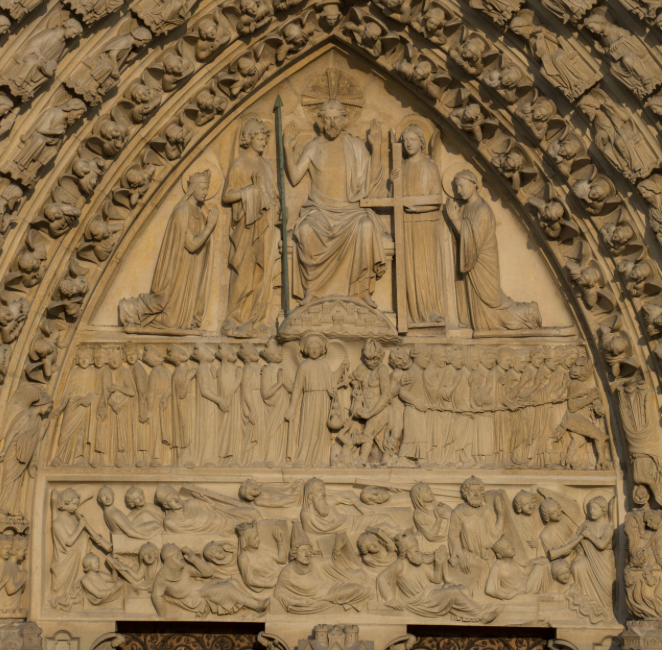
The Last Judgment Portal from the Notre Dame Cathedral, Paris, France, 1163-1345 (portal from 1220-1230)
High gothic era
Archivolts

Dipankara Jataka, ca. 2nd century, Pakistan (ancient region of Gandhara, Swat Valley), Metropolitan Museum of Art
The ascetic Megha appears three times (Buddha from his past life)
Schist relief panel with gold leaf
The Buddha is predicting that the next Buddha will reach enlightenment

Yamantaka, Destroyer of the God of Death, Tibet, 18th century
Painting on a small cloth that would have been located in a Tibetan monastery
Yamantaka is standing on Yama, the God of Death
Prevents the Yama from preventing enlightenment by breaking the cycle of samsara
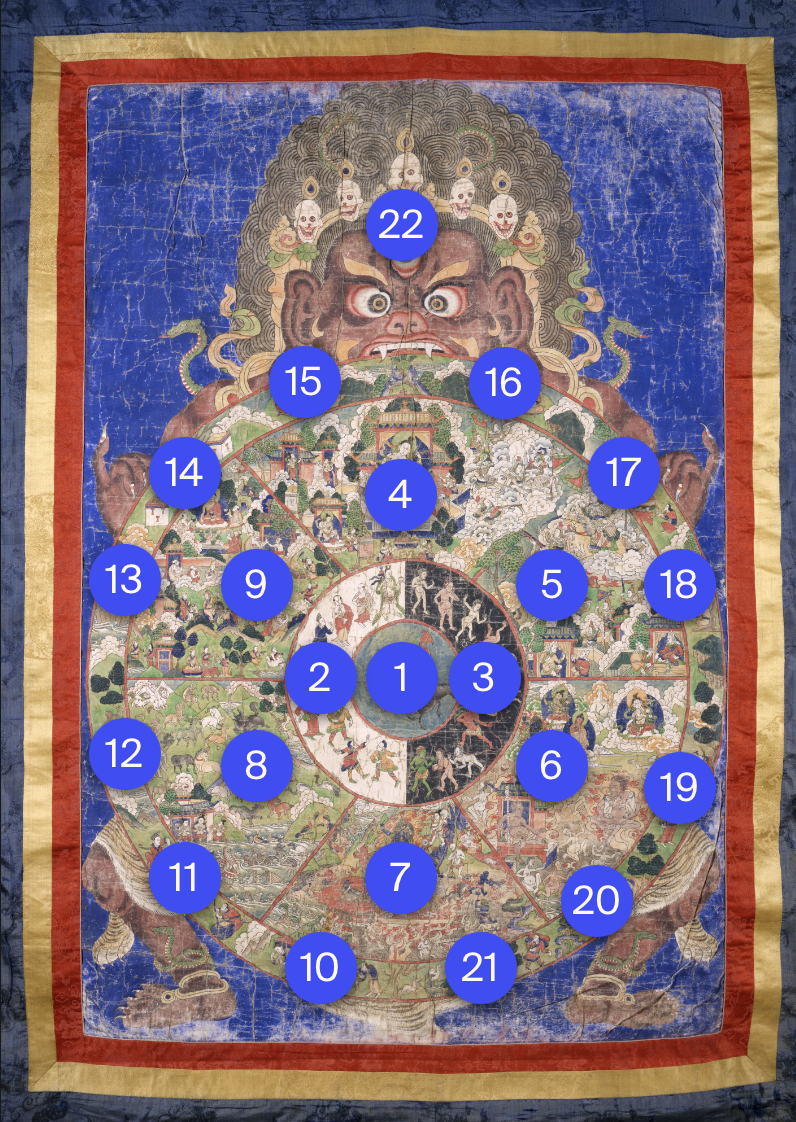
Wheel of Life, Tibet, 19th century
Representation of Buddhist beliefs about the cycle of life, death, and rebirth known as samsara
Past actions (karma) are the force that keeps beings within this cyclic existence (black and white section)
The entire wheel is clutched by Yama, the Lord of Death, symbolizing that all worldly existence is subject to death

Chenrezig Sand Mandala, created and exhibited at British House of Commons in 2008, during Dalai Lama’s Visit
Mark the visit of the 14th Dalai Lama
Made from sand and used to meditate
Destroyed once finished and deposited into the river
Represents celestial palace and impermanence
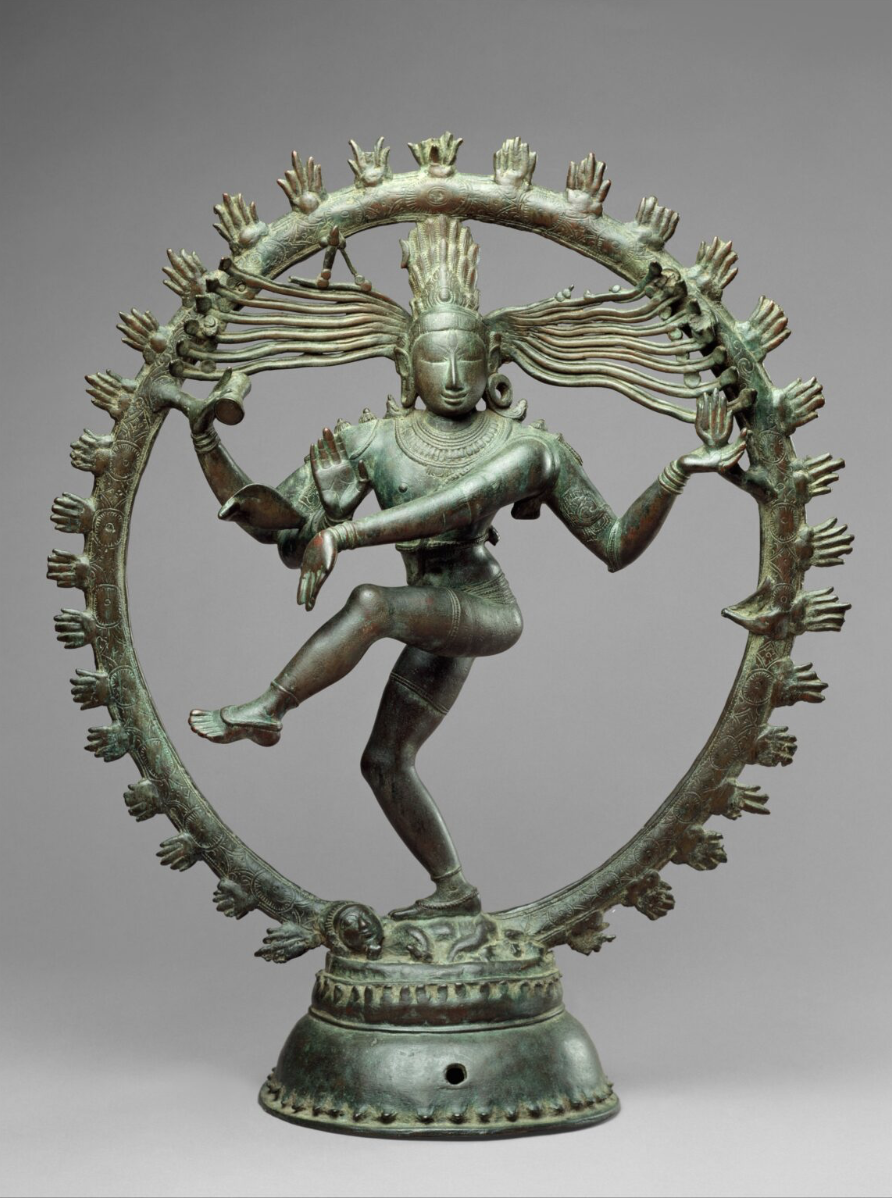
Shiva Nataraja, Chola Period, bronze, 11th century, Metropolitan Museum of Art
Copper alloy (bronze) cast
Shiva performs a cosmic dance (dance of bliss)
Embodying the continuous rhythm of creation, preservation, destruction, and release
Surrounded in a ring of fire
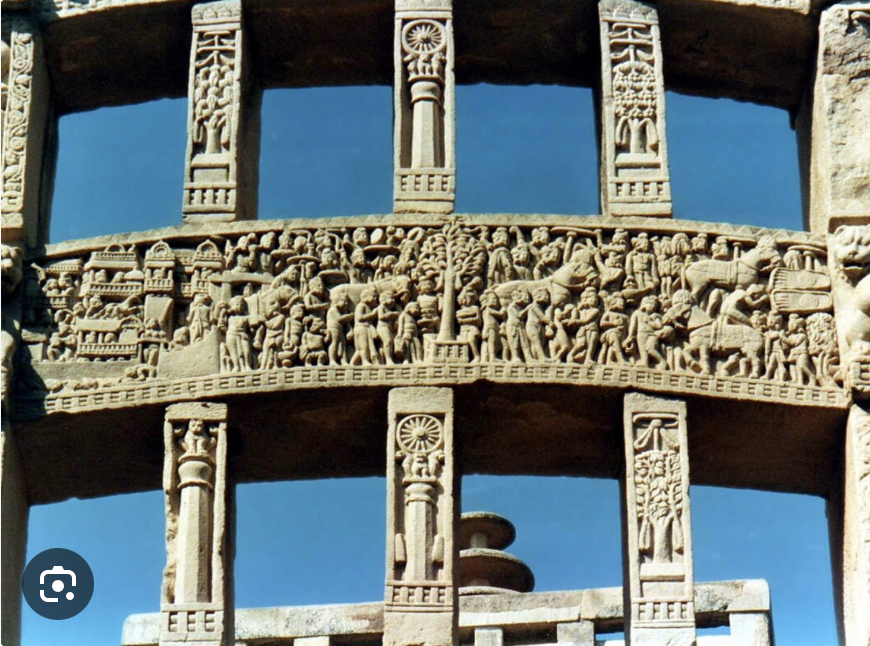
The Great Stupa of Sanchi, India, The Great Departure torana
Aniconic
Buddha’s presence is symbolized by an empty horse
Multiple moments of the Buddha’s story to enlightenment

Falnama of Shah Tahmasp, “Day of Judgment”
Opaque watercolor, gold, and ink on paper
The composition features prominent winged archangels (trumpets to sound day of judgement)
Groups of sinners who face deformations as punishment

Temptation of the Buddha by Mara and His Armies
Siddhartha Gautama confronted and conquered illusion, desire, fear, and self-doubt on the night before he attained enlightenment beneath the Bodhi tree
Siddhartha reached down and touched the ground with his right hand, calling upon the Earth Goddess to bear witness to his lifetimes of spiritual preparation and virtue