Biochem Ch 17
 Call Kai
 Learn
 Practice Test
 Spaced Repetition
 Match
 Flashcards
 Knowt Play
1/23

There's no tags or description
Looks like no tags are added yet.
24 Terms
routes for pyruvate
citric acid cycle
Alcoholic fermentation (No O2)
Anaerobic respiration
Phosphorylation of glucose
makes glucose-6-phosphate
Isomerization of glucose-6-phosphate
gives fructose-6-phosphate
Phosphorylation of fructose-6-phosphate
makes fructose-1,6-biphosphate
Isomerization of dihydroxyacetone phosphate
makes glyceraldehyde-3-phosphate
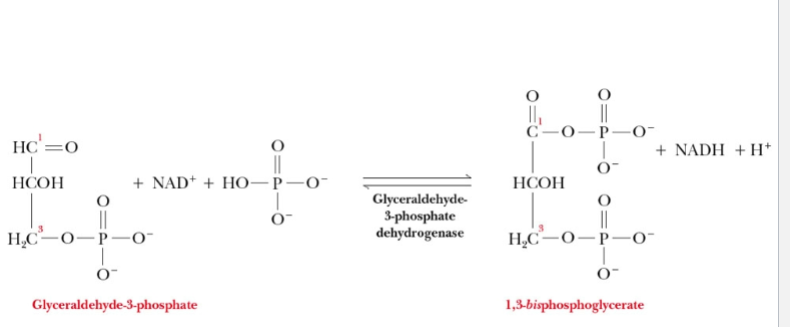
Oxidation of glyceraldehyde-3-phosphate
gives 1,3-biphosphoglycerate
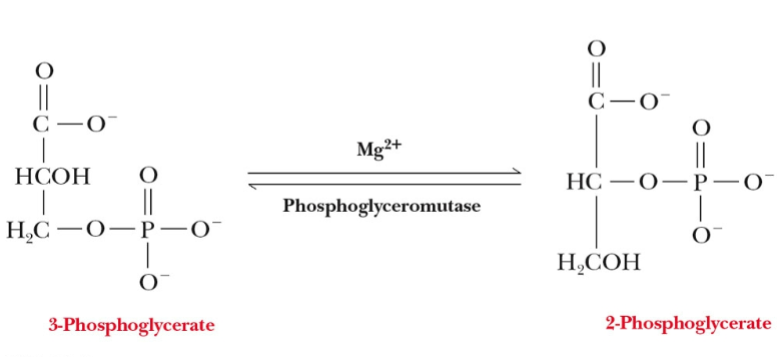
Isomerization of 3-phosphoglycerate
gives 2-phosphoglycerate
Dehydration of 2-phosphoglycerate
gives phosphoenolpyruvate
Transfer of phosphate group
transfers phosphate from phosphoenolpyruvate to ADP to give pyruvate
Step 1: Phosphorylation of Glucose
Glucose + ATP → Glucose-6-Phosphate + ADP
Adds phosphate to glucose
-1 ATP
control step
Enzymes: Hexokinase, Glucokinase

Step 2: Isomerization
Glucose-6-phosphate → Fructose-6-phosphate
Enzyme: glucose-phosphate isomerase

Step 3: Phosphorylation
ATP + fructose-6-phosphate → fructose 1,6 bisphosphate + ADP
Control step
-1 ATP
committed step
Enzyme: Phosphofructokinase
ATP is allosteric factor: higher ATP= slower reaction

Step 4: Cleavage
Fructose 1,6- biphosphate → glyceraldehyde- 3P + dihydroxyacetone- P
Enzyme: Aldolase

Step 5: Isomerization
dihydroxyacetone-phosphate → glyceraldehyde-3- phosphate
Enzyme: triosephosphate isomerase
End of phase one:
Every step forward is happening twice (2 glyceraldehyde)

Step 6: Oxidation and Phosphorylation
Glyceraldehyde-3-phosphate + NAD+ → 1,3-biphosphoglycerate + NADH +H
Enzyme: glyceraldehyde-3-phosphate dehydrogenase
+2 NADH
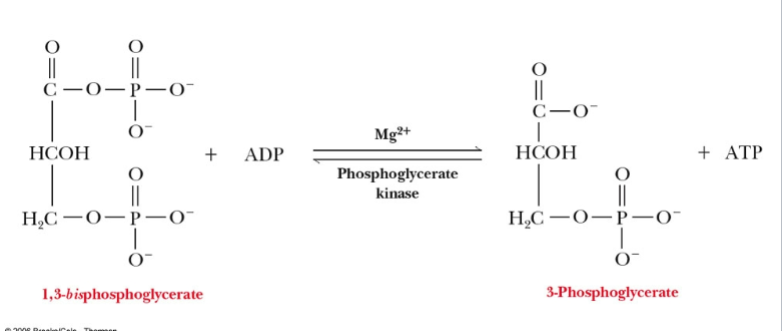
Step 7: Transfer of a phosphate
1,3-biphosphoglycerate + ADP → 3-phosphyclycerate +ATP
Enzyme: phosphoglycerate kinase
+2 ATP
Step 8: Isomerization
3-phosphoglycerate →2-phosphoglycerate
Enzyme: phosphoglyceromutase
Step 9: Dehydration
2-phosphoglycerate → phosphenolpycruvate
loss of water
Enzyme: enolase

Step 10: Transfer of a Phosphate
Phosphoenolpyruvate + ADP → pyruvate +ATP
Enzyme: pyruvate kinase (control)
allosteric
+2 ATP

Anaerobic Respiration
pyruvate → lactate
this step recycles NADH → NAD+
Enzyme: Lactate dehydrogenase

Alcoholic fermentation: Step 1
after glycolysis, pyruvate → acetaldehyde
pyruvate is loosing CO2
enzyme: pyruvate decarboxylase (redox)
Alcoholic Fermentation: Step 2
acetaldehyde is reduced to ethanol
NADH → NAD+
Enzyme: alcoholic dehydrogenase
Fetal alcohol syndrome
ethanol → acetaldehyde
can be transferred through placenta
acetaldehyde is toxic and everyone processes it differently
deprives fetus of nutrients and oxygen
Tooth Decay
bacteria grow on teeth
sugars, anaerobic respiration and plaque help growth
byproducts of anaerobic respiration: pyruvate and lactate which are acidic: degrades tooth enamel