Unit 3 Study Guide
 Call Kai
 Learn
 Practice Test
 Spaced Repetition
 Match
 Flashcards
 Knowt Play
1/52

There's no tags or description
Looks like no tags are added yet.
53 Terms
What is a Genome?
All of a cell’s genetic information (DNA)
Genome-Prokaryotes
1 Circular, chromosome, no nucleus
Genome-Eukaryotes
More than 1 linear chromosome, in nucleus
What is a Chromatin?
Condenses into visible chromosomes, the nuclear envelope breaks down, and the mitotic spindle forms
What is a Chromosome?
Unit of heredity
What is the difference between Chromatin and Chromosomes?
They differ in their level of condensation and the stage of the cell cycle in which they appear
Chromosome Structure
Starts as a single chromosome and then it duplicates to make a duplicated chromosome (this is made of two sister chromatids). when they split it goes back to being single chromosomes

What type of cells do mitosis?
Prophase, Prometaphase, Metaphase, Anaphase, Telophase
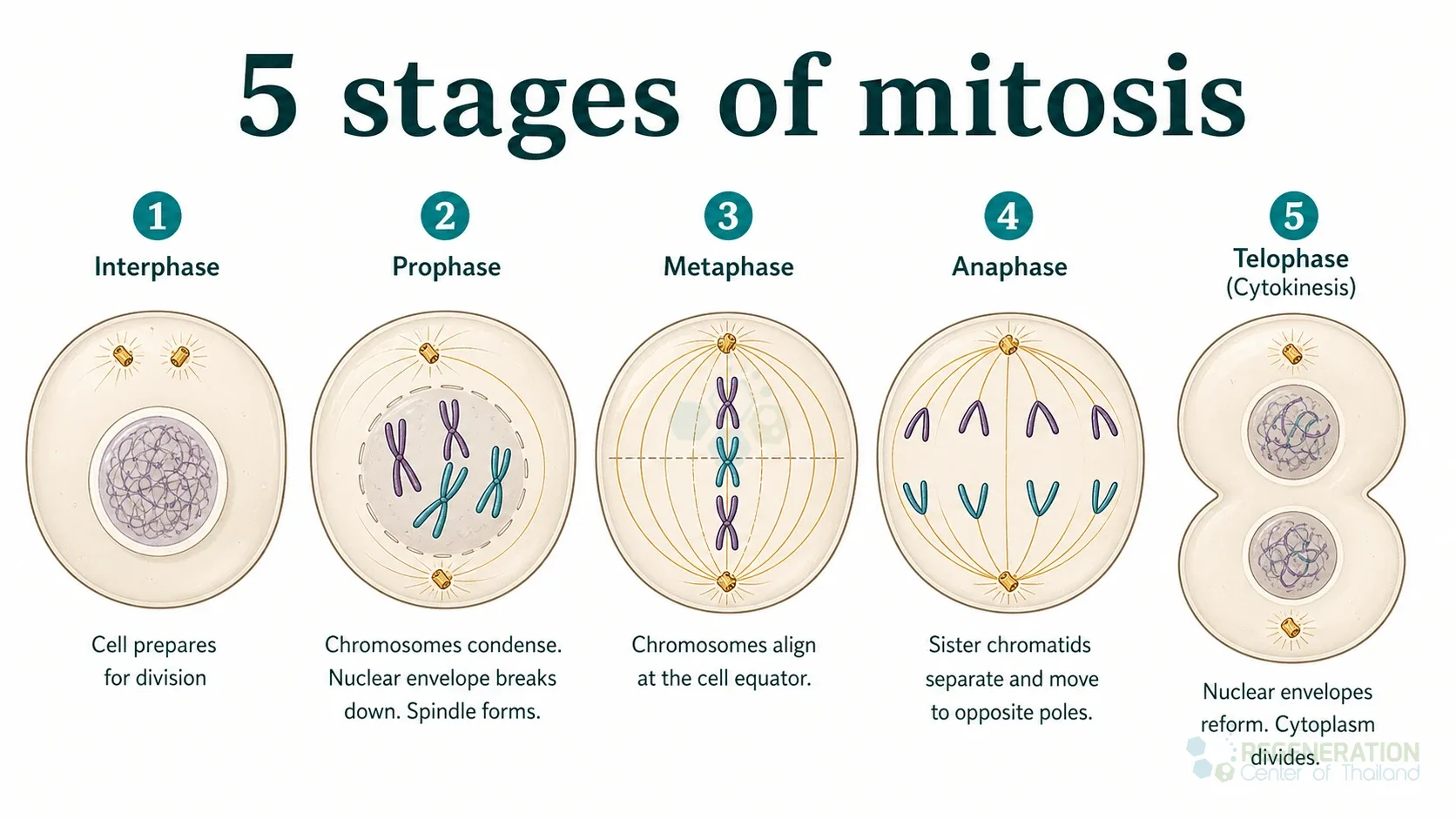
Why do cells do mitosis?
Growth and development, Tissue repair and replacement, Asexual reproduction
What are Somatic Cells?
Diploid (2n), copy of mom AND dad chromosome in each cell, divide by mitosis
What are Sex Cells/Gametes?
Sperm or egg, haploid (n), only mom OR dad chromosome in each cell, divide by mitosis
What is the difference between diploid and haploid?
A diploid cell contains two complete sets of chromosomes (2n), while a haploid cell contains only one complete set (n)
What are the 3 main phases of the cell cycle in order?
Interphase, Mitosis, and Cytokinesis
What are the subphases of Interphase?
G1, S, G2
How is cytokinesis different for animal cells and plant cells?
Animal cell = cleavage furrow
Plant cell = cell plate
What is G0 phase?
Nondividing phase - some cells stay forever
What are the three checkpoints and what do they check?
G1: Main checkpoint = checks size, nutrient availability, if passes this checkpoint, cell is committing to division (or apoptosis)
G2: checks DNA to make sure was copied correctly
M: checks kinetochores/spindle fibers to make sure they are all attached
Define apoptosis
A type of programmed cell death that rids your body of damaged cells
What is the role of internal and external signals?
Help living organisms and individual cells maintain balance, adapt to their surroundings, and coordinate growth and behavior.
What is cancer?
Group of diseases that all show uncontrolled cell growth
What is the difference between benign and malignant?
Benign = lump of cells, remains at original site/not invasive
Malignant = abnormal cells that ignore inhibiting signals and grow uncontrolled
What is the purpose of proto-oncogenes?
Genes that code for positive cell cycle regulators (stimulate normal cell division)
Mutate in certain ways to become oncogenes
What is the purpose of tumor suppressor genes?
Genes that code for negative cell cycle regulators (stop cell division) → when activated = stop uncontrolled cell division
Mutations can prevent them from working (so can no longer stop cell division)
What is Binary Fission
A single-celled organism that divides into two identical daughter cells
Why do prokaryotes not do mitosis?
No nucleus and multiple linear chromosomes
What is the purpose of meiosis?
To produce haploid gametes (sperm and egg cells) from a diploid parent cell
What are the 3 main types of life cycles?
Diploid dominant, haploid dominant, alternation of generations
Spermatogenesis
From puberty to death
Starts with spermatocyte and ends with 4 spermatids that mature to become sperm
Oogenesis
In humans = before birth, then puberty to menopause
Occurs in ovaries (creation of egg)
Starts with oocyte and ends with 1 egg and 3 polar bodies (which die)
Homozygous dominant
Occurs when an organism inherits two identical, dominant alleles for a particular gene (AA or BB)
Homozygous recessive
Occurs when an organism inherits two identical recessive alleles for a specific gene (bb, ff, aa)
Heterozygous
Having two different versions (alleles) of a specific gene (Aa, Bb, Dd)
What does it mean for a gene to be sex-linked?
A gene located on one of the sex-determining chromosomes (the X or Y chromosomes)
How are X-linked genes passed down?
Through the X chromosomes
What is the Chromosomal theory of inheritance?
Walter Sutton and Theodor Boveri developed the theory
Theory states that genes are found on chromosomes (and so chromosomes are the unit of heredity)
What is a linked gene?
Genes that sit close together on the same chromosome and tend to be inherited together during cell division
How many chromosomes are in a euploid human?
46 chromosomes
What is aneuploidy?
A cell has an abnormal number of chromosomes, either missing a chromosome or having an extra one
What is Monosomy?
A type of aneuploidy = an abornaml number of chromosomes, leaves a cell with 45 chromomes instead of 46
What is Trisomy?
A genetic condition in which a person has three copies of a specific chromosome instead of the usual pair
What is nondisjunction and how does it lead to these conditions?
The failure of homologous chromosomes or sister chromatids to separate properly during cell division (mitosis, meiosis I, or meiosis II).
What is polyploidy?
A genetic condition in which a cell or organism has three or more complete sets of chromosomes instead of the usual two
What is the purpose of genetic testing?
To analyze DNA, chromosomes, or proteins to identify gene changes or mutations that influence health, disease risk, or ancestry
What is the role of the centrioles/centrosome
Help prophase organize and build the spindle fibers.
What are Cyclins and CDKs?
Cyclins = proteins produced at specific times in cell cycle
CDKS = cyclin dependent kinases - are activated when cyclins bind
What is the importance of Genetic Variation?
Provides the raw material for natural selection which then allows for populations to survive, adapt, and evolve
What is Asexual reproduction?
Only one parent
Done by mitosis/binary fission
No variation - offspring are clones of parent
Uses less energy
Beneficial in unchanging environments
What is Sexual reproduction?
Requires two parents
Done by meiosis
Offspring is genetically different - mix of both parents
Uses more energy
Advantageous in changing environments
What is synapsis?
The close side-by-side pairing of homologous chromosomes.
Occur during Prophase I of meiosis
Tell when cells become haploid in meiosis
Anaphase I and telophase I of Meiosis I
Comparing mitosis and meiosis
Mitosis: Somatic Cells, 1 division - 2 diploid cells, offspring are clones of parent, conception/zygote to death, for growth, healing, asexual reproduction
Meiosis: Gametes/sex cells, 2 divisions - 4 haploid cells, offspring are genetically different from parent - 1 in 8 million alike, varies - females - before birth until menopause, males - puberty until death, for sexual reproduction, crossing over, independent assortment, synapsis, homologous chromosomes, tetrads
Humans have 46 chromosomes in our Somatic cell, how many autosomes do we have?
44
How many sex chromosomes do humans have?
2