Cog Neuro 3 Diagrams
 Call Kai
 Learn
 Practice Test
 Spaced Repetition
 Match
 Flashcards
 Knowt Play
1/55

There's no tags or description
Looks like no tags are added yet.
56 Terms

Lesions to the blue region result in deficiencies in…
the ability to retrieve proper names for familiar faces, identify unique persons
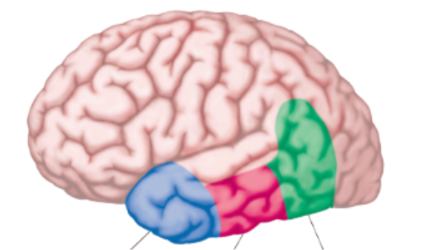
The blue region is referred to as…
(TP) the left temporal pole

Lesions to the red region result in deficiencies in…
the ability to retrieve names of non-unique living things (animals)

The red region is referred to as…
(IT) the left inferotemporal cortex

Lesions to the green region result in deficiencies in…
naming man-made, manipulable objects (tools)

The green region is referred to as…
(IT+) the posterior left inferotemporal cortex


What does 1 refer to?
Ciliary Muscle

What does 2 refer to?
Ciliary Body

What does 3 refer to?
Aqueous Humor
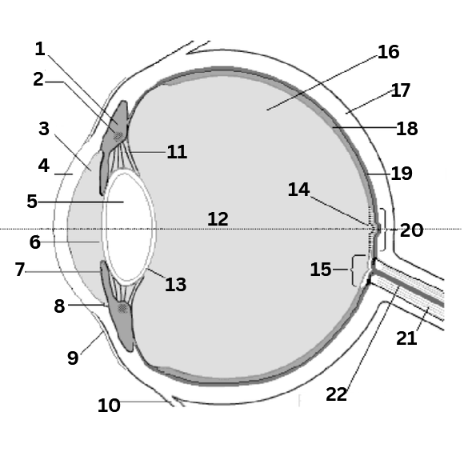
What does 4 refer to?
Cornea
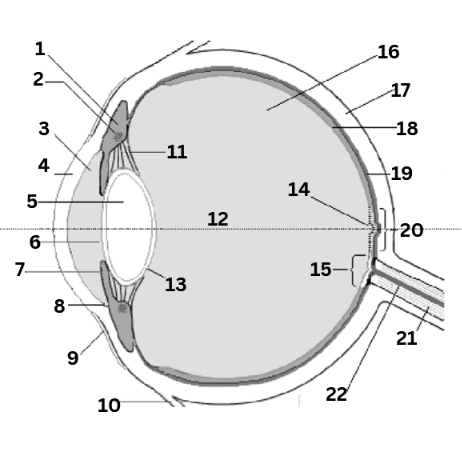
What does 5 refer to?
Lens
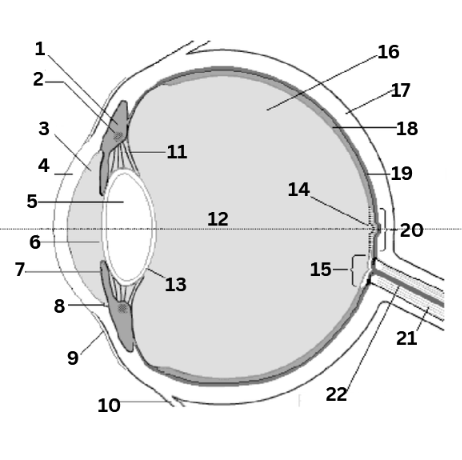
What does 6 refer to?
Pupil

What does 7 refer to?
Iris

What does 8 refer to?
Canals of Schlemm

What does 9 refer to?
Conjunctiva

What does 10 refer to?
Orbital Muscles

What does 11 refer to?
Zonules

What does 12 refer to? (the dotted line)
Visual Axis

What does 13 refer to?
Lens Sack

What does 14 refer to?
Fovea

What does 15 refer to?
Optic Disk

What does 16 refer to?
Vitreous Humor

What does 17 refer to?
Sclera

What does 18 refer to?
Retina
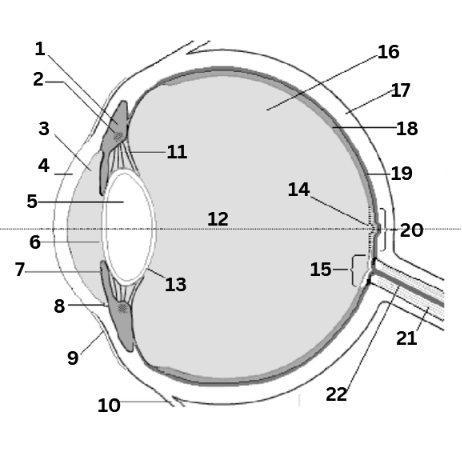
What does 19 refer to?
Choroid

What does 20 refer to?
Macula

What does 21 refer to?
Optic Nerve

What does 22 refer to?
Retinal Blood Vessels

What is this model called?
The Biederman Model

What does 1 refer to in this model?
Edge Extraction

What does 1 refer to in this model?
Parsing of regions of concavity

What does 1 refer to in this model?
Detection of non-accidental properties

What does 1 refer to in this model?
Determination of components

What does 1 refer to in this model?
Matching of components to object representations

What is this model supposed to depict?
the presumed porcessing stages in object recognition
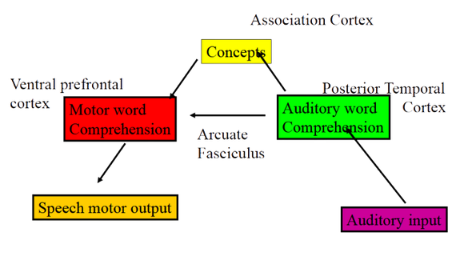
What is this model called?
The Lichtehim/Geschwind Model

What does this model depict?
how the brain processes, comprehends, and produces spoken and written language through specific interconnected cortical regions.

What process does A refer to?
Speech Motor Output

What process does B refer to?
Motor Word Comprehension

What process does C refer to?
Concepts

What process does D refer to?
Auditory Word Comprehension
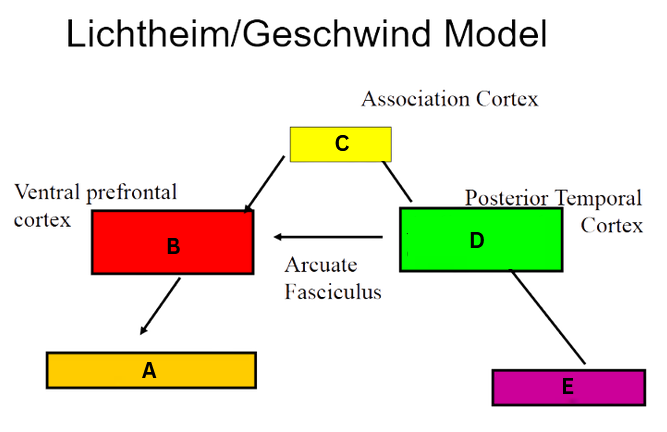
What process does E refer to?
Auditory Input
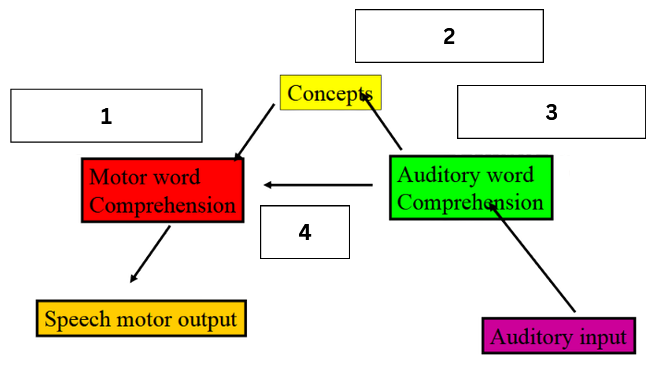
What structure does 1 refer to?
Ventral prefrontral Cortex
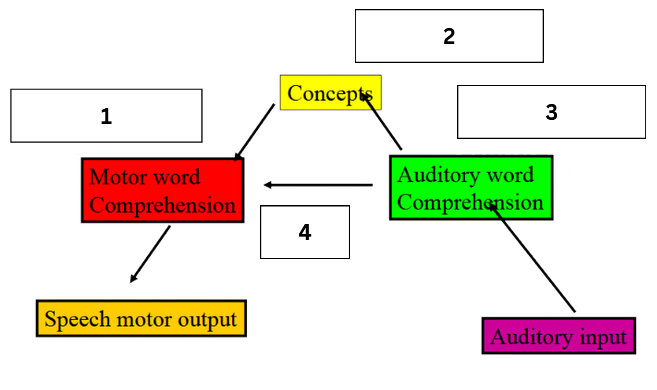
What structure does 2 refer to?
Association Cortex

What structure does 3 refer to?
Posterior Temporal Cortex
What structure does 4 refer to?
Arcuate Fasciculus

What structure does A refer to?
Pulvinar Nucleus

What structure does B refer to?
Thalamus

What structure does C refer to?
superior colliculus (automatic orienting)

What process does 1 refer to?
shifting attention to locations

What process does 2 refer to?
spatial relationships

What process does 3 refer to?
motion selection

What process does 4 refer to?
location selection
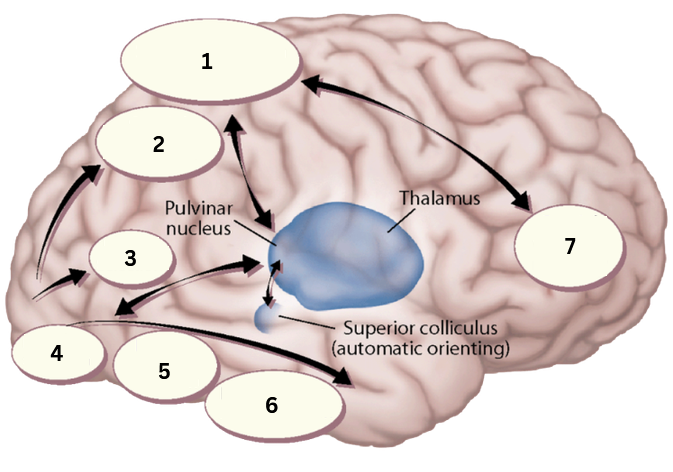
What process does 5 refer to?
feature (nonspatial) selection
What process does 6 refer to?
form selection and object selection

What process does 7 refer to?
spatial working memory