IF2- adhesions and chemotaxis
 Call Kai
 Learn
 Practice Test
 Spaced Repetition
 Match
 Flashcards
 Knowt Play
1/26

There's no tags or description
Looks like no tags are added yet.
27 Terms
where do leukocytes migrate to in the body + why is it important
they move from the blood to sites of inflammation and immune activation, when they arrive at their destination they participate in host defence, inflammation and repair and resolution
what is leukocyte migration controlled by
by tissue expression of adhesion molecules and chemical stimuli for leukocyte migration ( chemotaxis )
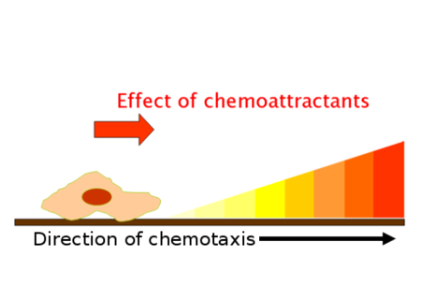
what is chemotaxis
its the process by which leukocytes move directionally in response to a chemical gradient

what are chemoattractant
they are signalling molecules that guide the movement of cells
what are chemotaxins
non- selective = they dont mind/ arent specific with the type of leukocytes they attract

what are chemokines
they are generated by cells in response to things like bacteria or other cytokines

describe CXC chemokines

describe CC chemokines

list all the steps involved in leukocyte migration
tethering- here there’s really weak interaction between leukocytes and endothelial cells so they can pass through the blood vessels
rolling
activation
adhesion
transmigration- here they are able to pass through cell membranes
explain how chemokines carry out their functions
the chemokine is produced by one cell then it goes and binds to its respective receptor on the target cell
CXCR1 receptors bind to CXC chemokines
and CCR receptors bind to CC chemokines
explain the tethering and rolling stage of leukocyte migration
at the very begining the leukocytes are just free moving in the blood streams
they need to be slowed down
they attach very loosely onto the bloo vessel wall and eventually escape back into the blood vessel
the adhesion molecules involved are selectins they bind weekly onto carbohydrates on the endothelial cell
what are selectins and what stage of the leukocyte migration are they involved in
they are involved in the tethering and rolling stages of migration
they are lectin like adhesion molecules that weakly bind onto carbohydrates on the endothelial cells
there are three types:
l-selectins - present on leukocytes
p-selectins - present on platelets ( endothelium )
e-selectins - present on endothelium
describe L-selectins
they are always expressed on leukocytes in response to bacterial components or inflammatory mediators
their activation leads to clustering of the l-selectin molecules so they can all bind to a specific site on blood vessel walls
what is the role of proteolytic enzyme sheddase during tethering and rolling
it cuts through adhesion molecules in the tethering and rolling stage of migration so that the cell is no longer able to bind onto the endothelium and the cell rolls off
describe the p-selectin molecules involved in the tethering and rolling stage
so l-selecting binds onto p-selectin on the endothelial cells
they are constitutively present in the platelets and the endothelium and stored in the granules of the cells
in response to a inflammatory mediator the p-selectins move onto the surface of the cell and become available for binding
describe what e- selectins are in the tethering and rolling stage of migration of leukocytes
they arent normally present in the cells and they need to be generated through undergoing transcription and translation
this is usually induced by inflammatory cytokines e.g. TNF alpha and IL-1
what are the adhesion molecules involved in the tethering and rolling stage of leukocyte migration
selectins ( L,P,E )
what are the adhesion molecules involved in the firm adhesion and flattening stage of leukocyte migration
integrins
describe what integrins are
they are heterodimeric ( they have two strands ) proteins expressed on the surface of leukocytes and other cells
they are adhesion molecules involved in firm adhesion
they require signals from the chemokines
describe the regulation of integrins
they are always present on the cells but they are initially inactive due to their confirmation
present chemokines are able to activate the cells by inducing conformational change
the chemokines also cause the clustering of the integrins which helps with the adhesion
the integrins can then bind onto cellular adhesion molecules
describe what cellular adhesion molecules are
they are molecules expressed on the inflamed blood vessel wall the endothelium and antigen presenting cell
they are ligands for integrins
there are intracellular adhesion molecules ( ICAMS 2 basally expressed and ICAM1 induced by cytokines)
and there are vascular cell adhesion molecules ( VCAMS induced by cytokines )
describe the flattening step of the leukocyte migration
integrin binding to the ICAM and VCAMS leading to the firm adhesion- the cell stops rolling
the leukocyte spreads out and flattens onto the endothelial cell surface
describe the transmigration step of leukocyte migration
this is the step where the leukocyte leaves to the blood vessel and enters through the cell membrane
there’s two ways this can happen:
usually in between endothelial cells at cell-to cell junctions ( paracellular )
also they can cross through endothelial cells ( transcellular )
this results from the interactions between CAMS and integrins on the leukocytes with the junctional proteins and other molecules on the endothelial cells
the direction is mediated by chemoattractant into specific tissues.
what are the adhesion molecules involved in transmigration
junctional adhesion molecules and platelet endothelial cell adhesion molecules
also ADAM and ADAMTs

what are the matrix malloproteinases involved in transmigration
they are a type of protease enzyme which degrade the basement membrane so the cells can pass through
they also degrade adhesion molecules that are on the surface of the cell
describe the selectivity in the inflammatory response

explain what leukocyte adhesion deficiency is
a condition caused by a defect in adhesion molecule expression
