APAH - Mesopotamia & Egypt
 Call Kai
 Learn
Learn Practice Test
 Spaced Repetition
 Match
Match Flashcards
 Knowt Play
1/12

There's no tags or description
Looks like no tags are added yet.
Name | Mastery | Learn | Test | Matching | Spaced | Call with Kai | Chat |
|---|
No analytics yet
Send a link to your students to track their progress
13 Terms

White temple and Zigguraut
Sumerian
Uruk
Mud Brick
corners face the cardinal points = four rivers that flow from the central mountain
bent axis floor plan, you can approach the cella ( inner chamber ) by turning 90 degrees
separated the nonsacred world from the deity
observatory for timekeeping
dedicate to sky god, Anu

Statues of votive figures
Square Temple at Eshunna
Sumerian
Gypsum inland with shell & black limestone
placed in the cella, stand ins for the actual person who wanted to pray
large eyes = waiting for the gods to descend
hierarchical scale = relative importance
hands in prayer = piety
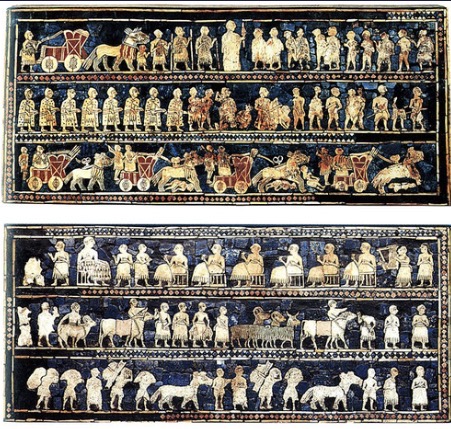
Standard of Ur
Sumerian
Wood inlaid with shell, lapis lazuli and red limestone
trapezoidal form
mosaic, registers, hierarchy of scale.
lapis lazuli = expensive = wealth & power
narrative, role of a sumerian king
read bottom to top, left to right
war
king is very large and breaks the register, soldiers bring the captives to him
soldiers lead captured enemies ( who are naked ) away
chariots crush enemies; invention of wheel
peace
priest-king is so large he is coming out of the register
attendants transport the spoils of war ( animals ) for a banquet
men carry provisions

Stele of Hammurabi
Babylon
Basalt
intended for public display
written in Cuneiform
earliest law code ever written
reinforces Hammurabi’s divine right to rule
Shamash is in composite view but his head is true profile
foreshortening makes some parts seem closer than others
Hammurabi raises his hand in respect
implied line puts both of them at the same height but Samash is much bigger if he stood up ( hierarchy of scale )
Shamash gives him a rod & ring, he’s giving Hammurabi's he authority to maintain social order

Lamassu
Dur Sharrukin
Neo-Assyrian
Alabaster
Stylized elements in hair, beard & wings
Naturalistic features in face and muscles
Five legs ( 2 from front, 4 from side )
Head of man = intelligence, body of bull = strength, wings = divinity
rite of passage, builds up tension before entering a place of power

Audience Hall of Darius and Xerxes
Persepolis,
Persian
Limestone
Royal audience hall
was built without slave labor = expensive
stairs have processional reliefs ( bringing tribute to the king )that represent the harmonious living of the 23 nations in the persian empire
figures ares stylized, composite view, different ethnicities, everyone is shown respectfully ( no classism )
Hypostyle hall, room with rows of columns supporting the roof

Palette of Narmer
Predynasitc Egypt
Greywacke
Beginners the Egyptian Canon, royal iconography, registers, hierarchy of scale, composite view
commemorative —> visually display the power and authority of Narmer
Asserts divine right to rule by connecting narmer to a god
the circle woudl be used to create eye makeup to make him look like a god
unification of egypt ( he’s wearing both crowns of upper & lower egypt )

Great Pyramids
Dynasty IV
Giza
Cut limestone
size = visually communicates the power fo the Pharaoh
symmetrical, perfect harmony
west side of the nile where the sun sets = death
symbol of Ra the sun god, pharaohs are his sons, the pyramids are a place of regeneration
sun rays are teh ramp through which the pharaohs ascend to the heavens
Giza plaque is a necropolis ( city of the dad )
smooth limestone would reflect the sun
Connected to the nile ( land of the living —> land of the dead )
kind of like stonehenge
Reinforces divine right to rule
funerary, protects the pharaohs’s ka
cult of the pharaoh
Great Sphinx
guardian figure, protects the pyramid
symbol of the pharaohs power
can be compared to Lamassu

King Menkaure and his Queen
Fourth Dynasty
Giza, Egypt
Greywacke ( very hard stone )
sense of enternity
idealized figures. Pharaoh iconography ( fake beard, kilt, headdress )
left foot forward
Protect the ka ( spirit ) of the figures
cult of the pharaoh; worship
Figure next to the pharaoh
Queen
Goddess
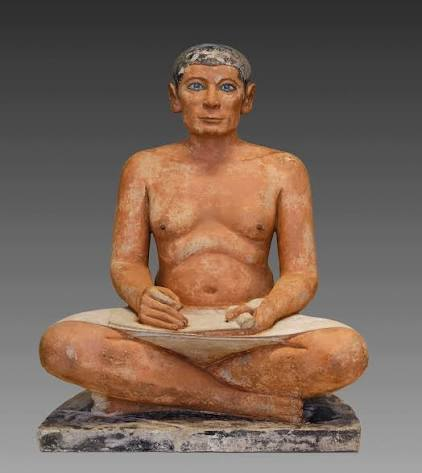
Seated Scribe
Foruth Dynasty, Old Kingdom
Painted Limestone
softer, less permanent thatn greywacke = lower class
scribes had high social status bc of literacy
naturalism shows he’s not a Pharoah
stiff, upright posture
frontal
eyes are made of a stone, he’s eternally awake

Temple of Amun Re
New Kingdom
Karnak
Cut sandstone and mud brick
Karnak was the principal religious center of the god Amun-Re
pylon temple : massive gateway with sloping walls, symbolic barriers between the outside and sacred space; represents the horizon
Hypostyle Hall
roof supported by row of columns
post & lintel construction
clerestory: window, allows for illumination
as you get deeper into the temple, there’s less/smaller clerestories and it gets darker
you’re getting closer to the birth of the universe, which is why it’s dark
only phaorahs enter the inner shrine
straight axis approach, direct path to the innner temple
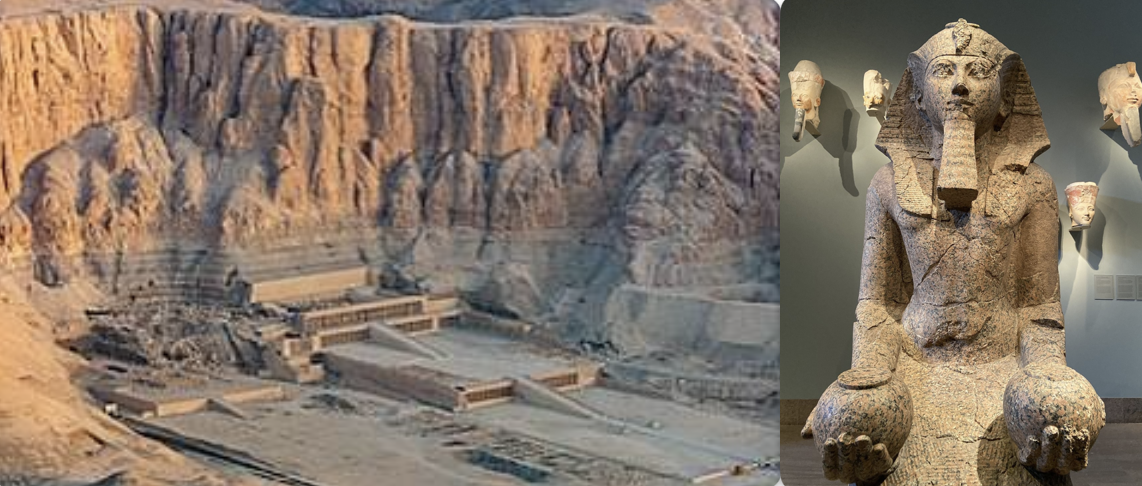
Mortuary Temple and Kneeling Statue of Hatshepsut
New Kingdom
Red granite - statue
Sandstone & granite - temple
Statue:
Female Power in egypt
false beard of the pharaoh even tho she’s female
sometimes represented as female, sometimes as male
first tribute to a woman’s a hie event
change from the old kingdom tradition, hatshepsut is shown praying, pharaohs are still idealized and have iconography
making an offering to Amun Re, divine right to rule
Mortuary temple:
relieves of hatshepsut’s accomplishments
visually connected to the natural setting ( situ )
rocks are unmoving and powerful, js like hatshepsut
reinforces her divinity, she wants to be remembered a s great and powerful fpharaoh
hatshepsut is buried in the valley of the kings, not the temple

Akhenaten and his Three Daughters
New Kingdom ( Amarna )
limestone
akhenaten wanted to be androgynous, he js is not like the other girls fr
bro changed his name to sound like aton the sun god
aton’s rays are touching akhenaton and his wife nefertiti
sunken relief, subtractive sculpture
family portrait, very intimate, no one else did this
private shrine for akhenatoen
overlong proportions
shows that AKhenatten and nefertiti were the only ones with direct access to the Aton.
you could only partake int he divine salvation of aton through him and his wife
Everyone hated this and they immediately reverted after Akhenaten’s death