Wed 10/14 Quiz 18: Brain - Amygdala, Cerebellum, Hippocampus
 Call Kai
 Learn
 Practice Test
 Spaced Repetition
 Match
 Flashcards
 Knowt Play
1/8

There's no tags or description
Looks like no tags are added yet.
9 Terms
Capgras delusion
belief that loved one has been replaced by an imposter (a body double)
In our normal brains, the amygdala gives us an emotional response when we see something familiar. However, this disorder is caused by a disconnected amygdala, causing an emotional response to be missing when recognizing objects. This disconnection results in no emotion when seeing someone familiar.
amygdala
Emotion, fear, rage, aggressiveness- this part of the brain will sound the alarm for the sympathetic nervous system
The Limbic System is the emotional part of the brain because it includes this

Anterograde amnesia
an inability to form new memories (like HM)
Caused by damage to the hippocampus
Procedural memory
the gradual acquisition of skills as a result of practice, or "knowing how" to do things - made by cerebellum
You "know how" to ride a bike, hit a baseball, or swim, because this type of memory is stored in the cerebellum
Hippocampus
A neural center located in the limbic system that helps process explicit memories for storage.
Vital for memory - if you had this damaged, you wouldn't be able to make new memories - unless they were skill memories (procedural memories aren't processed here because they are stored in the cerebellum)

Brain Plasticity
Parts of the brain can adapt themselves to perform other functions of the brain if needed - for example if part of your left brain is damaged, your right brain may try to do some of the functions of the left
If one part of the brain is damaged, the dendrites of the neurons might be able to make new connections that would be able to take over for those function
Researchers know that younger brains are more of THIS and are more likely to be able to compensate for damage.

Cerebellum
Part of the brain responsible for balance and coordination.
Also important for procedural memories (sometimes called "muscle memory"), like riding a bike or skills used playing a sport.
Prefrontal cortex
EXECUTIVE FUNCTIONING
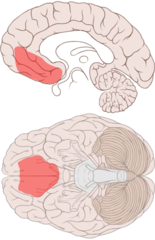
The "Central Executive" in charge of "executive functions"- self control, IMPULSE CONTROL, maintaining emotional control -regulates emotion from the amygdala, planning, decision making, problem solving, judgement - these things make up your personality
The anterior (front) part of the frontal lobe
Executive functions
Cognitive skills for goal-oriented behavior, including memory and inhibition
Primarily processed in the pre-frontal cortex
Examples: planning activities, managing distractions, and controlling impulses
