I/O Psych, chapt 9 motivation
 Call Kai
 Learn
 Practice Test
 Spaced Repetition
 Match
 Flashcards
 Knowt Play
1/55

There's no tags or description
Looks like no tags are added yet.
56 Terms
Work Motivation
A person energetic desire to initiate work-related behavior and to determine it’s form, direction, intensity, and duration.
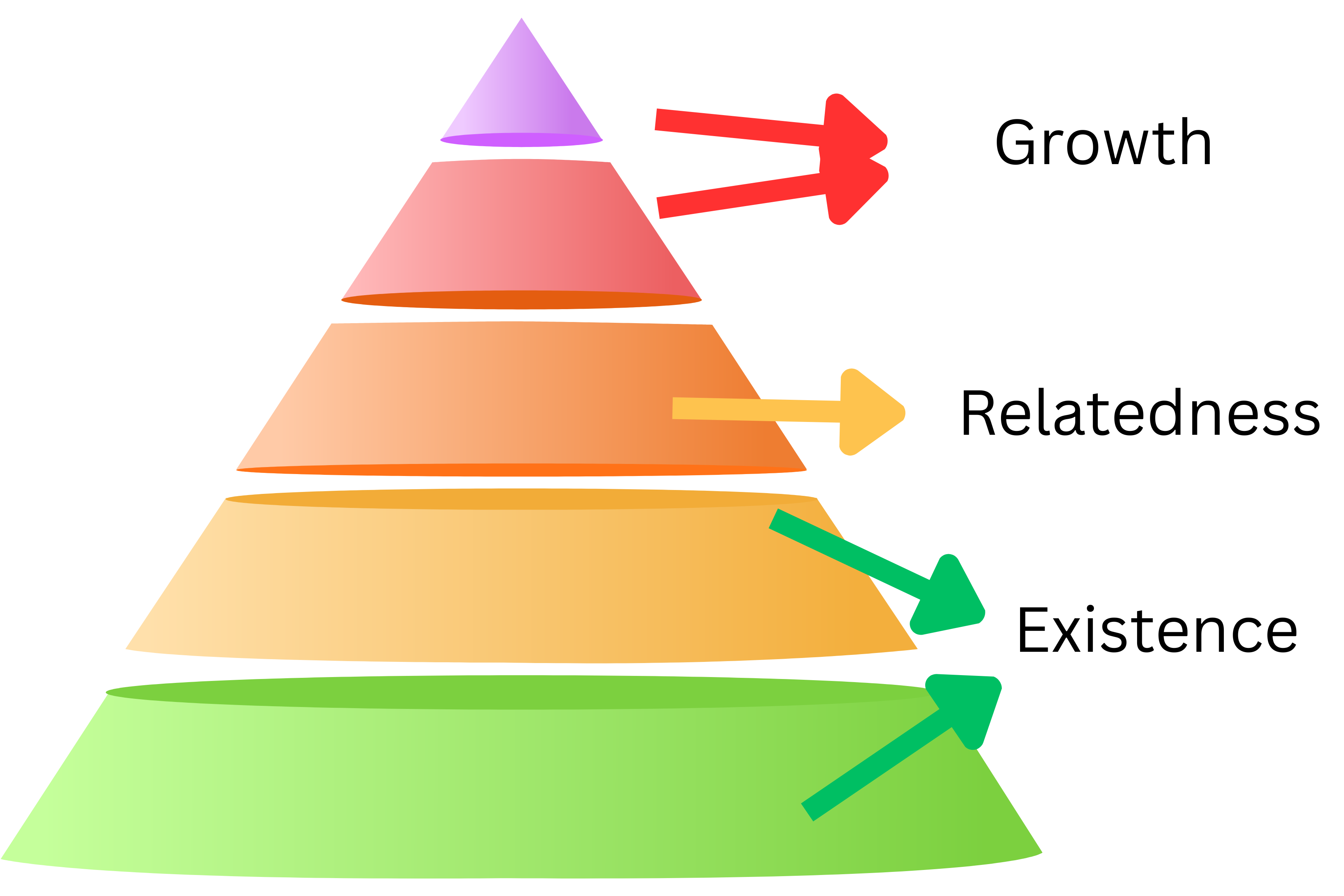
ERG Theory
a theory that proposes individuals have three needs:
Existence
Relatedness
Growth

(ERG Theory) Existence
Maslow’s 1st two levels, physiological and safety needs.

(ERG Theory) Relatedness
Maslow’s level of social needs

(ERG Theory) Growth
Maslow’s last two levels. Inner esteem/achievement and self actualization
Frustration-regression principle ((ERG Theory)
If a need is not met, a person will then focus on the lower-needs to compensate.
Two-factor theory (Motivation-hygiene theory)
Herzberg’s theory that tells the difference between hygiene and motivator factors for job satisfaction.

Hygiene factors
Job satisfaction factors that if their needs are not met, it can decrease work motivation. Examples:
Pay
work policies
work conditions
supervisor/employee relationship

Motivator factors
Optional factors (not always present) that motivate someone to perform better at work. Examples:
Opportunities for promotion
recognition
responsibility
interesting work tasks/projects

Acquired needs theory
(Falls under self-determination theory). Motivation is determined by the needs of that a person & that each person has 3 needs (achievement, power, and affiliation).

Need for Achievement (Acquired needs theory)
(N-Ach)
Desire to excel and succeed. Likes to set realistic goals.
Desires feedback on progress goals.
Likes organizations that reward merit, not seniority.
Best jobs for them: entrepreneur and scientist.

Need for Power (Acquired needs theory)
(N-Power). Desire to influence others and make an impact. Can damage an organization or own relation.
Best jobs: Leadership and Politics

Need for affiliation (Acquired needs theory)
(N-Affil) Desire to have friendships, feel accepted, and to engage with others.
Best Jobs: Teacher or social worker
Worst jobs: Manager (because of conflict)
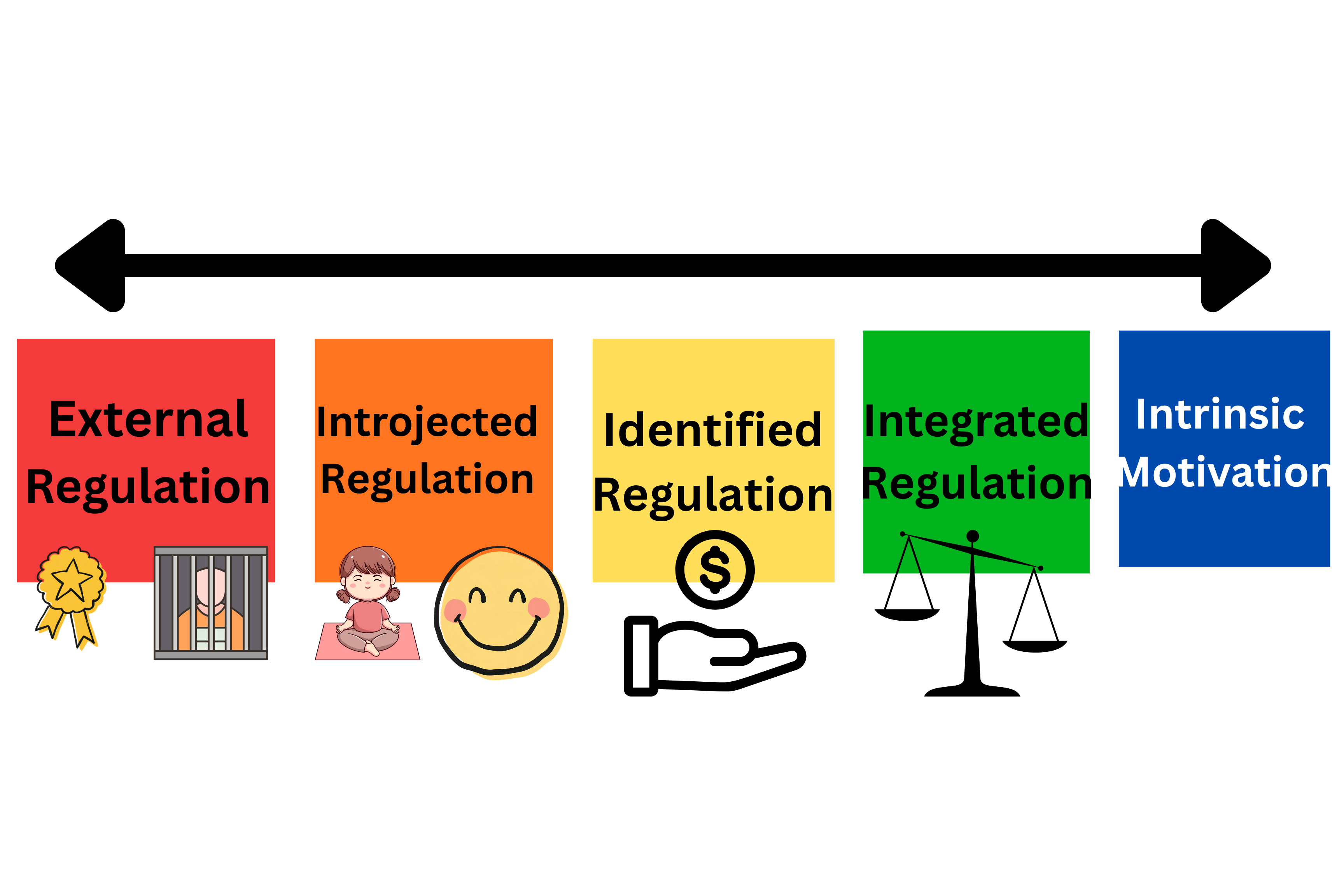
Motivation Spectrum (Self Determination)
External Regulation:
Compliance
External rewards or punishments
Introjected Regulation:
Self control
Internal rewards and punishments.
Identified Regulation:
Personal importance
Conscious valuing
Integrated Regulation:
Value congruence.
Synthesis with image
Intrinsic Motivation:
Interested, enjoyment
Inherent satisfaction
Equity theory
(process based theory) When a person determines if what they give is equal to what they receive
Self determination theory
Focuses on one’s intrinsic motivation.
Process-based work motivation
Focuses on how motivation develops and what factors cause motivation to exist

Benevolents
People who are more comfortable giving more inputs than the outcome they receive.
Ex: Social workers
Equity sensitivities
Those who prefer an equal ration of input and output

Entitleds
People who prefer giving less output and getting more.
Ex: Politics
Justice theory
(Process based theory) How fair an employee thinks their boss is to their employees

Distribute justice
How others perceived the rewards given from an organization as fair

Procedural Justice
How others perceived the process used to make important decisions as fair
Interactional / Interpersonal Justice
How employees perceived the interpersonal treatment from managers as fair.
Expectant theory / VIE {Extended} ~ Process based
If I put in good effort → Great Performance → Great outcome
Expectancy: An individual thinks their performance will lead to desired performance.
Instrumental: An individual expects their performance to lead to a reward or outcome.
Valence: The value a person places on a reward.
SMART Goals (Application based theory)
Attaining goals.
helps managers to explicitly diagnose why employees aren’t performing well.
Smart
Measurable
Achievable (Aggressive but attainable)
Relevant
Timely
Goal Commitment
One’s determination to reach their goal

Application based theories
Theories including need-based and process-based theories. An in-nature application.
Self regulation
Capacity to control one’s impulses.
Self-Efficacy
The believe in one’s own abilities.

Job characterisitics theory
To understand work motivation, one must examine 5 traits of a job.
Skill variety
tasks identity
task significance
autonomy
feedback

Skill variety
When a job requires different job tasks and different abilities in order to do it successfully.

Task identity
How well the employee associate their tasks with the job’s ultimate outcome.
Tasks significance
How much a worker believes their jobs impact other people’s lives (within or outside the organization).
Autonomy
How much an individual believes they have the freedom to dictate their own approach to their job tasks and decisions.
Feedback
When one receives direct information about the effectiveness of one’s performance.
Job rotation (under Job redesign)
Individual employee performs a set of task. Every week or month or so, their tasks/responsibilities rotate.

Job enrichment (under job redesign)
Increasing motivation of a job by increasing authority or control one has over the job.
Job enlargement (under job redesign)
Expanding on employees duties and responsibilities.
Operant conditioning
Learning via antecedants (rewards) or consequences (punishments)
Reinforcements
Anything that has an effect on a behavior. Making it happen more or less

positive reinforcement
positive behavior is rewarded with something good.
Ex: Good grades = extended curfew.

Negative reinforcement
positive behavior is rewarded by taking away something.
Ex: Teacher rewards class with no homework for good behavior.
Punishment
Undesirable behavior is given undesirable consequences
Ex: Acting up in school? Spanking
Extinction
Removing positive reward after a habit of getting it = decrease in behavior.
Ex: Coworker makes inappropriate jokes at work, people laugh (positive consequence).
Once people stop laughing, the positive reward is gone. Causing them to stop.
Nudge
encouraging someone to behave a certain way while they retain their freedom to choose their own actions.
Reinforcement schedules
How and when reinforcements are applied.
Continous reinforcment
Giving consequences (positive or negative) to behavior on a predicable schedule.
Ex: Training Lucas to let you pick him up and always giving him a treat.

Variable reinforcement
Sometimes giving consequence (positive or negative) after a behavior has happened.
Ex: Door-to-door salesmen unsure if the next door will lead to a sale.

Fixed ratio schedule
Reinforcement is applied after a specific period of time has passed.
Ex: Buy 5 shirts, and get the 6th shirt free

Fixed interval schedule
Reinforcement is applied after a specific period of time passes.
Ex: Bi-weekly pay checks

Variable interval schedule
Reinforcing behaviors at random.
Ex: Pop quizzes to see if students study (to reinforce studying)

variable ratio schedule
Reinforcing behaviors AFTER a random # of behaviors are observed.
Ex: Winning at casino after plating X amount of times.
Compensation
Both monetary and non-monetary pay given to an employee by employer
ex:
flex-time
Additional PTO for staying with a company for so long
Fufillment progression (Maslow’s heiarchy of needs)
Needs to complete one need to get to the next
MAslow’s hearchy of needs
Self Actualization
Ego/Achievement
Social
Safety and security
Physiological needs