Bio Test 4
 Call Kai
 Learn
 Practice Test
 Spaced Repetition
 Match
 Flashcards
 Knowt Play
1/67

There's no tags or description
Looks like no tags are added yet.
68 Terms
chemical reaction
occurs when atoms have enough energy to combine or change bonding partners
reactant
a chemical substance that enters into a chemical reaction with another substance
product
a molecule that results from the completion of a chemical reaction
metabolism
is the sum of all chemical reactions occurring in a biological system at a given time
catabolic reactions
complex molecules are broken down into simpler ones and energy is released
anabolic reactions
complex molecules are made from simpler ones and energy is required
energy
the capacity for change, often involved changes in chemical compositions and properties of molecules
chemical bond energy
stored in bonds, chemical energy stored in covalent bonds is released during the hydrolysis of polymers
electrical energy
separation of charges, electrical gradients across cell membranes help drive the movement of ions through channels
heat energy
transfer due to temperature difference, heat can be released by chemical reactions
light energy
electromagnetic radiation stored as photons, light energy is captured by pigments in the eye and by plant pigments in photosynthesis
mechanical energy
energy of motion, mechanical energy is used in muscle movements and movements within cells
kinetic energy
the energy of movement
potential energy
stored energy (stored as chemical bonds, a concentration gradient, or imbalanced charges)
first law of thermodynamics
energy is neither created nor destroyed
second law of thermodynamics
when energy is converted from one form to another, some of that energy is unavailable to do work (unusable energy increases after many chemical transformations) (energy lost to disorder, entropy)
entropy (S)
is a measure of the disorder or randomness in a system
the total entropy of a system increases over time
it takes energy to impose order on a system
a system will be disordered if energy is not applied to it

H=G+TS
H (enthalpy): total energy
G (Gibbs Free Energy): usable energy
TS (temperature and entropy): unusable energy
exergonic reactions
energy is released
G<0
catabolic

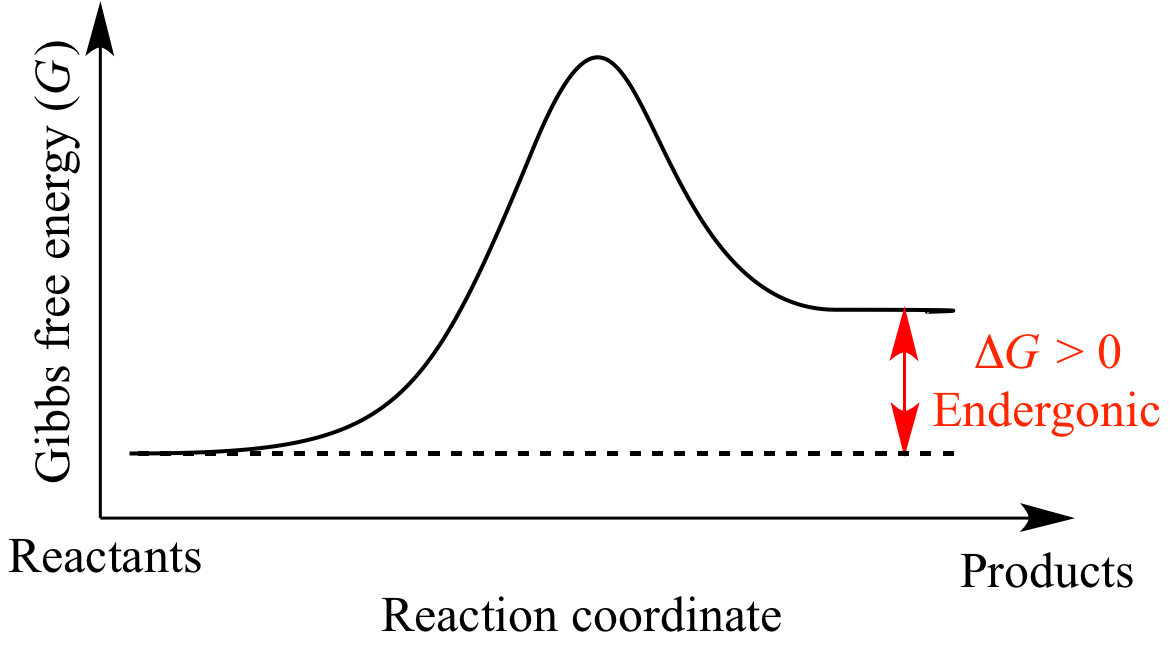
endergonic reactions
energy is required
G>0
anabolic
chemical equilibrium
occurs when the forward and reverse reactions in a system take place at the same rate
not always the same amount of reactant and product
individual molecules are still forming and breaking apart
there is a balance between forward and reverse
a state of no net change
G=0
coupled reactions
Example: ATP hydrolysis can be coupled to an endergonic reaction
hydrolysis of ATP is exergonic and releases energy
the energy released from ATP hydrolysis drives the second reaction, which is endergonic
the coupled reaction has overall G<0 and is exergonic
activation energy
required to start reaction, puts the reactants in a reactive mode called the transition state, changes the reactants into unstable forms (transition state intermediates) with higher free energy
catalysts
increase rates of chemical reactions without being permanently altered themselves, does not cause a reaction to occur that would not occur without it, lower the activation energy, no difference in free energy between catalyzed and uncatalyzed reactions
enzymes
speed up biochemical transformations by bringing the reactants together
active site, specific shape and properties
substrates bind
ribozymes are RNA molecules that act as biological catalysts
they will either orient substrates so they can react, induce strain by stretching the substrate-makes bonds unstable and more reactive to other substrates, or temporarily add chemical groups
induced fit
some enzymes change their shape when they bind their substrate(s), which alters the shape of the active site
oxidoreductases
transfer electrons between molecules

tranferases
transfer groups of atoms (functional groups) between molecules

isomerases
move functional groups from one place to another within a molecule - forming an isomer

hydrolases
add water to covalent bonds to break down molecules

lyases
catalyze non-hydrolytic bond breakage, often forming a new bond in the process (water no involved)

ligases
join two molecules together

how enzyme activity can be controlled
regulation of gene expression
regulation of enzyme activity (may change shape to hide the activation site, a regulator molecule may prevent the substance from reaching the active site)
enzyme inhibitors
molecules that bind to the enzyme and slow reaction rates
irreversible inhibition
the inhibitor covalently bonds to side chains in the active site and permanently inactivates the enzyme
competitive inhibitors
compete with the natural substrate for binding sites, have similar structures to the enzyme’s natural substrate

noncompetitive inhibitors
bind to an unbound enzyme at a different site than the substrate (not the active site)

allosteric regulation
a non-substrate molecule binds enzyme at a site different from the active site, which changes enzyme shape
inactive form: has a shape that cannot bind the substrate
active form: has the proper shape for substrate binding
allosteric inhibitor
a molecule that stabilizes the inactive conformation of an enzyme by binding to a site other than the active site
when the enzyme is in the inactive form, it cannot accept substrate
binding of an inhibitor makes it less likely that the active form will occur

allosteric activator
a molecule that stabilizes the active conformation of an enzyme by binding to a site other than the active site
when the enzyme is in the active form, it can accept substrate
binding of an activator makes it more likely that the active form will occur

coenzyme
a nonprotein carbon-containing molecule that is required for the action of one or more enzymes
binds to the active site
changes chemically during the reaction
separates from the enzyme to participate in other reactions
feedback inhibition
when a pathway’s end product acts as an inhibitor of the enzyme that catalyzes the first step in the pathway
commitment step
first step in a pathway; once this reaction (enzyme catalyzed) occurs, the “ball is rolling”
metabolic pathways
are composed of a series of enzyme-catalyzed reactions that convert a substrate into a final product
photosynthesis
plants, algae, and some bacteria take in sunlight energy
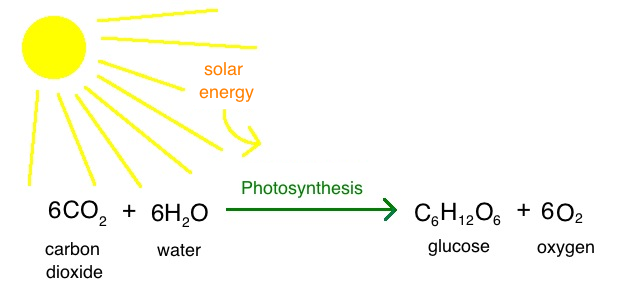
cellular respiration
most living organisms produce useful chemical bond energy

oxidation-reduction reactions
one substance transfers electrons (an therefore energy) to another substance
reduction: gain electrons
oxidation: lose electrons
reducing agent: gives up electrons (oxidized)
oxidizing agent: gains electrons (reduced)
electrons move with H atoms
NAD+/NADH
a coenzyme that serves as an electron carrier in redox reactions
the three catabolic processes that harvest energy from glucose
glycolysis
cellular respiration
fermentation
five principles of metabolic pathways
complex transformations occur in a series of separate reactions
each reaction is catalyzed by a specific enzyme
many metabolic pathways are similar in all organisms
in eukaryotes, metabolic pathways are compartmentalized in specific organelles
key enzymes can be inhibited or activated to alter the rate of the pathway
substrate-level phosphorylation
ATP is formed when an enzyme catalyzes the transfer of a phosphate group from a phosphorylated substrate to ADP
cellular respiration
energy is released gradually, chemical energy is stored in reduced molecules (like glucose), the chemical energy stored in glucose is harnessed in the chemical bonds of other molecules (ATP, electron carriers)
glycolysis
occurs in cytosol, has an energy investment (ATP required) and energy payoff phase (NADH and ATP are formed)
first step has glucose rearranged (requires ATP)
later phase has NADH and ATP made
Goes in: Glucose, 2 ATP, 2NAD+
Comes out: 2ATP, 2NADH, 2 pyruvate
pyruvate oxidation
occurs in mitochondrial matrix, pyruvate is oxidized to Acetyl CoA, catalyzed by enzyme complex called pyruvate dehydrogenase
Goes in: 2 pyruvate, 2 NAD+, 2 CoA
Comes out: 2 Acetyl CoA, 2 NADH, 2CO2

FAD/FADH2
electron carrier, which is used in the citric acid cycle
citric acid cycle
occurs in mitochondrial matrix, Acetyl CoA is the starting point, eight reactions completely oxidizes the acetyl group into 2 molecules of CO2
Oxaloacetate reacts with Acetyl CoA to form citrate at the start of the cycle
Oxaloacetate is regenerated in the last step
Goes in: 2 Acetyl CoA, 6 NAD+, 2FAD, 2ADP
Comes out: 4CO2, 6NADH, 2FADH2, 2ATP

oxidative phosphorylation
ATP is synthesized by reoxidation of electron carriers in the presence of O2 (electron transport, chemiosmosis)
goes in: 10 NADH, 2FADH2, 28ADP, 6O2
comes out: 10NAD+, 2FAD, 28ATP, 6H2O
intermembrane space
small space to quickly accumulate p+

inner membrane
contains ETC and ATP synthesis for oxidative phosphorylation

cristae
highly folded so as to increase SA:Volume ratio

the electron transport chain (respiratory chain)
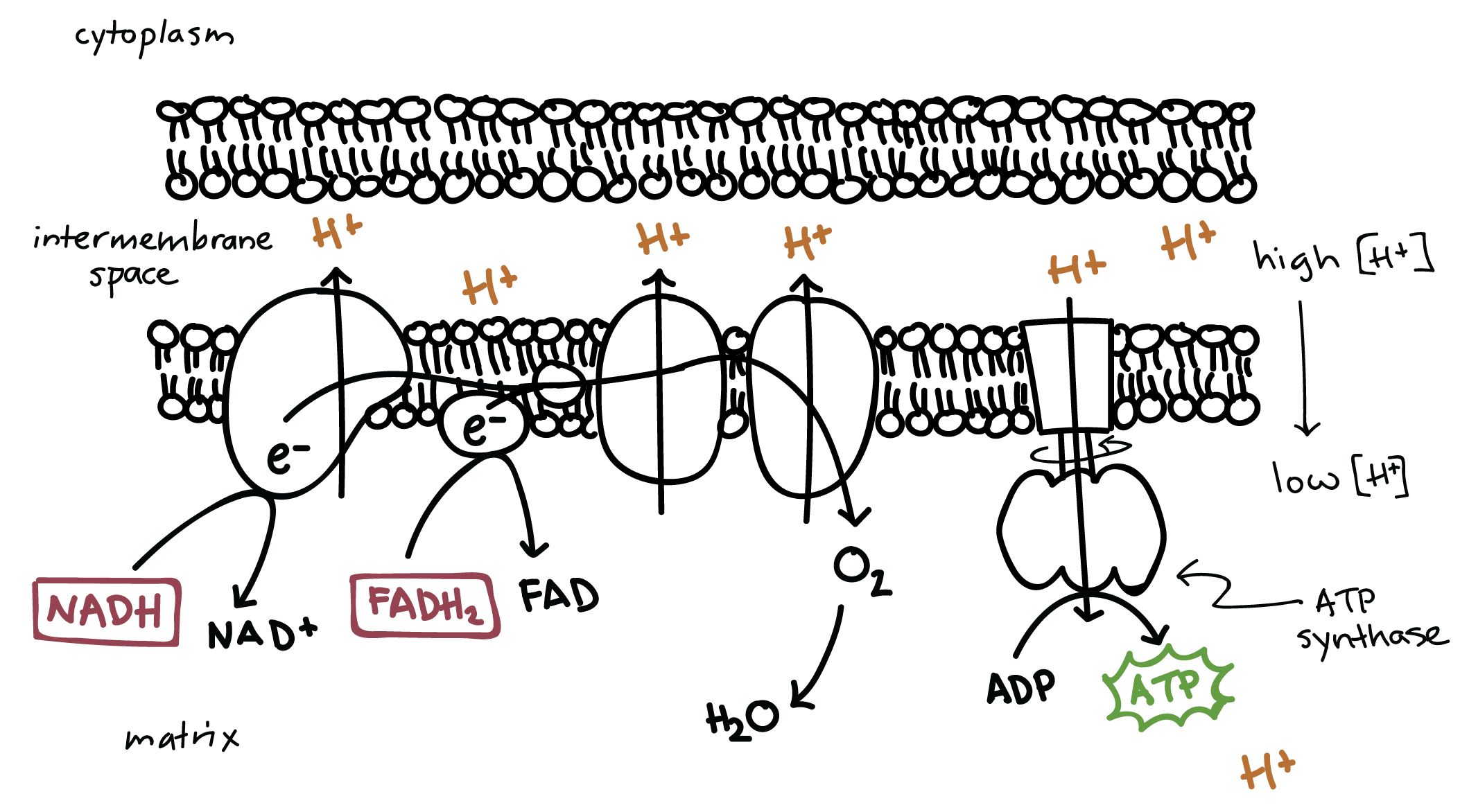
occurs in the inner mitochondrial membrane, electrons from NADH and FADH2 pass through the respiratory chain of membrane associated carriers
four protein complexes carry out electron transfer - the complexes contain electron carriers and associated enzymes
energy is released as electrons are passed between the carriers
a proton (H+) gradient is established and maintained
Complexes I, II, and IV transport H+ into the mitochondrial intermembrane space (against their concentration gradient) (creates potential energy for ATP synthesis)
O2, the final electron acceptor, accepts the e- that have been passed through the chain (along with H+ from the matrix) to form water
Ubiquinone (Q) and cytochrome c
are mobile electron carriers that transport electrons between the complexes of the ETC
proton-motive force
the gradient of the H+ across the inner membrane is a source of potential energy
chemiosmosis
diffusion of protons back across the membrane releases energy and is coupled to ATP synthesis
protons diffuse back through ATP synthase, a channel protein
Fo unit: a transmembrane H+ channel
F1 unit: projects into the matrix and rotates to expose active sites for ATP synthesis
potential energy is converted to kinetic energy and that causes rotation
the energy is transmitted to the catalytic subunits of F1, resulting in ATP synthesis

fermentation
when O2 (final electron acceptor) is not available
occurs in cytoplasm
glucose is only partially oxidized
2 ATP per glucose are produced by substrate-level phosphorylation
in all types of fermentation, NAD+ is regenerated to keep glycolysis going
lactate fermentation
pyruvate is reduced to lactate in the absence of oxygen, used by microorganisms and some complex organisms
lactate dehydrogenase catalyzes the reaction
regenerates NAD+ to keep glycolysis going during anaerobic exercise
Cori Cycle
during intense exercise muscle cells run low on oxygen and use lactate fermentation
lactate produced by muscle cells during anaerobic exercise is converted back to glucose in the liver through gluconeogenesis
net loss of energy, loss of 4 ATP
alcoholic fermentation
pyruvate is converted to ethyl alcohol (ethanol) in the absence of oxygen, used by yeasts and some plants
pyruvate decarboxylase catalyzes the first reaction (CO2 is released)
alcohol dehydrogenase catalyzes the second reaction