Topic 3: Demand, Supply & Price Determination
 Call Kai
 Learn
Learn Practice Test
 Spaced Repetition
 Match
Match Flashcards
 Knowt Play
1/55

There's no tags or description
Looks like no tags are added yet.
Name | Mastery | Learn | Test | Matching | Spaced | Call with Kai | Chat |
|---|
No analytics yet
Send a link to your students to track their progress
56 Terms
Demand
Desire to own something and ability to pay for it

Law of Demand
The law of demand states that as the price of a good increases, the quantity demanded decreases, and vice versa.
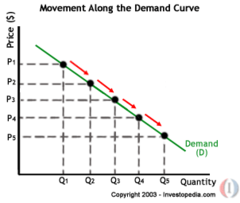
Substitution Effect
Consumers react to price increase by consuming more of other goods

Income Effect
Consumers change consumption due to change in real income

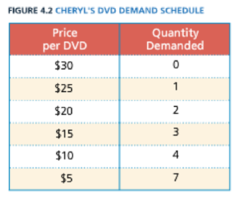
Demand Schedule
Shows relationship between price and quantity demanded

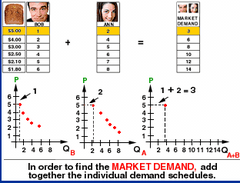
Market Demand Schedule
Chart listing quantity demanded at different prices

Demand Curve
Graphic representation of demand schedule

Individual Demand Schedule
Shows relationship between price and quantity demanded by an individual
Market Demand Curve
Graphic representation of market demand schedule
Normal Goods
Demand increases with income increase

Inferior Goods
Demand decreases with income increase

Demographics
Age, race, gender, occupation, and income impact production

Complements
Goods bought and used together

Substitutes
Goods used in place of one another

Elasticity of Demand
Measure of consumer response to price change

Inelastic Demand
Demand doesn't change much with price change

Elastic Demand
Demand changes significantly with price change

Unitary Elastic Demand
Demand changes proportionally with price change

Total Revenue
Price multiplied by quantity sold

Expenses
Costs subtracted from revenue to calculate net income

Production Costs
Costs associated with producing a good

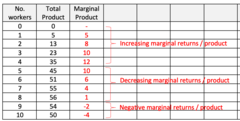
Marginal Product of Labor
Change in output from hiring one additional worker

Increasing Marginal Returns
Marginal production levels increase with new investment

Diminishing Marginal Returns
Marginal production levels decrease with new investment

Negative Marginal Returns
Marginal product of labor becomes negative
Fixed Cost
any cost that does not change when the firm changes its output.

Variable Costs
Costs that rise or fall depending on production

Total Cost
the sum of the fixed and variable costs for any given level of production

Marginal Cost
the cost of producing one more unit of a good or service

Marginal Revenue
Additional income from selling one more unit of a good, aka the price

Average Cost
total cost divided by the quantity produced; sometimes known as unit cost

Operating Cost
Costs incurred in day-to-day business operations

Supply
Amount of a good offered for sale at a specific price
Law of Supply
As the price goes up, producers want to supply more quantity

Quantity Supplied
Amount of a good offered for sale at a specific price

Supply Schedule
Shows relationship between price and quantity supplied

Market Supply Schedule
Chart listing quantity supplied at different prices

Supply Curve
a graphic representation of a supply schedule, showing the relationship between the price of an item and the quantity supplied during a given time period, with all other things being equal.

Market Supply Curve
Graphic representation of market supply schedule

Elasticity of Supply
Measure of supplier response to price change

Subsidy
Money granted by government to assist industry or business

Excise Tax
Tax required on specific goods or services

Regulation
Imposition of rules by government to modify economic behavior

Inventory
Stock of goods held by a business

Search Costs
Financial and opportunity costs in searching for a product

Equilibrium
Price and quantity where demand equals supply

Shortage
Quantity demanded exceeds quantity supplied

Price Ceiling
Maximum price that can be legally charged

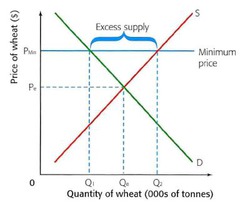
Price Floor
Minimum price that must be paid
Barter
Exchange of goods without using money
Supply Shock
Sudden shortage of a good

Rationing
Allocating goods and services using non-price basis

negative externality
a cost that is suffered by a third party as a result of an economic transaction

Income Elasticity of Demand
the change in quantity demanded that results from a change in income:

Cross-Elasticity of Demand
Exy = [% change in quantity demanded of product Y] / [% change in price of product X]
![<p>Exy = [% change in quantity demanded of product Y] / [% change in price of product X]</p>](https://assets.knowt.com/user-attachments/b97fecbd-495d-4c59-b05f-1cc6228ca1f1.jpg)
short run adjustment (to changes in demand)
would be to hire more workers or expand hours of operation
