AHS3263L: Lab 8 - Surgical positioning, Clipping, Multiparameter Monitor & Doppler Blood Pressure
 Call Kai
 Learn
 Practice Test
 Spaced Repetition
 Match
 Flashcards
 Knowt Play
1/9

There's no tags or description
Looks like no tags are added yet.
10 Terms
Doppler Ultrasound Monitor:
Detects blood flow through arteries using a Doppler crystal to produce an audible pulse sound & measure blood pressure
Used with a sphygmomanometer & a cuff to obtain ONLY the SYSTOLIC blood pressure
Cuff:
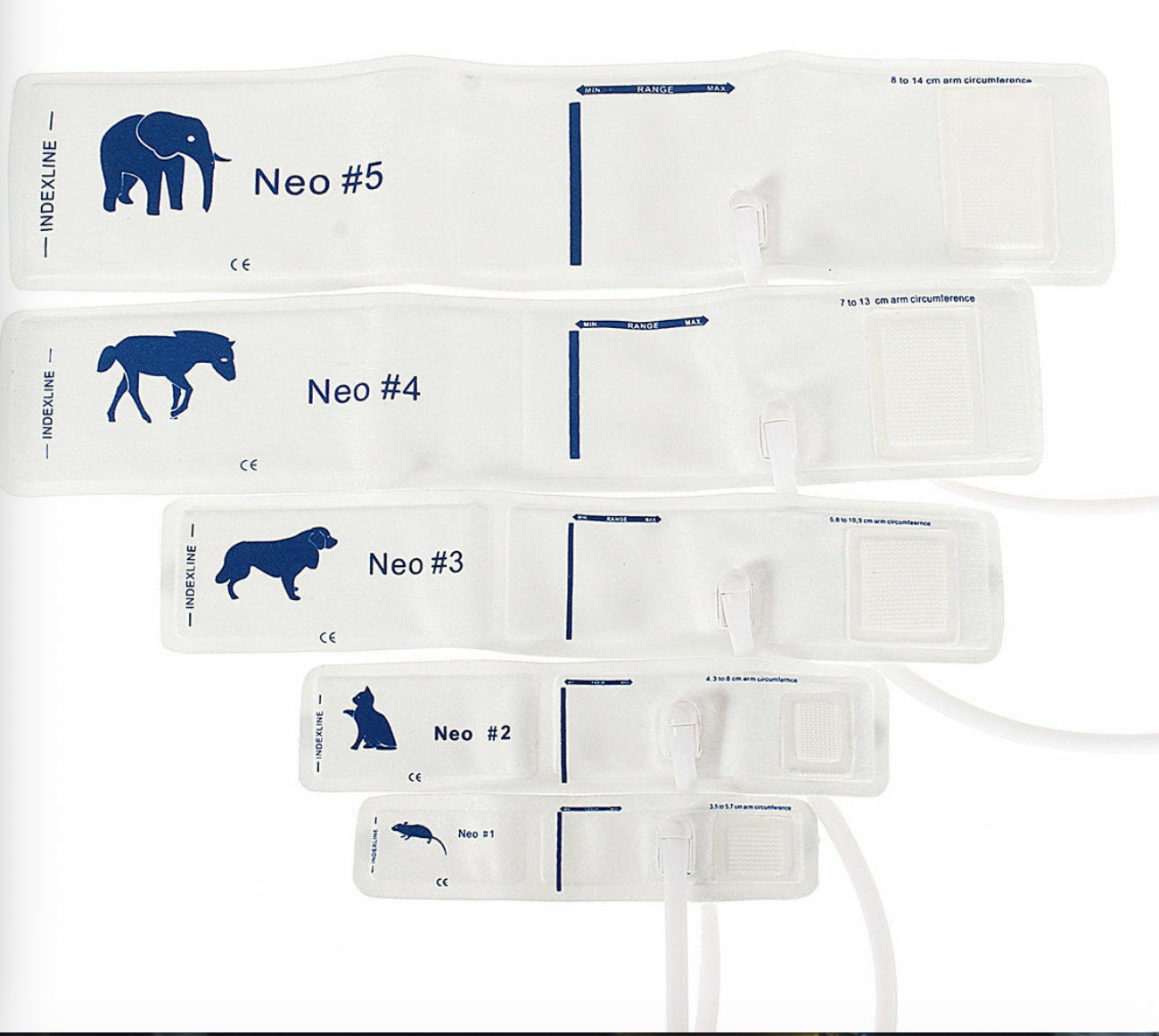
Cuff size should be measured to the LIMB CIRCUMFERENCE
40% in DOGS
30% in CATS
The cuff is placed PROXIMAL (closer to the body) to the Doppler crystal (closer to the paw)
Cuff STOPS blood flow when INFLATED
Sphygmomanometer:
The sphygmomanometer INFLATES & DEFLATES the cuff
Steps:
Palpate the pulse first to locate the artery
Apply ultrasound gel to the Doppler crystal or the skin over the artery
INFLATE the cuff until the audible pulse DISAPPEARS
SLOWLY DEFLATE the cuff until you hear the pulse AGAIN
RECORD the number on the pressure gauge on sphygmomanometer when the pulse returns - this is the SYSTOLIC PRESSURE
Repeat the whole process 3 times to get the average measurement


Multiparameter Monitor - Oscillometric blood pressure monitor:
Oscillometric blood pressure monitor:
Measures BP & HR
Cuff placed around FORELEG
The cuff is inflated & deflated automatically by the machine
Detects OSCILLATIONS within the CUFF BLADDER caused by pulsations of the arteries
Obtains SYSTOLIC, DIASTOLIC & MAP
To obtain the oscillometric BP reading on the multiparameter monitor, connect the NIBP hose the BP cuff & the monitor
White part of the black cord goes inside machine
Metal part of the cord is pushed in the cuff


Multiparameter Monitor - Pulse ox:
Pulse ox:
Detect changes in the oxygen saturation (SPO2) of HEMOGLOBIN
Probe emits RED & INFRARED light that is passed through the arterial bed
MUST be applied over NONPIGMENTED tissue such as the tongue or ear pinna
Pulse ox & HR SHOULD MATCH
An alarm may sound when signal is LOST which the probe must be readjusted or moved to a different location


Multiparameter Monitor - Electrocardiography (ECG) monitor:
ECG monitor
USED to monitor HR & HEART RHYTHM
Electrodes are attached to specific locations on the patient’s skin
ECG leads —→ LEAD II
“Snow over grass, smoke over fire”
White = RIGHT FORELIMB
Black = LEFT FORELIMB
Green = RIGHT HINDLIMB
Red = LEFT HINDLIMB


Multiparameter Monitor - ETCO2 monitor:
Measures the level of CO2 in the patient’s exhaled breath
Sensors used are:
MAINSTREAM
QUICKER - Pro
Adds DEAD SPACE - Con
Heavy sensor - Con
Measure CO2 directly at the airway - Pro
SIDESTREAM
REMOVES a SMALL sample of gas from the circuit - Con
LAG TIME - Con
Tubing can become kinked or clogged, leading to incorrect readings - Con
Moisture from condensation - Con


Monitoring Devices:
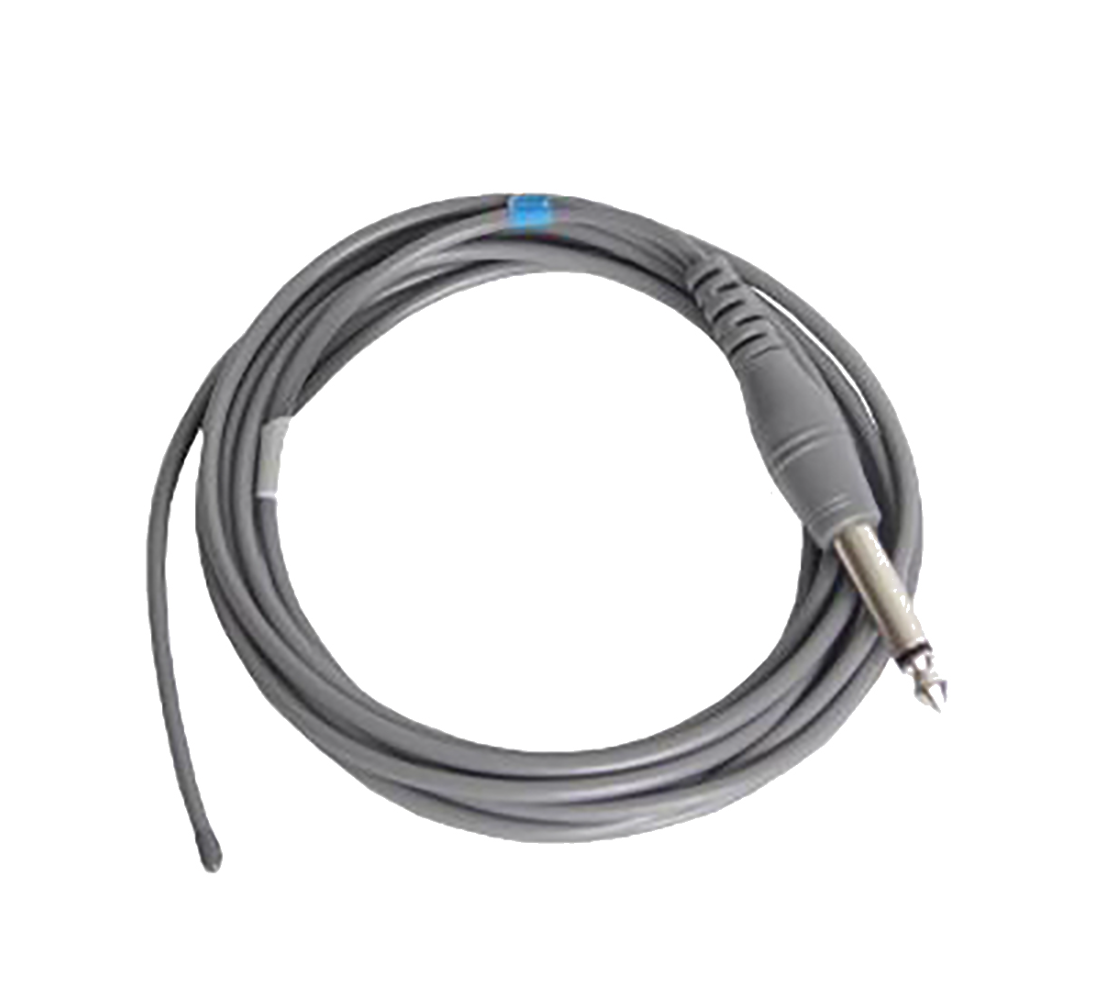
Temperature probe
Measure body temperature from the RECTUM

Esophageal stethoscope
Placed in the ESOPHAGUS to listen to heart & lung sounds during anesthesia
Amplifies HEART sounds so they can be heard from a distance

Clipping:
Clipping should be done w/ a SURGICAL clipper blade (No. 40)
Hold the clippers in a PENCIL GRIP
Permits the GREATEST amount of control & maneuverability
Clippers SHOULD be held FLAT against the patient’s skin for the CLOSEST clip
Shaving area SHOULD be BIG
Clip TWO clipper-blade widths in every direction from the proposed incision site
Clippers can get HOT —→ check temperature w/ your skin
Can use cooling spray to REMOVE the hot temperature
After clipping, the patient & area MUST be vacuumed
Loose hari can be a source of contamination in the surgery room
To clean clippers, REMOVE clipper blade & soak in clipper cleaner
Scrub & Solution:
After shave use a scrub & solution
Scrub
FIRST produce used in the preparation of the patient
A scrub has a DETERGENT base
Products to use as a scrub are:
Chlorhexidine gluconate
Povidone-iodine (iodine-based product - can stain
Solution
Needed to REMOVE the detergent
Products to use as solution/rising agent are:
70% isopropyl alcohol
Sterile saline
Preparation:
Solution - Pour alcohol in the bottom of a plastic container, add gauze into the container & soak it w/ alcohol
Scrub - Pour chlorhexidine in the bottom in a different plastic container, add gauze & soak it w/ scrub
Add water inside container to DILUTE SCRUB
Scrub & solution should be REPLACED daily to INHIBIT the growth of RESISTANT BACTERIA
Patterns for scrubbing:
FIRST use solution gauze to wipe around the clipped margin
START at the INCISION SITE w/ scrub
Move gauze OUTWARD in a circle until the hair is reached
NEVER return to the incision site w/ the same gauze
Then the surgical site should be rinsed w/ alcohol using the same technique
The process of scrubbing & rinsing SHOULD be performed 3 times
Unless there still dirt present should repeat process until the last solution gauze is clean
Patient Positioning - Ties:
To properly secure an animal to the table they MUST have TWO points of contact HALF-HITCH loops placed on their foreleg
This technique DISTRIBUTES the PRESSURE on the limb EVENLY - preventing a cut off in circulation or nerve damage
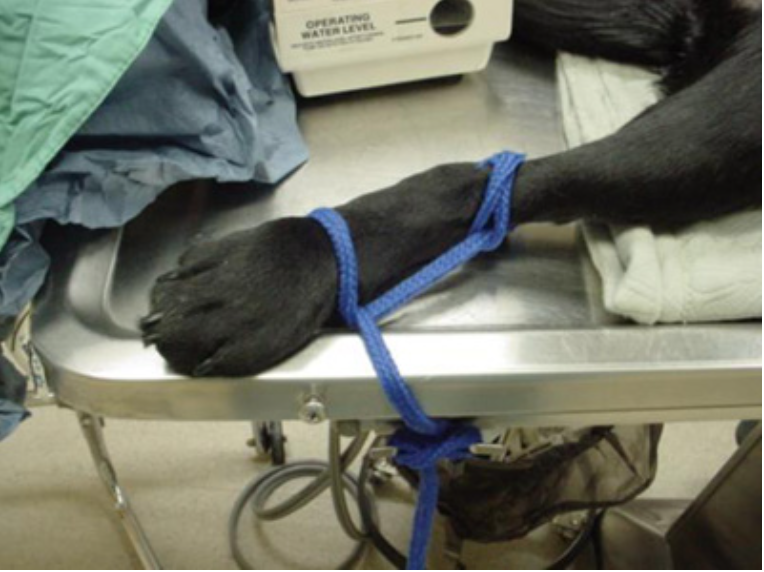
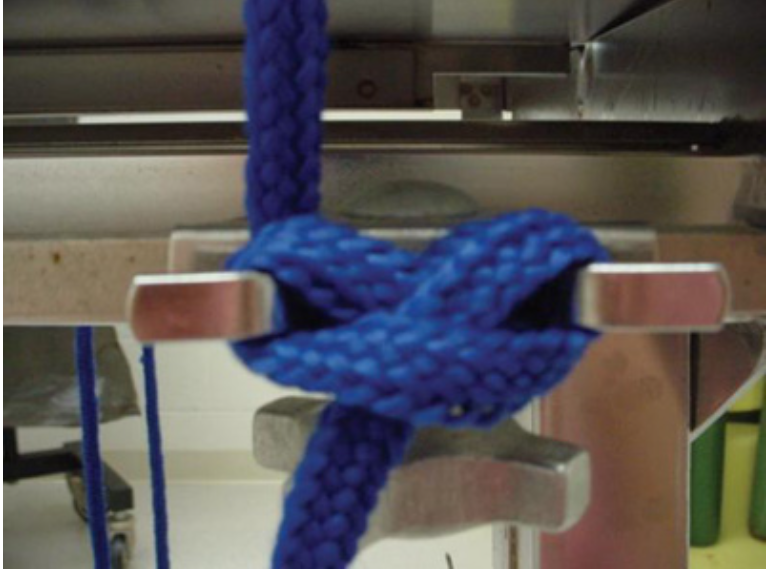
Then the end of rope is extended UNDERNEATH the tabletop & wrapped in a figure-eight fashion
This is a quick-release method for patients to be untied quickly
Bain Block:
The Bain Block is used for a NON-REBREATHING circuit - considered as open systems & DO NOT allow for rebreathing of expired gases
This device has a reservoir bag, pop-off valve & pressure manometer
