Unit 1 Test
 Call Kai
 Learn
 Practice Test
 Spaced Repetition
 Match
 Flashcards
 Knowt Play
1/41

There's no tags or description
Looks like no tags are added yet.
42 Terms
1. What is the purpose of engine instruments?
Answer: To monitor engine operation and measure temperatures, pressures, fuel flow, and other operating conditions.
Explanation: These instruments help technicians evaluate engine performance and ensure safe, reliable operation.
2. Why must engine instruments be inspected and calibrated periodically?
Answer: To ensure accurate readings.
Explanation: Incorrect readings can prevent technicians from identifying engine problems or unsafe operating conditions.
3. What are the three main instrument marking colors, and what do they mean?
Answer:
Red: Dangerous operating limit or range.
Yellow: Caution operating range.
Green: Normal, safe operating range.
Explanation: A red line identifies an operating limit, while a red arc identifies a dangerous range that may be passed through but cannot be maintained.
4. What is the purpose of a white slippage mark?
Answer: To indicate movement between the instrument glass and case.
Explanation: Movement of the glass can cause the operating range markings to become misaligned, resulting in incorrect limit indications.
1. What is the purpose of the Carburetor Air Temperature (CAT) indicator?
Answer: To measure the temperature of air entering the carburetor and help detect possible icing.
Explanation: Air temperature affects fuel vaporization and engine performance. The CAT indicator also helps monitor induction system conditions.
2. What can a sudden or continuous rise in CAT indicate?
Answer:
Sudden rise: Engine backfire.
Continuous rise: Induction system fire.
Explanation: A backfire produces a brief increase in temperature, while an induction system fire causes a sustained temperature increase.
3. Why should CAT be checked before starting and after shutdown?
Answer: Before starting, to determine if priming is needed. After shutdown, to check for excessive heat.
Explanation: Low temperatures can make fuel difficult to vaporize. Excessive heat after shutdown can cause trapped fuel to expand and increase pressure.
Priming supplies extra fuel to an engine to help it start, especially when the engine is cold.
When an engine is cold, fuel does not vaporize as easily, making ignition more difficult.

4. What do the CAT indicator's colored markings mean?
Answer:
Yellow (–10 °C to +15 °C): Carburetor icing danger.
Green (+15 °C to +40 °C): Normal operating range.
Red line (40 °C): Maximum temperature limit.
Explanation: The yellow range warns of possible icing, while exceeding the red temperature limit creates a danger of engine detonation.
1. What is the purpose of fuel pressure, and how does the engine adjust fuel delivery at different altitudes?
Answer: Fuel pressure ensures fuel is supplied at the proper pressure, while the fuel metering system controls the amount of fuel delivered based on engine needs.
Explanation: As altitude increases, air becomes less dense. The engine generally requires less fuel to maintain the correct air-fuel mixture. Depending on the engine, fuel delivery is adjusted manually or automatically. The fuel pressure indicator monitors pressure but does not control fuel delivery.
2. What does the fuel pressure indicator measure?
Answer: Fuel pressure at the carburetor or fuel injection unit inlet, measured in pounds per square inch (PSI).
Explanation: The instrument allows the pilot or technician to monitor whether fuel pressure is within the proper operating range.
3. What do the colored markings on a fuel pressure indicator mean?
Answer:
Green arc: Normal operating pressure.
Lower red line: Minimum allowable pressure.
Upper red line: Maximum allowable pressure.
Explanation: Fuel pressure must remain within the engine's specified limits. Pressure that is too low or too high can cause improper fuel delivery. The handbook shows 2–9 PSI as an example operating range, but limits vary by engine.
1. What is the purpose of the oil pressure indicator?
Answer: To monitor the pressure of oil being supplied to the engine's moving parts.
Explanation: Proper oil pressure helps ensure engine components receive enough oil for lubrication and cooling, preventing excessive wear and engine damage.

2. What do the colored markings on the oil pressure indicator mean?
Answer:
Lower red line (25 PSI): Minimum allowable oil pressure.
Green arc (60–85 PSI): Normal operating pressure.
Upper red line (100 PSI): Maximum allowable oil pressure.
Explanation: These markings help the pilot or technician determine whether oil pressure is within safe operating limits. The values are examples from the textbook and may vary by engine.
3. What should you do if the oil pressure indicator shows no pressure or the needle fluctuates excessively?
Answer:
No oil pressure: Shut down the engine immediately.
Excessive needle fluctuation: May indicate air in the gauge lines or an oil system malfunction.
Explanation: A loss of oil pressure can quickly damage the engine because moving parts are not receiving proper lubrication. Excessive needle movement may indicate a problem that needs inspection.
1. What is the purpose of the oil temperature indicator, and where is the temperature measured?
Answer: To monitor engine oil temperature and help ensure proper engine cooling and lubrication. Temperature is measured at the oil inlet to the engine.
Explanation: Engine oil absorbs heat from moving engine components, helping cool the engine while providing lubrication. During engine testing, temperatures are measured at both the oil inlet and outlet to determine whether heat transferred from the engine to the oil is low, normal, or excessive.

2. What do the colored markings on the oil temperature indicator mean?
Answer:
Green arc (25 °F to below 245 °F): Desired operating temperature range.
Red line (245 °F): Maximum allowable oil temperature.
Explanation: The green range indicates temperatures suitable for continuous operation. Reaching the red line indicates the maximum permissible temperature. These values are examples from the textbook and vary by engine.
1. What is the purpose of the fuel-flow meter?
Answer: To measure the amount of fuel being delivered to the engine over time.
Explanation: The fuel-flow meter helps pilots and technicians monitor fuel consumption and determine whether the engine is receiving the proper amount of fuel for its power setting.
2. How does a turbine engine fuel-flow meter work?
Answer: Fuel passes through a transmitter containing a small turbine that spins faster as fuel flow increases, sending an electrical signal to the indicator.
Explanation: The transmitter measures fuel flow and sends the information to the flight deck, allowing the pilot to monitor how much fuel the engine is consuming.
3. What units are used to measure fuel flow in reciprocating and turbine engines?
Answer:
Reciprocating engines: Gallons per hour (gal/hr).
Turbine engines: Pounds per hour (lb/hr).
Explanation: Reciprocating engines commonly measure fuel consumption by volume, while turbine aircraft measure fuel consumption by weight because fuel weight is important to aircraft performance.
4. What are the three types of fuel-flow meters, and how do they work?
Answer:
Direct Flow Meter: Uses calibrated tubes with floats that rise or fall with fuel flow.
Pressure-Based Flow Meter: Determines fuel flow by measuring fuel pressure.
Turbine Sensor-Based Flow Meter: Uses a small turbine that spins as fuel flows through it, producing an electrical signal.
Explanation: All three measure fuel flow differently. Direct flow meters use visible floats, pressure-based meters use fuel pressure, and turbine sensor-based meters use an electrical transmitter to send fuel-flow readings to an indicator.

1. What is manifold pressure, and what is the purpose of the manifold pressure indicator?
Answer: Manifold pressure is the air pressure inside the engine's intake manifold. The indicator measures this pressure in inches of mercury (inHg) to help monitor and adjust engine power.
Explanation: The intake manifold works like a funnel that branches into several smaller tubes, called runners, leading to the engine's cylinders. When the throttle opens, more air can enter, manifold pressure generally increases, and the engine can produce more power. The indicator helps the pilot monitor this pressure and set engine power.

2. What do the colored markings on the manifold pressure indicator mean?
Answer:
Green arc (35–44 inHg): Normal operating pressure range.
Red line (49 inHg): Maximum permissible manifold pressure for takeoff.
Explanation: The green arc indicates the desired operating range, while the red line indicates the maximum pressure that must not be exceeded. These values are examples from the textbook and vary by engine.

1. What is the purpose of the tachometer indicator?
Answer: To measure and display engine rotational speed in revolutions per minute (RPM).
Explanation: In reciprocating engines, the tachometer measures crankshaft speed. In turbine engines, it monitors the rotational speed of the compressor and turbine assemblies. This helps pilots monitor engine speed and avoid overspeed conditions.
2. What do the colored markings on a tachometer indicate?
Answer:
Green arc: Normal, permissible RPM operating range.
Red line: Maximum allowable RPM.
Explanation: The green arc indicates the safe operating range. Exceeding the red line causes an overspeed condition, which can damage engine components.

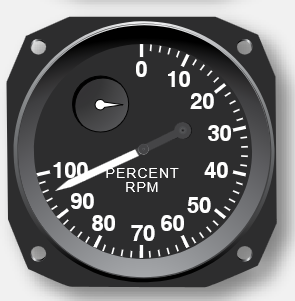
3. Why do turbine engines use percentage RPM indicators instead of actual RPM?
Answer: Because turbine engines operate at extremely high RPM, making percentage readings easier to monitor.
Explanation: Each rotating assembly has its own percentage RPM indicator. A reading of 100% represents the highest RPM at which that assembly is permitted to operate, according to the textbook.
1. What is the purpose of the cylinder head temperature (CHT) indicator, and how does it measure temperature?
Answer: To monitor cylinder head temperature and prevent overheating. It uses a thermocouple attached to the cylinder head to measure temperature.
Explanation: The thermocouple is usually installed on the hottest cylinder, either beneath a spark plug or in a special well in the cylinder head. Monitoring CHT helps protect the cylinders, pistons, and exhaust valves from excessive heat.
2. What is the limitation of using only one thermocouple for a CHT indicator?
Answer: It only measures the temperature of one cylinder and may not detect overheating or detonation in other cylinders.
Explanation: The selected cylinder provides a general indication of engine temperature. However, problems occurring in other cylinders may go undetected because their temperatures are not being measured.
3. What do the colored markings on the cylinder head temperature indicator mean?
Answer:
Blue arc (100–230 °C): Operating range permitted in auto-lean.
Green arc (230–248 °C): Operating range requiring auto-rich.
Red line (260 °C): Maximum permissible cylinder head temperature.
Explanation: Auto-lean uses a leaner fuel-air mixture, while auto-rich provides a richer mixture. At 230 °C, the mixture must be changed to auto-rich. Temperatures above 248 °C are permitted only for a limited time, and 260 °C is the maximum allowable temperature. These values are examples from the textbook.

1. What is torque, and what is the purpose of the torquemeter?
Answer: Torque is a twisting or rotational force. The torquemeter measures the torque produced at the propeller shaft to indicate engine power output.
Explanation: Think of torque as the turning force used to tighten a bolt with a wrench. In an aircraft engine, torque is the turning force delivered to the propeller shaft. The torquemeter helps pilots monitor engine power and select the proper power setting.
2. How does a torquemeter work, and what measurements can it display?
Answer: Most torquemeters use changes in oil pressure proportional to shaft torque. A transducer converts the pressure into an electrical signal sent to the flight deck.
The instrument can display:
Foot-pounds of torque (ft-lb).
Percent of horsepower.
Horsepower (HP).
Explanation: As the torque on the propeller shaft changes, a helical gear moves and adjusts a valve controlling oil pressure. The resulting pressure is converted into an electrical signal, allowing the instrument to display engine power. Some systems use strain gauges instead of oil pressure.
1. What is the purpose of engine warning systems, and what are two examples?
Answer: Engine warning systems use gauges, indicators, and warning lights to alert the pilot when a system is functioning improperly or has failed.
Examples from the reading:
Low fuel pressure warning light.
Low oil pressure warning light.
Explanation: Warning lights are part of the aircraft's instrumentation system. They alert the pilot to problems that may require immediate attention, such as insufficient fuel pressure or oil pressure.

1. What engine operating conditions are monitored by the instruments on a reciprocating engine?
Answer: Engine instruments monitor:
Engine speed (RPM)
Manifold pressure
Cylinder head temperature (CHT)
Carburetor air temperature (CAT)
Oil temperature and pressure
Fuel pressure and flow
Air-fuel mixture setting
Explanation: These instruments allow pilots to monitor engine performance and make adjustments using the flight deck controls. Monitoring the readings together helps keep the engine within its operating limits and prevents damage.
Actual operating limits vary depending on the engine and aircraft.
1. What is Engine Pressure Ratio (EPR), what is its purpose, and how does the indicator work? (Turbine)
Answer: EPR indicates how much thrust a turbofan engine is producing. The indicator compares pressure at two locations in the engine to help pilots monitor thrust and set engine power, especially during takeoff.
Explanation: The EPR indicator measures pressure at two points:
Pt2: Air pressure at the engine inlet.
Pt7: Gas pressure at the turbine exhaust.
The indicator divides exhaust pressure by inlet pressure to calculate a ratio. This ratio provides an indication of engine thrust, helping pilots select the proper power setting.

1. Why do turboprop engines use a torquemeter instead of an Engine Pressure Ratio (EPR) indicator? (Turboprop)
Answer: Because most turboprop thrust comes from the propeller, rather than jet exhaust. A torquemeter measures the turning force delivered to the propeller shaft to indicate engine power.
Explanation: Only about 10–15% of turboprop thrust comes from jet exhaust. Since the propeller produces most of the thrust, measuring shaft torque provides a better indication of engine power than EPR.

2. How does a torquemeter work, and what is it used for? (Turboprop)
Answer: It uses changes in oil pressure proportional to propeller shaft torque. A transducer converts that pressure into an electrical signal displayed on the flight deck to help set engine power.
Explanation: As engine torque changes, a helical gear adjusts a valve controlling oil pressure. The indicator displays the resulting measurement, usually in foot-pounds of torque or percent horsepower. The torquemeter must be calibrated periodically to maintain accuracy.

1. What is the purpose of a turbine engine tachometer, and how does it display engine speed? (Turbine)
Answer: To monitor engine speed during normal operation, engine starting, and overspeed conditions. It displays speed as a percentage of RPM.
Explanation: Turbine engines operate at extremely high RPM. Displaying speed as a percentage makes readings easier to understand and compare between different engines.
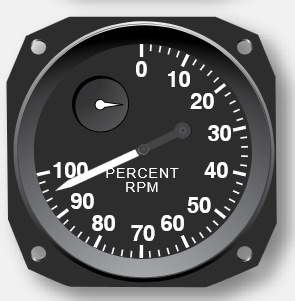
2. What are N1 and N2 on a turbofan engine tachometer? (Turbine)
Answer:
N1: Low-pressure spool speed.
N2: High-pressure spool speed.
Each has its own RPM indicator.
Explanation: A turbofan engine can have multiple rotating spools containing compressor and turbine sections. These spools rotate independently at different speeds, so separate indicators are needed to monitor each one.
1. What is the purpose of the Exhaust Gas Temperature (EGT) indicator? (Turbine)
Answer: To monitor exhaust gas temperature, check engine operating conditions, and prevent turbine damage from excessive heat.
Explanation: Turbine engines operate at extremely high temperatures. Excessive heat can damage turbine components, so temperature is an important engine operating limit. Different engines may use temperature indicators called EGT, TIT, TGT, ITT, or TOT, depending on where temperature is measured.

2. How does the EGT indicator measure and display turbine engine temperature? (Turbine)
Answer: It uses multiple thermocouples positioned around the exhaust duct near the turbine exit. The indicator displays their average temperature.
Explanation: Measuring the temperature directly at the turbine inlet is difficult because of the extreme heat. Instead, thermocouples measure the cooler gases leaving the turbine. These readings provide an indication of turbine inlet temperature and help pilots monitor engine conditions.

1. What is the purpose of the fuel-flow indicator, and how is fuel flow measured? (Turbine)
Answer: The fuel-flow indicator monitors fuel consumption and engine performance by displaying the amount of fuel flowing to the engine in pounds per hour (lb/hr).
Explanation: Turbine aircraft measure fuel flow by weight rather than gallons because fuel weight significantly affects aircraft performance. The indicator helps pilots monitor how much fuel the engine consumes during operation.

1. What is the purpose of the engine oil pressure indicator, and what does it measure? (Turbine)
Answer: To monitor oil pressure and ensure critical engine components receive adequate oil for lubrication and cooling. It usually measures oil pump discharge pressure.
Explanation: Engine oil lubricates moving parts and helps carry away heat. The oil pressure indicator allows the pilot to monitor the oil supply pressure. Inadequate oil pressure can lead to insufficient lubrication, overheating, and engine failure.

1. What is the purpose of the engine oil temperature indicator, and what does it measure? (Turbine)
Answer: To monitor the temperature of oil entering the oil pressure pump and help determine whether the engine oil cooler is operating properly.
Explanation: Engine oil lubricates moving parts and absorbs heat to help cool the engine. The oil temperature indicator helps pilots ensure the oil stays at a suitable temperature for lubrication and cooling. An abnormal oil temperature may indicate a problem with the oil cooling system.
