Investigating the Skin Lab
 Call Kai
 Learn
 Practice Test
 Spaced Repetition
 Match
 Flashcards
 Knowt Play
1/53

There's no tags or description
Looks like no tags are added yet.
54 Terms
what is normal body temperature
98.6 F or 37 C
what is thermoregulation
the homeostatic maintenance of a stable core temperature despite environmental changes
what part of the brain regulates body temperature
hypothalamus
what are three cold-condition body responses
shivering (muscles contract to generate heat)
vasoconstriction (blood vessels constrict to conserve heat)
erect body hair (arrector pili muscle contracts (piloerection) to cause hairs to stand up and reduce airflow over skin)
what are three hot-condition body responses
sweating (evaporative cooling)
vasodilation (blood vessels dilate to release heat)
flat body hair (relaxation of arrector pili muscle allows hair to fall flat on skin)
how does vasodilation cool you
more blood flows to skin capillaries, so more heat is lost through the skin
how does vasoconstriction warm you
cuts blood flow to skin to conserve heat for vital organs
hypothermia
heat loss exceeds heat production
core temp below 95 F
hypothermia symptoms
shivering
slow breathing
confusion
slowed heart beat
drowsiness
hyperthermia
temperature of the body continues to increase despite efforts to lower it
hyperthermia causes
hot environment
dehydration
fever
overexertion
heat stroke signs
sweating stops
skin is red
fainting
where was the highest recorded temperature in the united states recorded
death valley
134 F
where was the lowest recorded temperature in the united states recorded
Prospect creek, alaska
-80 F
what are sudoriferous glands
sweat glands in the dermis that release water and ions through pores
what is the difference between eccrine and apocrine glands
eccrine and apocrine glands are both sudoriferous (sweat) glands. However, eccrine glands are found all over the body and make odorless, watery sweat. While apocrine glands are found in the anogenital region and secrete a milky odorous sweat
what causes the odor of sweat from apocrine glands
uric acid and urea
what are sebaceous glands
glands on the base of hair follicles that secrete sebum (oily substance that waterproofs skin and hair)
what happens when sebaceous glands clog
excess sebum or dead cells accumulate in the pore and form a pimple (whitehead or blackhead)
why does sweating cool you
the sweat absorbs heat as it evaporates and carries it away from the body
what does it mean that water has a high heat of vaporization
it takes a lot of energy to turn water from a liquid to a gas
does alcohol have a high heat of vaporization
no
why must you drink water during exercise
it replaces sweat losses. less sweat means less evaporative cooling, so drinking water aids your body in its effort to cool down
in station 1 of the investigating the skin lab, what caused the sweating
muscle contraction produced excess heat and caused sweating (clenching of fist or rubbing hands together)
why did the cornstarch sheet turn dark in the “Investigating the skin lab”
sweat dissolves iodine at each pore on your palm. The dissolved iodine transfers to the sheet and turns the starch dark so that each spot marks a pore.
where are eccrine glands the densest
palms of hand
soles of feet
forehead
what is the rate of normal perspiration
1.5 L/hr
what is the rate of perspiration in extreme heat
3.5 L/hr
at what temp in Celsius does sweating begin
37
mechanoreceptors function in detecting
thermoreceptors function in detecting
nociceptors function in detecting
touch/pressure
temperature
pain
merkel’s discs function in detecting
light touch
Meissner’s corpuscles function in detecting
low frequency vibration and light touch
Pacinian (lamellar) corpuscles function in detecting
high frequency vibration and pressure
Ruffini terminals detect
stretch and sustained vibration
Kraus’ end bulbs function in detecting
pressure
free nerve endings detect
pain
what did a smaller two point discrimination distance mean
there was heightened sensitivity, meaning a higher density of mechanoreceptors
receptor density tracks (blank)
function
more mechanoreceptors were found in the fingertips, which engage more in active touch than that of the thigh or back

sebaceous (oil) gland
waterproofing of skin and hair

arrector pili muscle
contracts hair to conserve heat
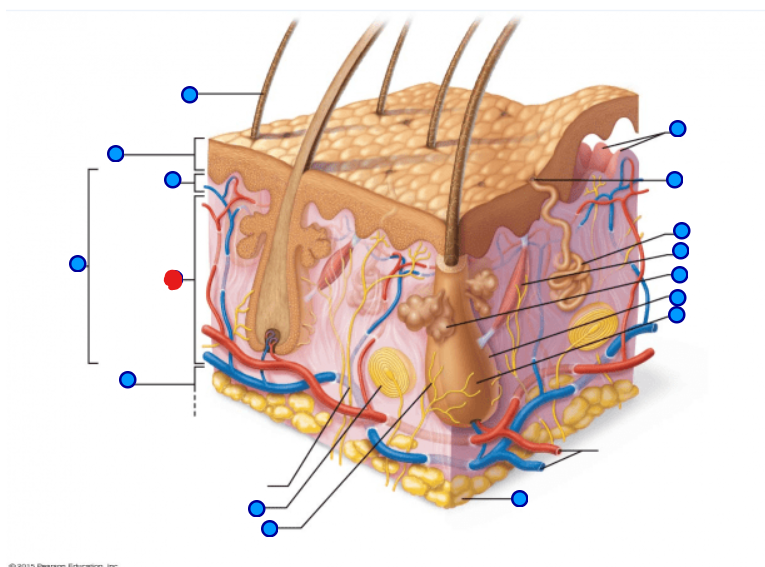
reticular layer
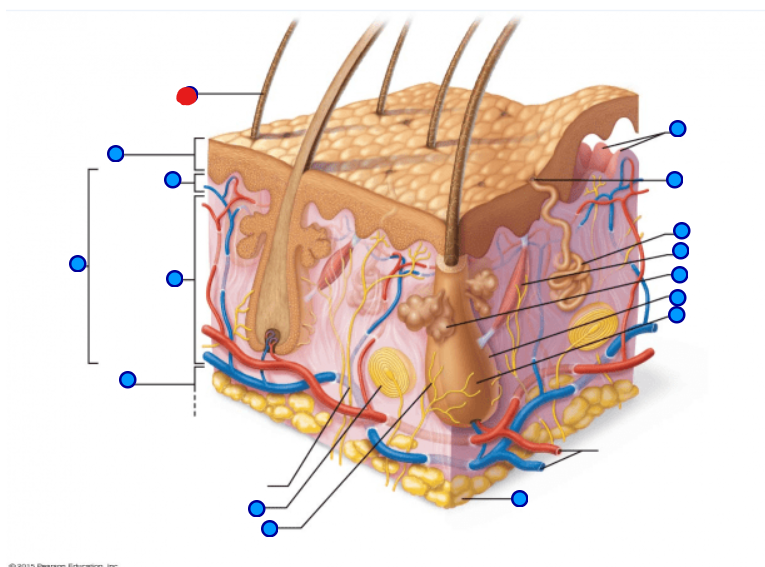
hair shaft

hypodermis

lamellar corpuscle
high frequency vibration and pressure
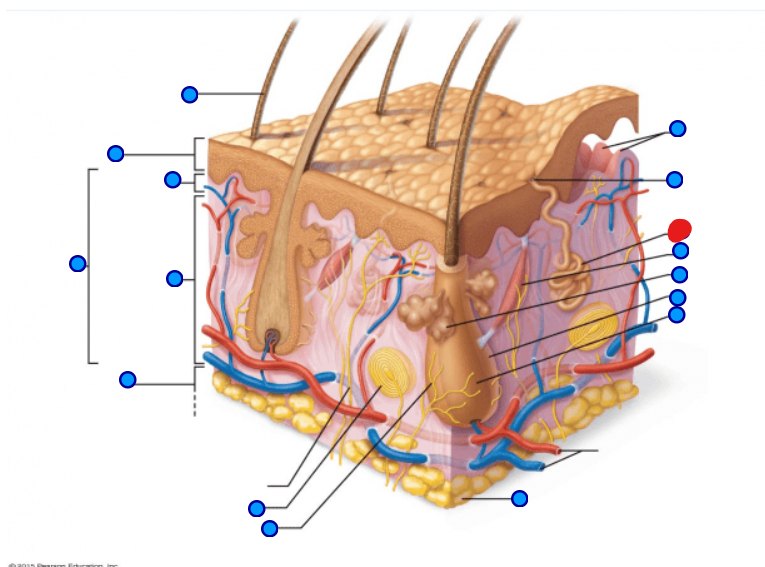
Eccrine (sudoriferous) sweat gland
thermioregulation
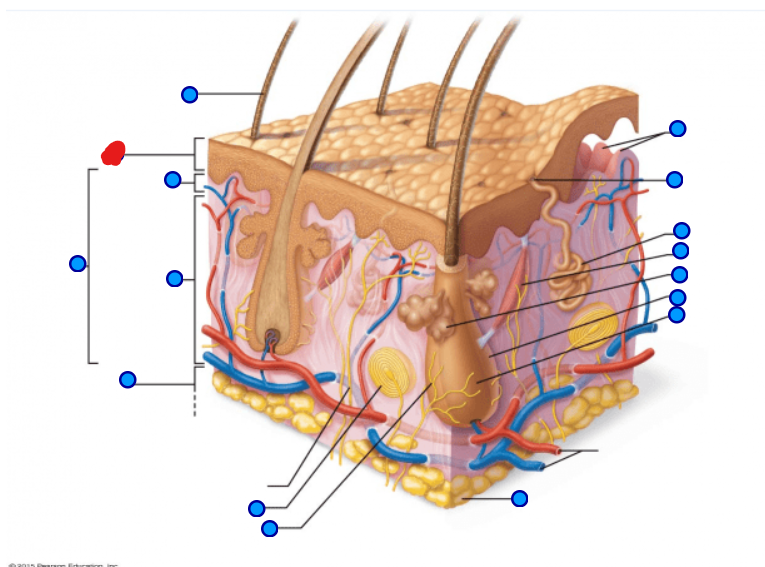
epidermis
physical barrier for defense
prevents water loss (keratin)
specialized Langerhans cells provide immune defense
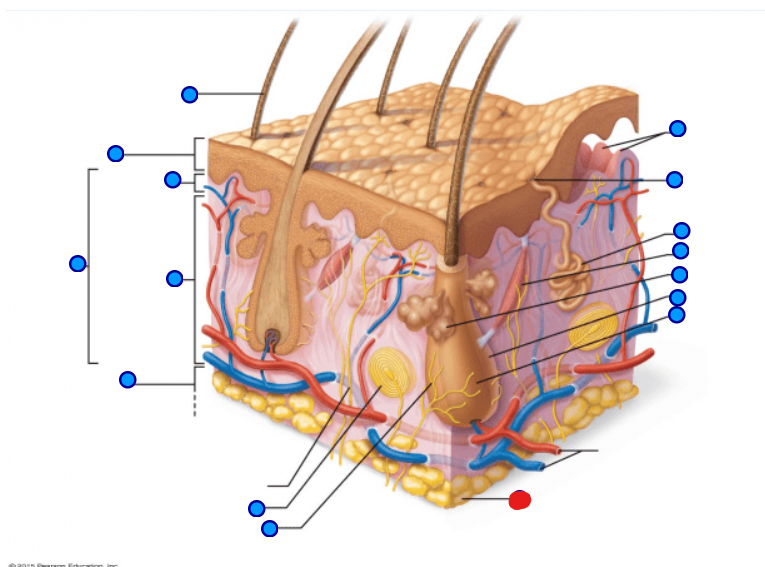
adipose tissue
cushions underlying organs
stores energy
insulation

papillary layer

hair follicle

Dermis
structural support and elasticity (collagen fibers)
sensation through receptors for pain and touch
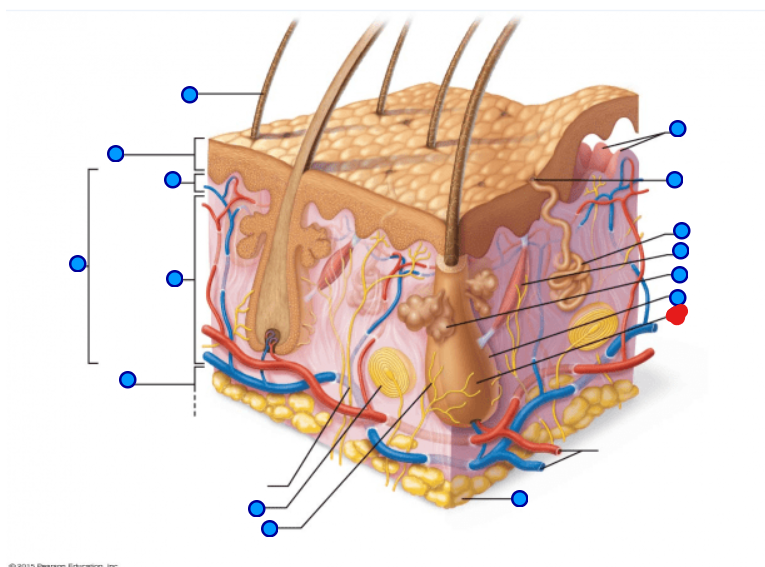
hair root
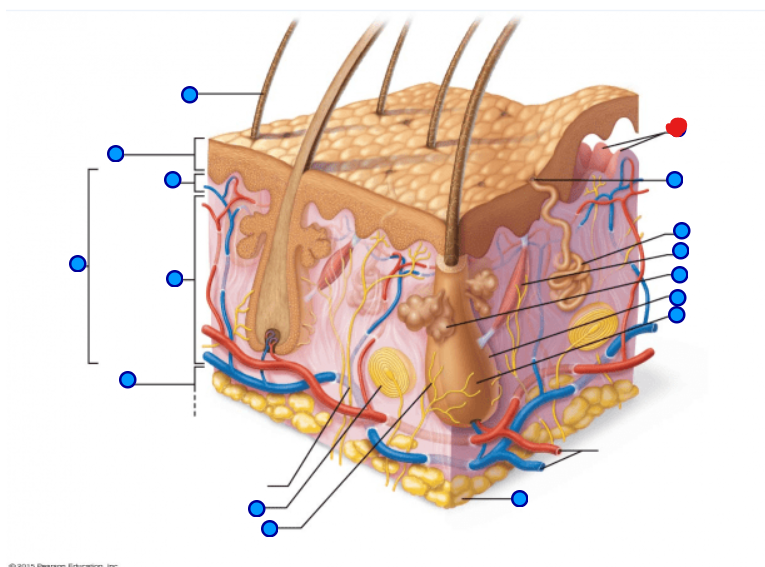
dermal papillae
delivers nutrients to epidermis and anchors skin layers

sweat pore
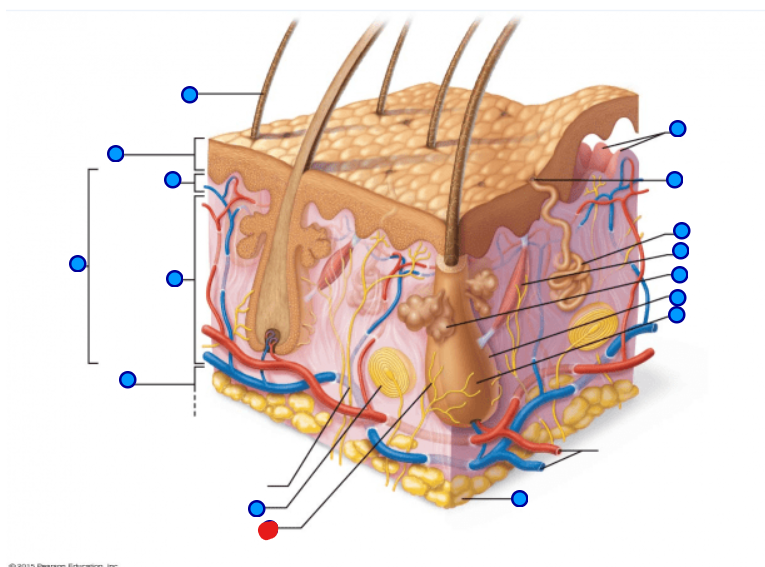
hair follicle receptor
detects hair movement