Biology Animal Section
 Call Kai
 Learn
 Practice Test
 Spaced Repetition
 Match
 Flashcards
 Knowt Play
1/78

There's no tags or description
Looks like no tags are added yet.
79 Terms
Choanoflagellats
unicellular, closest relative in opisthokonta
Metazoa
animals + eukaryotes
Traits of metazoa
no cell wall, multicellular, heterotrophic
Porifera/Parazoa
sponges, no true tissues or symmetry; larvae=free swimming; adults; sessile
Eumetazoa defining characteristics
True tissue & true symmetry
Radiata: Defining characteristics
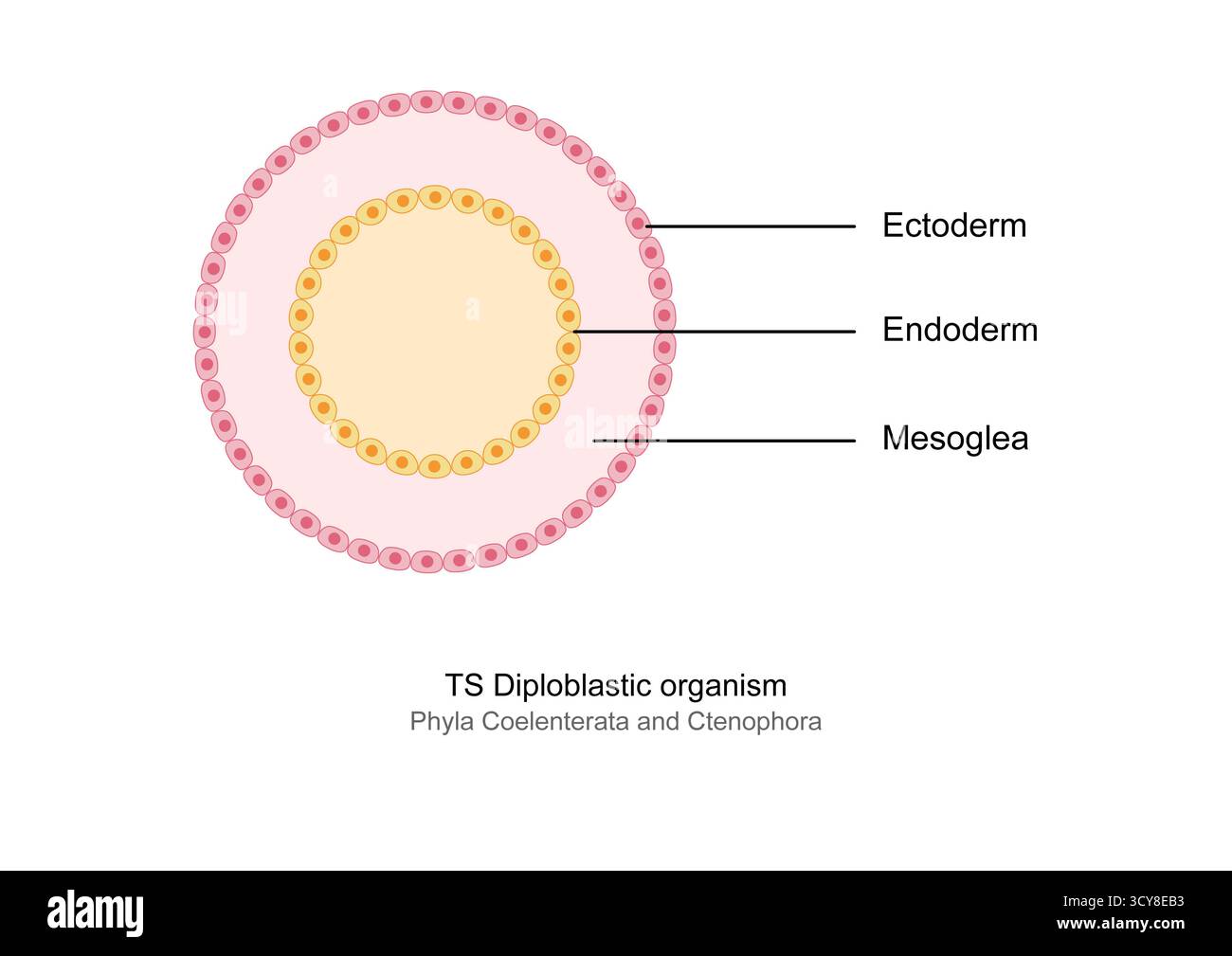
Radial symmetry and diploblastic (two layers of cells)
Dipoblastic graph?
Endoderm + Ectoderm (mesoglea is middle stuff)
Groups within Radiata:
Ctentophora & Cnidaria
Ctentophora
Comb jellies (sea walnut) (bioluminescent)
Cnidarians
Jellyfish, coral (dinoflagelletes live in symbiosis), sea anemones, hydrozoans
Cnidarians body forms?
Medusa + Polyp

Bilateria: Defining characteristics
Bilateral symmetry, triploblastic
Bilateria graph? + Gastrulation

Differences between acoelomates, pseudocolomates, coelomate
Acoelomates have no body cavity, pseudocoelomates have a partial or "false" cavity inbetween gut and the mesoderm, and coelomates have a true, fully lined cavity fully within the mesoderm. between the
Protostomes defining characteristics
Mouth forms first
Protostomes: Groups
Lophotrochozoa & Ecdyzoans
Lophotrochozoa: groups
Bryzoa & brachiopods (lophophore), mollusca, annelida (trochophore), flatworms
Difference between lophophore and trochophore
Characterized by a tentacle feeding structure (lophophore) or a free-swimming larval stage with bands of cilia (trochophore).
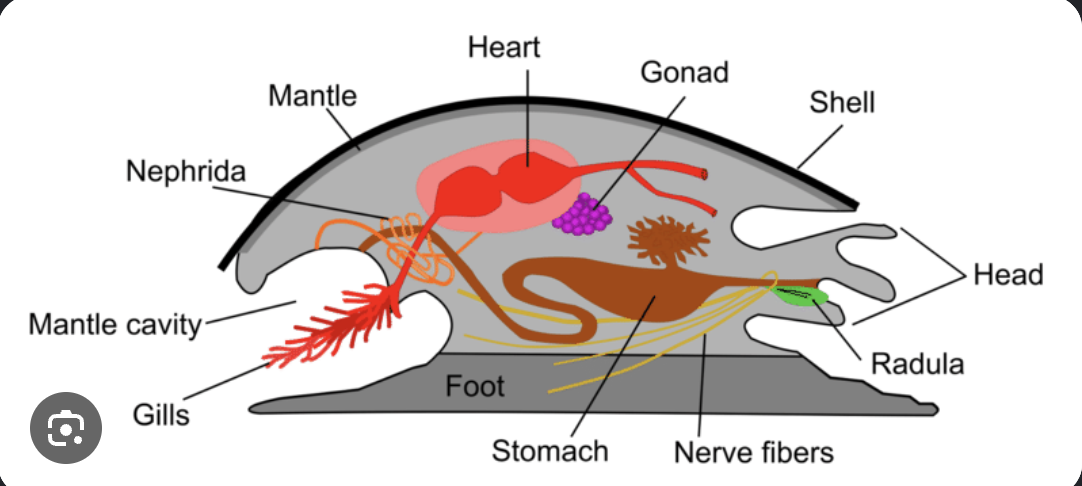
Mollusca groups + body plan
Bivalves (clams, etc), cephlapods (squid, octopus, etc), gastropods (snails + slugs)
Ecdysozoa (molting) Groups
Nematods (roundworms) and the Arthropods
Arthropoda characteristics
Exoskeleton, segmentation, jointed appendages, molting
Groups in arthropoda
Chelicerata, hexapoda, myriapoda, crustacea
Chelicerata
Arachnids
Hexapoda
Insects + springtails
Myriapoda
Centipedes (carnivorus + 1 pair of appendages per segemnt) & Millipedes (herbivorus + 2 pair of appendages per segment)
Crustacea
lobsters, crabs, shrimp, etc
Deuterostome traits
Blastopore forms anus first, all coelomates!
Deuterostome groups
Echinoderms & Chordates
Echinoderms
Starfish, sea urchins, brittle stars, sea cucumbers etc. Endoskeleton make of calcium carbonate
Four key features of chordates?
Hollow dorsal chord, notochord, pharyneal slit, postanal tail

Different groups of chordates,
Urochordata (tunicates), cephalochordata (lancelets), and verbrata
Urochordata (tunicates)
sea squirts and salps 🙂 only animal that produce cellulose
Lancelets
Embedded in sediment, filter feeders. Only chordate phylum that keeps all four traits into adulthood

FISH! Verbrata traits
Verterbral column w/skull
Jaws + paired appendages
Internal gills
Single-loop blood circulation
Jawless Fish?
Lampreys and hagfish. Hagfish Use slime to choke out their enemies (almost inspiring) Partial skull and partail vertebrae
Cartilaginous fish
Sharks, skates, rays. Internal skeleton made up of flexible cartilage
Bony Fish (What groups)
Ray-finned fish, lobe tail fish, lungfish
What do swim bladders do?
Help regulate buoyancy
Tell me about amphibians?
first vertebrates to walk on land, three chambered heart, eggs need to be in water
Three orders of tetrapods?
Amphibians, mammals, repties
Anura
frogs + toads, external fertilization
Caudata
salamanders, very flexible, aquatic/terrestrial
Apoda
a group of limbless, subterranean, and aquatic amphibians that physically resemble earthworms or snakes
Amniotes defining characteristics
They have amniotic egg + dry breathing. Not much else
Synapsid
1 hole behind eye in skull (mammals)
Diapsids
2 holes behinds eye in skull (reptiles + birds)
Anapsids
0 holes behinds eyes (turtles)
Reptiles defining characteristics
Heart with partially divided ventricle, ectothermic
Reptiles groups
chelonia, squamata, crocdilians, aves
chelonia
Trutles + tortoises, shell attched to carapace
squamata
Lizards + snakes +tuatara
crocdilians
alligators, crocodiles, 4 chambered heart, eyes and nose on top of head to hunt
Aves
BIRDS. No urinary baldder, endothermicm hollo bones
MAMMALS
Hair + milk, amniotes, 4 chambered hearts, differentiated teeth
2 classes of mammals
Monotremes and Viviparous
Monotremes
Lay eggs, lack developed nipples, cloaca. Ex: Platypus, echidnas????,
Viviparous classes?
Marsupials and Placental
Marsupials
Give birth to underdeveloped young that complete their early growth and development inside an external pouch (marsupium) while nursing (e.g., kangaroos, koalas, opossums).
Placental
Nourish the developing fetus internally via a well-developed placenta, giving birth to relatively well-developed offspring (e.g., humans, dogs, whales, elephants)
Primate groups
Anthropoids, Hominids, Hominins
Anthropoids
Monkeys, apes, humans
Groups farthest from humans?
Lemurs, lorises, tarsiers
Animal bodies! Give me the order
Cells, tissues, organs, organ systems
What are the four tissue types
Epithelial, nerve, connective, muscle
Epithelial tissue uses?
Secretion, absorption, transport, protection
What is epithelial tissue attached to?
basement membrane
What is absement membrane attached to?
Connective Tissue
Side of epithelial tissue attached to basement?
Basal surface
Side of epithelial tissue attached to upper surface?
apical surface
Shapes of tissue?
Squamous, cuboidal, columnar
Squamous
irregularly shaped (kinda like an egg) used for diffusion in lungs + blood vessels
Cuboidal
Cube shaped, kidney/sweat glands
Columnar
Protection, secretion, absorption, looks like a column
Different type of layers?
Simple = 1 layer. Stratified: multiple layers
Pseudostratified
1 layer but weird shaped