Skin, Nail, Hair Conditions
 Call Kai
 Learn
Learn Practice Test
 Spaced Repetition
 Match
Match Flashcards
 Knowt Play
1/46

There's no tags or description
Looks like no tags are added yet.
Name | Mastery | Learn | Test | Matching | Spaced | Call with Kai | Chat |
|---|
No analytics yet
Send a link to your students to track their progress
47 Terms
Vitiligo
is a long-term skin condition characterized by patches of the skin losing their pigment. The patches of skin affected become white and usually have sharp margins. The hair from the skin may also become white. The inside of the mouth and nose may also be involved

Petechiae
are tiny, round 1–3 mm spots of bleeding under the skin that appear red, purple, or brown.

Eczematous dermatitis
Most common inflammatory skin disorder.
What are the 3 types of eczematous dermatitis?
Irritant contact dermatitis, allergic contact dermatitis, and atopic dermatitis.
Irritant contact dermatitis
Skin inflammation caused by direct irritation to the skin.
Allergic contact dermatitis
Skin inflammation caused by an allergic reaction to something touching the skin.
Atopic dermatitis
Chronic inflammatory skin condition; commonly called eczema.
Folliculitis
Inflammation and infection of a hair follicle and surrounding dermis.
Furuncle (boil)
Deep-seated infection of the pilosebaceous unit
Cellulitis
serious bacterial skin infection that affects the deeper layers of the skin and underlying tissues, acute
Tinea (dermatophytosis)
group of noncandial fungal infections that involve the strateum corneum, nails, or hair
Psoriasis
A chronic disease that keeps coming back because keratinocytes are growing and multiplying too quickly
Rosacea
Chronic inflammatory skin disorder

Herpes zoster (shingles)
varicella-zoster viral infection
Herpex Simplex Type 1
associated with oral infection
Herpex Simplex Type 2
associated with genital infection
Tick-borne diseases that can lead to multisystemic failure
Lyme disease
Rocky Mountain Spotted Fever
Colorado Tick Fever
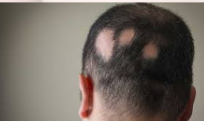
Alopecia areata
Sudden, rapid, coin-shaped loss of hair, usually from the scalp or face
Scarring alopecia
Replacement of hair follicles with scar tissue
Traction alopecia
Hair loss that is the result of prolonged, tightly pulled hairstyles
Hirsutism
Growth of terminal hair in women in the male distribution pattern on the face, body, and pubic areas
Paronychia
Inflammation of the paronychium
Onychomycosis
Fungal infection of the nails
Ingrown nails
Nail pierces lateral nail fold; grows into the dermis
Nail avulsion
part or all of a nail is torn away or removed from the nail bed.
Subungual hematoma
trauma to the nail plate severe enough to cause immediate bleeding and pain
Onycholysis
Loosening of the nail plate from the nail bed that begins at the distal groove
Nail Clubbing
is a change in the structure of fingernails or
toenails in which the finger and nail takes on the appearance
of an upside-down spoon and become red and sponge-like.
Nail clubbing is sometimes the result of
low oxygen in the blood and could be a sign of various types of lung disease
Koilonychia
also known as spoon nails, is a
nail disease that can be a sign of hypochromic
anemia, especially iron-deficiency anemia.
What is the epidermis?
The outermost layer of the skin.
What is the dermis?
The connective tissue layer of the skin.
What fibers are found in the dermis?
Elastin, collagen, and reticulin fibers.
What nerves are found in the dermis?
Sensory nerve fibers and autonomic motor nerves.
What is the hypodermis?
The subcutaneous layer under the skin.
What are the functions of the hypodermis?
Heat insulation, shock absorption, and calorie storage.
What are skin appendages?
Eccrine sweat glands, apocrine sweat glands, sebaceous glands, hair, and nails.
What are eccrine and apocrine glands?
Types of sweat glands.
What do sebaceous glands produce?
Oil, also called sebum.
Capillary refill assessment
used to monitor dehydration and the amount of blood flow to tissue.
What does the skin excrete
sweat, urea, lactic acid
Skin turgor may be altered in which situations?
Substantial dehydration or edema
A
Asymmetry
One half does not match the other half
B
— Border
Uneven or irregular borders.
C
— Color
Uneven or multiple colors, such as brown, tan, black, red, white, or blue.
D
Diameter
Larger than about 6 mm, roughly the size of a pencil eraser.
E
Evolution
Changes in size, shape, color, elevation, or symptoms over time.