Art Module 5 (Art of the French Revolution/Jacques-Louis David
 Call Kai
 Learn
 Practice Test
 Spaced Repetition
 Match
 Flashcards
 Knowt Play
1/8

There's no tags or description
Looks like no tags are added yet.
9 Terms

Name: The Oath of the Horatii
Artist: Jacques-Louis David
Year: 1784
Material: Oil on canvas
Extra: Done 5 yrs before French Revolution. Style, moral message to the liking of the French Academy. Perfect example for revival of history painting. Story from Ancient Rome: morally uplifting.
Horatii triplets (champions) about to fight triplet from neighboring Alba, the Curatii (not pictured). Curatii cousins of the Horatii. Here: Horatii triplets pledge to their father to triumph or die for Rome (Republican). Moral dilemma: Horatii’s sister Camille married to one of the Curatii triplets. Youngest Horatii married to sister of the Curatii.
What has priority? David: the state. Spatial separation: male vs female realm. Women’s group: emotional response/illuminated. Men’s group: heroic self-sacrifice/shadow.
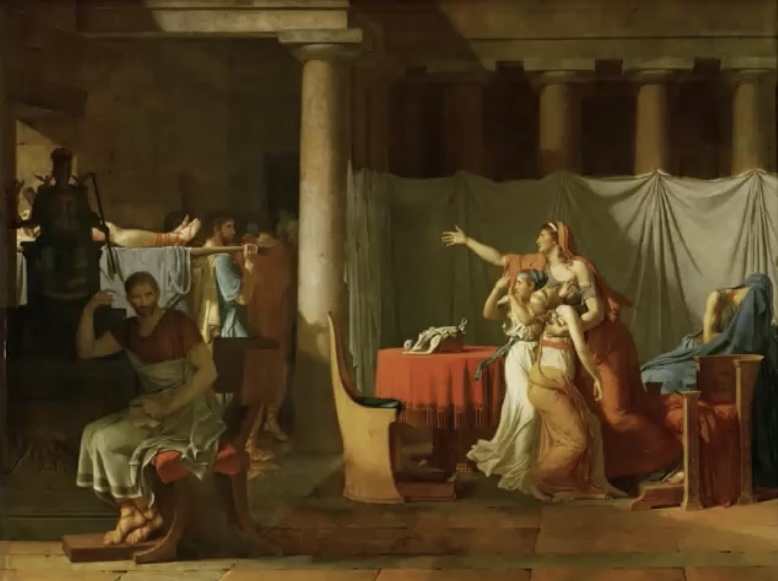
Name: The Lictors Returning to Brutus the Bodies of His Sons
Artist: Jacques-Louis David
Year: 1789
Material: Oil on canvas
Extra: Painted & exhibited in year of French Revolution. Another story from early Republic Rome.
Junius Brutus (founder of Roman republic) receives 2 corpses of his 2 sons, beheaded by his own order. Brutus decreed law that anybody who conspired to overthrow Rome to be killed. Sons conspired to re-establish monarchy. Ties w/ monarchist party from mother’s side.
Aftermath of executions here: foreground = Brutus; background = corpses of sons are brought back home. Family or law first? Compositional divide: make vs female (shadow vs light). Emotionalism on female side, mother calling out & nursemaid covering face; introspective mourning.

Name: The Oath of the Tennis Court
Artist: Jacques-Louis David
Year: 1791
Material: Graphite, pen, sepia wash heightened w/ white on paper.
Extra: Moment of the oath swearing of the 3rd Estate (joined by renegade members of 1st & 2nd). Tennis court > makeshift refuge for dissenting 3rd. Preparatory drawing for a large painting to be executed at the expense of the “Society of the Friends of the Constitution”. Painting never executed, but drawing shown in the Parisian Salon in the Louvre. Principle: politics is fast, painting is slow.

Name: The Death of Lepeletier de Saint-Fargeau
Artist: Anatole Devosge (after David)
Year: 1793
Material: Black chalk on paper
David: supported Revolution ideals, sided w/ radical movement of Robespierre’s Terror, voted for death of Louis XVI. Monarchists hit back.
Extra: 1st victim of Royalist reaction. Lepeletier: noble man who votes for kings death. David organized funerary ceremonies; painted pictures of the dead deputy. Painting later destroyed by victims daughter; compositions survives only as drawing. First of David’s portraits of “martyrs” of the Revolution.

Name: The Death of Marat
Artist: Jacques-Louis David
Year: 1793
Material: Oil on canvas
Extra: 2nd portrait of martyrs. Even more prominent Revolutionary, radical journalist Marat: champion of the Parisian poorer classes supporting the Revolution, the sans-culotte. Assassinated by Charlotte Corday, supporter of the more moderate Girondin faction. Skin disease required herbal bath > working in bath w/ wooden box to make letters.
2: one letter to starving war widow & her kids, the other to assassin Charlotte, demanding to see him. Corday gone except for letter & stabbing wound. Sent widow money, nicknamed “friend of the common people”.
Propaganda art: depicted as charitable & compassionate, highlighting injustice & outrage over the kill. David a friend of Marat, visited him the day before assassination, later in charge of funerary ceremonies for Marat.

Name: Self-Portrait
Artist: Jacques-Louis David
Year: 1794
Material: Oil on canvas
Extra: Publicly professed allegiance to Robespierre, arrested the next day, thrown into jail after the end of the Terror. Paints this in jail. Self-doubts, psychological intensity. Palette & brushes as elements defining his identity. Comeback under Napoleon Bonaparte in early 1800s.

Name: Marius at Minturnae
Artist: Jean-Germain Drouais
Year: 1786
Material: Oil on canvas
1784: Drouais won Rome Prize of the French Academy. David & Drouais leave together for Rome. In Italy: Drouais helps David paint the Oath of the Horatii. Drouais completes major work of his own here. Typical “Davidian” subject.
Story by Plutarch in Ancient Rome. Roman general & Canusul Caius Marius ostracized from Roman Senate. He flees & is arrested in town of Minturnae, local townspeople hire foreigner (a Gaul) to kill him. Assassin shrinks, Marius escape, & returns to Rome to install terror regime to exert revenge. Drouais’s last picture; died pre-maturely of smallpox in Rome, 1788.

Name: The Sleep of Endymion
Artist: Anne-Louis Girodet-Trioson
Year: 1791
Material: Oil on canvas
Extra: During 1790s, Girodet takes Drouais’s place in David’s studio. Celebrated greatest triumph in the 1793 Salon w/ Endymion. Student project in French Academy in Rome, study of male nude, carried to an extreme of refinement and polish.
Moon goddess Selene put Endymion in a perpetual state of sleep, holds him captive in a remote nature reserve. Selene present in the form of moonlight allowed in by a putto. New type of maleness: no stern warrior, but unconscious, flawless, soft body.

Name: Jean-Baptiste Belley
Artist: Anne-Louis Girodet-Trioson
Year: 1797
Material: Oil on canvas
Belley: deputy in the French National Convention, representing the French colony of Saint-Domingue (today: Haiti); dressed in costume of such a deputy. Celebration of the abolition of slavery in the aftermath of the French Revolution.
Belley held speech proceedings passage of law abolishing slavery in French colonies & giving French citizens rights to all former slaves. Background: Caribbean landscape. Marble bust: Abbé Raynal > one of the philosophers, condemning slavery in the “West Indies”.