training and conditioning test 1
 Call Kai
 Learn
Learn Practice Test
 Spaced Repetition
 Match
Match Flashcards
 Knowt Play
1/23

There's no tags or description
Looks like no tags are added yet.
Name | Mastery | Learn | Test | Matching | Spaced | Call with Kai | Chat |
|---|
No analytics yet
Send a link to your students to track their progress
24 Terms
Differences between exercise and training
exercise what we would do any day, working out, activity
all training is exercise but not all exercise is training
training adds extra levels such as progression
name four main human systems that affect training and conditioning
muscular
skeletal
cardiovascular
neural
parts of a performance pyramid

why is the flexed position the best angle for a bicep curl
longest moment arm
most leverage
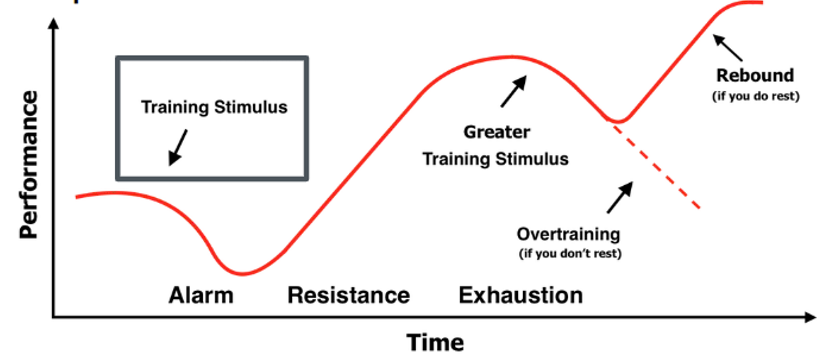
How do we create adaptation
training is exploiting the adaptive ability of human body to improve upon one or more factors
in order to get better, our body has to increase and adjust to a new base rate
start with a training stimulus
that brings you into an alarm phase
decrease in performance right away, 2-24 hours post session
then you get into the recovery phase which is when you start to climb back and your body adapts
the next training stimulus should be when you’ve reached optimal recovery (could be 24 hours, could be 8 etc.)
after the next session, hopefully we are not dipping as much, going into recovery and then training again when you have reached optimal recovery (which varies per athlete)
How to determine an athletes optimal recovery phase
time and working with them more
training is a long term plan
what happens with either recovery phase is too long or short
we can dip too far back down in performance
overtraining- training too much, can show up if you do it for months, not giving enough time for body to recover
undertraining also causes a dip down in recovery and now you starting from lower levels for the next training stimulus and therefore not able to push as much
Driving principles of training and conditioning
progressive overload: if you are not providing greater stimulus the next time, you will not grow
specificity: for certain wants, you need to training specific things
need sport specificity but not ultra specificity
individuality: treat the athlete as a person, each person needs are different
Reversibility: if you don’t use it, you lose it
Diminishing returns: as you get more experience in training, you less gains
FITT: frequency, intensity, type, time
what are the four overall foundational movement patterns
pus
squat/press/lunge
pull
row/chin up/drag
lift
hinger/pick up
carry
loaded movement
Types of lower body muscle actions in resistance training

Types of upper body muscle actions in resistance training

Types of torso/abdominal muscle actions in resistance training

parts of a needs analysis, also what is looked at from the sport vs. from the athlete
goals
timeline
current status & abilities
availability & barriers
Evaluation of the sport- KPIs (units of measurement)
movement analysis
physiological analysis
competency in movements and skills
Assessment of the athlete
training history
current abilities and fitness
injury status
Purpose of warm ups (including physiological responses)
prepare athlete physically and mentally for task/event
physiological responses that potentially increase performance
temperature related effects
increase in muscle temperature and core tmperature
enhanced neural function
disruption of transient connective tissue bonds
non-temperature-related effects
increased blood flow to muscles
elevation of baseline oxygen consumption
post activation potentiation (each exercises preps you for next)
overall:
decreasing risk of injury, increasing sport performance
things to consider for a warm up
number of athletes and size of space
time and duration- usually 8-10mins
purpose (principle of specificity)
weather and surface
injuries/fitness levels
FUN!
Parts of a warm up
R- raise (HR, blood flow, muscle temp, respiration)
A- activate (muscles that will be used)
M- mobilise (mobilise joint, tissues, structures)
P- potentiate (work towards potential)
What to do pre warm-up
inhibit/quiet down overactive muscles
5-8 sites, 30s per side
foam roll/trigger point
commons area related to posture
think front of the body. aim to get body extended (away from the positions we usually live in)
also consider principle of individuality
raise (in warm up): purpose, length, examples
raise- multi-directional movement
increase HR, blood flow, muscle temp, respiration
3-5 mins
games of low organization
individual: hurdles/ladder/skipping or track based
keep it fresh
activate (in warm up): purpose, length, examples
purpose: engage muscles in preparation for session
similar to movements in sport/events
5 mins (5-6 movements)
increasing intensity
low threshold strength movements
body weight, calisthenic, start to activate certain muscles
maintain posture and ensure technique
mobilize (in warm up): purpose, length, examples
purpose: move joint through a full range of motion while keeping patterns close to movement used during game
similar to movements in sport/events
5 mins (5-6 movements
increasing intensity
dynamic vs. ground based mobility
maintain posture and ensure technique
potentiate (in warm up): purpose, length, examples
bringing closer to potential
high intensity
short duration (2× 5-15s)
2-3 drills
Ex.
cone drills
jumping/bounding/sprinting
agility patterns
reactionary patterns
Why is it important to have a recovery stage after a workout
normalization of metabolic functions
normalization of homeostatic equilibrium