bio2 lecture 4 exam
 Call Kai
 Learn
 Practice Test
 Spaced Repetition
 Match
 Flashcards
 Knowt Play
1/152

There's no tags or description
Looks like no tags are added yet.
153 Terms
what are the 4 characteristics of chordata?
notochord, dorsal hollow nerve cord, pharyngeal slits, muscular post anal tail
what is the notochord?
a long flexible rod for support
what is the dorsal hollow nerve cord?
the space where the spinal chord is located
what are pharyngeal slits?
an opening in the throat to bring in air or water
what is the muscular post anal tail?
an extension past the anus
what is paedeogenesis?
when it becomes an adult, it keeps all larvae characteristics
what chordate characteristic do subphylum urochordata have?
pharyngeal slits
what chordate characteristic do subphylum cephalochordata have?
all 4
what chordate characteristic do subphylum vertebrata have?
all 4
what is the neural crest?
bones and cartilage of the skull
what superclass are hagfish from?
agnatha
what do hagfish lack?
scales and paired appendages
what superclass are lampreys from?
agnatha
where do lamprey migrate to to spawn?
from marine to freshwater
what are lamprey larvae called?
ammocoetes
what are ammocoetes larvae?
filter feeders buried in sediment
what is the feeding strategy of lamprey?
parasitic
jaws most likely developed from what?
gill arches used in filter feeding
what do gill arches lead to?
moving jaws
what do moving jaws allow for?
active defense from predators
what kind of skeleton do class chondrichthyes have?
cartilage
what kind of scales do class chondrichthyes have?
placoid
what kind of intestines do class chondrichthyes have?
spiral valve
what kind of sensory organ do class chondrichthyes have?
ampullae of lorenzini
what are claspers?
pelvic fins used to transfer sperm
what is ovuliparity?
female deposits unfertilized eggs which are externally fertilized by malesw
what is viviparity?
live birth
what is oviparity?
the mother deposits eggs
what is ovoviviparity?
the female lays eggs inside, then deposit them outside
what is a heterocercal caudal fin?
a tail in which the top of the tail is longer
what are class osteichthyes also called?
bony fishes
what is the operculum?
a bony gill cover
what kind of fish are in class sarcopterygii?
lobed-fin fish
what kind of fish are in class actinopterygii?
ray-finned fish
what is the lateral line used for?
to detect pressure changes
what is the swim bladder?
an internal air filled organ that aids in buoyancy
what do sharks use for buoyancy?
liver
what class are coelocanths?
sarcopterygii
what kind of fin do coelocanths?
3 lobed caudal fin
what kind of organ do coelacanth have?
rostral organ
when were coelacanth re-discovered?
1938
what class are lungfish from?
sarcopterygii
how long can lungfish survive dry conditions?
4 years
how can lungfish survive dry conditions?
by estivating in mucus-lined burrows, “hibernating”
what kind of fins do lungfish have?
slender fins
what is unique about the lungfish?
they have the largest genome among vertebrates
what class is the largest?
actinopterygiii
what do sturgeons lack?
vertebral central
what class are sturgeon from?
actinopterygii
minnows, carp, and shiners have what kind of pharyngeal?
early pharyngeal
what class are minnows, carp, and shiners from?
actinopterygiii
what are conjoined jaws?
they are fused together like a pipe to suck in particles
what animals have conjoined jaws?
seahorses and pipefish
what class are tuna and mackerel from?
actinopterygii
how fast can tuna and mackerel swim?
45-60 mph
what class are perch, bass, and cichlids from?
actinopterygii
when did the first vertebrates on land (amphibians) show up?
during devonian 400 mya
what does it mean when amphibians have two lives?
goes through metamorphosis at some point in their life
what kind of heart do fish have?
2 chambered
what kind of heart do frogs have?
3 chambered heart with a double circulation system
what type of eggs do amphibians have?
mesolecithal
how many species are in order urodela?
400
what kind of fertilization do species in urodela have?
internal fertilization using a spermatophore
what is paedomorphosis?
adults only keep 1 juvenile trait
what is paedogenesis?
adults keep many juvenile traits
are axolotls paedomorphosis are paedogenesis?
paedomorphosis
are humans paedomorphosis or paedogenesis?
paedogenesis
how many species are in order anurans?
3500
what kind of fertilization do order anurans have?
external fertilization (ovuliparity)
what kind of fertilization do caecilians have?
internal fertilization
what is the evolution of the amniotic egg?
allows animals to complete their entire life cycle on land
has a shell that retains water
has specialized extraembryonic membranes
what is the function of the amnion?
protects from dehydration and mechanical shock
what is the function of the yolk sac?
nutrient storage
what is the function of albumin?
nutrient storage
what is the function of allantois?
stores waste, gas exchange
what is the function of chorion?
gas exchange
what skull do turtles have?
anapsid
what skull do all other reptiles have?
diapsid
what is the top shell called on class testudines?
carapace
what is the bottom shell called on class testudines?
plastron
do chelonia have teeth?
no
what class are chelonia from?
class testudines
as the temperature gets warmer, are there more females are males that are born in class testudines?
females
what class are tuataras from?
sphenodontia
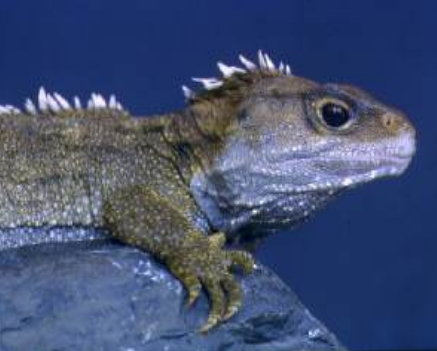
what animal is this?
tuatara
where are tuatara found?
new zealand
are tuataras true lizards?
no
what do tuatara develop under the skin?
a third eye
what kind of reproduction do class squamata have?
temperature dependent sex
what is studied about gila monster’s saliva?
protein in saliva may be used to treat diabetes
what do snakes lack?
limbs and movable eyelids
what kind of tongue do snakes have?
bifurcated
what organ do snakes have?
jacobsons organ
what does viperidae mean and what animal (s) are in this family?
folding fangs, rattlesnakes
what does elapidae mean and what animal (s) are in this family?
fixed front fangs, cobras, sea snakes, and coral snakes
what are some feeding adaptions for snakes?
hinged quadrate bone, elastic skin, and no sternum
what are class crocodilia closest related to?
dinosaurs
what class are the largest living reptiles?
class crocodilia
what kind of palate do class crocodilia have?
complete secondary palate
what kind of bones do class aves have?
hollow bones