Biology 196: Speciation Mechanisms (PWPT 10)
 Call Kai
 Learn
 Practice Test
 Spaced Repetition
 Match
 Flashcards
 Knowt Play
1/28

There's no tags or description
Looks like no tags are added yet.
29 Terms
3-stage process of speciation
separation of populations
divergence of traits
reproductive isolation upon secondary re-contact
Reproductive isolation
existence of biological factors (barriers) reducing gene flow
What maintains species boundaries
reproductive isolating barriers
True or False: Geography of isolation is a species mechanism
TRUE. There are two methods:
1) Allopatric speciation (geographical separation of speciating populations)
2) sympatric speciation (no geographical seperation)
BOTH REQUIRE SEPERATE GENE POOLS

Allopatric speciation
evolution with isolation between geographically separated populations
a.k.a Geographic barriers prevent gene flow
What does allopatric speciation occur by?
Vicariance events: Geological change leading to physical division of population
dispersal and colonization
Allopatric Speciation through Vicariance events
geological event lead to physical division of populations
i.e. mountain ranges, glaciers, rivers etc.

Allopatric speciation through dispersal
dispersal and colonization across a geographic barrier

Sympatric speciation
species arise from randomly mating ancestral population
gene pool isolated in midst of parent population
reproductive barrier without geographic separation

What makes sympatric speciation less common than allopatric?
continued contact and gene flow
How might you ask?!
polyploidy
sexual selection
habitat differentiation
What is polyploidy?
a condition where an individual has more than two complete sets of chromosomes
How does polyploidy cause instant speciation?
it created instant reproductive isolation between the polyploid individual and its diploid ancestors
Is polyploidy more common in plants or animals?
Far more common in plants
What are two main types of polyploids?
Autopolyploids and allopolyploids
Autopolyploids
extra chromosome sets from single species
failure of cell divisions

Allopolyploids
chromosome sets from two species
often sterile hybrid (asexual reproduction) later becomes fertile allopolyploid

What are the two main methods that drive sympatric speciation
sexual selection
habitat differentiation
Sexual selection
positive assortative mating
mated pairs in a population are composed of individuals with the same phenotype more often than expected by random mating
ex. female choice experiment where there is preference to a color morph

Habitat differentiation
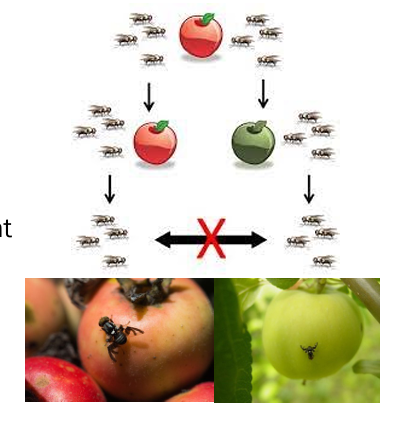
exploitation of a new host or habitat
What is a hybrid zone?
a region in which members of different species meet, mate, and produce hybrid offspring
Hybrids are the result of mating between species with what kind of reproductive barriers?
Incomplete reproductive barriers
If hybrids don’t become reproductively isolated from their parent species during secondary contact. what 3 alternate outcomes are possible?
1) Reinforcement
2) Fusion
3) Stability

Reinforcement
hybrids less fit
natural selection reinforced reproductive barriers
fewer hybrids
predicts barriers to reproduction stronger in sympatry than allopatry
Fusion
hybrids as fit as their parents
weakening of reproductive barriers
increased gene flow
parent species fuse
Stability
continued production of hybrids and hybrid zone
Time course for speciation
occurs both rapidly and slowly
can result from changes in few or many genes
The fossil record reflects two broad patterns of speciation. What are they?
1) gradual evolution
2) Punctuated equilibria

Gradual Evolution
species change gradually over time

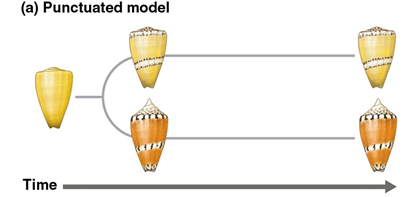
Punctuated equilibria
species appear suddenly, persist unchanged for long periods, then suddenly disappear
describes periods of stasis punctuated by sudden change