Artemia franciscana: Stages of life
 Call Kai
 Learn
 Practice Test
 Spaced Repetition
 Match
 Flashcards
 Knowt Play
1/12

Earn XP
Description and Tags
13 Terms

egg
This stage is qualified as a single-celled fertilized zygote showing the very beginning of embryonic development in cross-section.

8-cell stage
This stage qualifies after undergoing successive synchronous cleavages to form a cluster of exactly eight distinct embryonic blastomeres

blastula
This stage qualifies when cells arrange into a hollow, sphere-like structure forming an internal fluid-filled cavity known as the blastocoel.

gastrula
This stage is defined by gastrulation, where cells begin migrating inward to differentiate into distinct primary germ layers (ectoderm and endoderm).

late gastrula
This stage is qualified by a specialized flattening or shaping within the shell, signaling the onset of organogenesis and early limb bud positioning.

early nauplius
This stage qualifies as the pre-hatch "umbrella stage", where the differentiated larval form emerges from the cracked shell but remains encased in a transparent hatching membrane.

nauplius
This stage qualifies as the free-swimming larva immediately post-hatch, characterized by a single median naupliar eye and three pairs of functional appendages used for swimming.

metanauplius
This stage is distinguished by further elongation and the initial budding of segmentation along the post-cephalic trunk.

early instar
This stage qualifies through its first larval molts, showing increased elongation of the trunk and more defined anterior structures like the first antennae.

later instar
This stage is defined by the appearance of clear thoracic segments along the body, preparing the groundwork for swimming appendages.
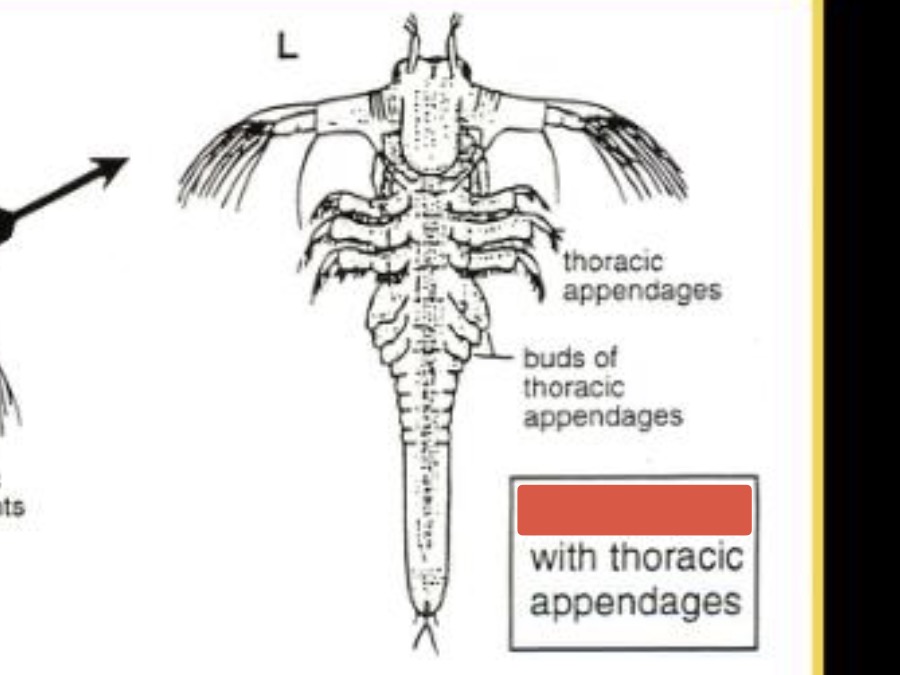
later instar (thoracopods)
This stage qualifies as an advanced juvenile stage showing fully developing buds of thoracic appendages (thoracopods) along the body column.

adult female
This stage qualifies as a sexually mature female identified by her compound eyes, complex swimming appendages, and a prominent ventral brood sac (uterus) located at the base of the thorax for incubating fertilized embryos.

adult male
This stage qualifies as a sexually mature male characterized by heavily enlarged, hook-like second antennae (claspers) used to grasp the female during mating, and a pair of eversible penes located at the base of the abdomen used to deposit sperm into the female's reproductive tract.