L5 nutrient cycling
 Call Kai
 Learn
 Practice Test
 Spaced Repetition
 Match
 Flashcards
 Knowt Play
1/15

There's no tags or description
Looks like no tags are added yet.
16 Terms
Why is nitrogen essential for all organism in an ecosystems
important component of aminoacids (proteins) and nucleic acids (DNA and RNA)
Why is phosphorus essential for all organism in an ecosystems
structural link in genetic materials (DNA and RNA)
critical for energy currency ATP (Adenosin Triphosphate) → moves energy through organisms
What is the unreactive for of nitrogen
N2 → 78% of atmosphere but triple bonded (unreactive)
not used by living organisms
short supply for plant growth → could be why short supply in water
What are the reactive forms of nitrogen
organic → comes from living/ dead tissues such as DNA, proteins and amino acid
inorganic
ammonia (NH3)
ammonium (NH4)
nitrate (NO3)
most oxidised in lakes
most abundant for bacteria, fungi plants
NO2 (partially reduced NO3) present in small quantities
plant cells use reduced N → transferred intercellulary as ammino group (-NH2)
Desrcibe soluble phosphorous forms
inorganic/ organic dissolved at normal pH 6.5-8.05 (avg = 7.40)
most common = orthophosphate (PO43-)
HPO4- monophosphate/ dihydrogen phosphate (< / « amounts)
Desrcibe particulate forms of phosphate
P attaches to component:
bacteria, animal (zooplankton, fish)
plant (macrophytes, phytoplakton)
suspended particles (clay or oher minerals)
particulate = unfiltered - filtered
living/dead organisms
excrete organic/soluble P
decomposition → dissolve organi P and PO43-
what are the source of nitrogen and phosphorus nutrients in freshwater ecosystems
external (allochtonous) → global cycling
NO3 → rainfall, aerial deposition, dust particles, fertiliser application
NH4 →burning of fossil fuels, planting N-fixed crops, water disposal
phosphorous → weathering of rocks, human activities (pollution from detergents and fertilisers)
variation dependent on seasons
What is nitrogen fixing
converting unreactive nitrogen gas (N2) into usuable compouns → ammonia (NH3), ammonium (NH4+), nitrates (NH3-)
What is the nitrogen cycle
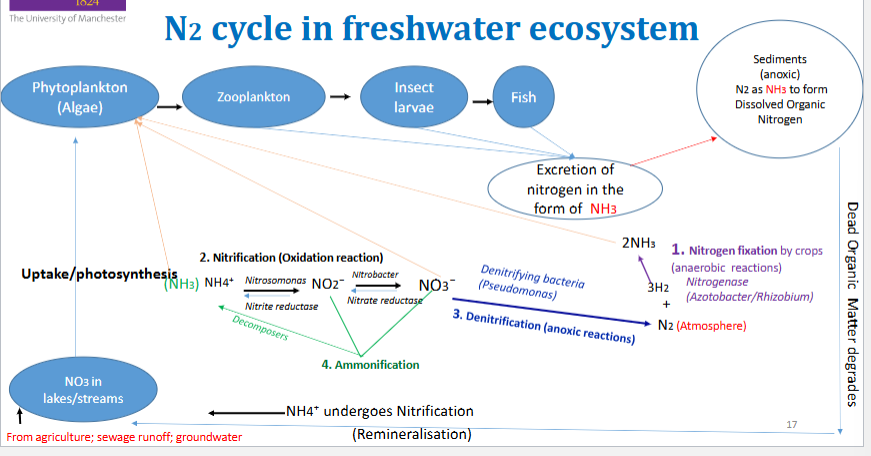
nitrogen fixation
NF organisms (diazotrphs) fix N2 gas when limited supply → takes place in anaerobic conditions
nitrification (2 phases):
Denitrification
nitrate in soils is reduce to N2 → released into atmosphere in presence of denitrifying bacteria
Ammonification
ammonium ion (2NH4+) → nitrate (NO3) in presence of decomposers
OR → NO2 → NO2 through nitrification

desribe the N2 cycle in freshwater ecosystems
removal of nitrate (NO3) through waste water treatments and wetlands → anoxic conditions in waterlogged marsh soils encourages dentrification
Describe the phosphorus cycle → landscape to sediment
Sources:
95% P from weathering and mining of rocks
96% PO4-P = sewage effluent/ city runoff
agricultural run off
detritus
rivers → forms aggregates suchs as mineral apatite
lakes → P-recycling, settle at sediments onto clays
oceans → p-recyles and settle in sediment

Describe the phsophurus cycle → biota (internal loading) for animals living and dead
e.g. bacterioplankton/zooplankton/fish
→ diel migration and excretion
daytime at low temp sediment
nightime migration → to water surface at euphotic zone
eat, excrete (50% of P and 50% organic matter)
seasonal transfer of P
Describe the phsophurus cycle → biota (internal loading) for macrophytes
e.g. rootes, emergent, submerged and phytoplankton
primary produces constitute large P biomass
modify P cycle in lakes → transport PO43- from sediment to surface
uptake PO43- through leave when conc is high
Describe the phsophurus cycle → biota (internal loading) for decompostions
dead plants adn animals release DOP and PO43-
In shallow lakes or in the littoral zone, direct replenishment of PO4³ from the sediments is important (called internal
loading).
PO4³¯ is bound to biota and, Al and Fe-oxides (in aerobic/anaerobic conditions)
no gaseous phase, atomspheric pool or specialised microbial aspect
main source is mineral apatite
plants take up organic P
organic P → inorganic → fungi and bacteria take up x2-9 more than plants
What are the challenges of increase nitrate and phosphate conc. in freshwater ecosystems
increased productivity
increased organic mater → impacts water clarity
increased respiration
decreased oxygens
loss/redution of aquatic life
species shift
harmful algae
aesthetic/toxins/taste and adour
loss/ reduction in aquatic life