Blood And Hematocrit
 Call Kai
 Learn
 Practice Test
 Spaced Repetition
 Match
 Flashcards
 Knowt Play
1/35

There's no tags or description
Looks like no tags are added yet.
36 Terms
A) Name
B) Description
C) Function
A) Erythrocytes (RBC)
B) Biconcave disc (most abundant)
C) Uses hemoglobin to carry oxygen to tissues throughout the body
Leukocytes (WBC)
A) Describe
B) Types
A) Have many different immune functions. Spherical & nucleated
B) Granulocytes: neutrophils, eosinophils, basophils
Agranulocytes: lymphocytes, monocytes

A) Name
B) Description
C) Function
A) Neutrophil
B) Nucleus, red and blue granules
C) Phagocytize (eats) pathogens or debris

A) Name
B) Description
C) Function
A) Eosinophil
B) Nucleus, Cytoplasmic granules
C) Kills parasitic worms, slightly phagocytic. Roles in allergy

A) Name
B) Description
C) Function
A) Basophil
B) Nucleus, large blue-purple cytoplasmic granules
C) Releases histamine and other mediators of inflammation

A) Name
B) Description
C) Function
A) Lymphocyte
B) Nucleus, Spherical or indented
C) Mount immune response by cell attack by antibody production

A) Name
B) Description
C) Function
A) Monocyte
B) Nucleus U or Kidney shaped
C) Develop into macrophages in tissues and phagocytize pathogen or debris

A) Name
B) Description
C) Function
A) Platelets
B) Uncompelete cells-cytoplasmic fragments containing granules. Originate from megakaryocytes that fragment.
C) Seal small tears in blood vessels. Vital for blood clotting
How to Perform a Hematocrit?
Measure total length of the fluid in the tube from the
bottom
Then also measure in cm: RBC, WBC and plasma from the
bottom
Calculate percentage of RBC/total, WBC/total, and
plasma/totalDetailed instructions are in your lab manua
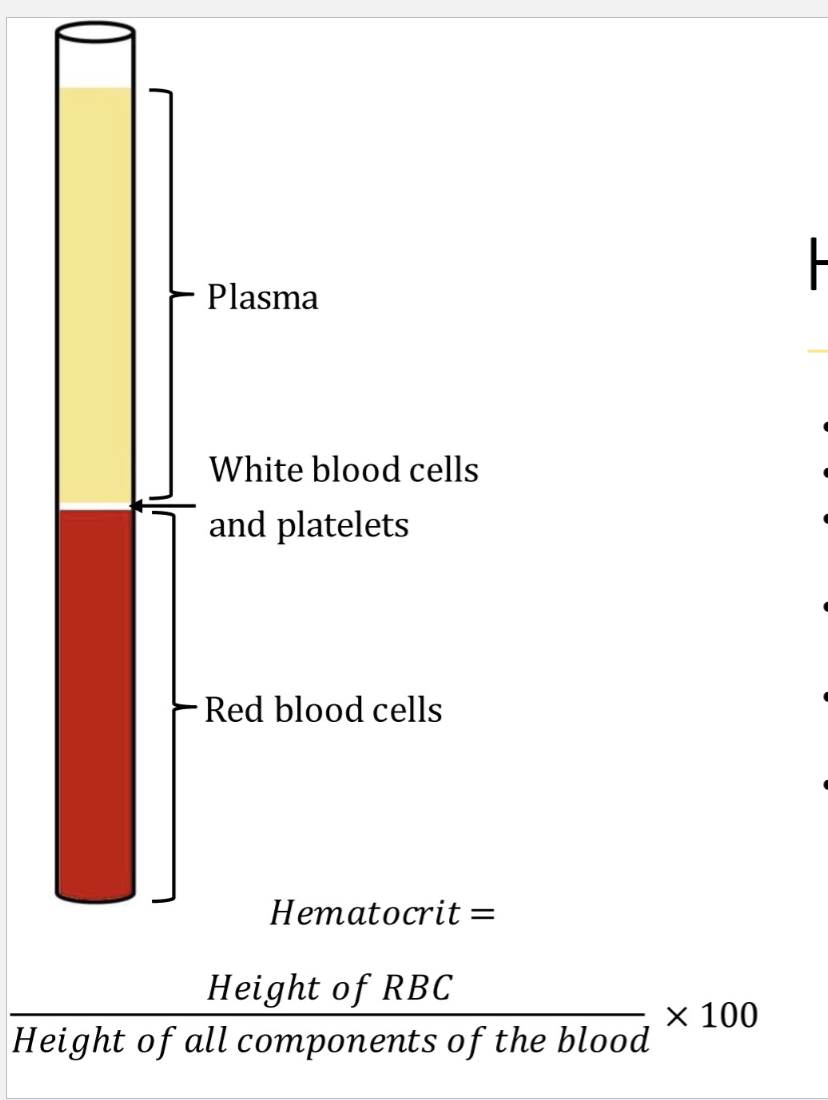
When centrifuged describe what happens to…
Erythrocytes, Buffy Coat, Plasma
Erythrocytes sink to the bottom (~45% of blood, a
percentage known as the hematocrit)
Buffy coat contains leukocytes and platelets (less
than 1% of blood); the buffy coat is a thin, whitish
layer between the erythrocytes and plasma
Plasma rises to the top (~55% of blood)

Normal Male and female Hematocrit levels?
Normal Adult Female Range: 37 – 47%
Normal Adult Male Range: 42 – 52%
Leukocytosis
Leukocyte count is too high
• Buffy coat constitutes >1%
• Caused by infection and some types of leuke
Leukocytes in order from most to least abundant?
(Never, let, monkeys, eat, bananas)
Neutrophil, Lymphocytes, Monocytes, Eosinophils, Basophils
Where is blood found? What is it classified as? How much in a human?
Found in the heart and blood vessels (arteries, veins, and capillaries).
Blood is a fluid connective tissue
4-6 L
What is blood composed of
Plasma (liquid portion)
Formed elements (red blood cells, white blood cells, and platelets)
Name the 3 plasma proteins and their functions
Albumin | Maintains blood osmotic pressure and transports substances |
Globulins | Transport substances and participate in immune defense (antibodies) |
Fibrinogen | Helps form blood clots by becoming fibrin |
What is hematocrit?
The percentage of total blood volume occupied by red blood cells.
Bone marrow produces too few RBCs
Aplastic anemia
Insufficient iron for normal hemoglobin production
Iron-deficiency anemia
RBCs destroyed too quickly
Hemolytic anemia
Abnormally shaped RBCs
Sickle cell anemia
Blood loss
Hemorrhagic anemia
Elevated WBC count
Leukocytosis
Explain what Dehydration and high altitude would do to hematocrit
Dehydration → increases hematocrit (less plasma)
High altitude → increases hematocrit (more RBC production)
Recent hemorrhage → may initially show no change
Blood is classified by which antigens are present on RBC surfaces.
Blood type | RBC antigens | Plasma antibodies |
|---|---|---|
A | A | Anti-B |
B | B | Anti-A |
AB | A and B | Neither anti-A nor anti-B |
O | Neither A nor B | Anti-A and anti-B |
Universal Donor and recipient
Universal RBC donor: O negative.
Universal RBC recipient: AB positive.

Example: Identify blood type from agglutination
A positive (A+)
Who can donate to and receive from whom?
Blood type | Can donate RBCs to | Can receive RBCs from |
|---|---|---|
O− | Everyone | O− |
O+ | O+, A+, B+, AB+ | O−, O+ |
A− | A−, A+, AB−, AB+ | A−, O− |
A+ | A+, AB+ | A+, A−, O+, O− |
B− | B−, B+, AB−, AB+ | B−, O− |
B+ | B+, AB+ | B+, B−, O+, O− |
AB− | AB−, AB+ | AB−, A−, B−, O− |
AB+ | AB+ | Everyone |

Blood cell and function
Neutrophil
Function: Engulfs bacteria and other pathogens.

Blood cell and function
Eosinophil
Function: Parasite defense and allergic responses.

Blood cell and function
Basophil
Function: Releases histamine and other inflammatory mediators.

Blood cell and function
Lymphocyte
Function: B and T lymphocytes contribute to adaptive immunity.

Blood cell and function
Monocyte
Function: Can differentiate into macrophages and engulf pathogens.
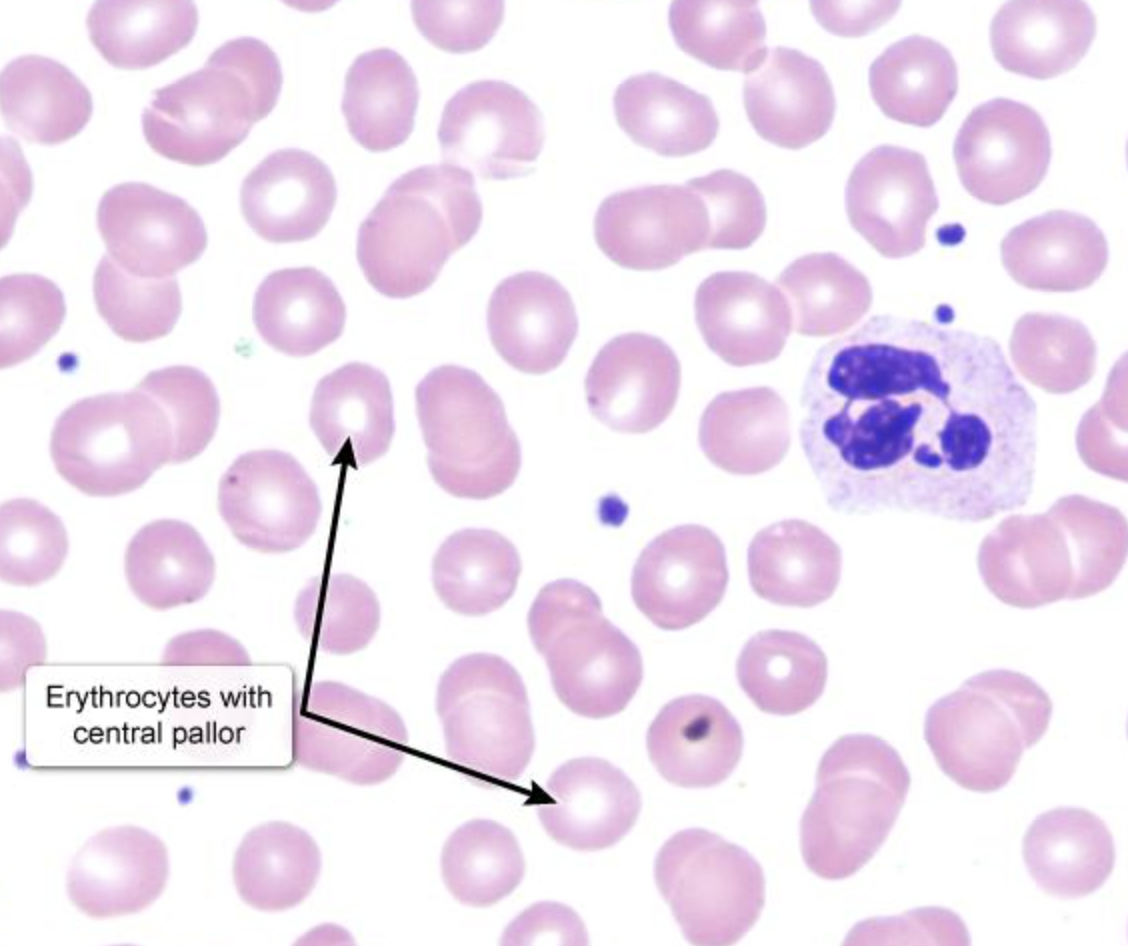
Blood cell and function
Erythrocyte
Function: Carries oxygen via hemoglobin.

Blood cell and function
Platelet
Function: Helps stop bleeding by forming platelet plugs and supporting clotting.