404 Exam 1 with amino acids
 Call Kai
 Learn
Learn Practice Test
 Spaced Repetition
 Match
Match Flashcards
 Knowt Play
1/145

There's no tags or description
Looks like no tags are added yet.
Name | Mastery | Learn | Test | Matching | Spaced | Call with Kai | Chat |
|---|
No analytics yet
Send a link to your students to track their progress
146 Terms
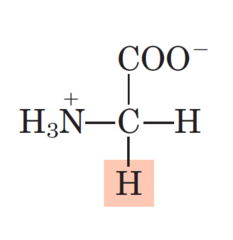
Glycine
neutral, but hydrophobic at times; uncharged
Alanine
hydrophobic; uncharged; nonpolar

Valine
hydrophobic; non polar

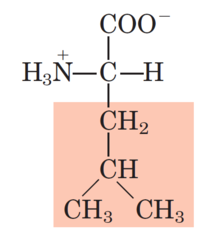
Leucine
hydrophobic; nonpolar
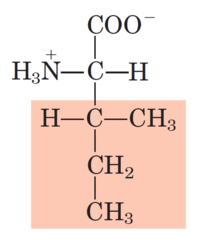
Isoleucine
hydrophobic; nonpolar
Proline
hydrophobic; nonpolar

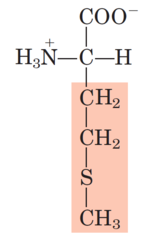
Methionine
hydrophobic; uncharged
Phenylalanine
hydrophobic; uncharged

Tyrosine
hydrophilic; polar

Tryptophan
hydrophobic; nonpolar

Serine
hydrophilic; polar

Threonine
hydrophilic; polar

Cysteine
hydrophilic; polar

Asparagine
hydrophilic; polar

Glutamine
hydrophilic; polar

Lysine
hydrophilic; charged

Arginine
hydrophilic; charged

Histidine
hydrophilic; charged

Aspartate
hydrophilic; charged

Glutamate
hydrophilic; charged

a-Ketoglutarate amino acid derivatives
Glutamate, glutamine, proline, arginine

Oxalocacetate amino acid derivatives
Aspartate, Asparagine, Threonine, Isoleucine, Methionine, Lysine

3-Phospho-glycerate amino acid derivatives
Serine, Glycine, Cysteine
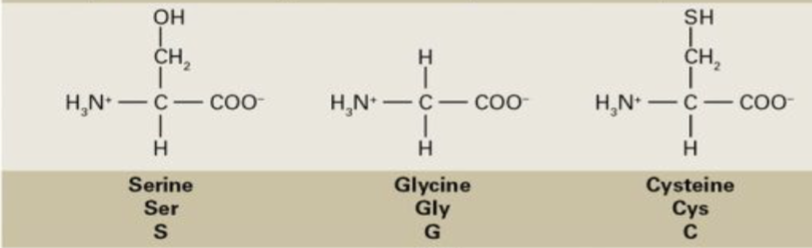
phosphoenol-pyruvate amino acid derivatives
Tryptophan, Tyrosine, Phenylalanine
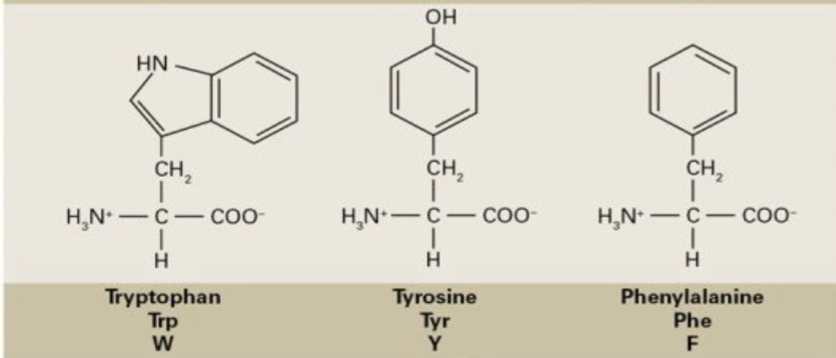
pyruvate amino acid derivatives
Alanine, Leucine, Valine
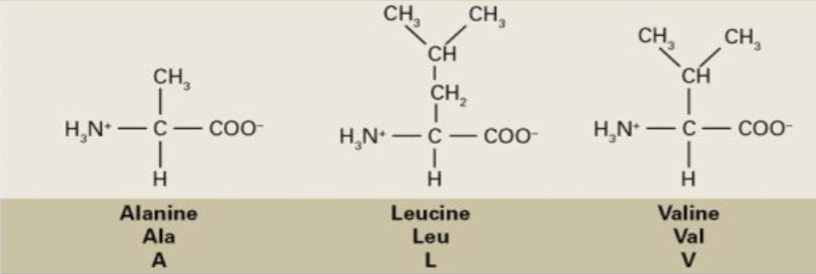
the # of amino acids for building protein
20
What are the amino acids that create the start codon
AUG
What are the amino acids to create stop codons
UGA, UAA, UAG
(U Get A, U Are Awesome, U Are Great)
What does nonessential vs essential amino acids mean
nonessential: can synthesize ourselves; make it on our own
essential: cannot synthesize our selves efficiently; get from food bc its less of an investment and energy to make it ourselves
**does not apply to plants bc they create #essential
In humans, what is the most costly amino acid
Arginine
NH2- and NH and NH2 in top group => urea cycle
3 rules of amino acid synthesis
different metabolic substrates
incorporate N2 into NH4 (amino groups)
feedback and control mechanisms to balance the levels of all 20 amino acids
What is the main nitrogen fixation cycle for amino acid biosynthesis
Nitrification of Nitrite (NO2-) → Nitrate (NO3-) → Denitrification to N2 → nitrogen fixation → Ammonia (NH4+)

How to attach nitrogen/ammonia to molecule to make amino acids?
Glutamine & free ammonium
What is the importance and difference between GS1 and GS2
compartmentation of isoenzymes of glutamine synthetase (GS)
GS1 only functions in cytosol
GS2 only functions in plastid
In plastids, which amino acids are derived from aspartate
Threonine
Methionine
Isoleucine
Lysine
Where are most biosynthesis of amino acids found in plant cell
Chloroplasts or plastids
What is the main mode of action of the Methionine-SAM cycle
transfer of methyl groups from methionine-SAM to charge and move methyl
What is unique about methionine
first amino acid in the start codon
Where in the pathway do substrates target when overproduced
the earliest enzyme → nip production in the bud without wasting any byproduct by going up the pathway
What is the key enzyme for branched chain amino acid synthesis
Acetohydroxy acid synthase (AHAS)
What is the function/mode of action of herbicides
inhibit certain pathways for plants biosyntheses
for AHAS enzymes, herbicides mimic the structure of Hydroxyethyl-TPP to glue the enzyme shut and inhibit function = kill plant
Why is ESPS synthase important
creates precursor chorismate for aromatic amino acids (rings)
the synthase can be targeted by RoundUp (Glyphosate) = no aromatic amino acids
What amino acid is biosynthesized through the shikimate pathway
Chorismate
What does allosteric regulation of chorismate mutase (CM) mean?
depends on context and where the substrate will bind to the enzyme => can either be promoter or inhibitor
What are the 5 enzymes of tryptophan biosynthesis
AnS (first step & feedback regulation)
PAT
PAI
IGPS
Tryptophan synthase (TS)
what is genetic redundancy
Multiple genes that have similar functions or code for the same products
some may be “dormant” when the DNA is methylated (regulated to demethylate when product is low in cell)
What do southern, western, and northern blot dectect?
Southern: DNA
Western: proteins
Northern: mRNA
4 parts of plant cell
cell wall
plasma membrane
cytoplasm & organelles
air space
what are membrane lipids built from
bilayer of amphipathic bipolar lipids (hydrophilic and hydrophobic tails — hydrophilic being on the outside and hydrophobic inside
What makes up the fluid mosaic membrane model
fluid membrane with:
integral membrane proteins
peripheral membrane proteins
GPI/lipid anchored proteins
oligosaccharide side chains
What is the plasmodesmata
channels through cell wall to connect neighboring cytoplasm
What is the function of the endoplasmic reticulum
the highway system to connect nucleus to rest of cell and cell to cell interactions
sorts proteins
movement of organelle
difference between the rough and smooth ER
Rough:
ribosomes
makes membrane protein (protein body ER)
Smooth:
no ribosomes
makes lipids (oil bodies)
Function of the golgi apparatus
work with the ER for retrograde transport (ER → golgi → ER)
rides along actin filaments with motors
what are the 3 mechanisms of membrane trafficking and recycling
cell expansion (use up membrane)
formation of clathrin-coated vesicles (CCV) (endocytosis)
direct lipid transfer from PM to ER
Function of vacuoles
build large cells for cheap (turgot pressure)
storage, digestion, pH homeostatis, defense
What organelles contain their own DNA
nucelus, mitochondria, plastids
(all double membraned)
how and why to remove cell wall
pectinase and cellulase
deliver reagents easier without the barrier of wall
what makes fungal cell wall diff than plant cell wall
fungal walls are made of chitin
long chain polymer of derivative of glucose (N-acetylglucosamine)
what is the function of plastids
handle the manufacture and storage of essential food and chemical compounds
what is the function of mitochondria
ATP synthase, electron transport chain complexes, porin channels with its own DNA in the mitochondria
What are peroxisomes
single membrane organelles for photorespiration, ROS control, and make long fatty acid chains
what is the function of the nucleus
store genetic material and safeguard/regulate molecules with the nuclear pore complex and cytosol
which organelles are important for the cell membrane system
plastma membrane, ER, golgi
What are the 5 amino acid derivatives
α-ketoglutarate
Oxlacacetate
3-phospho-glycerate
Phosphonoenol-pyruvate
Pyruvate
What is a lipid
organic compounds that are fatty acids or derivatives
insoluble in water
soluble in organic solvent
What are the 3 general classes of lipids
phospholipids
triglycerides (triacylglycerol)
steriods
Function of lipid molecules in plants
membrane structure
storage
protein modification
signaling
defense
cold weather protection
How many fatty acid tails do phosphatidylcholine have
2
How many fatty acid tails do tricylglycerol have
3
What is the structural and shorthand abbreviation difference between saturated and unsaturated fatty acids?
Saturated Fatty Acids:
(total # carbons: 0)
Only single carbon-carbon bonds (C-C); fully packed with hydrogen atoms. Straight chains that stack tightly (solid at room temperature)
Unsaturated Fatty Acids:
[Total Carbons]:[Number of double bonds] Δ^[positions of double bonds]
Contains one or more carbon-carbon double bonds (C=C), causing a "kink" or bend. Prevents tight stacking (liquid at room temperature).
Simple definition of the sanger sequencing process
(the chain-termination method) determines the exact nucleotide order of a DNA strand using regular building blocks and fluorescent stop signals
Steps of sanger sequencing
Denature: Heat the DNA to separate it into single strands.
Anneal: Cool the mixture = the primer to the target DNA.
Extend: The polymerase adds normal dNTPs to grow the new DNA strand.
Terminate: A colored ddNTP is randomly added instead of a normal base. It stops the chain because it lacks a required 3'-OH group.
Repeat: The reaction creates many fragments of different lengths, all ending in a colored stop base.
Separate and Read: Capillary electrophoresis sorts the fragments by size, and a laser reads the fluorescent colors in order from shortest to longest to reveal the DNA sequence.
What is one basic mechanism for plants to recognize fungal pathogens and how can one engineer disease resistance to fungus?
Pathogen-Associated Molecular Pattern pathway with PRR where cell-surface receptors detect chitin found in fungal cell walls
overexpress chitin receptors or plant chitinases to boost detection
What does amphipathic for mem. lipid mean
It has a hydrophilic (polar) head group AND hydrophobic tail(s) (fatty acids). In water the tails hide from water and the heads face it
How do sterols control membrane fluidity?
They wedge between phospholipid tails.
high temperature: restrain movement
low temperature: prevent tight packing (keep it from solidifying).
Net effect: a fluidity buffer.
State the fluid-mosaic model.
membrane is a fluid phospholipid bilayer in which proteins float like a 'mosaic'
Lipids and many proteins can diffuse laterally.
Components: lipid bilayer, integral proteins, peripheral proteins, lipid-anchored proteins, and oligosaccharide (carbohydrate) chains on the outer face.
List the 5 types of phospholipid movement
Lateral diffusion (neighbor swap on same side)
Rotation (spinning about the long axis)
Flexion (bend tail)
Bobbing
Flip-flop (transverse movement to the other side, need phospholipid translocators)
Structure of the nuclear pore complex (NPC).
Embedded where the inner and outer nuclear membranes fuse.
Parts: cytoplasmic filaments, cytoplasmic ring, luminal ring, scaffold, nuclear ring, central channel (transporter), and nuclear basket. Built from ~30 nucleoporin proteins.
How do proteins get through nuclear pores?
Small molecules (< ~40 kDa) diffuse freely.
Larger proteins need a nuclear localization signal (NLS) that binds importin = pulled through the central channel by binding FG-nucleoporins.
How does the Ran gradient make nuclear transport directional?
nucleus Ran-GTP causes cargo release. Export uses a nuclear export signal (NES) + exportin + Ran-GTP. Ran-GTP/GDP gradient gives direction and requires energy (GTP
List the all membrane systems/organelles
Plasma membrane, ER, Golgi, vacuoles, plastids (chloroplast, amyloplast; absent in fungi), mitochondria, peroxisome, nucleus.
How can you determine the subcellular localization of a protein? (list methods)
(1) Fuse a fluorescent protein (GFP) to your protein; express in protoplasts, image by confocal with organelle marker co-localization.
(2) Immunolocalization with a specific antibody (immunofluorescence)
(3) Subcellular fractionation + Western blot with organelle marker antibodies.
(4) In silico prediction (signal peptides)
When and how is the plant cell wall formed?
During cytokinesis
Golgi-derived vesicles guided by the phragmoplast (microtubules + actin) fuse at the cell plate = grows outward to fuse with the parent wall
The cell plate matures into the middle lamella, and each daughter cell then lays down its own primary wall.
List ALL major components of the plant cell wall
Cellulose microfibrils
cross-linking glycans (hemicelluloses) (bind cellulose)
pectins (middle lamella is pectin rich and is like a glue with pore size of wall)
structural proteins (PRP, GRP)
phenolic polymers lignin and suberin (secondary walls/special cells)
water
Cellulose: monomer, bond, and structure
Linear glucan chains of beta-D-glucose joined by beta-1,4-glycosidic linkages
held by hydrogen bonds into crystalline microfibrils
Which sugar nucleotides are the 'active building blocks' of wall polysaccharide synthesis?
UDP-glucose and GDP-glucose
Glycosyltransferases transfer the sugar from the nucleotide sugar to the growing chain, releasing UDP/GDP.
List the 3 families of Structural proteins of the wall
Hydroxyproline-rich glycoproteins (HRGPs)
Proline-rich proteins (PRPs)
Glycine-rich proteins (GRPs)
List Wall-related water transport pathways
Apoplastic: through cell walls and intercellular spaces (fast, but blocked by waterproof lignin/suberin in the Casparian strip).
Symplastic: through the cytoplasm via plasmodesmata.
Transcellular: crossing plasma membranes through aquaporins. Waterproof suberin/lignin forces water into the symplast/transcellular route at the endodermis.
How is an actin filament assembled and disassembled?
Dynamic cycle
adding ATP-bound G-actin monomers to the plus (ATP is hydrolyzed within the filament) end and disassemble by releasing ADP-bound monomers from the minus (pointed) end
Free ADP-actin is recharged to ATP-actin and reused = treadmilling. Capping protein blocks ends;
How are the cytoskeleton and the cell wall coordinated?
Microtubules lie beneath the plasma membrane and guide cellulose synthase complexes
Actin/myosin-driven vesicles deliver matrix polysaccharides and CESA to the wall. Wall status feeds back on the cytoskeleton.
List hydrophobic amino acics
Glycine, Alanine, Valine, Leucine, Isoleucine, Methionine, Proline, Phenylalanine, Tryptophan
List hydrophilic amino acids
Serine, Threonine, Cysteine, Tyrosine, Asparagine, Glutamine
List charged & acidic amino acids
Aspartate, Glutamate
List charged & basic amino acids
Lysine, Arginine, Histidine
Four major roles of nucleotides
Building blocks of nucleic acids
energy currency
activated intermediates/derivatives in biosynthesis
cell signaling
Purines vs pyrimidines
Purines (A, G): two-ring structure (6+5-membered fused).
Pyrimidines (C, T, U): single six-membered ring.
DNA: A, G, C, T.
RNA: A, G, C, U.
What are the two routes of nucleotide synthesis?
De novo pathway: build the ring from simple precursors (amino acids, CO2, formate/THF, NH3) on activated ribose (PRPP), costly in ATP.
Salvage pathway: recycle free bases/nucleosides by attaching them to PRPP (cheap, base + PRPP → nucleotide).
De novo pyrimidine synthesis: list enzymes in order (to UMP)
(CPS): Gln (NH3) + HCO3- + 2 ATP -> carbamoyl phosphate.
(ATCase): + Asp -> carbamoyl aspartate.
Dihydroorotase: ring closure -> dihydroorotate
Dihydroorotate dehydrogenase (DHODH; uses CoQ or NAD+) -> orotate
Orotate phosphoribosyltransferase (+PRPP) -> OMP
OMP decarboxylase -> UMP.
Regulation of pyrimidine synthesis
Feedback at the first committed enzyme (CPS): PRPP (and ATP) activate (positive);
end products UDP/UTP (and downstream nucleotides) inhibit (negative).
PRPP availability also acts as feed-forward control.