[12B] Exercise, Fitness & Performance Nutrition
 Call Kai
 Learn
 Practice Test
 Spaced Repetition
 Match
 Flashcards
 Knowt Play
1/51

There's no tags or description
Looks like no tags are added yet.
52 Terms
Exercise for at least ____ min/week promotes
150
increased fitness and reduces the risk of chronic diseases (obesity, heart disease, stroke, high BP, T2D, osteoporosis, some cancers)
The Canadian 24-hour movement guideline presents
“healthy 24 hours” as a balance between movement, rest (sedentary activity), and sleep
What is unique about the Canadian 24-hour movement guideline, what does it integrate instead
avoids focusing on specific movement behaviours (e.g., get 150 minutes of “moderate-intensity exercise” per week)
integrates all “movement behaviours” (physical activity, including but not only exercise) with sedentary and sleep behaviours
Core recommendations of Canadian 24-hour movement guideline (C24MG) (3)
Move more: Add movement throughout your day; include a variety of types and intensities of activity.
moderate to vigorous aerobic physical activities (150 mins/wk)
Reduce sedentary time: Limit sedentary time to ≤8 hours per day, including ≤3 hours of recreational screen time. Break up long periods of sitting where possible.
Sleep well: Set yourself up for 7-9 hours (aged 18-64) or and 7 to 8 hours (65+ years) of good quality sleep on a regular basis.
Consistent bed and wake up times are also key.

Difference between the 18-64yo vs. 65+ C24MG (2)
Addition of activities that train balance in 65+ guidelines
Slight change from 7 to 9 (18 to 64) to 7 to 8 (65+) hours of sleep
Following the C24MG associated with what benefits (5)
Lower risk of mortality
Lower risk of CVD, HTN, T2D, adverse blood lipid profile, wt gain
Lower risk of several cancers
Lower risk of anxiety, depression, and dementia
Improved bone health, cognition, quality of life, and physical function.
% of Canadians male vs. female meeting C24MG recommendations
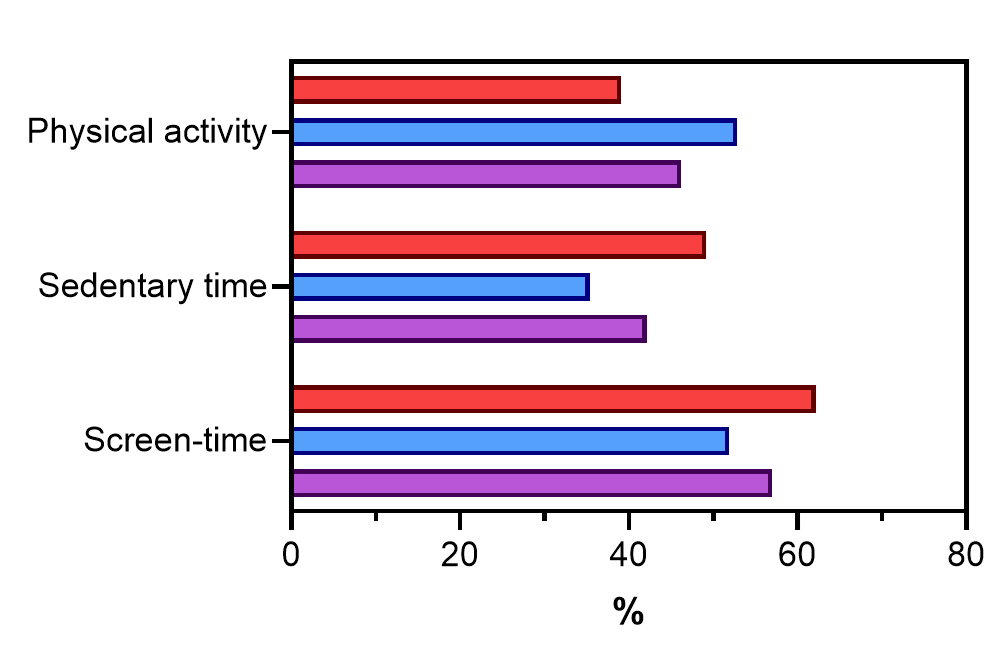
How does exercise induce a variety of integrated physiological effects

Physical fitness on cardiorespiratory endurance
how long a task can be performed (improved by aerobic exercises)
Physical fitness on m. strength and endurance
power from force generation by the muscles (improved by strength and resistance training that induces hypertrophy)
Physical fitness on flexibility
improved ROM and speed (improved by stretching)
Physical fitness on body composition
more lean body mass improves all aspects of fitness
What is VO2 max, what is the larger VO2 max
max exercise oxygen capacity

Explain aerobic vs. anaerobic activity (including intensity and examples)
Aerobic (cardio) - trains cardioresp system
slower (prolonged), more efficient
low-medium intensity (60-85% HR max)
examples: running, swimming, cycling
Anaerobic - trains capacity of m. without O2 E metab
large amounts of ATP very quickly, not sustainable (fuel depletion and acidosis)
typically higher HR (>85% HR max)
examples: sprint, hockey, lifting
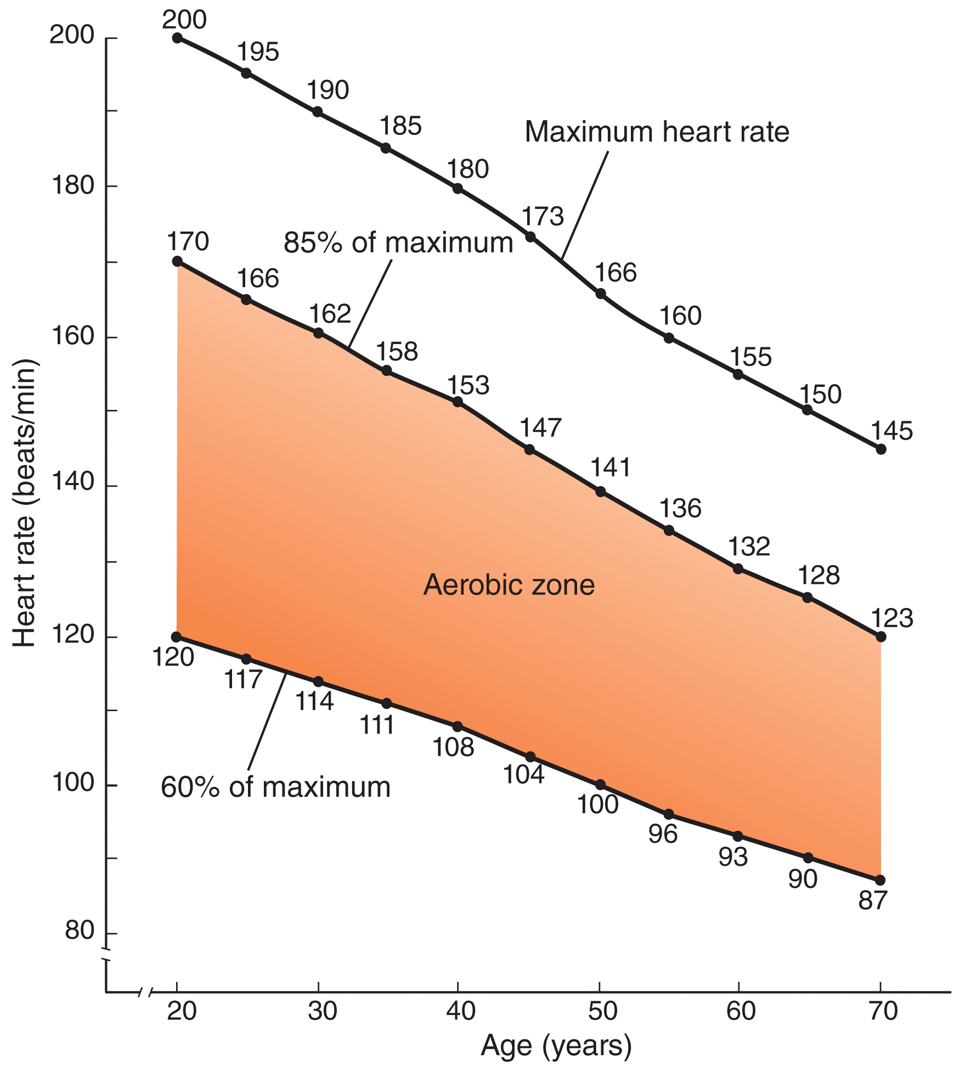
Way of measuring exercise
HR
Balance between use of aerobic vs. anaerobic metabolism depends on (3)
Exercise duration
Exercise intensity
Conditioning (training) of the individual, which modulates muscle mass, metabolism, oxygen transport capacity, onboard energy reserves…
What is the overload principle
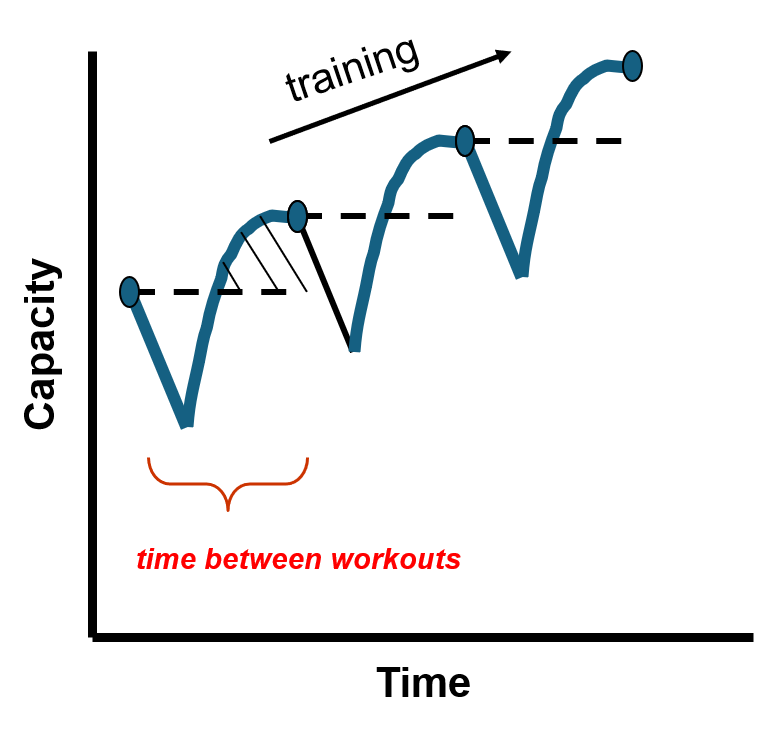
body adapts to stress to stress placed upon it (i.e., the same exercise becomes less effective with successive bouts). Must increase intensity or duration as you go
Exercise causes how much E demand
extreme increase in E demands in muscle tissue (~200x in seconds!)
Compare the cardiorespiratory system response to metabolic response
cardiorespiratory system to increased demands is much slower than metabolic response
Increased O2 and nutrient delivery delayed relative to increased metabolic flux. Such as epinephrine
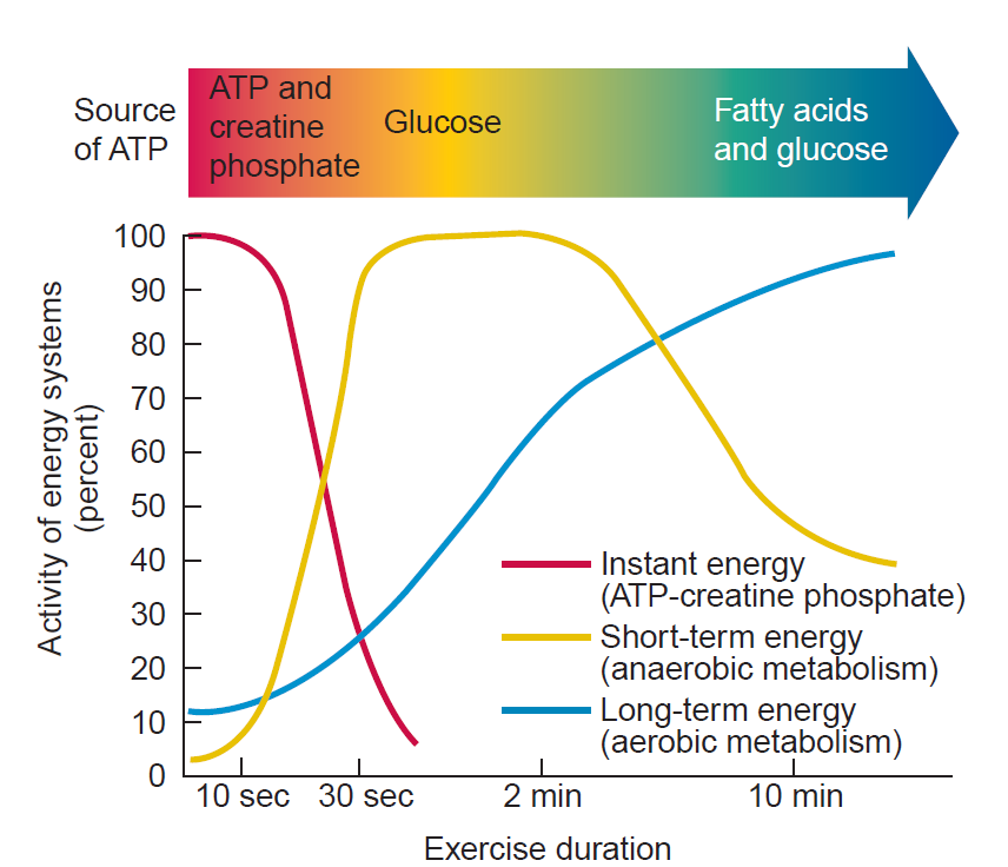
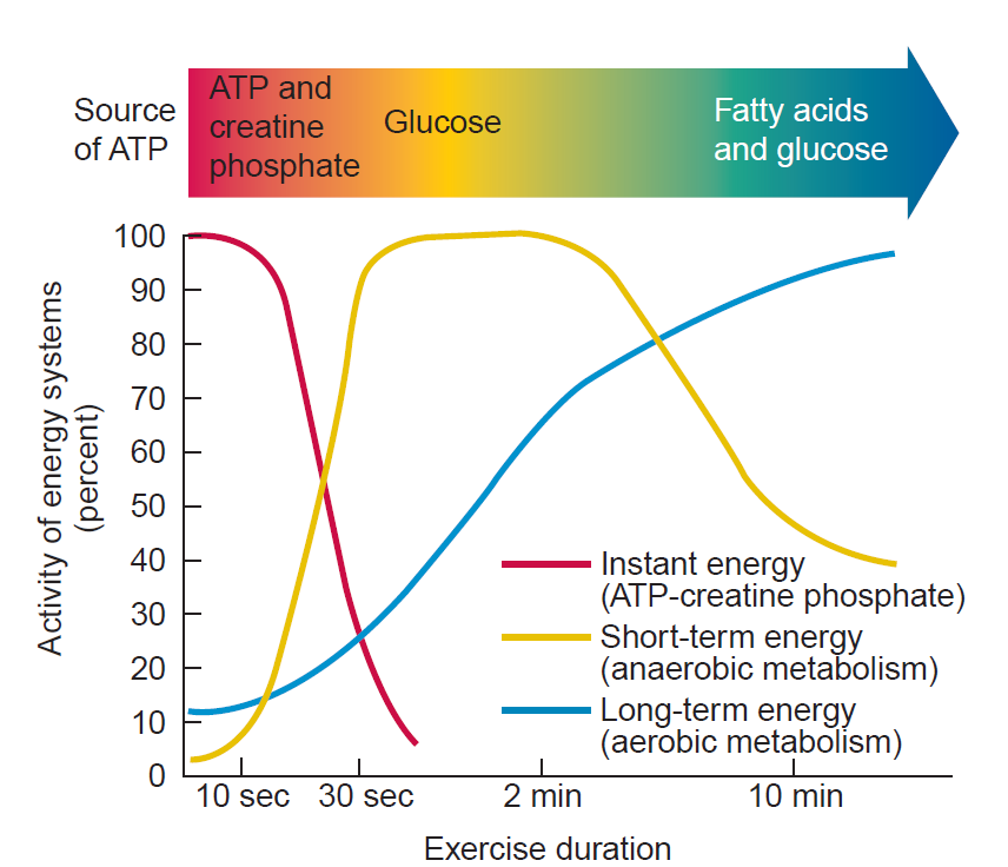
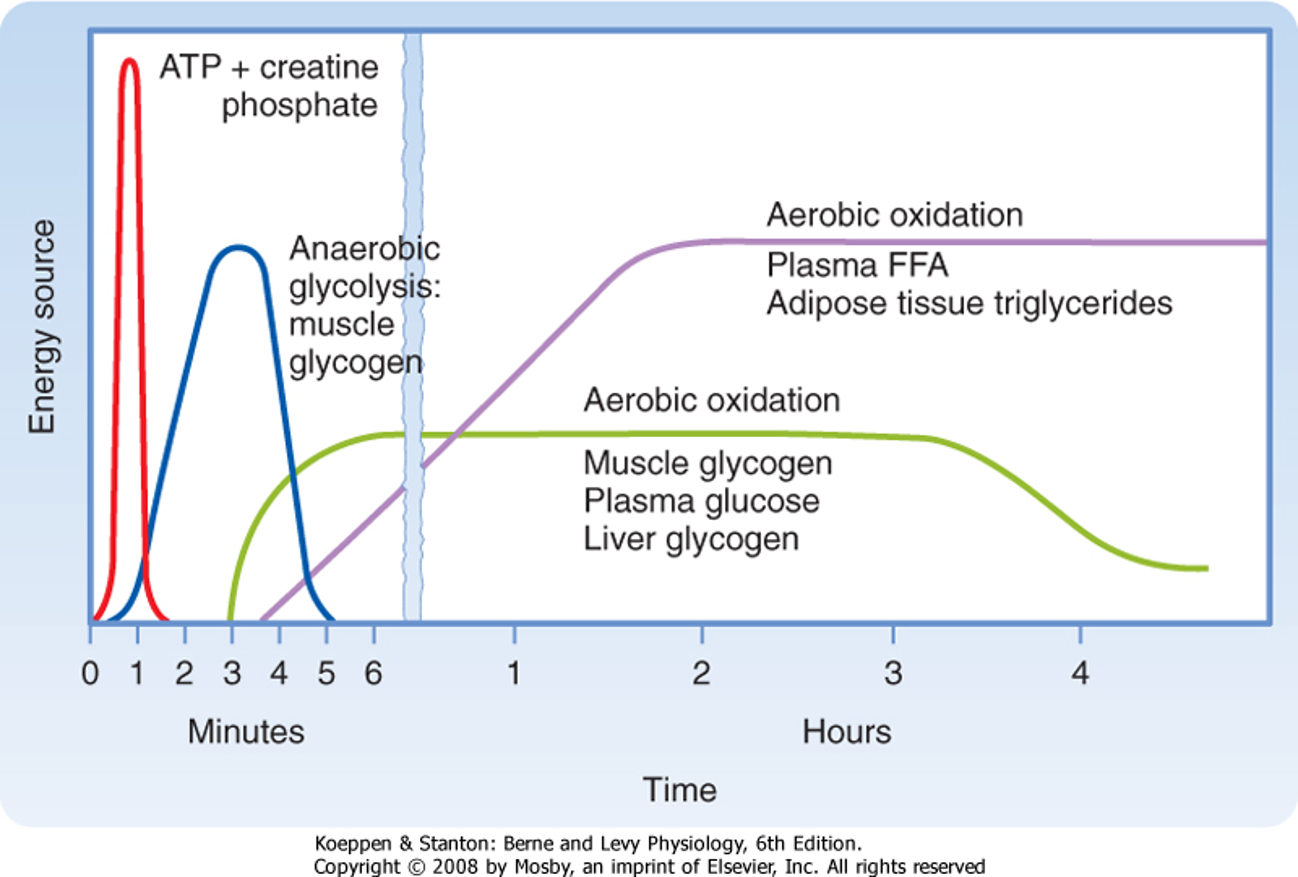
First 10-15 seconds of exercise
fueled by on-board stores of ATP and phosphocreatine (“creatine phosphate”) until cardioresp comes on line, rely on muscle

within 30s of exercise
Once available ATP and PCr are depleted, m. cells turn to glycolysis, which is activated at full capacity
What happens when m. O2 demand exceeds O2 availability in tissue
Pyruvate > lactate + H+ direction of LDH reaction dominates to regenerate NAD+ for use upstream in glycolytic pathway
Allows you to maintain glycolysis at expense of lactate and proton synthesis
Leads to accumulation of protons in tissues (“lactic acidosis”)
Exercise after 2-3 min
cardioresp system catches up with increased metabolic demands:
Increased ventilation and HR improves supply of O2 and nutrients (e.g., glucose) to m., supporting more sustainable ATP production via aerobic metabolism
Aerobic metabolism can use all macronutrients, but glucose and fatty acids are preferred fuels for ATP production….
What macronutrients can aerobic metabolism use
All BUT glucose and fatty acids are preferred fuels for ATP production
List the types of fuels used during aerobic exercise (3) in order of preferred/best fuels
Carbohydrates (Glycogen)
Glycolysis continues, but is no longer the primary source to ATP (outpaced by OXPHOS)
Pyruvate from glycolysis > Acetyl CoA > Krebs
Lipids (Fatty acids
Triglycerides arrive from adipose tissue and broken down in fatty acids and glycerol.
FAs > Acetyl-CoA from Beta-ox > Krebs
Proteins
Amino acids only used in significant amounts if other fuels depleted.
Carbon skeletons can enter Krebs or be converted into glucose (gluconeogenesis).
Amino acids are least E efficient
Another way of describing first few minutes of exercise: 0-15s, ~15s-2min, 2+ mins
0 to 15s (instant) = what the muscle has ready for immediate use
~15 s to 2 mins (short-term) = what the muscle can make by itself with existing materials
2+ mins (sustained) = what the muscle can make with support from the cardiorespiratory system, including importing new materials
When exercise intensity increases, rely more on
CHO fuels
ATP is yielded directly from ________, but not ________ (yields ___________)
glycolysis
beta-oxidation (yields acetyl-CoA)
Is beta-oxidation or glycolysis faster
Glycolysis is faster than beta-oxidation (shorter pathway to yield ATP)
Which CHO type metabolism requires more O2
lipids
What can prolong window for maximum intensity (2)
Training and certain diets (e.g., carb loading)
What types of foods preferred for athletes, why
Energy dense
due to physical limitation of stomach
Athlete AMDR considerations
Same AMDRs for CHO, lipids, and proteins as general population
What can improve endurance by increasing glycogen stores
carbohydrate loading
Similarity between carbohydrate loading and carbohydrate fueling
Athlete consumes more carbohydrates than AMDR
Differences between carbohydrate loading and carbohydrate fueling
Carbohydrate loading (stored) “tricks” body into storing extra glycogen in prep for exercise
A few days before an event, decrease exercise (=more sedentary) and greatly increasing carbohydrate intake
Excess carbohydrates stored as glycogen (so you have glycogen ready for exercise)
Complex carbohydrates preferred = more sustained energy source
Carbohydrate fueling (in the moment) delays carbohydrate depletion so they can be used as fuels for longer.
Glycogen stores last ~ 1 h during exercise
For activities >1 hour, fueling during exercise is recommended to add carbohydrates to blood so they can be used as a fuel
Simple sugars such as pure glucose preferred for immediate use

Fat stores in athletes
Unlike CHO, fat stores (~114,000 kcal total) unlikely to be depleted even during intense endurance events, and “fat loading” is unlikely to benefit performance
Protein for muscle growth and exercise
needs may increase to support m. synthesis (hypertrophy), repair, and metabolism. However…
Muscle growth stimulated by exercise, not by increasing protein intake
Higher protein intake will not improve performance unless individual is deficient
Therefore, little to no benefit of consuming protein above RDA (typically ~1.2 to 2 g/kg/day for training)

What risk with electrolyte increases with prolonged exercise, what is recommended, how long is water sufficient for
Hyponatremia (esp in hot and humid environments)
Increased fluid intake is recommended for all exercises.
Water is sufficient for <1 hour
Fluids + carbohydrates and electrolytes for prolonged activity
Special nutritional concerns for athletes (overall diet) (4) why
Iron: Athletes, especially females, are at risk of reduced Fe stores due inadequate intake + increased needs (erythropoiesis, myoglobin synthesis, Fe proteins in ETS) + increased losses (sweat, injury)
Vitamin C, E, and other antioxidants: Exercise induces oxidative stress: mitochondrial ROS production, ischemia-reperfusion of tissues, etc.
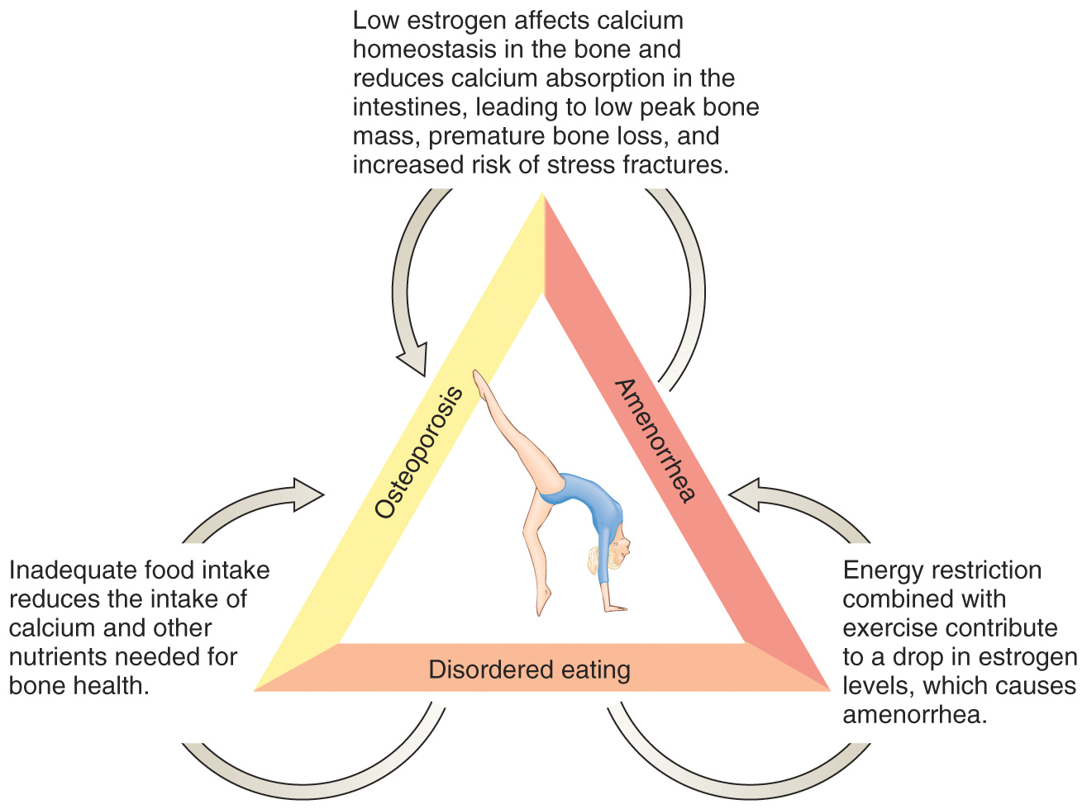
Calcium: Concern for female athletes due to Female Athlete Triad.
Does antioxidant supplementation improve performance
No
Describe the female athlete triad and 3 factors
Disordered eating due to pressures to maintain lean, thin, athletic bodies.
E restriction paired with excessive exercise upsets hormonal balance
Low estrogen levels leads to amenorrhea (menstruation absence or delays)
Low food intake and low estrogen impact nutrient intake, especially Ca, increasing risk of injury and osteoporosis
Ergogenic aids
Substances, devices, or methods designed to improve athletic performance, strength, and endurance
Impact of ergogenic aids as supplementation for athletes
unlikely to benefit an individual unless that individual is deficient in that micronutrient
Is an athlete likely to be deficient in micronutrients compared to general population, why
No
Athletes typically consume way more calories than regular person
Protein as a supplement for athletic performance
Claimed to enhance m. growth or improve performance, but excess protein does not trigger increased muscle growth or strength.
Protein contained in supps does not meet needs any better than protein found in a balanced diet.
Protein must be paired with exercise to see effect
Amino acids as a supplement for athletic performance
All 20 amino acids are required for protein synthesis, so supplementing only some amino acids is less likely (even more than protein) to improve muscle growth and strength.
Various claims: glycine helps synthesize creatine; ornithine, arginine, and lysine stimulate growth hormone release; glutamine promotes glycogen synthesis and improves weight-lifting performance by preventing acid accumulation; and branched amino acids (leucine, isoleucine, valine) as a “third fuel” alongside glucose and triglycerides/fatty acids
Overall, there is a lack of evidence in support of these claims.
Creatine (Cr) as a supplement for athletic performance
Supported for high, intense, short, performance
Nitrogen-containing compound used to synthesize phosphocreatine (PCr)
PCr + ADP à Cr + ATP via creatine kinase
Cr supplements increase Cr and PCr levels in muscle and can improve performance in high-intensity exercise lasting ≤30 seconds.
M. mass increase may be due to water retention caused by Cr uptake
Beta-hydroxyl-beta-methylbutyrate (HMB) as a supplement for athletic performance
Metabolite of amino acid leucine
Claimed to increase strength and lean body mass by decreasing muscle breakdown and speeding muscle repair, evidence is lacking
Bicarbonate as a supplement for athletic performance
Claimed to neutralize acid build up and thus delay fatigue and improve performance. Related to lactic acid
Some evidence that it can improve performance and delay exhaustion in short duration (1 to 7 mins) sprinting sports (e.g., sprint cycling)
Side-effects are common and include abdominal cramps and diarrhea.
Carnitine as a supplement for athletic performance
part of transport system that brings free fatty acids into mitochondria for beta-oxidation
Marked as “fat burners,” but no evidence that supp increases use of fat during exercise or that it improves endurance
Carnitine is a nonessential nutrient that is readily synthesized by body from lysine and methionine
Medium chain triglycerides (MCT) as a supplement for athletic performance
small and soluble enough to be absorbed directly into blood; component of some ketogenic diets
MCTs ingestion increases blood FFA, but no support that MCT supplementation increases endurance, spares glycogen, or enhances performance.