Substituents/functional groups and nomenclature
 Call Kai
 Learn
Learn Practice Test
 Spaced Repetition
 Match
Match Flashcards
 Knowt Play
1/95

There's no tags or description
Looks like no tags are added yet.
Name | Mastery | Learn | Test | Matching | Spaced | Call with Kai | Chat |
|---|
No analytics yet
Send a link to your students to track their progress
96 Terms
List carbonyl functional groups
Ketones, aldehydes, carboxylic acids, ester, amides
List hydrocarbon functional groups
Alkanes, alkenes, alkynes
List simple oxygen functional groups
Alcohols, ethers
How to identify alkanes
Single carbon-carbon bond (C-C)
How to identify alkenes
Double carbon-carbon bonds (C=C)
How to identify alkynes
Triple carbon-carbon bonds
How to identify alcohols
Contains hydroxyl group (-OH) bonded to carbon
How to identify ethers
Oxygen atom bonded between two carbon chains (R-O-R)
How to identify ketones
Carbonyl carbon (C=O) sits between two carbon (R) groups
How to identify aldehydes
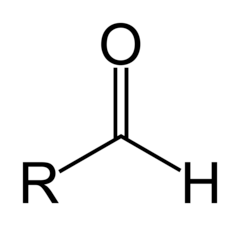
Carbonyl group (C=O) is attached to a hydroxide (-CHO) group at end
How to identify carboxylic acid
How to identify ester group
Carbonyl group (C=O) directly bonded to a second, single-bonded oxygen atom that continues into another carbon chain. Generally -C(=O)-O-C
How to identify amides
Carbonyl (C=O) attached to a nitrogen
What is a carbonyl?
C=O
How to identify an amine
Contains a nitrogen atom single bonded to carbons R3N. Either has lone pair or hydrogen as fourth bond.
How to identify alkyl halides
Carbon bonded to halogen R-X, X=F, Cl, Br, I
How to identify an aryl group
Flat, ring-shaped carbon structure with alternating double bonds connected to larger molecule. Has hydrogen removed. Ar-
How to identify sulfide/thioether
R-S-R'
Thiol
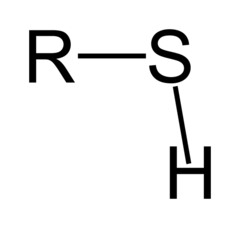
R-SH
Functional group of an alkyl halide
Halo group
Functional group of an alcohol
Hydroxy group

Functional group of an ether
-OR alkoxy group

Functional group of a thiol
Mercapto group
Functional group of a sulfide
-SR alkythio group
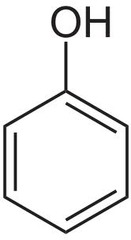
Hydroxyl + carbon + aromatic hydrocarbon
Aromatic alcohol
Aromatic hydrocarbon w 1+ benzene ring
Arene

Carbon-nitrogen triple bond
Nitrile

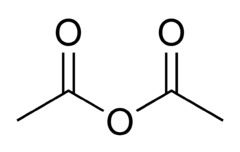
Two acyl groups with a common central oxygen (RCO)2O
Acid anhydride
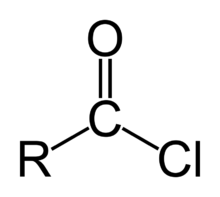
Carbonyl + chlorine, R-COCl
Acyl/acid chloride
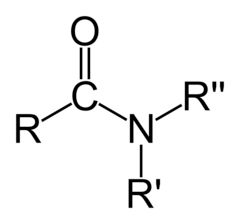
Carbonyl + nitrogen R-C(=O)-NH2
Amide
Hydrogen in hydroxyl replaced by organyl RCOOR'. Derived from acid, organykl from alcohol
Ester
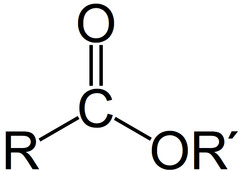

R-COOH
Carboxylic acid
Carbonyl inside carbon chain/ring
Ketone
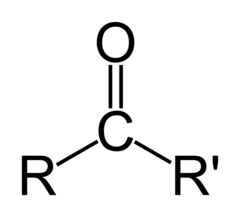
Carbonyl + hydrogen. -CHO
Aldehyde
R-S-R'
Sulfide

R-SH
Thiol
R-NH2, R2NH, R3N
Amine

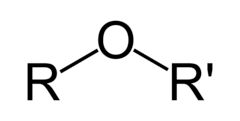
R-O-R'
Ether
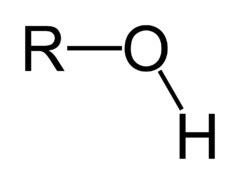
R-OH
alcohol
R-X
alkyl halide

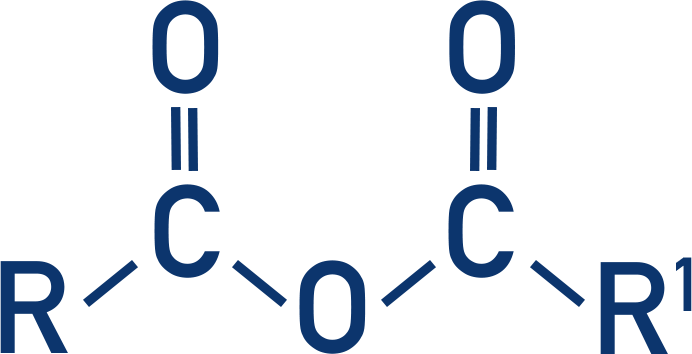
Two carbonyls w a central oxygen -C(=O)-O-C(=O)
Anhydride
Carbonyl group + halogen
Acid halide


Halogen bonded to sp2-hybridized alkene carbon (R-CH=CH-X). Low reactivity
Vinyl halide
Halogen bonded to a carbon in an aromatic ring
Aryl halide

Ethyl group
Two-carbon substituent branch
All substituents are functional groups, but not all functional groups are substituents
False. Substituents is any group of atoms that replaces a hydrogen on a parent hydrocarbon chain, whereas a functional group is a specific substituent that dictates the characteristic chemical reactions of a molecule.
Meth-
1 carbon
Eth-
2 carbons
Prop-
3 carbons
But-
4 carbons
Pent-
5 carbons
Hex-
6 carbons
Hept-
7 carbons
Oct-
8 carbons
Non-
9 carbons
Dec-
10 carbons
Standard layout of IUPAC nomenclature
Prefix (secondary substituent) + parent carbon chain (bond type) + suffix (primary substituent)
Hierarchy order for IUPAC suffixes
Carboxylic acids > aldehydes > ketones > alcohols > alkenes/alkynes > alkanes/halides
Aldehyde suffix
-al
Ketone suffix
-one
Carboxylic acid suffix
-oic acid
Ester suffix
-oate
Amide suffix
-amide
Halide prefix
halo-
Alcohol prefix
Hydroxy-
Amine prefix
Amino-
Nitro prefix
nitro-
Amide vs amine
Both have nitrogen, but amide has a carbonyl
Phenyl group C6H5—
Cyclic chemical group derived from benzene with one hydrogen atom removed

Benzyl group C6H5CH2—
Benzene ring + methylene

Benzene C6H6
Aromatic ring alternating double/single bonds with 6 carbons

Alkyl halide nomenclature
Fluoro-, chloro-, bromo-, iodo-
Alcohol nomenclature
hydroxy-, -ol
Ether nomenclature
alkoxy-, methoxy-
Amine nomenclature
-amine, amino-
Thiol nomenclature
-thiol, mercapto-
Aldehyde nomenclature
-al, oxo-
Ketone nomenclature
-one, oxo-, keto-
Carboxylic acid nomenclature
-oic acid, carboxy-
Ester nomenclature
-oate
Amide nomenclature
-amide, amido-
Acid anhydride nomenclature
-oic anhydride
Isopropyl / propan-2-yl
A branched chain of 3 carbons attached to the main molecule at the middle carbon

Butyl / isobutyl/ sec-butyl / tert-butyl
Various 4-carbon branching motifs
But- vs tetra-
But- indicates a parent carbon chain of four carbons, whereas tetra- is a numerical multiplier indicating four identical substituent groups attached to that carbon
Hydrocarbon suffixes
-ane (single bonds) -ene(C=C) -yne (C≣C)
Hydrocarbon combinations
-diene → 2 double bonds. -triene → 3 double bonds. -diyne → 2 triple bonds
Locant
number or letter that shows position of atom/group/chain on parent
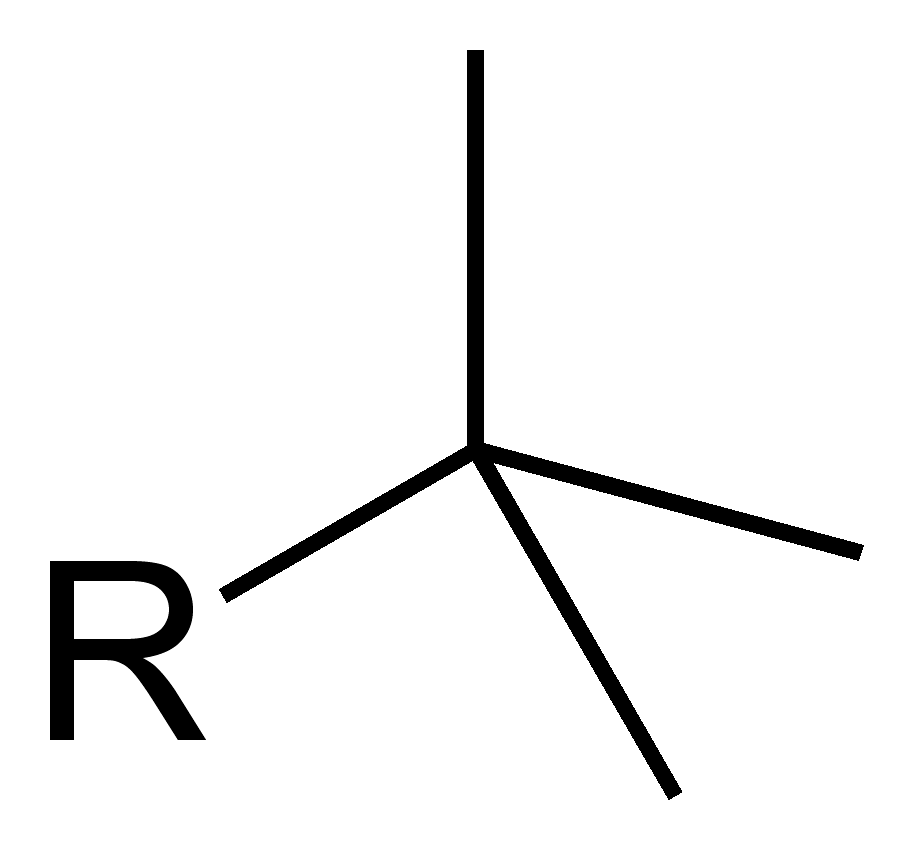
tert-butyl / 1,1-dimethylethyl
four-carbon branched alkyl group
n-
Stands for “normal” and means a molecule has a straight, continuous, unbranched chain of carbon atoms
neo-
All but two carbons form a continuous chain (common)
Disulfide
Covalent bond between two sulfur atoms
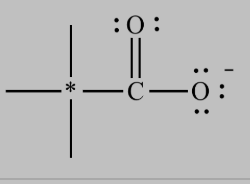
Carboxylate
RCOO-`
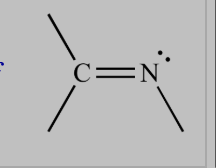
Imine
C=N

Nitro
-NO2