Conservation Science 8,10,11,12
 Call Kai
 Learn
 Practice Test
 Spaced Repetition
 Match
 Flashcards
 Knowt Play
1/59

There's no tags or description
Looks like no tags are added yet.
60 Terms
adaptive managment
a scientific approach that employs a structured process of learning by doing
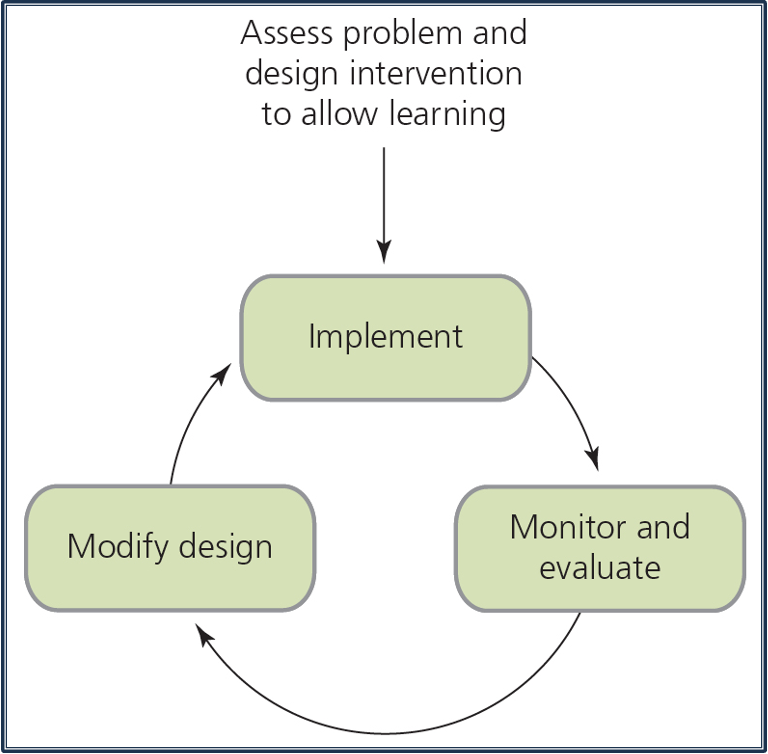
reactive managment
there is no systematic attempt to build opportunities for learning into the design
passive management
the course of action remains constant, often with no monitoring even attempted
meta anaylsis
synthesizes findings across numerous studies and statistically evaluates treatment effects
three main questions that help urge more conservation plans
1) How many individuals are in the population? 2) What is the trend in the population size over time? 3) What is the likelyhood of extincition.
why it is generally difficult to obtain an estimate of the number of individuals in a population for most species?
1) expensive 2) time consuming 3) scientifically challenginly
Be able to explain the quadrat method for estimating the population size for a species.
For what kind of species is this method most useful?
The quadrat method is most useful for sessile or slow-moving species, such as plants or certain marine organisms. It involves laying down square plots in a habitat to sample and estimate population density based on counts within these designated areas (transects).
Relative Abundance
the number of individuals spotted or trapped, standardized “per unit of effort.”
Poop, footprints, and other signs of the animal.
unit of effort is the area you are measuring.
mark-recapture
these techniques (e.g., Lincoln-Petersen) can be used to estimate population sizes of mobile animals ( N= ms/r)
6 assumptions of marked-recaptured method
Marking does not affect survival of individuals.
Marking does not affect probability of recapture.
Upon release, marked individuals mix with entire population
Captured individuals are representative of the whole population.
The population is closed and stable.
The marks are not lost.
why/how can estimates of a population’s genetic diversity be used as an indication of past population sizes of that species?
Genetic diversity reflects how many different gene variants exist in a population. Genetic diversity reflects past population sizes primarily through the effects of genetic drift.
discrete time model
Used to estimate population trends
Nt+1 = Lamba * Nt
Lamba = population growth rate
λ = Nt+1 / Nt
life-cycle diagram
illuminate what measures are needed to produce a more realistic population model

PVA (Population Variability Assesment)
a quantitative assessment of the probability that a population will become extinct during some specified time horizon
MVP (minimum viable population)
a population size above which a species has a good chance of surviving over some specified time horizon
What is meant by the term habitat fragmentation?
is the transformation of contiguous habitat into a patchwork of small, isolated remnants
What is the focus of the scientific discipline called landscape ecology?
focuses on effects of spatial patterning on interactions among species and their environment.
In the hierarchy of ecological disciplines, landscape ecology falls between community ecology and ecosystem ecology
The planning of an “ideal” network of protected areas was said to consist of what four fundamental questions about the individual areas that make up the network?
How many protected areas should there be?
How big should each one be?
What shape should each
one be?How near to other protected areas should they be?
Which two famous ecologists were responsible for formulating the theory of island biogeography?
Robert H. Macarthur and Edward O. Wilson
The equilibrium theory of island biogeography is based on a balance between the rates of which two processes regarding habitat patches? (i.e., the number of species predicted to occupy a patch is determined by the rate of _____ and the rate of _____.)
colonization and extinction
According to the equilibrium theory of island biogeography, the rates of extinction and colonization depend on which two main characteristics of a patch of habitat?
the size and relative location/isolation
To what phenomenon does the term faunal relaxation refer?
the decrease in diversity after reducing the size of a patch
To what phenomenon does the term extinction debt refer?
The number of species predicted to become extinct after a reduction in patch size
Be familiar with (and able to succinctly explain) the SLOSS debate
is an enduring focus of conservation science (“single large or several small” pieces of land debate)
A single large area will have higher species richness than the small areas if the species composition is highly nested
Data sometimes show that collections of small habitat fragments harbor more species than a single large patch
The SLOSS debate often become moot of the priority is not just to preserve the greatest number of species
What geometric property of habitat patches does fragmentation affect? (Hint: Think in terms of edge and interior.)
Fragmentation increases proportion of edge habitats relative to interior habitat
provide/recognize examples of edge effects that are due to abiotic environmental conditions as well as to changes in interspecific interactions
changes in biotic interactions, such as increased exposure to predators
For a patch of a given area, what shape will have the smallest edge-to-interior area ratio
a circle
What do ecologists mean by the term metapopulation?
A collection of spatially isolated subpopulations of species that interact at some level
In a metapopulation model, the extinction risk of an entire metapopulation depends on a balance between the rates of which two factors?
extinction and colonization
four major simplifications that are inherent in most models of metapopulation dynamics (as listed in lecture and detailed in the textbook)
Patches are considered as either “occupied” or “unoccupied”
Complexities of population growth within subpopulations are typically ignored
Probability of colonization does not differ among patches
Probabilities of extinction does not differ among patches
What do the variables f and f* refer to in a metapopulation model?
rates of extinction and colonization affect the fraction of patches occupied (f)
In terms of a metapopulation model, in order for f* to be greater than zero, the probability of which factor has to be greater than the probability of which other factor?
the probability that the patch of colonization is bigger than the patch of extinction
In the language of a metapopulation model, why does the destruction of habitat increase the probability of extinction? (Hint: think in terms of colonization success.)
Destroying habitat increases the distance between patches, thereby reducing colonization success (c)
Metapopulation models have taught conservation scientists the following important lessons
1. unoccupied patches can still be essentail for the survival of a metapopulation
2. reduced dispersal success can cause a metapopulation to go extinct
3. the metapopulation can be extinct before the last patch is gone.
4. arrangements and connectivity of patches matter in the success of a metapopulation.
What do conservation scientists mean by the term dispersal corridor?
strips of habitat that link larger habitat patches
all meta population equations
What is the general definition of ecological restoration?
the practice of assisting the recovery of habitat that has been degraded or destroyed
What are the three main aspects of an environment (or habitat, or area) that restoration activities will most commonly target?
Restoration activities most commonly target soil, hydrology, and vegetation
What is meant by the term remediation in the context of ecological restoration?
is the active removal of pollutants from an environment
Contaminated soil may be collected from a site, transported to a toxic-waste facility for treatment, and returned to the site
What is meant by the term bioremediation in the context of ecological restoration?
involves using living organisms that can store/remove/detoxify pollutants (fungi, bacteria, algae, plants, nanoparticals(oil spills)).

In terms of the relative productivity and stress levels of damaged areas, which combinations of factors are predicted to require active restoration, as opposed to letting spontaneous succession occur? (See Figure 11.3.)
intermediate conditions are the most conducive to recovery without active restoration
what plant traits were considered when choosing species to revegetate an area for ecological-restoration purposes?
Restoration plants were chosen for traits like growth speed, pollution tolerance, or being soil stabilizers (Kudzu was a soil stabilizer, then it bacame invasive)
What is the drawback of using commercial seed mixes to revegetate an area for ecological-restoration purposes?
Non-locally sourced seeds can result in poorly adapted plants and outbreeding depression with local plants
considered the best strategy of plant choices for revegetating an area when simultaneously trying to maximize genetic variation while avoiding the risk of outbreeding depression and the creation of invasive-species problems?
to collect seeds from as many individuals as possible from a single nearby population
What is meant by the nickname nurse plant?
plant species that increase the survival of newly germinated seedlings (of the same or other species)
Miesquite trees for sequoia cacti
Why is it important that conservationists describe specific reference states in the planning process for an ecological-restoration project?
to define goals and asses ultimate success
shifting baselines
a change across generations in people’s perceptions of what is normal for an ecosystem
outbreeding depression
reduction in the survival or reproductive fitness of offspring produced through outbreeding
Reintroduction
the re-establishment of a population that has become extirpated (locally extinct)
Re-establishment of grey wolves has resulted in a trophic cascade that has restored a diverse, functioning ecosystem
translocation
moving individuals, often to sites they have never been before & often due to loss of habitat (whooping crane)
conservation reliant
require constant life-support services (the california Condor)
rehabilitation
entails capturing individuals, administering a treatment, then releasing them back into the wild (sea otter getting cleaned after an oil spill)
ex situ conservation
the protection of species outside their natural habitats
AZA-accredited zoos
Arboretum of VA
The national aquarium
The U.S. Botanic Garden
species survival plans (SSP)
involving captive-breeding programs to increase genetic diversity prior to reintroduction of animals into the wild. (mill mountain zoo)
two stratgies of banking genetic information
preserving seeds
freezing genetic material
adaptive managment
a scientific approach that employs a structured process of learning by doing
reactive managment
there is no systematic attempt to build opportunities for learning into the design
passive management
the course of action remains constant, often with no monitoring even attempted
meta anaylsis
synthesizes findings across numerous studies and statistically evaluates treatment effects