Foundations Exam 2 (L9 - L17)
 Call Kai
 Learn
 Practice Test
 Spaced Repetition
 Match
 Flashcards
 Knowt Play
1/355

There's no tags or description
Looks like no tags are added yet.
356 Terms
L9
**chronic hypertension therapies
1st line → ACEi, ARB, thiazide, CCB
2nd line → beta-blockers
resistant htn → alpha blockers
used for management of benign prostate hyperplasia (BPH) and some off-label indications
**-lol, -olol, -alol, -ilol chemical nomenclature
aryloxypropanoloamines; multi-ring structures
**-lol, -olol, -alol, -ilol pharmacologic nomenclature
beta-adrenergic receptor blockers (beta-blockers)
act at beta-receptors located in various organs in the body
**beta1 receptors
catecholamines (norepinephrine) binds to beta1 receptors and cause inc cardiac automaticity and conduction velocity = inc heart rate
release renin which leads to bp elevation
more likely located on cardiac muscles, but not exclusively
relates to bp
**beta2 receptors
cause relaxation of smooth muscles such as in the lungs
peripheral vasodilation
skeletal muscle stimulation (tremors)
work primarily in the pulmonary tissue and the periphery
**alpha1 receptor
bronchodilation and vasoconstriction effects
found in blood vessels
some beta-blockers exhibit alpha-blocking properties - mixed alpha1/beta-blockers
labetalol
carvedilol
beta-blocker mechanism of action
dec BP by competitively blocking both beta1 and beta2 adrenergic receptors
results in dec HR and myocardial contractility
some block alpha1 receptors
dec peripheral vasoconstriction (lowers BP)
intrinsic sympathomimetic activity (ISA)
partially stimulate beta receptors while blocking catecholamines
do not lower HR to the same degree as other beta-blockers

**cardio-selective beta blockers
target beta1 receptors preferentially; affect heart; more effect on heart rate
most become more non-selective in nature at higher doses
cause a larger effect on HR
have a smaller effect on BP
does not always correlate w what the specific beta-blockers are used for
**non-cardio selective beta blockers
do not lower HR as much as selective beta-blockers
cause more BP lower by either alpha-blocking properties or NO vasodilation
can cause bronchoconstriction
must be avoided in patient w a history of asthma
used w caution in patients w COPD
does not always correlate w what the specific beta-blockers are used for
beta-blocker therapeutic indications
2nd line treatment for htn unless patient has another indication req it such as
angina pectoris (help inc O2 supply)
cardiac arrhythmias (atrial fibrillation)
myocardial infarctions
migraine prophylaxis
heart failure
tremors
**beta-blocker contraindications
2nd or 3rd degree AV block or sick sinus syndrome
cardiogenic shock
cardiac failure/decompensation
**beta-blocker warnings
caution in patients w diabetes (mask signs of hypoglycemia)
except sweating
use caution w brochospastic diseases
or COPD
peripheral vascular disease
CNS depression
use in acute decompensated heart failure
**beta-blocker ADR/side effects
bradycardia
hypotension
fatigue
dizziness
depression
dec libido
impotence
beta-blocker drug interactions
diltiazem/verapamil
digoxin
carvedilol, metoprolol, and propranolol are major substrates of CYP2D6
carvedilol and propranolol are inhibitors of p-gp
cyclosporine, dabigatran, digoxin, ranolazine
diabetes medications
beta-blocker counseling points
do not abruptly discontinue beta-blockers after using for extended period of time
can lead to rebound tachycardia
taper beta-blockers slowly to avoid rebound effects
if symptoms of HF appear (SOB, dyspnea, swelling of ankles)
masks signs of hypoglycemia
pt will still have sweating and hunger
**non-selective beta-blockers examples
propranolol
timolol
nadolol
pindolol

**cardio-selective beta-blockers examples

**mixed non-selective and alpha1 blockers
carvedilol
labetalol

ophthalmic beta-blockers
indication → glaucoma

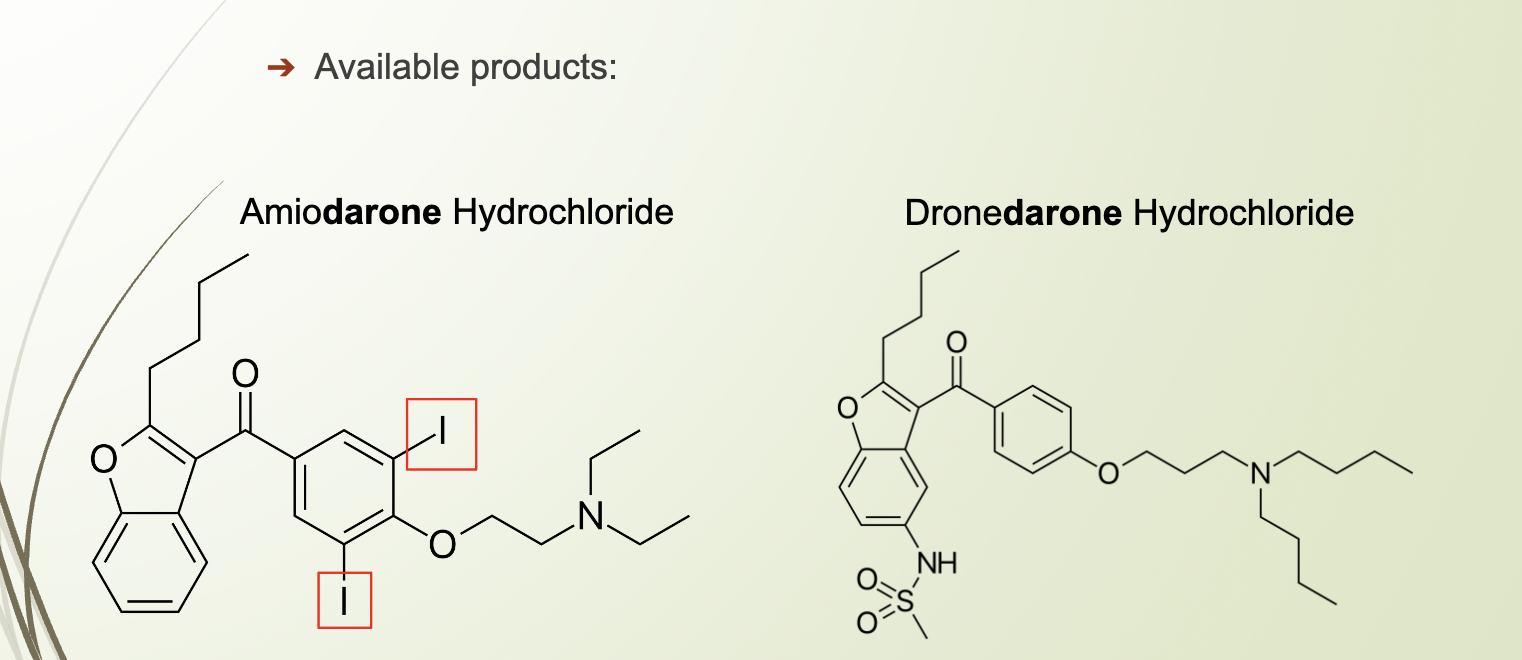
-darone examples
**amiodarone indications
antiarrhythmic agent used for ventricular arrhythmias
non-sustainted verticular tachycardia (VT)
sudden cardiac arrest due to ventricular fibrillation/pulseless VT
off label
pharmacological cardioversion in atrial fibrillation (Afib)
maintenance of sinus rhythm
prevention of post operative atrial arrhythmias
dose used is dependent on the type of arrhythmias being treated
lower doses are generally used for atrial arrhythmias (paroxysmal Afib)
**amiodarone mechanism of action
class III antiarrhythmic
inhibits adrenergic alpha and beta receptors
affects Na, K, and Ca channels
prolongs action potential and refractory period
dec AV conduction and sinus node functions
t ½ = 40-55 days - long
**amiodarone side effects
seen after patient is on for extended period of time
affects several systems
pulmonary - fibrosis, pneumonitits
thyroid - hypo/hyperthyroidism - has iodine in structure
ophthalmic - blurred vision, visual halos
gastrointestinal - anorexia, nausea, vomiting
cardiovascular - hypotension, bradycardia, QT prolongation
dermatologic - photosensitivity
hepatic - abnormal LFTs
no renal toxicity
**amiodarone BBW
hepatotoxicity
pulmonary toxicity
ability to worsen arrhythmias
use should be limited to pt w life-threatening arrhythmias
amiodarone drug interactions
drugs that prolong QTc (fluoroquinolones, macrolides)
warfarin
substrate - CYP3A4, CYP2C8
inhibits - CYP2C9, CYP2D6, CYP3A4 (grapefruit juice)
amiodarone examples

**dronedarone
class III antiarrhythmic for reducing risk of cardiovascular hospitalization
for pt w paroxysmal or persistent atrial fibrillation or atrial flutter w recent episode
associated risk factors → age > 70, HTN, diabetes, prior stroke
structurally similar to amiodarone, but lacks iodine moiety
**dronedarone warnings
slightly better side effect profile vs amiodarone
lacks thyroid toxicity - bc no iodine
other side effects are similar
**dronedarone BBW
inc risk of death when used w patients w class III or IV congestive heart failure (CHF)
inc risk of death in patients w chronic atrial fibrillation
-(z)osin chemical classification
quinazolines (piperazine ring and acyl moiety)
aryl sulfonamides
**-(z)osin pharmacologic classification
alpha blockers
alpha1 - adrenergic receptor blockers on smooth muscle cells of peripheral vasculature
dec BP by vasodilation and tot peripheral resistance
inc urine flow and dec frequency in BPH bc alpha1 receptors on prostate
alpha1a - adrenergic receptor blockers
**-(z)osin indications
hypertension
benign prostatic hyperplasia (BPH) - only alpha1a blockers
**-(z)osin warnings and side effects
priapism (esp w alpha 1a blockers) - rare but serious ADR resulting in painful, prolonged penile erection, leading to permanent impotence if not treated asap
orthostatic hypotension
retrograde ejaculation
nasal congestion, dizziness, tiredness
sulfonamide allergy (tamsulosin)
-(z)osin examples

-asteride chemical classification
4-azasteroids - synthetic steroid-like structures
**-asteride pharmacologic classification
androgen hormone inhibitors/ 5 alpha-reductase inhibitors
competitively inhibit type II 5-alpha reductase → inhibits reduction of testosterone to dihydrotestosterone
**-asteride indications
benign prostatic hyperplasia (BPH)
alopecia
**-asteride warnings
pregnancy category X - contraindicated
use w care in patient who have diminished urinary flow (obstructive uropathy)
use w caution in patient w hepatic insufficiency
not indicated in US for prevention of prostate cancer
-asteride examples

L10
glucocorticoid
protein, lipid, and CHO metabolism
brain excitability
inflammation
ex: cortisol
mineralocorticoid
water and electrolyte balance
ex: cortisol, aldosterone
**steroid therapy
used in many types of disease; corticosteroids are everywhere
ex: leukemias, RA, asthma, etc.
**glucocorticoid activity
convert protein into CHO (hepatic gluconeogenesis) & dec in uptake of glucose in peripheral tissues
may inc glucose levels and worsen diabetes management
lipolysis
may cause hypertriglyceridemia
redistribution of body fat to upper trunk and face from extremities
may cause moon face appearance; accumulation of fat around shoulders
inc in gastric acid secretion and blood flow to gastric mucosa
inc risk of peptic ulceration
inc in growth hormone secretion
inc growth
potentiation of catecholamines and inc in synthesis of epinephrine from NE
inc HR and BP
modulation of bone cell function
can lead to osteoporosis and fractures w longer term use
influence on brain excitability and patterns
influenced mood and behavior, mania or psychosis
dec eosinophils, monocytes, and basophils; inhibition of recruitment of neutrophils and monocytes; death of B cells and dec in production of antibodies and complement system components
immunosuppression, inc risk of infection
**mineralocorticoids activity
endogenous mineralocortioid = aldosterone
inc in sodium reabsorption in distal convoluted tubule
inc water retntion
inc in potassium and H renal excretion
hypokalemia and metabolic alkalosis
Cushing’s syndrome
excess corticosteroid concentration
due to excess corticosteroid secretion
latrogenic disease due to high dose, long-term steroid use
symptoms
high hp
weight gan
fat redistribution - moon face
hyperglycemia
osteoporosis
irritability
susceptibility to infection
effects of long-term corticosteroid
dec in ACTh production from anterioir pituitary due to suppression
natural feedback look
get vit D and calcium supplements
for GI bleed prevention
high dose AND on of the following (old age, history of GI ulcer, usage w anticoagulants (warfarin, asprin, aspirin, clopidegral, ibuprofen, naproxen)
treatment → PPI
**tapering of steroids to prevent adrenal insufficiency
if starting at a high dose >20 mg prednisone equivalent and prolonged duration of therapy > 2 weeks
slow, controlled withdrawal of medication
**short-acting steroid meds
hydrocortisone
cortisone acetate - equal glucocort. and mineral. potency
**intermediate-acting steroid meds
prednisone
prednisolone
methylprednisolone
fludrocortisone - only mineral. potency
triamcinolone - only glucocort. potency
**long-acting steroid meds
dexamethasone - only glucocort. potency
betamethasone - only glucocort. potency - use for childen
L11
hyperlipidemia
condition caused by an inc amt of lipids (fat) in the body
lipids deposit on the side of the artery wall
narrows the artery, which impacts blood flow and cause complete blockage
plaque can rupture and cause platelet aggregation and form a clot
cholesterol
LDL (low-density lipoproteins)
TG (triglycerides)
HDL (high-density lipoproteins)
low-density lipoproteins (LDL)
“bad cholesterol”
stores cholesterol in arteries, which can lead to plaque and blockage
Triglycerides (TG)
main component of body fat
high-density lipoproteins (HDL)
“good cholesterol”
removes cholesterol from the blood and carries it back to the liver
anti-hyperlipidemics
medications used to lower lipids (fats) in many disease states:
cerebrovascular disease (CVD)
coronary heart disease (CHD)
atherosclerotic cardiovascular disease (ASCVD)
acute myocardial infarction (AMI)
angina
stroke
diabetes
-Statins examples
derived from molds and fungi

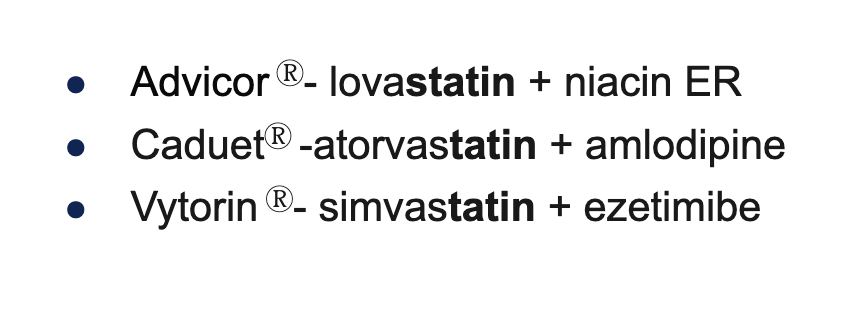
-statin combination products
**-statin mechanism of action
HMG CoA Reductase Inhibitors
HMG CoA Reductase → rate-limiting enzyme in cholesterol synthesis
limiting it leads to a compensatory inc in expression of LDL receptors, which stimulates LDL catabolism
pleiotropic effect
cholesterol reduction
dec LDL
dec TG
inc HDL
pleiotropic effect
dec inflammation at the site of coronary plaque, inhibits platelet aggregation, and has anticoagulant effects
**-statins indication
hypercholesterolemia
reduced risk of CHD
reduced risk of atherosclerosis, stenosis, strokes, and MI
reduction of LDL
improvement of HDL
recommended for patients to stay on statins w co-morbid conditions if they have ASCVD risk factors, regardless of cholesterol levels
-statin therapeutic uses
antihyperlipidemic drugs used for primary and secondary prevention
hypercholesterolemia
hypertriglyceridemia
cerebrovascular disease (CVD)
coronary heart disease (CHD)
atherosclerotic cardiovascular disease (ASCVD)
acute myocardial infarction (AMI)
angina
stroke
diabetes
**-statin adverse effects
arthralgia (joint pain)
myalgia (muscle pain)
inc hepatic function tests
diarrhea
nasopharyngitis
insomnia
malaise
**-statin warnings and monitoring
pregnancy category X
administered before bedtime
exception: atorvastatin, rosuvastatin
if myalgia → try diff statin as they have diff rates of lipophilicity, leading to diff rates of myalgias
many interact w grapefruit
simvastatin can only be used at certain doses when used w CCBs
**-statin intensity
only high-intensity (lowers LDL > 50%)
atorvastatin
rosuvastatin
only low-intensity (lowers LDL < 30%)
lovastatin
simvastatin
pravastatin
fluvastatin
pitavastatin
all used for moderate-intensity (lowers LDL 30-49%)

**choles- examples
bile acid sequestrants

**choles- mechanism of action
forms a non-absorbable complex w bile acids and releases Cl ions in the process
inhibits reuptake of intestinal bile sals and inc fecal loss of LDL
cholesterol reduction
dec LDL
**choles- therapeutic uses
dyslipidemia
diabetes (colesevelam only)
off label
chronic diarrhea due to bile acid malabsorption
hyperthyroidism
pruritus associated w cholestasis
**choles- adverse effects
myalgias
constipation
abdominal pain
flatulence
abnormal hepatic function tests
osteoporosis
choles- dosing/monitoring
DDI
warfarin → monitor for dec INR
statins/fibrates → monitor for inc incidence of myalgias
amiodarone → may dec availability/effectiveness of amiodarone
-fibr- examples
fibrates; fibric acid derivatives

**-fibr- mechanism of action
not well understood
theoretical → inhibits lipolysis and dec hepatic fatty reuptake as well as inhibit secretion of VLDL (very low-density lipoprotein)
cholesterol reduction
dec LDL
dec VLDL
dec TG
inc HDL
-fibr- therapeutic uses
hypertriglyceridemia
hypercholesterolemia
off label
primary biliary cholangitis
**-fibr- adverse effects
myalgias
inc serum transaminases
abdominal pain
abnormal hepatic function tests
-fibr- dosing/monitoring
inc risk of myalgia when used in combo w statins
gemfibrozil has DDIs that are contraindicated
all statins
ezetimibe
any CYP2C8 substrates (many antiretrovirals)
use in caution in patients on warfarin
**-ocumab examples
PCSK-9 inhibitors; subQ injection; monoclonal antibodies

**-ocumab mechanism of action
human monoclonal antibodies that aid in clearance of LDL
PCSK-9 inhibitors
cholesterol reduction
lotta dec LDL
-ocumab adverse effects
pain/redness at injection site
flu or flu-like symptoms
-ocumab counseling points
rotate injection sites - thigh, belly (stomach), upper arm, hip, buttocks
Enlicitide (Lipfendra) - 20 mg tablets
only oral agent in class
PCSK-9 inhibitor - dec LDL
FDA approved 07/2026 - very recently
adverse effects
dizziness
diarrhea
Lerodalcibep-liga (Lerochol) - 300 mg/1.2 mL syringes
once monthly injection
PCSK-9 inhibitor - dec LDL
FDA approved 02/2026
adverse effects
pain/redness at injection site
flu or flu-like symptoms
**PCSK-9 inhibitors
alirocumab
evolocumab
Enlicitide
Lerodalcibep-liga
niacin (nicotinic acid, vit B3) mechanism of action
not fully understood
theoretical → inhibits free fatty acid release from adipose tissue
cholesterol reduction
dec LDL
dec TG
inc HDL
niacin (nicotinic acid, vit B3) adverse effects
flushing
pruritis
GI distres
vomiting
diarrhea
hepatotoxicity
niacin (nicotinic acid, vit B3) notes
diff products of niacin are NOT interchangeable - IR vs ER
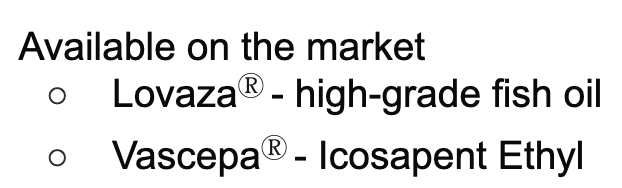
omega-3 fatty acids examples
omega-3 fatty acids mechanism of action
reduces hepatic production of VLDL and reduces hepatic synthesis of TG
cholesterol reduction
dec VLDL
dec TG
omega-3 fatty acids notes
inc risk of bleeding
second-line therapy for hypertriglyceridemia
omega-3 fatty acids adverse effects
diarrhea
nausea
fishy burps
ezetimibe (zetia) mechanism of action
cholesterol absorption inhibitor at the brush border of the small intestine
cholesterol reduction
dec LDL
dec TG
inc HDL
ezetimibe (zetia) adverse effects
diarrhea
myalgia
arthralgia
fatigue
inc transaminases
ezetimibe (zetia) notes
generally used in combo w statin or in addition to dietary changes
bempedoic acid (nexletol) mechanism of action
adenosine triphosphate-citrate lyase (ACL) inhibitor, which lowers LDL by inhibiting LDL synthesis in liver
enzyme upstream of HMG CoA reductase
cholesterol reduction
dec LDL
bempedoic acid (nexletol) adverse effects
gout
abdominal pain
arthralgias
inc transaminases
bempedoic acid (nexletol) notes
generally used in combo w statins or in addition to dietary changes
also available in combo product w ezetimibe (nexlizet)
marketed as an alternative to patients who cannot tolerate statins due to myalgias
inclisarin (leqvio) mechanism of action
utilizes the RNA interference mechanism and directs the catalytic breakdown of mRNA for PCSK-9
inc LDL receptor recycling and reuptake
cholesterol reduction
dec LDL
inclisarin (leqvio) adverse effects
antibody development
injection site reactions
arthralgias
bronchitis