Weather & Climate Systems | Exam #2 | Dr. Lauren Michel
 Call Kai
 Learn
 Practice Test
 Spaced Repetition
 Match
 Flashcards
 Knowt Play
1/141

There's no tags or description
Looks like no tags are added yet.
142 Terms
water does not participate easily in hydrogen bonding.
All of the following are properties that make water unique among other substances on Earth EXCEPT:
break hydrogen bonds
Water's temperature increases slowly because some of the energy absorbed is used to _______________ instead of to increase the kinetic energy of the molecules.
absorbed by the evaporating water.
As liquid water is evaporated into the atmosphere, heat energy is:
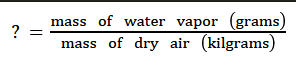
the mixing ratio.
The formula shown above defines the humidity measure known as:
increases with an increase in temperature.
The capacity of the air to hold water vapor:
nearness to saturation for the air.
Relative humidity indicates the:
air temperature.
Relative humidity depends on the water vapor present in the air and the:
condensation
As the temperature of air is reduced to its dew point, which of these is most likely to occur?
expanded to a larger volume.
During the process of adiabatic cooling, the temperature decreases because the air has:
decreases
The temperature of rising air parcels _____________ as they move upward.
latent heat is released inside a parcel of rising saturated air.
The moist adiabatic rate is different from the dry adiabatic rate because:
divergence.
All of the following are lifting mechanisms in the atmosphere EXCEPT:
environmental lapse rate.
The change in the actual air temperature as you go up in to the atmosphere is called:
absolutely stable.
If the environmental lapse rate is less than the wet adiabatic lapse rate, then the atmosphere is:
decrease.
The addition of water vapor will cause the density of air to:
an area of low pressure.
A cyclone is generally defined by meteorologists as:
air moving out of an area.
Divergence in the atmosphere is best defined as:
pressure gradient force.
The primary force which causes ALL winds is:
pressure gradient force and Coriolis effect.
Neglecting friction, the speed and direction of the horizontal wind are determined by:
everywhere.
The pressure gradient force is directed from higher to lower pressure:
lines connecting points of equal air pressure.
What do isobars represent on a map?
winds would not be impacted by the Coriolis Effect.
If the Earth were not rotating:
changing the direction of the wind.
The Coriolis effect influences the wind by:
parallel to the isobars.
The geostrophic wind described a situation where the air moves:
If you stand with your back to the wind, there is low pressure on your left and high pressure on the right.
What does Buys Ballot's Law state? (in the Northern Hemisphere)
outward and counterclockwise.
In the southern hemisphere, anticyclonic winds flow:
microscale winds
circulation is small and chaotic
they can last from seconds to minutes
simple gusts, downdrafts, and small vortices
don’t cover large distances
mesoscale winds
can last from minutes to hours
usually less than 100 km across
some (thunderstorms and tornadoes) also have strong vertical component
macroscale winds
largest wind patterns
planetary scale; can remain unchanged for weeks at a time
smaller circulation - synoptic scale
smaller systems are tropical storms and hurricanes
land and sea breezes
form in coastal locations in the tropics and midlatitudes
arise from differential heating of the land and water
sea breeze
local wind that blows from sea towards land in afternoon in coastal areas
land breezes
blow from land toward sea during night in coastal areas
valley and mountain breezes
results from differential heating of mountain slopes vs valley floors
valley breezes
daily upslope winds encountered in mountain valleys
start in valley floor and move up mountain slope
mountain breezes
nightly downslope winds commonly encountered in mountain valleys
start on mountain slopes and winds move into the valley
Chinook winds
warm, dry winds that move down leeward slopes of mountains
can bring on drastic changes in temp
Santa Ana winds
local name for Chinook-like winds in southern California and northwest Mexico
occur yearly in Fall and Winter
dry summers + strong [term] = wildfire conditions
Katabatic (fall) winds
originate when cold, dense air begins to move
glacial, cold ahh wind
better known ones have local names, such as mistral
Country breezes
mesoscale winds
caused by uneven heating of urban and country areas
results in flow from country to urban areas
Hadley model
single-cell circulation model
contrast in temps between the poles and equator creates a large convection cell in both the Northern and Southern hemispheres

three-cell circulation model assuming a featureless Earth and no rotation

Hadley Cell
warm air rises at equator
as flow moves poleward, begins to cool and sink at 20° - 30° latitude
somewhat meridional (N - S)
doldrums
region with a weak pressure gradient where trade winds meet at the equator
Ferrel Cell
westerly circulation of surface winds (prevailing westerlies) between 30° and 60° latitude
Polar Easterlies
circulation (60° - 90°) within polar cell; surface flows that move toward equator
equatorial low
an intertropical convergence zone
ITCZ
intertropical convergence zone
actual/preferred term for doldrums
subtropical highs (STH)
high-pressure zones in belts around 20° - 35° latitude on either side of equator
polar highs
near poles where polar easterlies originate
monsoon
seasonal reversal of winds; driven by pressure differences
Rossby waves
longest wave patterns, usually consisting of 4-6 waves that encircle the globe
have a large impact on weather
Jet Streams
polar and subtropical
occur near top of the troposphere
embedded in westerlies
widths vary from less than 100 km - more than 500 km
speeds can attain 100 - 400 kph
polar jet stream
most prevalent jet stream
moves faster and is stronger in winter
occasionally moves north - south in winter
polar front
major frontal zone that the polar jet stream occurs along
subtropical jet stream
west-to-east current, centered at 25° N and S
mainly winter phenomenon
slower than polar
not on the test
fixes energy imbalance
transfer of heat by winds and ocean currents equalizes the latitudinal energy imbalances
gyres
“jacking off and tired” - Lou
nearly circular patterns of ocean currents formed by Coriolis affect deflecting surface currents poleward
poleward moving, warm ocean currents
moderate high latitudes during winter
cold currents
exert their greatest influence in tropics & during summer in mid-latitudes
increase aridity in tropical deserts along west coasts of continents
ocean currents
have an impact on climate, help maintain heat balance
cold currents offshore
dry climate
warm currents offshore
warm, moist climate
upwelling
rising of cold water from deeper layers to replace warmer surface water due to wind-induced vertical movements
occurs where winds blow parallel to coast toward equator
El Niño
gradual warming of Eastern Pacific waters in December or January
warm water does not move, it stays there
noted for potentially catastrophic impact on weather
arid areas can get lots of precipitation
change in surface water temp can kill fish
Atacama Desert
rain during El Niño year can lead to a superbloom here
La Niña
opposite of El Niño; refers to colder than normal ocean temperatures
western Pacific - wetter than normal conditions occur
more frequent hurricanes in Atlantic
Southern oscillation
seesaw pattern of atmospheric pressure between the eastern and western Pacific
teleconnection
link between weather occurring in widely separated regions of the globe
hydrolic cycle
continuous exchange of water
ice
less dense than liquid
water
has a unique ability to form hydrogen bombs
latent heat
hidden heat
calorie is the amount of energy required to raise temp of 1 g of water by 1°C
latent heat of melting
[-] 1 gram of ice requires 80 calories
latent heat of fusion
freezing 1 gram of water releases 80 calories
latent heat of vaporization
energy absorbed by water during evaporation
evaporation
cooling process
condensation
converting gas to a liquid
reverse of evaporation
latent heat of condensation
process when water vapor changes to the liquid state
sublimation
process that turns a solid into a gas
i.e. disappearing ice cubes in freezer
deposition
reverse process of changing a vapor to a solid
i.e. frost accumulating in freezer
humidity
amount of water vapor in the air
absolute humidity
mass of water vapor in a given volume of air
= mass of water vapor (g) / volume of air (cubic meter)
mixing ratio
mass of water vapor in a unit of air compared to the remaining mass of dry air
vapor pressure
part of the total air pressure attributable to water vapor content
saturation
equilibrium point between evaporation and condensation
saturation vapor pressure
pressure by the motion of the water vapor molecules when the air is saturated
relative humidity
how close or far something is to saturation
ratio of the air’s actual water vapor content & amount of water vapor required for saturation at a certain temp
increase in temp =
decrease in relative humidity
advection
primarily horizontal component of convective flow (wind) that causes temp changes
convection
air moving up
dew point
temp at which air is cooled to reach saturation
measure of actual moisture content
saturation pressure is
pressure dependent & that for every 10°C increase in temp, the amount of water vapor needed for saturation doubles
hygrometer
measures moisture content of the air
psychrometer
consists of two identical thermometers
dry thermo measures air temp
“wet bulb” measures dryness of air
the larger the difference in temp, the lower the relative humidity
adiabatic
process is one in which NO HEAT is transferred
changes in pressure
result in temp changes
air compressed
warms
air expands
cools
parcel of air
imaginary volume of air
typically few hundred cubic meters in volume
assumed to act independently of surrounding air
assumed no heat transferred in or out of
dry adiabatic rate
unsaturated air cools at a rate of 10°C/1000m