Dental Disease
 Call Kai
 Learn
 Practice Test
 Spaced Repetition
 Match
 Flashcards
 Knowt Play
1/30

There's no tags or description
Looks like no tags are added yet.
31 Terms
abnormalities of incisors
retained deciduous teeth
fractures
displacement
EORTH
wry nose
diastema
parrot/ sow mouth
what cheek teeth issue are there
retained deciduous caps
diastema and periodontal disease
caries
loose teeth
pulp exposure
retained deciduous teeth
-easy to remove and must come out
-cause gap between adult incisors
-radiographs if cannot distinguish between adult and deciduous tooth
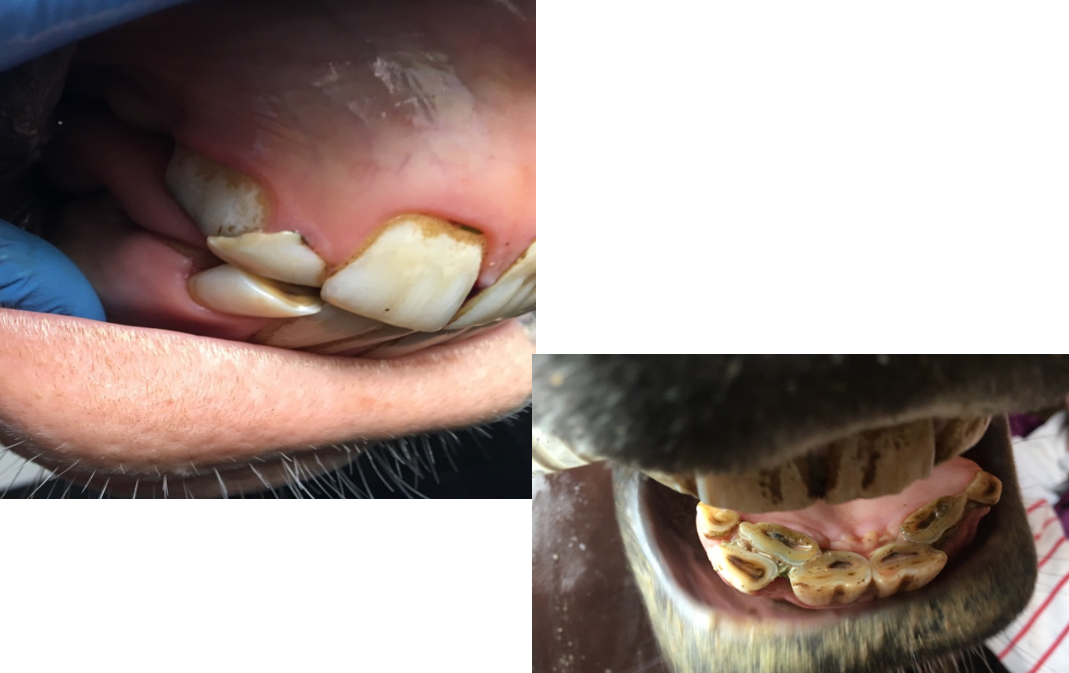
fractures or displacement of incisors
-often traumatic or assoc with concurrent bone injury
-may need extraction
-jaw may be fractured

possibility for fixing fractured or displaced incisors
-wire back into place and stabilise
-x rays always necessary→ fractureed jaaw?
parrot/ sow mouth
Over or under shot jaw
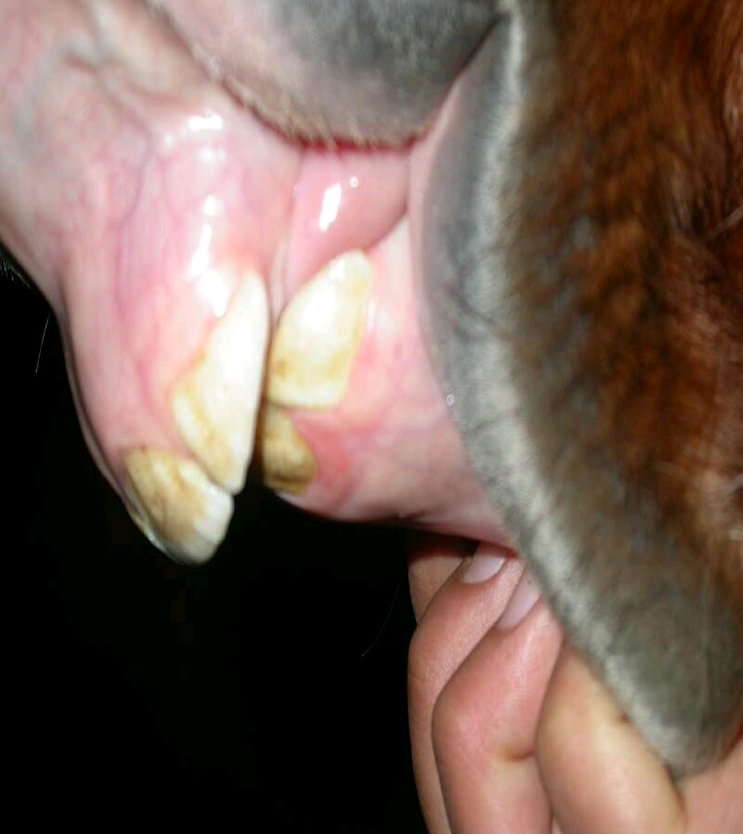
parrot/sow mouth treatment
-incisors don't normally need treatment unless impinge on soft tissue
-often secondary cheek teeth issue
-correct as foal with surgery
wry nose
Condition in which the nasal bone is grossly twisted causing reduced air flow along with parrot/sow mouth
equine odontoclastic tooth resoprtion and hypercementosis EOTRH
-older horses
-causes resorption of roots +/- cement deposition, teeth become loose and painful
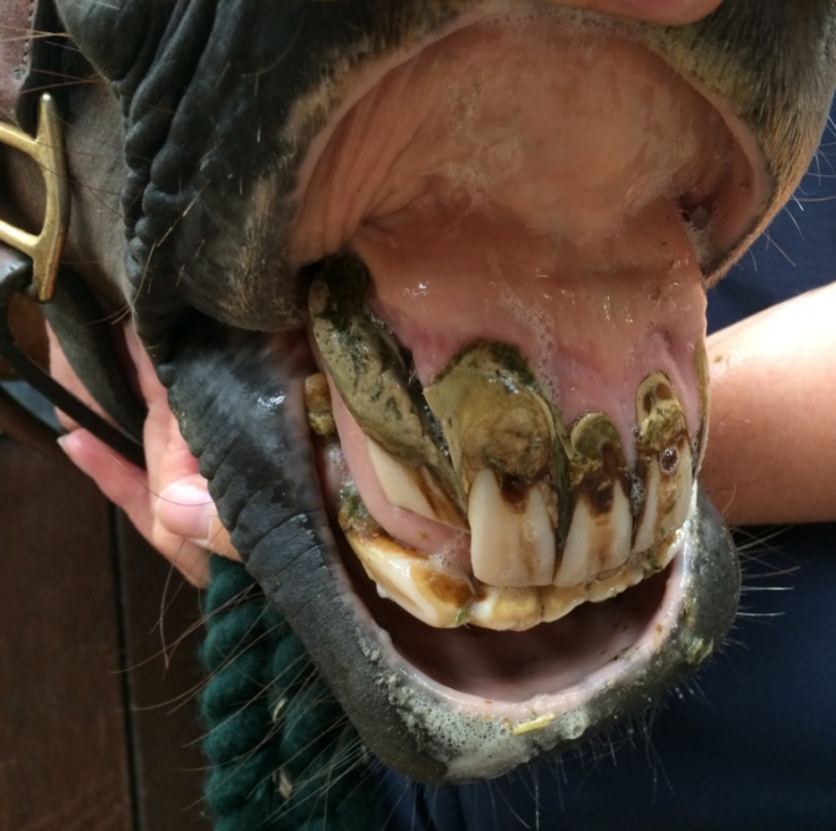
treatment for EOTRH
x ray and extraction
-feed toothless diet and put on grass so can use gums
differential for EOTRH
diastemata
diastemata
-relatively common
-gaps develop between teeth usually age related
-food easily picked out and keep clean with toothbrush
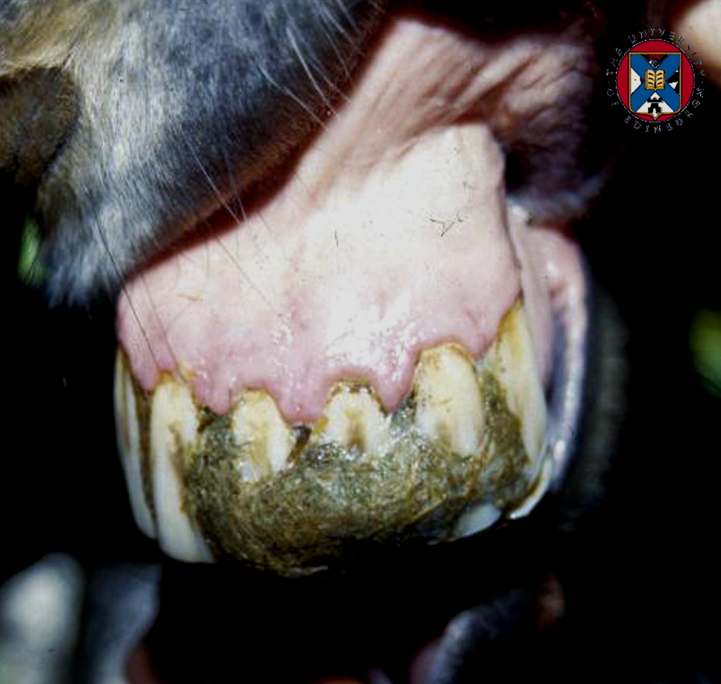
incisor fractures
-mostly trauma
-assoc with concurrent bone injury
diagnostics for incisor fractures
-radiographs always and do not place speculum
treatment of incisor fractures
-referral indicated (for wiring +/- perform endodontic procedures on fractured teeth)
how many deciduous teeth shed
12
retained deciduous caps on cheek teeth
-have full mouth of teeth by age 5
-fragments common
-remove if loose or obvs causing disease
-food packing common

diastemata and peridontal disease of cheek teeth
-abnormal gaps between teeth
-causes very painful gum/peridontal disease
-always check opposing transverse ridge

why should cheek teeth be tightly packed
to form one grinding unit
why check opposing transverse ridges with diastemata
drives food between gaps
prevention of peridontal disease with diastemata of cheek teeth
flush out with high power garden hose
treatment of diastemata
-challenging→ usually management
-balance mouth by removing sharp points and excessive ridges
-flush out or pick food
-pack with putty?
-widen?
-remove teeth

-remove tooth/teeth?
how often should diastemata be checked over
every 3 months esp at worst point
caries of cheek teeth types
-peripheral (surrounding edges of teeth)
-infundibular (centre of upper cheek teeth)
what can cause caries of cheek teeth
acidogenic bacteria cause erosion to cement (and enamel/dentine if progress)
infundibular caries
-upper only
-maybe linked to tooth development
-lead to tooth fracture
-graded 1-5
identifying earlier= better
5→ fracture
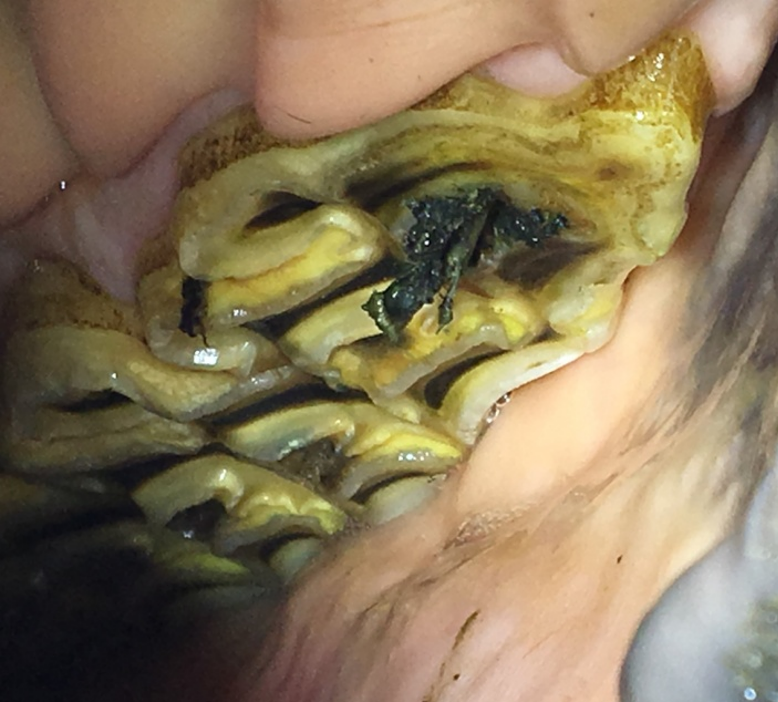
treatment of infundibular caries
-fill affected teeth
-remove from occlusion if referral not option
loose cheek teeth
-occur with advanced peridontal disease
teeth shorter
-must remove or extract
-round edges so does not impinge on soft tissue
-flush out packed food
-ongoing management

pulp exposure of cheek teeth causes
-endodontic disease or irreversible pulpitis
-iatrogenic
endodontic disease, irreversible pulpitis
-oral exam reveals defect in secondary dentine
-radiograph and referral
iatrogenic cause of pulp exposure
overzealous rasping resulting in pulper exposure. identifiable as pink defect on occlusal surfac. can cause inappetance.
-prompt treatment and referral endodontics